
In This Issue



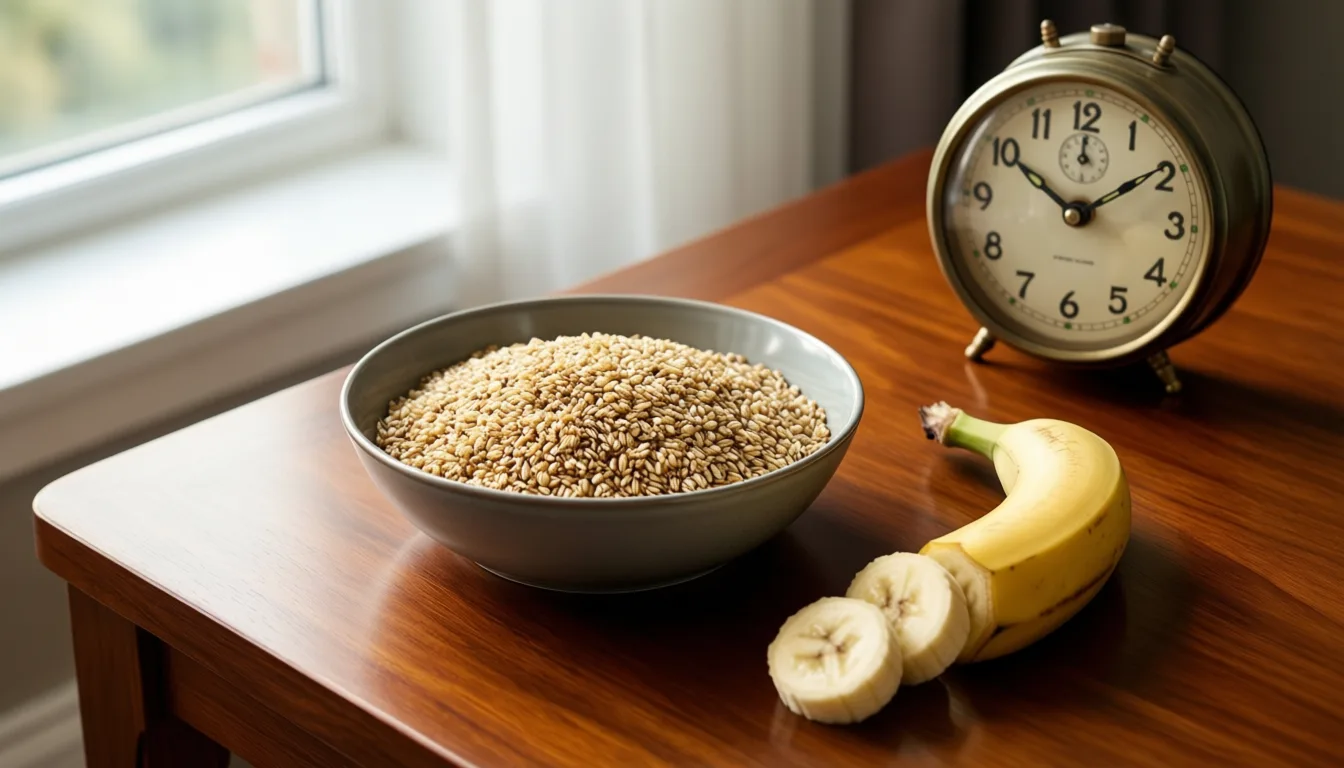
Eat With the Clock: Resistant Starch, Meal Timing, and the Microbiome
Two new reviews suggest the next frontier in performance nutrition isn't what you eat — it's when you eat, and how the starch on your plate talks to the bugs in your gut.
For a decade, performance nutrition has been a numbers game — grams of carbs per hour, grams of protein per kilo, a calculator in every gym bag. But a quieter shift is underway in the literature. Two recent reviews, one on dietary strategies for circadian rhythm regulation and another on resistant starch type 5 and the gut microbiome, point in the same direction: the macros matter, but the structure around them — when food arrives, and what shape it takes by the time it reaches the colon — may matter just as much. For athletes whose recovery hinges on circadian repair and whose engines run on microbial metabolites, that is not a small footnote.
- Timing is a nutrient. A 2026 review frames chrononutrition as a four-dimensional system: time window, energy distribution, macronutrient pattern, and bioactive compounds.
- Light pollution is a metabolic stressor. The authors describe circadian rhythm disruption as a 'concealed epidemic' linked to shift work and urban night light.
- RS5 is structurally different. Resistant starch type 5 is a V-type inclusion complex where amylose helices wrap around guest molecules, surviving digestion intact.
- The output is butyrate. Colonic fermentation of RS5 yields butyrate, acetate, and propionate — short-chain fatty acids tied to gut barrier integrity and inflammation control.
- Evidence is moderate, not settled. Standardized assessment frameworks, human trials, and structure–activity mapping are still catching up to the mechanistic story.
The clock on your plate
The premise of chrononutrition is straightforward: the same meal eaten at 8 a.m. and at 11 p.m. is not the same meal. Peripheral clocks in the liver, gut, and muscle synchronize partly through feeding signals, and when those signals scatter across a 16-hour eating window under blue light, the orchestra goes out of tune. The new review in Critical Reviews in Food Science and Nutrition calls this an emerging 'concealed epidemic,' driven by urban light pollution and globalized schedules, and proposes a four-dimensional framework for thinking about food as a circadian input: time-window-based, energy-intake-based, macronutrient-based, and bioactive-compound-based strategies.
For an endurance athlete, the practical translation is intriguing rather than prescriptive. Time-window strategies (think early time-restricted feeding) overlap heavily with what shift workers and red-eye flyers already wrestle with. Energy-distribution strategies — front-loading calories toward earlier in the day — line up with metabolic data showing better glycemic handling in the morning. None of this is a license to skip the post-session carb refuel because the clock says 9 p.m.; the review is candid that translating preclinical findings to human responses remains one of the field's hardest unsolved problems.

Front-loaded eating windows are one of four chrononutrition strategies the reviewers map.
The same meal eaten at 8 a.m. and at 11 p.m. is not the same meal.
The starch that survives
If chrononutrition is about when food arrives, resistant starch is about what survives the journey. Most starch is hydrolyzed in the small intestine and absorbed as glucose. Resistant starch escapes that fate and reaches the colon intact, where it becomes substrate for the microbiome. Among the five recognized types, RS5 has a quietly unusual architecture. The review in Engineering Microbiology describes it as a self-assembled V-type inclusion complex: amylose helices that, once the native granule is disrupted, wrap around a guest molecule — a fatty acid, a polyphenol, a flavor compound — through non-covalent interactions.
That geometry is the whole story. The helical cage resists digestive enzymes, slows fermentation in the colon, and offers a mechanism for targeted release of whatever bioactive is tucked inside. The reviewers frame RS5 as a structural strategy for delivering both fiber and a guest payload to the lower gut, where the microbiome can do the work.

RS5's V-type helical architecture is what lets it slip past small-intestine enzymes.
Why athletes should care about butyrate
The reason the microbiome conversation keeps creeping into performance circles is short-chain fatty acids. When colonic bacteria ferment resistant starch, they produce butyrate, acetate, and propionate — small molecules with outsized roles. Butyrate is the preferred fuel for colonocytes and a key signal for intestinal barrier integrity. Acetate and propionate enter systemic circulation and interact with hepatic and peripheral metabolism. The RS5 review reports that the complex promotes beneficial taxa, suppresses pathogenic species, and shifts SCFA output upward, with knock-on effects the authors link to inflammation control and metabolic regulation, and potentially to obesity, type 2 diabetes, and colorectal cancer risk.
That last sentence deserves to sit there carefully. The review is a mechanistic synthesis, not a clinical trial. The phrase the authors use — that RS5's influence on gut microbiota and host health 'remains inadequately explored' — is the honest one. The signal is plausible and the biochemistry is elegant. The human outcome data is thinner than the mechanism deserves.
Where the two stories meet
Read together, the two reviews suggest a single thesis: the next wave of nutrition science is structural. Chrononutrition treats the eating window as a structural variable; RS5 treats the starch molecule itself as one. Both shift attention from how much to in what form, and when. For athletes whose training already pushes the system to its edges — shift workers training around night rotations, ultra-endurance athletes whose gut tolerance is the rate-limiting step, anyone managing inflammatory load across a hard block — the framing is useful even before the clinical data catches up.
What it isn't, yet, is a protocol. The chrononutrition review explicitly flags the absence of standardized assessment frameworks and the limited predictive value of preclinical models. The RS5 review flags that we still don't fully understand the structure–activity relationships of these complexes. Moderate evidence means moderate language: these are working hypotheses with real mechanistic teeth, not finished recommendations.
The performance-nutrition stack of 2030 may look less like a macro calculator and more like a calendar with a fermentation map attached. The clock and the colon, in other words, are about to get a lot more interesting.
Frequently asked questions
What is chrononutrition, and why does meal timing matter?
Chrononutrition is the study of food as a circadian input, based on the idea that the same meal eaten at 8 a.m. and at 11 p.m. is not the same meal. Peripheral clocks in the liver, gut, and muscle synchronize partly through feeding signals, so when those signals are scattered across a long eating window, the system goes out of sync. The article frames this as a four-dimensional approach covering time window, energy distribution, macronutrient pattern, and bioactive compounds.
What makes resistant starch type 5 (RS5) different from other resistant starches?
RS5 has a V-type inclusion complex architecture in which amylose helices wrap around a guest molecule — such as a fatty acid or polyphenol — through non-covalent interactions. This helical cage resists digestive enzymes and allows RS5 to reach the colon intact. The article describes this structural property as the mechanism behind RS5's ability to deliver both fiber and a bioactive payload to the lower gut.
What are short-chain fatty acids, and what role do they play?
Short-chain fatty acids — butyrate, acetate, and propionate — are produced when colonic bacteria ferment resistant starch. Butyrate is the preferred fuel for colonocytes and a key signal for intestinal barrier integrity, while acetate and propionate enter systemic circulation and interact with hepatic and peripheral metabolism. The article links RS5's promotion of these molecules to inflammation control and metabolic regulation.
Is the article recommending a specific eating window or RS5 supplementation protocol?
No — the article is explicit that neither story has reached the level of a protocol. The chrononutrition review flags the absence of standardized assessment frameworks and the limited predictive value of preclinical models, and the RS5 review acknowledges that structure–activity relationships are still poorly understood. The article describes both as working hypotheses with real mechanistic basis, not finished recommendations.
Why does the article describe circadian rhythm disruption as a 'concealed epidemic'?
The article borrows that phrase from a 2026 review, which uses it to describe how urban light pollution and globalized schedules quietly disrupt the body's internal clocks. Shift work and exposure to blue light at night are cited as primary drivers. Because the disruption is gradual and widespread rather than acute, it goes largely unrecognized despite its metabolic consequences.
Sources
- Dietary nutritional strategies for circadian rhythm regulation: advances, challenges and future directions. — Critical reviews in food science and nutrition
- Effect of resistant starch type 5 on gut health through modulating gut microbiota. — Engineering microbiology

The Metabolism-Frailty Loop: Why Insulin Resistance May Accelerate Whole-Body Decline
New research links a combined insulin-resistance and frailty score to liver disease, ties everyday nutrients to kidney-heart-metabolic mortality, and uses a mouse model to ask why some bodies lose muscle while others don't.
For years, insulin resistance has lived in the wellness conversation as a blood-sugar problem — something to manage with a continuous glucose monitor, a walk after dinner, maybe a swap from oat milk to almond. But a wave of 2026 research is reframing it as something bigger and stranger: a systemic aging signal that appears to pull the liver, kidneys, heart and muscles into decline together. The story isn't that one number on a lab panel is destiny. It's that metabolic dysfunction and physical frailty seem to feed each other in a loop — and that loop may be one of the more underappreciated drivers of how bodies actually age.
Three new papers, taken together, sketch the outline. A large Chinese cohort study links a combined insulin-resistance-and-frailty score to chronic liver disease. A global nutrient analysis ties specific dietary patterns to the staging and mortality of cardiovascular-kidney-metabolic (CKM) syndrome. And a mouse study probes a molecular switch that may explain why some bodies gain fat without losing muscle — and why others might not be so lucky. None of these is a smoking gun on its own. But the through-line is hard to miss.
- Insulin resistance plus frailty appears worse than either alone. A combined index was associated with markedly higher odds of chronic liver disease in a large older-adult cohort.
- Diet quality tracks with CKM syndrome stage and mortality. Lower potassium and higher sodium intake were linked to more advanced disease; fiber, choline, vitamin K and certain fatty acids were linked to lower mortality risk.
- Fat gain and muscle loss can be decoupled — in mice. p62-knockout male mice became obese and insulin resistant but kept their muscle mass and grip strength at an intermediate timepoint.
- The evidence is suggestive, not settled. These are observational human studies and a preclinical animal model, so think directional signals, not prescriptions.
- The actionable layer is unglamorous. Pattern-level eating, strength work, and a conversation with a clinician about metabolic labs — not a new supplement.
When two risks multiply
The first study, published in BMC Gastroenterology, drew on 7,417 participants in the China Health and Retirement Longitudinal Study (CHARLS). Researchers combined the triglyceride-glucose (TyG) index — a widely used proxy for insulin resistance — with a frailty index that captures cumulative physiological decline, creating what they call the TyG-Frailty Index, or TyGFI. Then they tracked who developed chronic liver disease over the follow-up window.
The pattern was steep. Participants in the highest TyGFI quartile had roughly triple the odds of chronic liver disease compared with the lowest, and each one-unit increase in the score was associated with 38% higher odds of incident chronic liver disease after adjustment. That's a meaningful signal, especially because it suggests metabolic dysfunction and bodily frailty aren't independent risks running in parallel — they may be compounding.
The usual caveats apply. This is an observational study in a specific older population, so it can't prove causation, and the absolute number of liver-disease cases (265) is modest. But the biological story is plausible: insulin resistance drives fat accumulation in the liver, and frailty reflects the kind of chronic inflammation and reduced repair capacity that lets that damage compound.

Pattern-level eating — more potassium-rich plants, less ultra-processed sodium — showed up across CKM syndrome stages.
The nutrients that keep showing up
If the first paper says insulin resistance plus frailty matters, the second asks what's modifying that risk on a plate. Researchers integrated data from the Global Burden of Disease study and NHANES to look at how 26 dietary nutrients tracked with the stages and mortality of cardiovascular-kidney-metabolic (CKM) syndrome, the clinical umbrella that recognizes how heart, kidney and metabolic disease cluster.
A few signals stood out. Lower potassium and higher sodium intake were associated with more advanced CKM stages — consistent with what's already widely understood about blood pressure and kidney load. Higher cholesterol intake was associated with increased all-cause mortality risk in this analysis. And higher intakes of dietary fiber, choline, vitamin K, and a specific long-chain fatty acid (arachidonic acid, PFA 20:4) were associated with reduced mortality risk.
It's worth pausing on what this kind of study can and can't tell us. Nutrient-by-nutrient analyses in big observational datasets are notoriously slippery — people who eat more fiber tend to do a lot of other things differently too. But the directional pattern is consistent with the bigger picture: plants, less ultra-processed sodium, enough of the micronutrients that support vascular and metabolic function. Nothing here justifies a supplement stack.
Three new papers sketch the same outline: insulin resistance isn't a siloed blood-sugar problem. It's a signal that travels.
The muscle question
The third paper is the most speculative, and the most interesting. It looks at male mice missing a gene called p62 (also known as SQSTM1) — a scaffolding protein that sits at the intersection of autophagy (the cell's recycling system) and metabolic regulation. Knock it out, and the mice develop what researchers call mature-onset obesity: progressive weight gain, dramatically elevated fat mass, fasting hyperglycemia, and impaired glucose tolerance.
Here's the twist. Despite all of that metabolic dysfunction, the p62-deficient mice maintained grip strength, skeletal muscle weights, and myofiber size comparable to wildtype controls at the intermediate timepoint studied. The researchers found elevated NBR1 and phospho-mTOR signaling in the soleus muscle, suggesting the autophagy machinery had rerouted in a way that preserved muscle even as fat accumulated.
This matters because one of the scariest versions of metabolic decline is sarcopenic obesity — gaining fat while losing muscle, which is a particularly bad trajectory for frailty, falls and overall mortality. The p62 paper hints that the fat-gain and muscle-loss tracks aren't biologically welded together; specific molecular signals may decouple them. The authors are careful, though: this is a male mouse study at a single timepoint, and they note that chronic obesity and metabolic dysfunction may still impair muscle health long-term. There's a long road between this finding and anything resembling a human intervention.

Strength work doesn't show up in these three studies directly — but it's the most evidence-backed lever against the muscle side of the metabolism-frailty loop.
What this actually means for you
It would be easy to read three papers about insulin resistance and reach for a CGM or a berberine bottle. Resist that impulse. The honest read of this evidence is more modest: insulin resistance appears to be a systemic signal that interacts with frailty, diet quality, and muscle biology in ways researchers are still mapping. The strongest signals here are at the pattern level, not the hack level.
If anything in this loop feels relevant — a family history of liver disease, recent labs that flagged elevated triglycerides or glucose, or a creeping sense of physical decline — the next step is a conversation with a clinician who can look at the whole picture. Not a new wellness protocol. The interventions with the best evidence base are still the ones that have been quietly working for decades: eating more plants and less ultra-processed food, building and keeping muscle, sleeping, and getting metabolic labs checked at the cadence your doctor recommends.
The interesting shift is conceptual. These papers nudge metabolic health out of its silo and into a longevity frame, where insulin sensitivity, muscle mass and organ function are treated as a single system that ages together — or, ideally, doesn't.
Frequently asked questions
What is the TyGFI, and what did the study find?
The TyGFI (TyG-Frailty Index) combines the triglyceride-glucose index, a proxy for insulin resistance, with a frailty index that captures cumulative physiological decline. In a cohort of 7,417 older adults, participants in the highest TyGFI quartile had roughly triple the odds of chronic liver disease compared with those in the lowest quartile, and each one-unit increase in the score was associated with 38% higher odds of incident chronic liver disease.
Which dietary nutrients were linked to worse outcomes in cardiovascular-kidney-metabolic syndrome?
Lower potassium and higher sodium intake were associated with more advanced CKM syndrome stages, and higher cholesterol intake was associated with increased all-cause mortality risk. The analysis drew on the Global Burden of Disease study and NHANES data across 26 dietary nutrients.
Which nutrients were associated with lower mortality risk in the CKM analysis?
Higher intakes of dietary fiber, choline, vitamin K, and a long-chain fatty acid called arachidonic acid (PFA 20:4) were associated with reduced mortality risk in the CKM syndrome analysis.
What did the mouse study reveal about fat gain and muscle loss?
Male mice lacking the p62 gene developed progressive weight gain, elevated fat mass, and impaired glucose tolerance, yet maintained grip strength, skeletal muscle weights, and myofiber size comparable to normal mice at the timepoint studied. This suggests fat gain and muscle loss are not biologically fixed together and may be decoupled by specific molecular signals, though the researchers caution this is a single-timepoint animal study and chronic metabolic dysfunction may still impair muscle health long-term.
What does the article say people should actually do with this information?
The article describes the actionable layer as 'unglamorous': pattern-level eating, strength work, and a conversation with a clinician about metabolic labs. It explicitly cautions against reaching for supplements or a continuous glucose monitor as a first response, noting that the evidence is directional rather than prescriptive.
Sources
- The association of the combined triglyceride-glucose and frailty index with chronic liver disease: evidence from the CHARLS study. — BMC gastroenterology
- A Comprehensive Analysis of the Impact of Nutrient Intakes on the Stages and Mortality of Cardiovascular-Kidney-Metabolic Syndrome. — Food science & nutrition
- Mature-onset obesity in p62-deficient male mice maintains skeletal muscle mass despite metabolic dysfunction. — Physiological reports

Orforglipron and the GLP-1 Era: Oral Pills, Reproductive-Age Prescribing, and the Algorithm Selling Them
The first non-peptide oral GLP-1 has real bioavailability data, prescriptions to women of reproductive age are climbing fast, and social-media ads are quietly rewriting how the public reads the science.
The GLP-1 story has stopped being a single story. What began as a tidy narrative about a once-weekly injection for type 2 diabetes has fractured into at least three parallel ones: a pharmacology arc, where chemists are trying to shrink the molecule into a pill; a prescribing arc, where the real-world patient mix is shifting faster than the guidance around it; and a marketing arc, where Facebook and Instagram are doing a lot of the public-education work that clinicians used to do. For the quantified-self crowd that has tracked this class from the first n-of-1 logs of fasting glucose to today's CGM-and-DEXA dashboards, the interesting question is no longer does it work. It is which version of it is coming next, for whom, and through which channel.
- Orforglipron is a non-peptide oral GLP-1 with reported mean absolute oral bioavailability around 79% in a small phase 1 study — a notable number for an orally dosed GLP-1, though still early-stage data.
- Prescribing to reproductive-age women is climbing sharply in Australian general practice, and the majority of recent initiations are in women without type 2 diabetes.
- Contraception overlap and pregnancy timing around GLP-1 initiation appear under-tracked relative to guidance.
- Social-media ads for GLP-1 weight-loss drugs lean on medical authority, telehealth convenience, affordability, and emotional appeals — themes that can outpace the evidence.
- Evidence strength is moderate: human pharmacokinetic data and population prescribing data are real, but outcome data for newer agents and newer use cases are still maturing.
The pill problem, briefly solved
Peptides are notoriously hard to dose by mouth. They get chewed up by stomach acid and digestive enzymes, and what survives often struggles to cross the gut wall. That is why the first wave of GLP-1 receptor agonists arrived as injections, and why the oral semaglutide formulation that followed leans on an absorption enhancer and still posts single-digit bioavailability. Orforglipron takes a different route: it is a small-molecule, non-peptide GLP-1 receptor agonist, designed from the start to behave like a conventional oral drug rather than a smuggled peptide.
In two phase 1, open-label studies in healthy adults, investigators paired oral orforglipron with a microdose of intravenous [14C]-orforglipron and tracked the molecule using accelerator mass spectrometry and HPLC. The headline number — mean absolute oral bioavailability of 79.1% ± 16.8% — is the kind of figure that makes formulation chemists sit up. Elimination was overwhelmingly fecal (about 87%) with negligible urinary excretion, and the molecule underwent extensive oxidative metabolism followed by microbial metabolism of its oxadiazolone ring.
None of this is an efficacy claim. Phase 1 disposition studies are about where a drug goes and how it leaves, not whether it changes a hard outcome. But for a class historically gated by the needle, a small-molecule GLP-1 that absorbs like a regular pill is a meaningful structural shift — assuming later-phase efficacy and safety data hold up.

Orforglipron's disposition was characterized using accelerator mass spectrometry and HPLC in small phase 1 cohorts.
Who is actually getting these drugs
While the chemistry moves toward pills, the prescribing patterns are moving toward a different patient. A retrospective open cohort study using Australian MedicineInsight general-practice data followed more than 1.6 million women aged 18–49 between 2011 and 2022. Among them, about 1.1% were first prescribed a GLP-1 receptor agonist during the study window, and only a minority of those — roughly one in five — had type 2 diabetes.
The trajectory is steep. Age-standardised initiation among women with type 2 diabetes climbed from 13.0 per 1000 in 2011 to 88.5 per 1000 in 2022. Among women without type 2 diabetes it rose from zero to 14.9 per 1000 over the same period. By 2022, the great majority of new prescriptions in this age band — 90.5% of the year's initiations — were going to women without a diabetes diagnosis. The authors also examined contraception overlap at the time of initiation and pregnancy incidence within six months, areas where current guidance and real-world practice appear to be drifting apart.
For readers used to thinking about GLP-1s as metabolic drugs, this is a quiet but important reframing. The modal new user in this dataset is no longer a person being treated for hyperglycemia; she is a person being treated for weight. That distinction matters for how risk-benefit gets weighed, for how counseling around pregnancy and contraception is structured, and for how follow-up is designed.
The modal new user is no longer being treated for hyperglycemia. She is being treated for weight — and the guardrails around that use are still catching up.

Australian GP data show GLP-1 initiation rising fastest among reproductive-age women without type 2 diabetes.
The algorithm in the exam room
The third arc is the one most readers will recognize from their own feeds. A critical discourse analysis of 90 Facebook and Instagram advertisements for FDA-approved GLP-1 weight-loss drugs, collected between February 2023 and February 2024, surfaced four recurring themes: health and safety, consultation and support, ease and affordability, and emotional and psychological impact. Using Fairclough's CDA framework, the authors describe ads that lean on medical authority and telehealth convenience to build trust, while emotional appeals do the persuasion work.
None of those themes are inherently dishonest. Telehealth genuinely has expanded access; affordability genuinely is a barrier; clinician oversight genuinely is part of how these drugs are prescribed. The concern the analysis raises is one of proportion. When the messaging foregrounds ease, emotional payoff, and a frictionless path from quiz to prescription, it can quietly compress the parts of the story that matter most to a careful reader: who the drug was studied in, what the side-effect profile looks like over time, what happens when you stop, and what counseling should accompany initiation — including, for reproductive-age users, contraception and pregnancy planning.
For the quantified-self reader, the implication is familiar. Treat the ad as a data source about marketing, not about pharmacology. The chemistry and the prescribing data live in different places.

Ads analyzed in the study foregrounded medical authority, telehealth access, affordability, and emotional appeal.
A moderate-evidence read
Pulling the three threads together: the pharmacology is genuinely interesting, the prescribing shift is genuinely large, and the marketing environment is genuinely consequential. But the evidence rating across the bundle is moderate, not strong. The orforglipron data come from small phase 1 cohorts focused on disposition and bioavailability rather than outcomes. The Australian cohort is rich and longitudinal but regional, and observational. The discourse analysis is a structured read of 90 ads, not a behavioral study of what those ads actually do to readers.
What the three together justify is a posture, not a protocol. The next phase of the GLP-1 era will likely be defined less by whether the drugs work — that question is, broadly, answered — and more by the format they arrive in, the populations they reach, and the channels through which people first hear about them. For a readership that prides itself on tracking variables, those are the three worth instrumenting.
Frequently asked questions
What makes orforglipron different from earlier GLP-1 drugs like injectable semaglutide?
Orforglipron is a small-molecule, non-peptide GLP-1 receptor agonist designed from the start to behave like a conventional oral drug rather than a smuggled peptide. Earlier GLP-1 drugs arrived as injections because peptides are broken down by stomach acid and digestive enzymes, and oral semaglutide, which uses an absorption enhancer, still posts single-digit bioavailability.
What did the phase 1 studies show about how orforglipron is absorbed and eliminated by the body?
Phase 1 studies in healthy adults found a mean absolute oral bioavailability of 79.1% ± 16.8%. Elimination was overwhelmingly fecal at about 87%, with negligible urinary excretion, and the molecule underwent extensive oxidative metabolism followed by microbial metabolism of its oxadiazolone ring.
Does the phase 1 bioavailability data mean orforglipron has been proven to work for weight loss or diabetes?
No. The article notes that phase 1 disposition studies are about where a drug goes and how it leaves the body, not whether it changes a hard outcome. The favorable bioavailability finding is described as encouraging but does not establish efficacy, durability, or comparative safety.
How have GLP-1 prescribing patterns shifted among reproductive-age women in Australia?
A retrospective study of more than 1.6 million Australian women aged 18–49 found that by 2022, 90.5% of GLP-1 initiations in that age group were going to women without a type 2 diabetes diagnosis, up from zero per 1,000 in 2011 to 14.9 per 1,000 in 2022. The modal new user in the dataset was being treated for weight rather than hyperglycemia.
What recurring themes did researchers find in social media ads for GLP-1 weight-loss drugs?
An analysis of 90 Facebook and Instagram ads collected between February 2023 and February 2024 identified four recurring themes: health and safety, consultation and support, ease and affordability, and emotional and psychological impact. The authors found that ads leaned on medical authority and telehealth convenience to build trust while emotional appeals did the persuasion work.
Sources
- Disposition and Absolute Bioavailability of Orally Administered Orforglipron in Healthy Participants. — Clinical pharmacology in drug development
- Incidence of GLP-1 receptor agonist use by women of reproductive age attending general practices in Australia, 2011-2022: a retrospective open cohort study. — The Medical journal of Australia
- Critical discourse analysis of social media advertisements for GLP-1 receptor agonist weight loss drugs: implications for public perceptions and health communication. — BMC public health