
In This Issue
Peptides
-
 GLP-1 Showdown: Tirzepatide, Semaglutide, and a New Weekly Contender
A network meta-analysis finally ranks the incretin heavyweights head-to-head, while a novel once-weekly peptide files its first big numbers. Here's what the data actually shows.
GLP-1 Showdown: Tirzepatide, Semaglutide, and a New Weekly Contender
A network meta-analysis finally ranks the incretin heavyweights head-to-head, while a novel once-weekly peptide files its first big numbers. Here's what the data actually shows.
-
 GLP-1s Beyond the Scale: Muscle, Brain Pressure, and the Next Wave of Formulations
Semaglutide reshaped the conversation around obesity. The next round of data — from skeletal muscle to intracranial pressure to oral small molecules — is reshaping what comes next.
GLP-1s Beyond the Scale: Muscle, Brain Pressure, and the Next Wave of Formulations
Semaglutide reshaped the conversation around obesity. The next round of data — from skeletal muscle to intracranial pressure to oral small molecules — is reshaping what comes next.
-
 Ozempic on the OR Table: The New Pre-Surgery Fasting Playbook for GLP-1 Users
A 2026 systematic review reframes the pre-anesthesia question for semaglutide users — less about pausing the drug, more about clearing the stomach and checking it with ultrasound.
Ozempic on the OR Table: The New Pre-Surgery Fasting Playbook for GLP-1 Users
A 2026 systematic review reframes the pre-anesthesia question for semaglutide users — less about pausing the drug, more about clearing the stomach and checking it with ultrasound.
Metabolic Health
-
 Your Workout Has a Gut Feeling: How HIIT and Steady Cardio Reshape the Microbiome
A new narrative review suggests the intensity of your training — not just whether you sweat — may sculpt the gut bugs that govern metabolism. The evidence is early, but intriguing.
Your Workout Has a Gut Feeling: How HIIT and Steady Cardio Reshape the Microbiome
A new narrative review suggests the intensity of your training — not just whether you sweat — may sculpt the gut bugs that govern metabolism. The evidence is early, but intriguing.
-
 Lactate Isn't Waste — It's a Signal: Why Hard Exercise May Reverse Fat-Tissue Insulin Resistance
A new mouse study reframes the molecule behind your burning legs as a messenger, not a metabolic leftover — and hints at why intense training keeps outperforming easy cardio on the metrics that matter.
Lactate Isn't Waste — It's a Signal: Why Hard Exercise May Reverse Fat-Tissue Insulin Resistance
A new mouse study reframes the molecule behind your burning legs as a messenger, not a metabolic leftover — and hints at why intense training keeps outperforming easy cardio on the metrics that matter.
-
 When Cutting Carbs Quiets the Immune System: Two-Year Data on Ketosis and Inflammation in Type 2 Diabetes
A new post-hoc analysis tracks inflammatory and immune markers in adults with type 2 diabetes for two years on a carb-restricted, ketogenic plan — and the signal goes well beyond blood sugar.
When Cutting Carbs Quiets the Immune System: Two-Year Data on Ketosis and Inflammation in Type 2 Diabetes
A new post-hoc analysis tracks inflammatory and immune markers in adults with type 2 diabetes for two years on a carb-restricted, ketogenic plan — and the signal goes well beyond blood sugar.


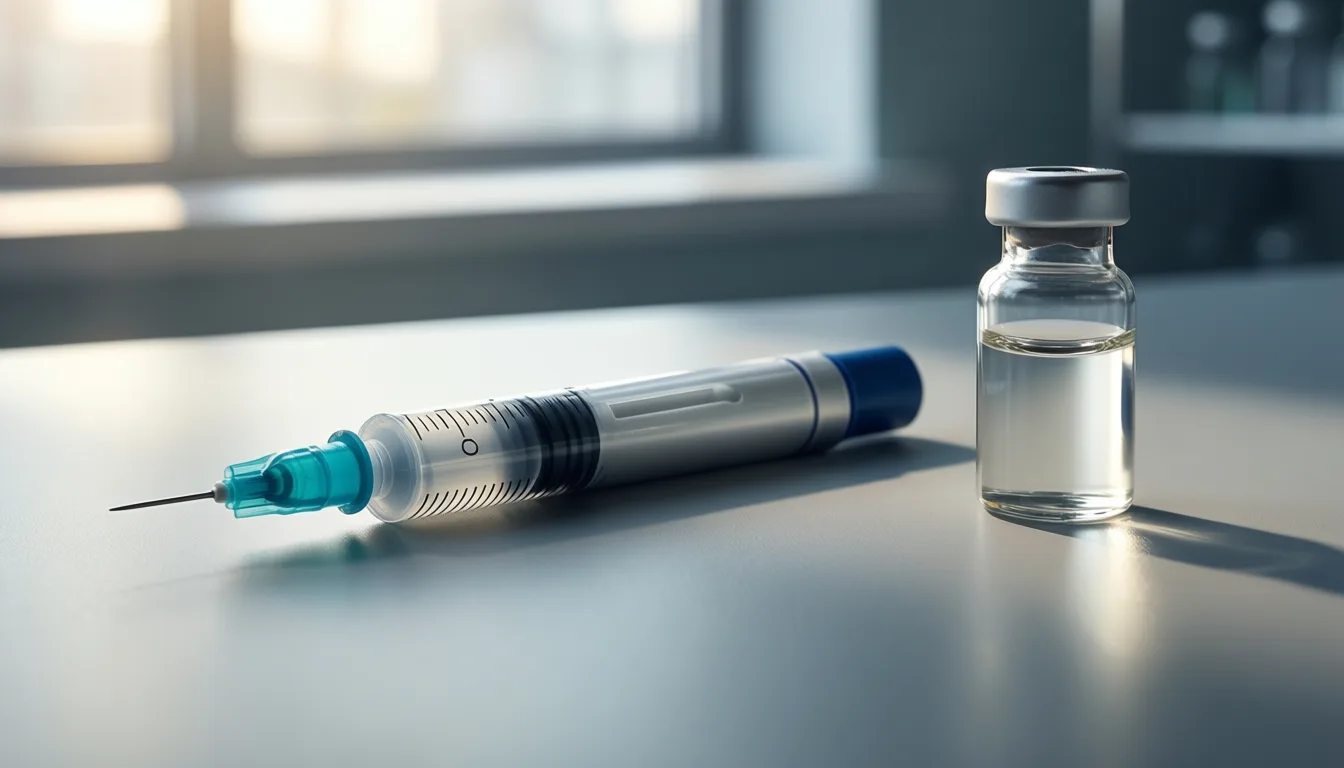
GLP-1 Showdown: Tirzepatide, Semaglutide, and a New Weekly Contender
A network meta-analysis finally ranks the incretin heavyweights head-to-head, while a novel once-weekly peptide files its first big numbers. Here's what the data actually shows.
For most of the last decade, the GLP-1 conversation among the quantified-self crowd has been a kind of n-of-1 telephone game: a forum thread here, a CGM trace there, a screenshot of a body-composition scan posted at 2 a.m. The drugs worked — that much was obvious — but ranking them, dose against dose, in non-diabetic adults whose only goal was weight loss, was something the published evidence stubbornly refused to do directly. That gap just narrowed. A new network meta-analysis pools eight randomized trials and 7,179 participants to put tirzepatide and semaglutide on the same axis, and a separate phase 2b/3 readout introduces a novel weekly contender, Efsubaglutide Alfa, into the same conversation. The picture that emerges is less hype reel, more spreadsheet — which is exactly what this class needed.
- Tirzepatide leads on weight. At maximum tolerated dose, it produced roughly a 21% mean reduction in body weight versus placebo in non-diabetic adults with obesity.
- Dose matters more than brand loyalty. The network meta-analysis ranks tirzepatide MTD first, then tirzepatide 15 mg, with semaglutide 2.4 mg trailing the top tirzepatide arms.
- A new weekly GLP-1 is in play. Efsubaglutide Alfa 1 mg cut HbA1c by 1.69% at 24 weeks in type 2 diabetes patients on metformin, with a placebo-corrected difference of −0.95%.
- Weight effects at the low Efsubaglutide dose were modest — about −2.8% versus −1.3% on placebo, and not statistically significant.
- Trade-offs are real. All active arms beat placebo, but GI side effects and discontinuation patterns vary by molecule and dose.
- This is educational, not prescriptive. Class, dose, and candidacy decisions belong with a clinician who knows your history.
The head-to-head we finally have
Until recently, comparing tirzepatide and semaglutide for weight loss meant squinting across separate trials with different populations, durations, and endpoints. The new network meta-analysis published in Cureus does the statistical bridging work: eight RCTs, 7,179 non-diabetic adults with obesity, every active arm benchmarked against placebo using a random-effects model, with funnel plots and Egger-type regression to interrogate small-study effects.
The headline ranking is unambiguous. Tirzepatide at its maximum tolerated dose produced the largest mean reduction in body weight — a difference of −20.90% versus placebo (95% CI: −24.93 to −16.87) — followed by tirzepatide 15 mg at −18.08% (95% CI: −20.38 to −15.78). The lower tirzepatide doses and semaglutide 2.4 mg also beat placebo significantly; they simply did less of it. For a class that often gets discussed as monolithic, that dose-response gradient is the part worth internalizing.

The network meta-analysis converts a tangle of separate trials into one comparative ranking — the closest thing the field has to a leaderboard.
For a class that often gets discussed as monolithic, the dose-response gradient is the part worth internalizing.
Why the dual agonist keeps pulling ahead
Tirzepatide's mechanistic edge — agonism at both the GLP-1 and GIP receptors — has been the working hypothesis for why it outperforms selective GLP-1 agonists on weight. The network meta-analysis is consistent with that idea: even at 5 mg, tirzepatide is meaningfully active, and the curve steepens as the dose climbs. Secondary endpoints — waist circumference and the proportion of participants reaching ≥15% weight loss — track the same ranking.
The catch, and it is a real one, is tolerability. The analysis tracked discontinuation due to adverse events and gastrointestinal side effects as part of its safety read. All incretin therapies trade some GI burden for metabolic effect; the question for any individual is whether the dose that delivers the response they want is the dose they can actually stay on. That is a clinician conversation, not a forum one.
Enter Efsubaglutide Alfa

Efsubaglutide Alfa is positioned as a once-weekly GLP-1 receptor agonist; the new post-hoc data fills in the 1 mg dose that the pivotal trial otherwise skipped past.
The second piece of evidence is narrower but interesting. Efsubaglutide Alfa is a novel, long-acting, once-weekly GLP-1 receptor agonist. The pivotal phase 2b/3 SUPER2 trial settled on the 3 mg dose, but 155 patients had already been randomized to 1 mg before the interim analysis — the so-called "overrun" cohort. A new post-hoc analysis in Diabetes, Obesity & Metabolism follows those patients through 24 weeks of double-blind 1 mg dosing.
The glycemic numbers are substantial. HbA1c dropped by −1.69% at week 24 on Efsubaglutide Alfa 1 mg versus −0.74% on placebo, a placebo-corrected difference of −0.95% (p < 0.0001). Fasting plasma glucose fell by −2.09 mmol/L versus −0.50 mmol/L on placebo, and 56.3% of patients reached HbA1c <7.0% compared with 11.1% on placebo — an odds ratio of 8.3.
The weight signal, at this lower dose, is the part biohackers will want to read carefully. Body weight reduction was modest and not statistically significant: −2.8% versus −1.3% on placebo (LSM −0.72 kg; p = 0.137). That is consistent with a molecule whose lower dose is doing useful glycemic work but is not, at 1 mg, a weight-loss instrument on par with what the network meta-analysis describes for tirzepatide.
What the strong evidence actually licenses you to say
Put together, the two papers support a few defensible statements. First, within non-diabetic obesity, the comparative ranking of tirzepatide doses over semaglutide 2.4 mg is now backed by a formal network meta-analysis rather than cross-trial guesswork. Second, the incretin pipeline is not finished: a new weekly agonist has now published phase 2b/3-adjacent data with a clear glycemic signal, even if its lower-dose weight effect is modest. Third — and this is the part the quantified-self crowd tends to underweight — "strongest mean effect" and "right drug for you" are not the same sentence. Dose tolerability, comorbidities, access, and what happens when the drug is eventually stopped all sit outside what these trials measured.
The honest read is that the GLP-1 era is maturing from a single-drug story into a class with internal hierarchy and credible new entrants. The data are getting better. The decisions still belong with a clinician.
The GLP-1 era is maturing from a single-drug story into a class with internal hierarchy and credible new entrants.
- Rank, don't conflate. Tirzepatide MTD > tirzepatide 15 mg > lower tirzepatide doses and semaglutide 2.4 mg, in non-diabetic obesity.
- Mechanism plausibly matters. Dual GLP-1/GIP agonism continues to outperform selective GLP-1 agonism on weight endpoints.
- Efsubaglutide's 1 mg signal is glycemic, not weight-defining. The pivotal dose in SUPER2 was 3 mg.
- Tolerability is the silent ranking variable. The dose that works is the dose you can stay on.
- Talk to a clinician. None of this is a protocol; it's a map of where the evidence currently sits.
Frequently asked questions
How does tirzepatide compare to semaglutide 2.4 mg for weight loss in people without diabetes?
A network meta-analysis of eight randomized trials and 7,179 non-diabetic adults with obesity found that tirzepatide at its maximum tolerated dose produced the largest mean reduction in body weight at roughly 20.9% versus placebo, followed by tirzepatide 15 mg at about 18.1% versus placebo. Semaglutide 2.4 mg also beat placebo significantly but trailed the top tirzepatide arms in the ranking.
Why does tirzepatide appear to produce greater weight loss than selective GLP-1 agonists like semaglutide?
Tirzepatide acts on both the GLP-1 and GIP receptors, whereas semaglutide is a selective GLP-1 agonist, and this dual agonism is the working hypothesis for why tirzepatide outperforms on weight. The network meta-analysis is consistent with that idea, showing a steepening dose-response curve as tirzepatide's dose climbs.
What is Efsubaglutide Alfa and what did the 1 mg data show?
Efsubaglutide Alfa is a novel, long-acting, once-weekly GLP-1 receptor agonist studied in a phase 2b/3 trial called SUPER2. At the 1 mg dose over 24 weeks in type 2 diabetes patients on metformin, it reduced HbA1c by 1.69% versus 0.74% on placebo, but the weight reduction of 2.8% versus 1.3% on placebo was modest and not statistically significant.
Can the Efsubaglutide Alfa 1 mg weight loss results be applied to people trying to lose weight without diabetes?
No — the article specifically cautions that the Efsubaglutide data comes from type 2 diabetes patients, not a non-diabetic obesity trial, and that the two populations behave differently on incretin therapy. Additionally, the 1 mg results come from a post-hoc "overrun" cohort rather than a pre-specified primary analysis, so they should be treated as preliminary on weight.
Do all of these GLP-1 medications carry side effects?
Yes — the article states that all incretin therapies trade some gastrointestinal burden for metabolic effect, and the network meta-analysis tracked discontinuation due to adverse events and GI side effects as part of its safety read. GI side effects and discontinuation patterns vary by molecule and dose.
Sources
- Comparative Efficacy and Tolerability of Tirzepatide Versus Semaglutide at Varying Doses for Weight Loss in Non-diabetic Adults With Obesity: A Network Meta-Analysis of Randomized Controlled Trials. — Cureus
- Efficacy and safety of Efsubaglutide Alfa in "overrun" patients in the SUPER2 trial: A post-hoc analysis for comprehensive evaluation. — Diabetes, obesity & metabolism

Your Workout Has a Gut Feeling: How HIIT and Steady Cardio Reshape the Microbiome
A new narrative review suggests the intensity of your training — not just whether you sweat — may sculpt the gut bugs that govern metabolism. The evidence is early, but intriguing.
Scroll through any wellness corner of the internet and you'll find two camps shouting past each other: the HIIT loyalists who swear by all-out intervals, and the Zone 2 devotees who insist slow and steady wins the metabolic race. A new narrative review in Gut Microbes adds an unexpected variable to that debate — the trillions of microbes living in your intestines. According to the authors, exercise intensity may shape which bugs flourish, which fade, and which metabolic byproducts they produce. The catch: most of the data still comes from mice, and the human evidence is just getting started.
- Dose matters. A 2026 review found moderate-intensity training (MIT) and high-intensity interval training (HIIT) produced the most consistent gut shifts; low-intensity training did very little.
- The evidence base is small. The review pulled from 17 animal studies and just 5 human studies — meaning the human picture is still blurry.
- Two recurring 'good' bugs. Akkermansia and the Christensenellaceae family showed up across studies, both linked in other research to metabolic health.
- The mechanism is plausible. Intensity-linked changes appear to affect short-chain fatty acids, bile acids, gut-barrier proteins and inflammatory signaling.
- It's early. No one can yet prescribe an exercise 'dose' for a specific microbial outcome — and you shouldn't expect a clinician to.
What the new review actually found
The paper is a narrative review synthesizing 17 animal models and 5 human studies on how different exercise intensities influence the gut microbiome in the context of obesity. Its headline conclusion is deceptively simple: not all workouts speak to your microbes the same way. Moderate-intensity training and HIIT generated the most consistent microbial shifts across studies, while low-intensity movement produced minimal change.
That doesn't mean a daily walk is wasted — walking has well-established cardiometabolic benefits the review didn't set out to measure. But if the question is specifically can exercise nudge the microbiome?, the early answer is that the nudge appears to require some effort.
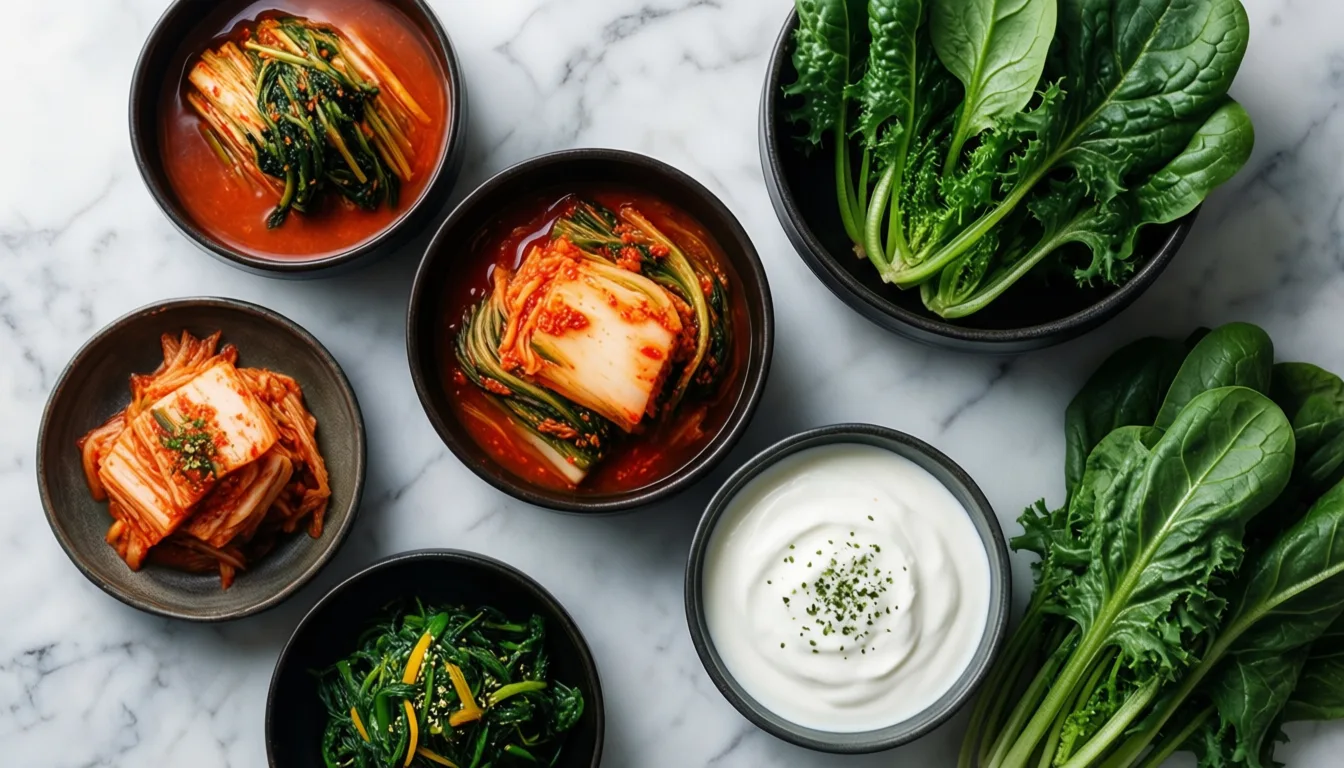
Diet remains the dominant lever on the microbiome — exercise appears to be a smaller, complementary one.
Meet the bugs that keep showing up
Two microbial names recur across the studies the review examined. Akkermansia — a genus that lives in the mucus layer of the gut — and Christensenellaceae, a bacterial family often associated with leaner metabolic profiles in other research, both appeared more consistently in trained animals and humans across the studies surveyed.
It's tempting to label these as 'good bugs' and call it a day. Resist. The review describes associations, not proof that boosting them via exercise causes weight loss or metabolic repair in humans. Microbiome science has a long history of charismatic single species turning out to be more complicated than the first headlines suggested.
The early answer is that nudging the microbiome appears to require some effort — a daily stroll may not be enough to register. On the Gut Microbes 2026 review
How a hard interval might reach your gut
The proposed mechanism is where this gets genuinely interesting. The reviewers describe a chain of effects in which intensity-dependent microbial changes influence short-chain fatty acid (SCFA) and bile acid metabolism, gut-barrier integrity, endotoxemia, and inflammatory signaling. SCFAs — molecules like butyrate, produced when microbes ferment fiber — are messengers that talk to the cells lining your gut and, through them, to the rest of your metabolism.
HIIT and moderate training were also linked to improved expression of tight-junction proteins — ZO-1, Claudin, and Occludin — reduced circulating lipopolysaccharide (LPS), and increased SCFA-producing taxa. In plain English: a sturdier gut wall, less inflammatory leakage into the bloodstream, and more of the fermentation-derived molecules your metabolism likes. That's a coherent story. It's also a story largely told in rodents so far.
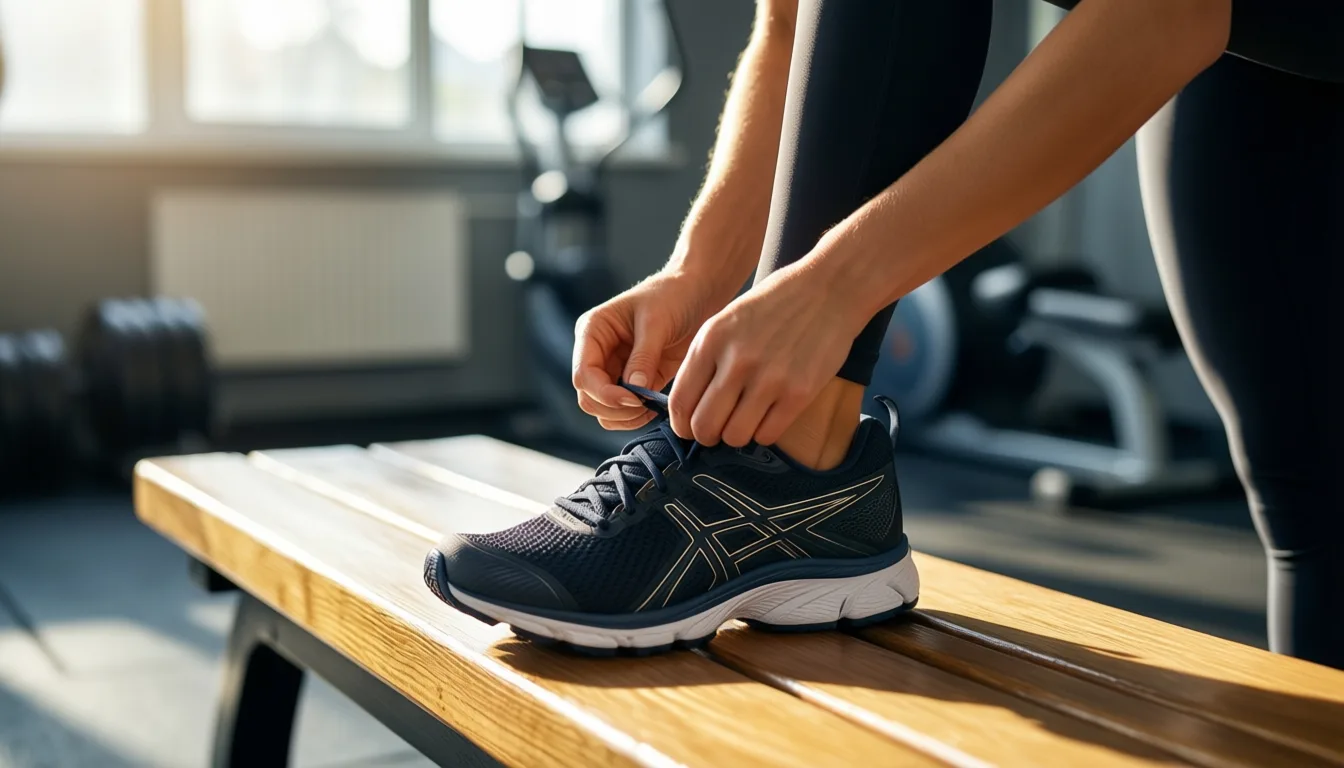
The training prescription is the easy part. What it does downstream is where the science is still catching up.
Why the human picture is still blurry
Five human studies is not a lot. The review itself flags inconsistent findings between species and substantial interindividual variability as real limitations. Microbiomes are deeply personal — two people doing the same intervals can end up with different microbial responses depending on baseline diet, sleep, medications, body composition, and genetic background.
There's also a directionality problem the review doesn't resolve. Did the microbial shifts cause the metabolic benefits, or are they fellow travelers alongside the well-documented effects of exercise on insulin sensitivity, mitochondrial function, and inflammation? Probably some of both, but the order of operations matters if anyone wants to design a microbiome-targeted training plan.
What this means for how you train (for now)
If you're already mixing some harder efforts into a base of easier movement, the takeaway is reassuring: that combination maps onto what the early evidence suggests is most likely to engage the gut. If you're a low-intensity-only exerciser hoping movement alone will reshape your microbiome, the early signal is that you may need to add some intensity to see microbial change — though the cardiometabolic case for walking remains rock-solid on its own merits.
What you probably shouldn't do is overhaul your training based on a narrative review of mostly mouse data. The most reliable microbiome interventions we have today are still the unsexy ones — fiber diversity, fermented foods, sleep, stress reduction. Exercise intensity is shaping up to be a complementary lever, not the master switch.
Exercise intensity is shaping up to be a complementary lever on the microbiome — not the master switch.
The most honest framing of this research right now is: a coherent hypothesis, a small but suggestive evidence base, and a lot of follow-up work needed in humans. That's not a reason to dismiss it. It's a reason to watch the space — and to keep doing the hard intervals you were going to do anyway.
Frequently asked questions
Which exercise intensities had the biggest effect on gut microbiome changes?
According to the review, moderate-intensity training and HIIT produced the most consistent microbial shifts across studies. Low-intensity training did very little to change the microbiome, though the article notes that walking still has well-established cardiometabolic benefits the review was not designed to measure.
Which gut bacteria kept appearing across the studies, and what does that mean?
Akkermansia, a genus that lives in the mucus layer of the gut, and Christensenellaceae, a bacterial family often associated with leaner metabolic profiles, both appeared more consistently in trained animals and humans. The article cautions that the review describes associations, not proof that boosting these bacteria through exercise causes weight loss or metabolic repair in humans.
How might intense exercise actually change what's happening in the gut?
The review describes a chain of effects in which intensity-dependent microbial changes influence short-chain fatty acid and bile acid metabolism, gut-barrier integrity, and inflammatory signaling. HIIT and moderate training were linked to improved expression of tight-junction proteins, reduced circulating LPS, and increased bacteria that produce short-chain fatty acids — pointing to a sturdier gut wall, less inflammatory leakage, and more fermentation-derived molecules.
Why is it hard to draw firm conclusions from this research?
The review was built on 17 animal studies but only 5 human studies, which the authors themselves flag as a real limitation. The human picture is further complicated by substantial interindividual variability — two people doing identical workouts can end up with different microbial responses depending on baseline diet, sleep, medications, body composition, and genetic background.
Should I overhaul my training routine to improve my gut microbiome?
The article advises against changing your training based on a narrative review of mostly mouse data. It describes exercise intensity as a complementary lever on the microbiome rather than the master switch, and notes that the most reliable microbiome interventions remain fiber diversity, fermented foods, sleep, and stress reduction.
Sources
GLP-1s Beyond the Scale: Muscle, Brain Pressure, and the Next Wave of Formulations
Semaglutide reshaped the conversation around obesity. The next round of data — from skeletal muscle to intracranial pressure to oral small molecules — is reshaping what comes next.
Every gym group chat has the same running argument right now: are GLP-1s the most important metabolic drugs of our lifetime, or a shortcut that quietly costs you muscle? The honest answer — based on the latest cycle of research — is messier and more interesting than either camp wants to admit. Semaglutide and its successors are moving fast past obesity and type 2 diabetes into neurology, body composition science, and a new generation of formulations that may not even require a needle. If you train hard and read the literature, this is the moment to pay attention.
Four studies dropped in the last cycle that, taken together, sketch a credible picture of the post-semaglutide landscape. One is a tightly controlled mouse experiment on what GLP-1s actually do to skeletal muscle. One is a real-world cohort study showing GLP-1 receptor agonists may reduce the need for brain surgery in a specific neurological condition. One is an exposure-response analysis of a long-acting Fc-fused analogue. And one is the first-in-human readout of an oral small-molecule GLP-1. None of them is a final answer. All of them move the needle.
The muscle question, finally asked properly
The loudest objection from lifters has always been the same: if GLP-1s cause weight loss this aggressive, how much of that scale drop is lean tissue? A 2025 study in The Journal of Physiology tackled the question with the kind of controlled design human trials can't easily replicate — mice with diet-induced obesity given either semaglutide or a calorie-matched diet for four weeks, then tracked through a six-week withdrawal period.
The result is the nuance the discourse has been missing. Semaglutide produced greater weight loss than caloric restriction at matched energy intake, and was apparently more effective at promoting fat loss specifically. But on muscle, the drug behaved like dieting: semaglutide reduced muscle size and strength to the same extent as caloric restriction, with distinct transcriptomic signatures but a similar functional outcome. After discontinuation, lean and fat mass rebounded to baseline, and muscle size and strength normalized across groups.
Translation for the gym floor: the muscle loss on a GLP-1 in this model looks like the muscle loss from any aggressive deficit — not a unique drug-driven catabolic insult. That's a meaningful reframe. It also means the standard lifter playbook for a cut — high protein, hard resistance training, don't crash the deficit — is probably still the right playbook on these drugs. This is a mouse study. Don't extrapolate it past what it is. But it's the cleanest data we have on the question so far.
The muscle loss looked like dieting muscle loss — not a unique drug-driven catabolic insult. On semaglutide vs. matched caloric restriction in mice

The training response that protects lean mass in a deficit doesn't disappear because the deficit comes from a drug.
A neurological dividend nobody was expecting
Idiopathic intracranial hypertension (IIH) — elevated pressure inside the skull, most common in women with obesity — is a condition most lifters have never heard of. It matters here because some patients end up needing real neurosurgery: ventriculoperitoneal shunts, venous sinus stenting, optic nerve sheath fenestration. Weight loss is the cornerstone of treatment, which made GLP-1s an obvious thing to study.
A propensity-matched, multi-institutional cohort study published in the Journal of NeuroInterventional Surgery compared 2,690 IIH patients on GLP-1 RAs to 2,690 matched controls. At both five weeks and six months, GLP-1 RA use was associated with significantly lower odds of undergoing venous sinus stenting and ventriculoperitoneal shunting. That's not a soft endpoint — that's avoided brain surgery.
The caveats matter. This is a retrospective cohort, not a randomized trial; propensity matching is a powerful tool, not a magic wand. And the headline odds ratios as reported are unusual in direction-of-effect framing, so the paper is worth reading carefully rather than memeing. Still: if this signal holds up in a prospective trial, GLP-1s graduate from "weight-loss drug with side benefits" to a tool a neurosurgeon might genuinely reach for first.
The next-generation injectables
Semaglutide is once-weekly and peptide-based. The next iteration of injectables is trying to push pharmacokinetics further and engineer cleaner exposure-response relationships. Efsubaglutide alfa is one example: a long-acting GLP-1 RA built by fusing two human GLP-1 molecules to an IgG2 Fc via a natural immunoglobulin hinge — basically borrowing antibody half-life biology for a peptide drug.
An exposure-response analysis from the YN011-302 trial, in 406 type 2 diabetics on stable metformin, found a robust inverse correlation between efsubaglutide alfa exposure and improvements in HbA1c, fasting plasma glucose, body weight, and BMI, plus a positive correlation with C-peptide AUC suggesting better beta-cell function. The modeled effect: doubling steady-state trough concentrations reduced HbA1c by 0.211%, and every 100 ng/mL increase in average concentration corresponded to 0.5 kg of weight loss at week 24. Baseline HbA1c predicted response.
That's not a blockbuster magnitude on its own. But the cleanliness of the exposure-response curve is the point: it means dosing can be tuned with confidence, which is exactly what you want from a next-gen molecule.
And the one that doesn't need a needle
The bigger structural shift may come from oral small molecules. Peptide GLP-1s are hard to absorb through the gut and expensive to manufacture at population scale. A small molecule that hits the GLP-1 receptor changes both equations.
DA-302168S is one such candidate, and its first-in-human Phase I — single ascending dose, multiple ascending dose, and a 28-day weekly-titration study in overweight and obese adults — just read out. It was generally well tolerated, with nausea as the most common adverse event, dose-proportional pharmacokinetics, and mean weight loss of −5.67% to −7.26% versus −2.90% on placebo over four weeks, alongside reductions in HbA1c, glucose fluctuations, and improved lipids.
Four weeks is not a Phase III readout. A few dozen subjects is not a population. But for a first-in-human study, those weight-loss numbers are striking, and the safety profile is what you'd want to see before greenlighting a larger trial.
If oral small-molecule GLP-1s pan out, the economics and accessibility of this drug class change.
- Muscle loss looks like deficit-driven muscle loss — in mice, semaglutide and matched caloric restriction reduced muscle size and strength to a similar extent.
- The standard lean-protection playbook still applies — high protein, hard resistance training, avoid crash deficits — even if the data here is preclinical.
- GLP-1 RAs may reduce neurosurgery in IIH — a propensity-matched cohort linked them to lower odds of shunting and venous sinus stenting at 5 weeks and 6 months.
- Fc-fusion analogues like efsubaglutide alfa show clean exposure-response curves for glycemic and weight endpoints in type 2 diabetes.
- Oral small-molecule GLP-1s are now in humans — DA-302168S delivered up to ~7% mean weight loss in 28 days in Phase I, with a manageable safety profile.
- This is moderate-strength evidence — mixed preclinical, retrospective, and early-phase. Talk to a clinician before acting on any of it.
Zoom out and the through-line is clear: GLP-1 receptor signaling is turning out to be a much broader lever than the obesity story alone suggested, and the molecules hitting that lever are getting more sophisticated fast. The muscle question has a more honest answer than the hype cycle gave it. The neurological signal is real enough to take seriously. The pipeline is no longer just "semaglutide, but weekly-er." Stay skeptical of single studies, stay curious about the trajectory, and — if any of this is personally relevant — have the conversation with an actual clinician, not a group chat.
Frequently asked questions
Do GLP-1s cause more muscle loss than regular dieting?
According to a 2025 study in The Journal of Physiology, semaglutide reduced muscle size and strength to the same extent as caloric restriction in obese mice given matched energy intake — not more. The muscle loss on a GLP-1 in this model looks like the muscle loss from any aggressive calorie deficit, not a unique drug-driven catabolic effect.
Does muscle lost on semaglutide come back after stopping the drug?
In the mouse study, after discontinuation both lean and fat mass rebounded to baseline, and muscle size and strength normalized across groups. The article cautions this is a mouse study and should not be extrapolated beyond what it is.
What is idiopathic intracranial hypertension, and what did researchers find about GLP-1s and the condition?
Idiopathic intracranial hypertension (IIH) is elevated pressure inside the skull that is most common in women with obesity and can require neurosurgery in some patients. A propensity-matched cohort study of 2,690 IIH patients on GLP-1 receptor agonists versus 2,690 matched controls found that GLP-1 use was associated with significantly lower odds of undergoing venous sinus stenting and ventriculoperitoneal shunting at five weeks and six months. The study was retrospective rather than a randomized trial, so the authors note the findings require prospective confirmation.
What makes oral small-molecule GLP-1s potentially significant compared to current injectable options?
Peptide-based GLP-1s are hard to absorb through the gut and expensive to manufacture at population scale, so a small molecule that hits the GLP-1 receptor changes both equations. The article notes that if oral small-molecule GLP-1s pan out, the economics and accessibility of the drug class would change.
How did the oral GLP-1 candidate DA-302168S perform in its first human trial?
In a Phase I study covering single ascending dose, multiple ascending dose, and a 28-day weekly-titration arm in overweight and obese adults, DA-302168S was generally well tolerated with nausea as the most common adverse event. Mean weight loss ranged from −5.67% to −7.26% versus −2.90% on placebo over four weeks, alongside reductions in HbA1c, glucose fluctuations, and improved lipids. The article emphasizes that four weeks and a small number of subjects is not a Phase III readout, but the safety profile was what researchers would want to see before greenlighting a larger trial.
Sources
- Semaglutide impacts skeletal muscle to a similar extent as caloric restriction in mice with diet-induced obesity. — The Journal of physiology
- Association between GLP-1 receptor agonist use and neurosurgical intervention in patients with idiopathic intracranial hypertension and obesity: a propensity-matched, multi-institutional, cohort study. — Journal of neurointerventional surgery
- Exposure-Response Analysis of Efsubaglutide Alfa in Patients with Type 2 Diabetes Treated with Metformin. — Clinical pharmacokinetics
- Phase I study of the oral GLP-1 receptor agonist DA-302168S: Safety, pharmacokinetics, and pharmacodynamics in healthy and overweight/obese adults. — Diabetes, obesity & metabolism

Ozempic on the OR Table: The New Pre-Surgery Fasting Playbook for GLP-1 Users
A 2026 systematic review reframes the pre-anesthesia question for semaglutide users — less about pausing the drug, more about clearing the stomach and checking it with ultrasound.
You finally got the shoulder scope on the calendar. You also happen to be one of the millions of men now taking a weekly GLP-1 for body composition or blood sugar. Somewhere in the pre-op phone call, a nurse asks when you last injected — and whether you've been eating solids. That awkward question has, until very recently, been answered with a shrug and a blanket order to stop the drug for a week. New evidence suggests the real answer is more interesting, more practical, and a lot less about pausing your peptide.
The concern is mechanical, not mysterious. GLP-1 receptor agonists — semaglutide, tirzepatide and their cousins — slow gastric emptying. That is part of why they work for appetite and glycemic control. It is also why anesthesiologists worry about residual gastric content (RGC): food or fluid still sitting in the stomach when you go under, which in theory can be regurgitated and aspirated into the lungs. A 2026 systematic review in Cureus pulled together nineteen clinical studies plus one large claims dataset to ask a sharper question: what actually reduces that residual content, and does it line up with the real, much rarer event of aspiration?
The headline finding for a busy 40-year-old is that fasting protocol may matter more than the heroic week-long drug hold everyone has been arguing about. In one retrospective study cited in the review, patients on a 24-hour clear-liquid diet before their procedure had high residual gastric content roughly one to two percent of the time, versus about ten percent on standard fasting — an odds ratio near 0.13. That is a large effect for a behavioral change you can actually execute the day before surgery.
The drug hold question, reframed
Society guidance over the last two years has swung between aggressive medication holds and a more measured "individualize it" stance. The Cureus synthesis lands somewhere pragmatic. In prospective ultrasound studies, withholding weekly GLP-1 RAs for seven to eight days before a procedure was associated with lower odds of high residual gastric content compared with shorter intervals. That is consistent with the long half-lives of these drugs and the time it takes gastric motility to normalize.
But — and this is the part the headlines keep missing — residual gastric content is a surrogate. It is what shows up on the ultrasound screen, not what shows up in the recovery room. Clinical aspiration is rare. The review is explicit that RGC and aspiration are distinct outcomes, and the evidence base does not yet prove that aggressive drug holds translate into fewer real aspiration events. For a healthy adult getting an elective procedure, that distinction matters: pausing your weekly injection has its own costs — rebound appetite, glycemic swings, missed momentum — and those costs only buy you something if the marginal aspiration risk is actually moving.
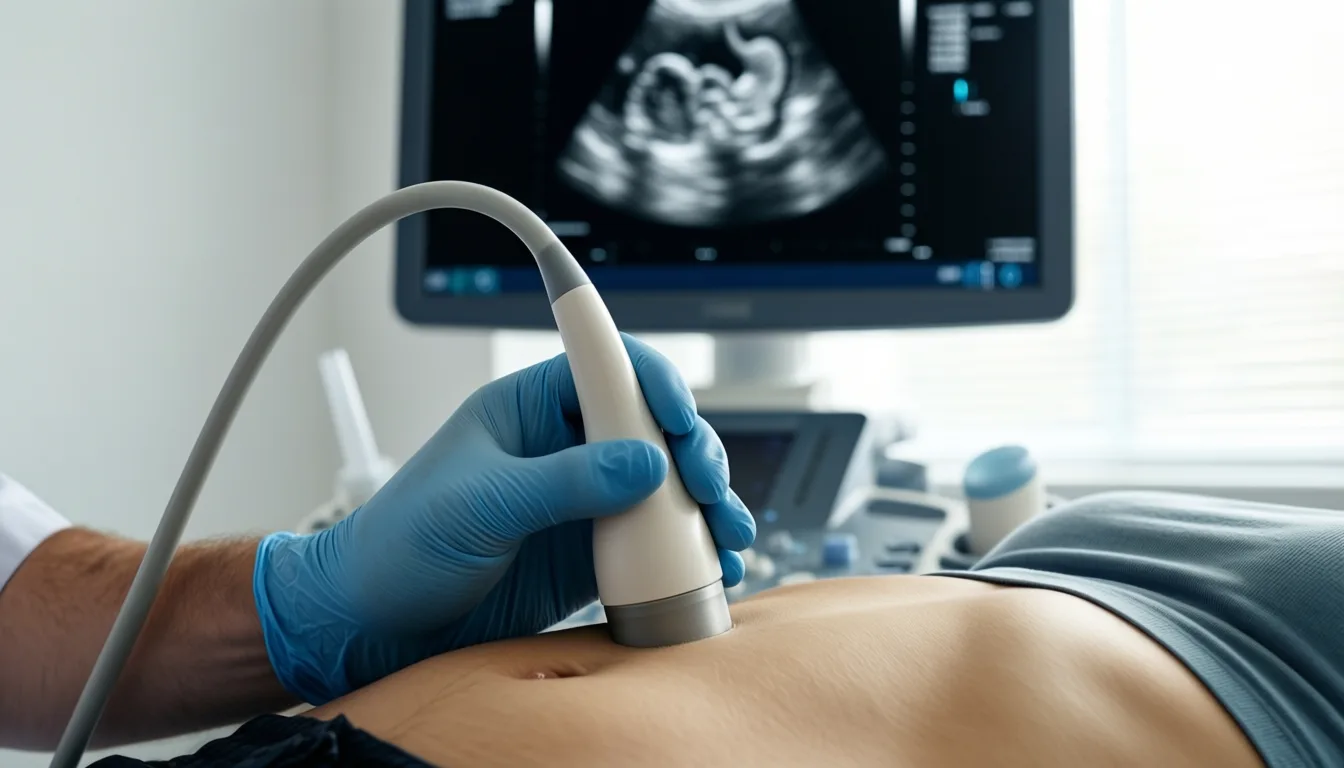
Point-of-care gastric ultrasound is moving from research tool to pre-op checkpoint.
Why ultrasound is quietly winning
The most interesting through-line in the review is the rise of gastric point-of-care ultrasound, or POCUS. Multiple studies used validated thresholds — broadly, an antral content estimate above roughly 1.5 mL/kg, or the presence of solid material — to decide, at the bedside, whether a given GLP-1 user actually has a full stomach right now. Instead of treating every semaglutide patient as a default aspiration risk and cancelling cases or delaying them by a week, the team scans, looks, and decides.
That is a meaningfully different posture. It moves the decision from a population-level rule ("hold the drug for everyone") to an individual-level measurement ("this stomach, today, is empty enough"). It also gives the anesthesiologist a clean Plan B: if the antrum looks loaded, you can postpone, switch to a rapid-sequence induction, or extend clear-liquid fasting and rescan. The catch is access. POCUS requires a clinician trained in the gastric protocol and a machine in the pre-op bay. Big academic centers increasingly have both. Your local ambulatory surgery center may not.
Residual gastric content is what shows up on the ultrasound screen. Aspiration is what shows up in the recovery room. They are not the same outcome.
What this actually changes for you
You are not the one writing the pre-op order. But you are the one who tells the surgical team you are on a GLP-1 — and that disclosure shapes everything downstream. The practical move, weeks before any elective procedure, is to flag the medication early, ask whether the facility uses gastric POCUS, and ask what fasting protocol they want from you. The review suggests an extended clear-liquid window the day before is a high-leverage, low-cost intervention. A longer drug hold is a separate decision that should weigh your metabolic situation, not just a default policy.
The honest read on the evidence is moderate, not definitive. Nineteen heterogeneous studies, no meta-analysis, surrogate outcomes, and a still-thin link between RGC and clinical aspiration mean the field is converging, not settled. Expect society guidelines to keep moving. What looks durable is the direction of travel: away from blunt week-long holds, toward smarter fasting plus a quick look with an ultrasound probe.
- Disclose early. Tell the surgical and anesthesia teams you are on a GLP-1 weeks before an elective procedure, not the morning of.
- Clear liquids do real work. An extended clear-liquid window before surgery was linked to a roughly 1–2% vs 10% rate of high residual gastric content in one cited study.
- The 7–8 day hold has evidence, but trade-offs. Longer holds of weekly GLP-1s lowered RGC odds in ultrasound studies; whether that prevents actual aspiration is not yet proven.
- Ask about gastric ultrasound. POCUS is emerging as a smarter individualized check than blanket medication holds — if your facility offers it.
- RGC ≠ aspiration. Residual content is a surrogate. Clinical aspiration remains rare, which is why aggressive blanket policies deserve scrutiny.
- Decide with a clinician. Drug-hold timing interacts with glycemic control and weight goals. This is a conversation, not a default.
Frequently asked questions
Why do anesthesiologists care that I'm on a GLP-1 like Ozempic before surgery?
GLP-1 receptor agonists slow gastric emptying, which is part of why they work for appetite and blood sugar control. Anesthesiologists worry that food or fluid may still be sitting in the stomach when a patient goes under, which can in theory be regurgitated and aspirated into the lungs — a condition called residual gastric content.
Does following a clear-liquid diet before surgery actually reduce the risk of a full stomach?
According to a retrospective study cited in the Cureus review, patients on a 24-hour clear-liquid diet before their procedure had high residual gastric content roughly one to two percent of the time, compared with about ten percent on standard fasting. The article describes this as a large effect for a behavioral change that can be executed the day before surgery.
What is gastric POCUS and how is it used for GLP-1 patients before an operation?
Gastric point-of-care ultrasound (POCUS) is a bedside tool that lets clinicians measure whether a specific patient's stomach is actually empty before a procedure, rather than applying a blanket policy to all GLP-1 users. If the scan shows concerning content, the team can postpone, switch to a different induction approach, or extend clear-liquid fasting and rescan. The article notes that access varies widely — large academic centers increasingly have it, but many ambulatory surgery centers may not.
Is residual gastric content the same thing as aspiration during surgery?
No — the article is explicit that residual gastric content (what shows up on an ultrasound) and clinical aspiration (what shows up in the recovery room) are distinct outcomes. Clinical aspiration remains rare, and the evidence base does not yet prove that aggressive drug holds translate into fewer actual aspiration events.
What should I do before a scheduled procedure if I take a weekly GLP-1 injection?
The article recommends disclosing the medication to the surgical and anesthesia teams weeks before the procedure — not the morning of — because that disclosure shapes everything that follows. You should also ask whether the facility uses gastric POCUS and what fasting protocol they want from you, since the appropriate drug-hold decision depends on your individual metabolic situation and should be made with a clinician.

Lactate Isn't Waste — It's a Signal: Why Hard Exercise May Reverse Fat-Tissue Insulin Resistance
A new mouse study reframes the molecule behind your burning legs as a messenger, not a metabolic leftover — and hints at why intense training keeps outperforming easy cardio on the metrics that matter.
For a century, lactate was the villain of the gym: the burn in your quads, the supposed sludge of fatigue, the thing your body had to clear before it could feel good again. That story was wrong in the textbooks decades ago, and a new preclinical paper in American Journal of Physiology — Endocrinology and Metabolism pushes the rewrite further. In obese, insulin-resistant mice, the lactate produced by hard exercise behaved less like exhaust and more like a memo — one that fat tissue actually reads.
The study, published in 2026 by Lin and colleagues, asked a deceptively simple question: when intense exercise floods the bloodstream with lactate, is that just a side effect of fuel use — or is the lactate itself doing something useful? Working with diet-induced obese and insulin-resistant (DIO-IR) mice, the team put one group through high-lactate exercise training and watched what happened in the epididymal white fat pad, a depot that tends to go metabolically deaf in obesity. The result, in their words, was a marked easing of both adipose-tissue and whole-body insulin resistance after training, with parallel effects when isolated fat cells were dosed with lactate in a dish. The link between the two settings was a receptor most readers have never heard of: GPR81.
The receptor that reads the burn
GPR81 is a G-protein-coupled receptor expressed on fat cells (among other tissues) whose preferred ligand is lactate itself. In the new work, acute bouts of high-lactate exercise raised lactate levels in both the bloodstream and the white adipose tissue, and that rise tracked with higher GPR81 expression and a stronger glucose-uptake signal inside the fat cells. Crucially, an l-lactate injection — no exercise involved — produced a similar pattern, which is the kind of overlap researchers look for when they want to argue that the molecule, not the movement, is doing the talking. Overexpressing GPR81 in insulin-resistant 3T3-L1 adipocytes mimicked the benefit, tightening the case that the receptor is the relevant switch.
Mechanistically, the researchers traced the downstream chain: lactate engages GPR81, which potentiates the classical insulin pathway inside the fat cell — insulin receptor substrate 1 (IRS1) to AKT to GLUT4, the glucose transporter that actually pulls sugar out of the blood. In insulin-resistant cells, that chain is sluggish; with lactate/GPR81 signaling turned up, it moved closer to normal. Adipokine secretion — the hormonal chatter fat tissue uses to talk to the rest of the body — also shifted in a more favorable direction.
The burn in your quads may be less a waste product than a message your fat cells are listening for.
In isolated insulin-resistant fat cells, lactate alone reproduced much of what exercise did in the whole animal.
Why this matters for the intensity debate
Exercise physiologists have known for years that harder efforts tend to deliver outsized metabolic benefits per minute spent, and that lactate production is one of the clearest markers separating an easy jog from a real interval session. What has been missing is a clean mechanistic story for why the harder work pays off in tissues like fat, which don't contract and don't obviously care how fast you ran. A signaling role for lactate offers one plausible thread: the same molecule that marks the intensity of the effort is also the molecule that knocks on the door of the fat cell and asks it to behave more like a healthy one. In the DIO-IR mouse model, high-lactate training did exactly that.
This is the part where the writer earns his keep by saying what the study is not. It is preclinical. The animals are mice on a diet designed to make them obese and insulin-resistant; the cells are an immortalized adipocyte line. None of this is a human trial, none of it speaks to GLP-1 users specifically, and none of it tells you how many intervals, at what intensity, for how many weeks, would translate the mouse finding into a measurable change in your own fasting insulin. The mechanism is suggestive. The dosing is unknown.
- Lactate may be a messenger, not a leftover. In obese, insulin-resistant mice, exercise-induced lactate activated GPR81 on fat cells and improved glucose handling.
- The pathway is plausible. Lactate/GPR81 signaling fed into the classic IRS1–AKT–GLUT4 chain that insulin normally uses.
- Intensity is the implied lever. Higher-intensity work produces more lactate; easy cardio produces far less.
- This is animal-preclinical work. Human dosing, durability, and clinical relevance remain open questions.
- Talk to your clinician. If you're on a GLP-1 or managing insulin resistance, training changes belong in that conversation.

Intervals are the most reliable way to push lactate higher than a steady jog will.
What an honest reader should take from this
Two things, in tension. First, the biology is getting more interesting, not less. The idea that fat tissue has a dedicated receptor tuned to a molecule your muscles dump into the blood during hard work is the kind of detail that quietly reorganizes how we think about exercise. It fits a broader pattern in which intense training keeps showing up as metabolically distinct from easy movement — not better in every way, but different in ways that seem to matter for insulin sensitivity.
Second, the gap between a mouse paper and a training prescription is large, and anyone selling you a closed loop between the two is overselling. The authors themselves frame the work as uncovering a previously underappreciated mechanism, not as a clinical recommendation. For readers on GLP-1 therapy or working through diet-driven insulin resistance, the practical move is unchanged: protect muscle, include some genuinely hard efforts if your clinician agrees they're safe for you, and let the next wave of human studies decide how much of this mouse signal survives the translation.

The training stimulus implied by the research — repeated, genuinely hard bouts — is not the same as a comfortable hour on the bike.
For now, the most defensible read is the simplest one. Lactate is not the enemy your high-school coach said it was. It is, increasingly, a courier — and at least in mice, fat tissue is signing for the package. Whether that quietly changes how clinicians eventually frame exercise for insulin resistance, or whether the human evidence narrows the claim, is the next chapter. The current one is worth reading carefully, and not a sentence further than it goes.
Frequently asked questions
What is GPR81, and why do the researchers think it matters?
GPR81 is a G-protein-coupled receptor expressed on fat cells whose preferred ligand is lactate itself. In the study, raising lactate levels through high-intensity exercise tracked with higher GPR81 expression and a stronger glucose-uptake signal inside fat cells. Overexpressing GPR81 in insulin-resistant adipocytes mimicked the benefit of exercise, tightening the case that the receptor is the relevant switch.
Does the benefit require actual exercise, or does lactate alone produce the same effect?
According to the article, an injection of l-lactate with no exercise produced a similar pattern to high-lactate training. In isolated insulin-resistant fat cells, lactate alone also reproduced much of what exercise did in the whole animal, which the researchers took as evidence that the molecule itself, not the movement, is doing the signaling work.
How does lactate signaling improve insulin resistance inside a fat cell?
The article describes a downstream chain in which lactate engages GPR81, which then potentiates the classical insulin pathway: insulin receptor substrate 1 (IRS1) to AKT to GLUT4, the glucose transporter that pulls sugar out of the blood. In insulin-resistant cells that chain is sluggish, and with lactate and GPR81 signaling turned up, it moved closer to normal.
Why can't readers use this study to design a specific training program?
The article states plainly that the study is preclinical work conducted in obese, insulin-resistant mice and an immortalized adipocyte cell line, not a human trial. It does not tell readers how many intervals, at what intensity, or for how many weeks would translate the mouse finding into a measurable change in human fasting insulin. The authors themselves frame the work as uncovering a mechanism, not as a clinical recommendation.
What does the article say about exercise intensity and lactate production?
The article notes that higher-intensity work produces more lactate while easy cardio produces far less, making intensity the implied lever in this signaling story. It also distinguishes that the training stimulus suggested by the research — repeated, genuinely hard bouts — is not the same as a comfortable hour on the bike.
Sources
- Exercise ameliorates adipose tissue insulin resistance by activating the lactate/GPR81 signaling pathway in DIO-IR mice. — American journal of physiology. Endocrinology and metabolism

Strength Is the New Cardio: What Military Performance Science Teaches the Rest of Us
Two new military-medicine reviews converge on a practical playbook: lift to sustain performance, and use vitamin D plus smarter programming to keep injuries from derailing it.
For a generation, endurance athletes treated the weight room like a side quest — something you visited if you had time after the long run. Military performance science has been quietly arguing the opposite for years, and two 2025 reviews in BMJ Military Health now push the case into the open: strength is not a supplement to stamina, it is the structural ingredient that lets stamina survive contact with the real world. The same reviews point to a second, unglamorous lever — vitamin D, calcium, and smarter programming — that reduces the injuries most likely to end a training block. Taken together, they sketch a playbook that civilians chasing performance can borrow with very little translation.
The first review, led by Mikkonen and colleagues, examines what it actually takes to keep a warfighter functional under heavy loads and high-intensity work. Their argument is mechanistic before it is prescriptive: developing adequate physical reserves — strength, power, and endurance together — is what attenuates injury risk and sustains performance across long, stressful operations. Endurance alone, they note, leaves the system brittle when the load gets heavy or the terrain gets ugly. The reviewers explicitly call for programming that pairs strength and power work with aerobic conditioning, rather than treating them as competing priorities.
The physiology underneath this is the fun part. Strength training drives adaptations on two fronts: neural (better motor-unit recruitment, firing rates, and intermuscular coordination) and muscular (cross-sectional area, tendon stiffness, connective-tissue resilience). Those adaptations are what let a runner hold form in mile 22, what let a cyclist stay over the pedals on a 12% pitch, and what let a rucking soldier carry 30 kilos without their knees buckling on the descent. The review is careful, though — this is a narrative synthesis, not a meta-analysis, and the authors flag that 'one size does not fit all,' with sex differences and environmental stressors meaningfully shifting the calculus.
Endurance alone leaves the system brittle when the load gets heavy or the terrain gets ugly.
The injury problem nobody wants to talk about
If strength is the engine of sustained performance, musculoskeletal injuries (MSKI) are the thing most likely to take it offline. The second review, by Tingelstad and colleagues, frames MSKI as 'one of the biggest challenges for military services globally' — a sentence that endurance athletes can read with grim recognition. The paradox the authors highlight is sharp: physical training is both the primary tool for building readiness and a major contributor to the injuries that destroy it. The nature of the training, not just its volume, is itself a risk factor.
What changes the curve? Two categories of intervention, both with reasonable evidence behind them. On the nutrition side, the reviewers point to calcium and vitamin D supplementation reducing stress-fracture incidence during military training, with vitamin D status itself linked to MSKI and bone-stress-fracture risk. Protein and carbohydrate supplementation during arduous, high-volume training periods has also been associated with lower MSKI risk and fewer limited or missed duty days. On the training side, the headline finding is concrete: programs built on evidence-based principles — managing load, sequencing intensity, building in recovery — can cut MSKI incidence by a substantial margin.

The unsexy hardware of staying healthy: load that builds tissue without breaking it.
Translating the barracks to your basement
The civilian translation is straightforward in principle and demanding in practice. If you are an endurance athlete, the Mikkonen review is an invitation to stop treating two strength sessions a week as optional. The point is not to chase a powerlifting total; it is to build the neural and structural reserves that let your aerobic engine actually express itself under fatigue. Heavy compound lifts, plyometric work for power, and progressive loading of the tissues you stress on long efforts — that is the spine of the program these authors describe for warfighters, and the underlying physiology does not change because you swapped a ruck for a race vest.
The injury-prevention side is where the evidence is most actionable. The Tingelstad review's headline that evidence-based PT can reduce MSKI by 33–62% is striking, but the mechanism is mundane: appropriate load progression, attention to the type of training (not just the dose), and respect for recovery. The nutritional levers are similarly unromantic. Vitamin D status is worth knowing — a clinician can order the test — and adequate calcium, protein, and carbohydrate intake during heavy training blocks is not optional fuel, it is structural insurance.
A note on the evidence rating. Both papers are reviews, one explicitly narrative, and they synthesize work done in military populations whose training demands overlap with — but are not identical to — civilian endurance sport. The direction of the findings is consistent and the mechanisms are well-understood, which is why we are comfortable calling this moderate evidence rather than weak. It is not, however, a license to self-prescribe supplements or training loads. Talk to a clinician before starting vitamin D, and to a qualified coach before overhauling your program.
Two strength sessions a week are not optional. They are the reserves your aerobic engine spends under fatigue.

The work that protects the long runs happens on the days you don't run.
- Strength is structural, not supplemental. Pair it with endurance work rather than treating them as rivals.
- Program type matters as much as volume. Evidence-based PT design is what drives the 33–62% MSKI reduction.
- Check vitamin D status. Low levels are linked to stress-fracture and MSKI risk; supplementation has reduced stress fractures in military training.
- Fuel the hard blocks. Adequate protein and carbohydrate during arduous training is associated with fewer injuries and missed days.
- One size does not fit all. Sex, environment, and prior training history all shift the optimal mix — get qualified guidance.
The cultural shift the military literature keeps nudging is the one civilian endurance sport is slowest to make: strength is not the thing you do when you can't run, and vitamin D is not a wellness affectation. They are the boring infrastructure that lets the interesting work happen, week after week, year after year. The reviews do not promise miracles — they promise fewer interruptions. For anyone whose performance is bounded less by their ceiling than by their availability to train, that is the more useful promise.
Frequently asked questions
Why do the researchers argue that strength training should be paired with endurance work rather than treated as optional?
The Mikkonen review argues that developing adequate physical reserves — strength, power, and endurance together — is what attenuates injury risk and sustains performance across long, stressful efforts. Endurance alone, the authors note, leaves the system brittle when the load gets heavy or the terrain gets ugly.
What physical adaptations does strength training produce?
According to the article, strength training drives adaptations on two fronts: neural, including better motor-unit recruitment, firing rates, and intermuscular coordination, and muscular, including increased cross-sectional area, tendon stiffness, and connective-tissue resilience. These are the adaptations that help athletes maintain form and function under fatigue.
How much can evidence-based programming reduce musculoskeletal injuries?
The Tingelstad review found that programs built on evidence-based principles — managing load, sequencing intensity, and building in recovery — can cut musculoskeletal injury incidence by 33–62%. The article notes that the mechanism is the nature and structure of the training, not just its volume.
What nutritional factors does the article link to lower injury risk during hard training blocks?
The Tingelstad review points to calcium and vitamin D supplementation reducing stress-fracture incidence during military training, with vitamin D status specifically linked to musculoskeletal injury and bone-stress-fracture risk. Protein and carbohydrate supplementation during high-volume training has also been associated with lower injury risk and fewer missed or limited training days.
Do the article's findings apply equally to everyone?
No — the authors explicitly warn that 'one size does not fit all,' noting that sex differences and environmental stressors meaningfully shift the optimal training mix. The article recommends bringing any supplementation or major program change to a clinician or qualified coach.
Sources

Resilience as a Brain-Health Lever: Why Longevity Needs a Global Lens
A new Nature Medicine review argues that resilience — biological, psychological, social — is a measurable modifier of brain aging, and that studying it only in wealthy countries leaves real protection on the table.
For years the longevity beat has been a parade of single levers — a molecule, a macronutrient, a wearable metric — each promising to bend the curve of brain aging. A new review in Nature Medicine takes a quieter, more useful position. It argues that the most consequential variable may be the one we have been measuring least well: resilience, understood as the biological, psychological and social capacity to absorb stress and keep functioning. And it points out, politely but firmly, that most of what we know about it comes from a narrow slice of the world.
The authors, an international group writing in Nature Medicine in 2025, treat resilience not as a personality trait but as a measurable modifier of brain-health outcomes. In their framing, it sits at the intersection of three layers: the body's stress-handling machinery, the mind's coping repertoire, and the social scaffolding around a person. None of these are new ideas on their own. What is new is the insistence that they be studied together, and that the study not stop at the borders of the Global North.
That last point matters more than it sounds. The review notes that the bulk of existing brain-health research originates in wealthy countries, while the majority of the world's older adults — and the majority of future dementia cases — will live somewhere else. Unique biological, exposomal, economic and sociocultural factors shape health in those settings, and some of them appear to be protective in ways our cohorts cannot see.
What "resilience" actually means here
Strip away the self-help connotations and the working definition is concrete. Biological resilience refers to the body's ability to maintain stable function under load — what physiologists call allostasis. Psychological resilience covers the cognitive and emotional habits that let a person recover from adversity. Social resilience is the density and quality of the relationships around you: family, neighbors, faith communities, the people who notice when you go quiet.
The review's contribution is to argue these layers interact, and that brain outcomes — cognitive decline, dementia risk, recovery after insult — track the combined signal more faithfully than any single one. It also introduces the exposome — the cumulative tally of environmental exposures over a lifetime, from air quality to chronic stress to diet — as the other half of the equation. Resilience, in this telling, is what determines how much of that exposure leaves a mark.

Social scaffolding — multigenerational households, dense neighborly ties — shows up in the review as a candidate protective factor that Global North cohorts under-sample.
Resilience is what determines how much of a lifetime of exposure actually leaves a mark.
Why the Global North bias matters
If you only study brain aging in places where most people live alone, eat industrial food and retire into relative isolation, you will tend to find that the things that protect brains are the things those people happen to have — education, income, access to specialists. Those findings are real, but they may be incomplete. The Nature Medicine authors point out that majority-world settings carry their own protective patterns: cultural reserve, community resilience, multigenerational living arrangements and locally adapted coping practices that rarely make it into a standard cognitive-aging questionnaire.
The caution is worth stating plainly. The review is a synthesis, not a randomized trial. It proposes frameworks and identifies priorities; it does not prove that any single cultural or social factor causes better brain outcomes. The evidence here is moderate — strong enough to reshape the research agenda, not strong enough to support new prescriptions. That is the honest reading.
- Resilience is multi-layered. The review treats biology, psychology and social environment as one interacting system that modifies brain-health outcomes.
- The exposome is the other half. Lifetime environmental load matters; resilience modulates how much of it sticks.
- Global North data is not the whole picture. Protective factors common in majority-world settings are under-studied and may be substantial.
- Frameworks, not prescriptions. The paper proposes integrated measurement approaches; it does not recommend specific interventions.
- Equity is methodological, not decorative. Better measurement in diverse settings is presented as a path to better science, period.
What a reader can take from this now
None of this lands as a new pill or protocol, and the review does not pretend otherwise. What it offers a thoughtful reader is a more accurate mental model. The factors that have been quietly compounding in your favor for decades — the long marriage, the walking neighborhood, the church or the chess club, the habit of handling setbacks without coming apart — are not soft variables that fall outside the science. They are, increasingly, inside it. The authors argue for studying them with the same rigor we already apply to blood pressure and ApoE status.
For men in the second half of life, that reframing has a practical edge. The instinct to optimize a single number — LDL, VO2 max, sleep score — is not wrong, but it is partial. The review's quiet message is that a person who keeps showing up to things, who maintains the relationships and routines that absorb shock, is doing brain-health work that no supplement currently matches. That is not a license to skip the cardiologist. It is a reminder that independence in your eighties is built out of more components than the clinic measures.

The review's argument: the habits that absorb life's shocks belong in the same conversation as cholesterol and cardio fitness.
The longevity conversation has spent a decade chasing molecules. The next decade, if this review is read seriously, will spend more time on the unglamorous architecture around the molecules: the people you see weekly, the air you breathe, the stresses you metabolize, the meaning you draw from a given Tuesday. Those are harder to measure and harder to sell. They may also be where the real leverage has been all along.
Frequently asked questions
How does this review define resilience — isn't it just a personality trait?
The review explicitly treats resilience not as a personality trait but as a measurable modifier of brain-health outcomes operating across three interacting layers: the body's stress-handling machinery (biological resilience), the mind's coping habits (psychological resilience), and the quality and density of relationships around a person (social resilience). The authors argue that brain outcomes such as cognitive decline and dementia risk track the combined signal from all three layers more faithfully than any single one alone.
What is the exposome, and why does it matter for brain health?
The exposome is the cumulative tally of environmental exposures across a lifetime — from air quality and diet to chronic stress. According to the review, resilience is what determines how much of that lifetime environmental load actually leaves a mark on the brain.
Why do the authors argue that research conducted mainly in wealthy countries gives an incomplete picture of brain aging?
The review notes that majority-world settings carry their own protective patterns — including multigenerational living arrangements, community resilience, cultural reserve, and locally adapted coping practices — that rarely appear in standard cognitive-aging questionnaires. Because the bulk of existing brain-health research originates in wealthy countries, these potentially substantial protective factors remain under-studied.
Does the review recommend any specific lifestyle changes or interventions?
No. The authors are explicit that the paper proposes integrated measurement frameworks and identifies research priorities rather than recommending specific interventions. The evidence is described as strong enough to reshape the research agenda but not strong enough to support new prescriptions.
What is the review's main limitation that readers should keep in mind?
The review is a synthesis, not a randomized trial, so it cannot prove that any single cultural or social factor causes better brain outcomes. The authors themselves describe it as proposing frameworks and identifying priorities, and the article advises treating any headlines claiming a single 'resilience score' with the usual skepticism until follow-on trials test whether the framework holds up.
Sources
- Resilience and brain health in global populations. — Nature medicine

When Cutting Carbs Quiets the Immune System: Two-Year Data on Ketosis and Inflammation in Type 2 Diabetes
A new post-hoc analysis tracks inflammatory and immune markers in adults with type 2 diabetes for two years on a carb-restricted, ketogenic plan — and the signal goes well beyond blood sugar.
If you have ever stood in the kitchen at 6 a.m. balancing a toddler on one hip and a coffee in the other hand, the last thing you want is another sweeping claim about diet. So let's keep this honest. A two-year analysis of adults living with type 2 diabetes suggests that steady carbohydrate reduction — the kind that nudges the body into mild nutritional ketosis — may do more than steady blood sugar. It appears to quiet a broad set of inflammatory and immune signals that often run hot in metabolic disease. The evidence is moderate, not miraculous. But the direction is interesting enough to talk about over that coffee.
The new work is a post-hoc analysis of a continuous-care intervention that supported people with type 2 diabetes (and a smaller prediabetes group) through individualized carbohydrate reduction for two full years, with a usual-care comparison group. Researchers measured high-sensitivity CRP, fifteen cytokines and adhesion molecules, and several indices derived from a standard blood count — a wider net than most nutrition studies cast. They then looked at how those markers moved over time, and whether the changes tracked with ketone levels, weight loss, HbA1c, or insulin resistance. The headline finding: nineteen of twenty-one markers declined at one year in the intervention group, and most of those reductions were largely sustained at two years. The usual-care group showed essentially no movement.
For exhausted parents who have been told for years that inflammation is the slow-burning fuse behind everything from cardiovascular risk to fatigue, that is a meaningful sentence. Chronic low-grade inflammation is one of the mechanisms thought to drive both the progression of type 2 diabetes and its complications. So a dietary pattern that consistently lowers a wide range of inflammatory signals — not just one or two convenient ones — is at least worth understanding before the school run.
What actually changed, and what it might mean
The markers that moved are a who's-who of metabolic-immune crosstalk. Higher average levels of beta-hydroxybutyrate — the main ketone body produced when carbohydrate intake drops — were associated with reductions in white blood cell count, ICAM-1 (an adhesion molecule involved in vascular inflammation), VEGF-A (a growth factor tied to vessel remodeling), and the systemic immune-inflammation index, a composite drawn from routine blood counts. Weight loss, meanwhile, tracked with declines in IL-6, IL-18, IL-1β and TNF-α — cytokines you may have seen named in coverage of everything from heart disease to long COVID. The authors interpret the pattern as broad, durable anti-inflammatory effects supporting a role for the intervention in lowering systemic inflammation and cardiometabolic risk.
It is worth saying clearly what this study is and is not. It is a post-hoc analysis — meaning the inflammation questions were asked of data collected in an existing trial, not a fresh randomized experiment designed around them. The comparison group received usual care rather than a different active diet, so we cannot cleanly separate the effects of carb reduction, weight loss, ketone production, and the coaching and support built into the program. And the participants were people with type 2 diabetes or prediabetes, not the general population. The findings are consistent and biologically plausible, but they sit in the moderate-evidence drawer, not the case-closed one.

A two-year horizon is unusually long for a nutritional ketosis study — and long enough to start asking whether changes hold up through real life.
Nineteen of twenty-one markers moved in the same direction, and most stayed moved at two years. That is the part that is hard to ignore. On the new post-hoc analysis
The mechanism story, in plain language
Why might cutting carbohydrates shift immune signaling at all? A few threads are worth pulling, gently. When carbohydrate intake is low enough for long enough, the liver increases production of ketone bodies, particularly beta-hydroxybutyrate. Beyond serving as fuel, BHB has been studied as a signaling molecule with effects on certain inflammation pathways. At the same time, sustained carb reduction tends to lower circulating insulin and visceral fat, both of which are independently linked to inflammatory tone. And weight loss itself — however it is achieved — reduces output from fat tissue that secretes inflammatory cytokines. The new analysis is consistent with all three of these threads operating in parallel: ketone levels tracked with one cluster of markers, weight change with another.
What it does not tell us is whether you, specifically, would see the same shifts. People with type 2 diabetes living in a structured care program are not a stand-in for a sleep-deprived parent trying to do better on a Tuesday. And nothing here suggests that carbohydrates are villains, that everyone should pursue ketosis, or that a single way of eating is right for every family. It is one more piece of evidence that the metabolic-immune system is responsive to food in ways that go beyond calories on a label.
- Broad signal, not a single number. The study tracked 21 inflammatory and immune markers; most declined and stayed lower at two years in the carb-reduced group.
- Two years is the point. Most ketogenic-diet studies stop at weeks or months. A durable signal at 24 months is the unusual part.
- Ketones and weight loss did different work. Higher beta-hydroxybutyrate tracked with one cluster of markers; weight loss tracked with another.
- It is a post-hoc analysis. Findings are consistent and biologically reasonable, but evidence is moderate — not a directive.
- This is not a DIY prescription. The intervention involved continuous clinical support; type 2 diabetes management changes if you change your eating pattern, especially on medications.
The honest bottom line
For families navigating type 2 diabetes — your own or a partner's or a parent's — this analysis adds something useful to the conversation. It suggests that the benefits of sustained carbohydrate reduction in a supported program may extend past the glucose meter into the broader landscape of systemic inflammation, and that those changes can hold up over two years rather than fading at six months. It does not declare a winner among diets, and it does not replace the slow, individual work of figuring out what actually fits a life with small children, shift work, or a fridge that has to feed several people with different opinions.
Promising, durable, biologically coherent. Also: one study, post-hoc, in a specific population. Hold both of those in mind, and bring the question — not the conclusion — to the next appointment with someone who knows your history.
Frequently asked questions
How many inflammatory markers were measured in the study, and how many improved?
Researchers measured twenty-one inflammatory and immune markers in total. Nineteen of those declined at one year in the carbohydrate-reduction group, and most of those reductions were largely sustained at two years, while the usual-care group showed essentially no movement.
Did ketones and weight loss affect the same markers, or different ones?
They tracked with different clusters of markers. Higher beta-hydroxybutyrate was associated with reductions in white blood cell count, ICAM-1, VEGF-A, and the systemic immune-inflammation index, while weight loss tracked with declines in IL-6, IL-18, IL-1β, and TNF-α.
What are the main limitations of this research?
It is a post-hoc analysis, meaning the inflammation questions were asked of data from an existing trial rather than a study designed around them from the start. The comparison group received usual care rather than a different active diet, so the individual effects of carb reduction, weight loss, ketone production, and program support cannot be cleanly separated. The participants had type 2 diabetes or prediabetes, so the findings do not automatically apply to the general population.
Why might cutting carbohydrates affect inflammation in the first place?
The article points to a few potential threads operating in parallel: beta-hydroxybutyrate has been studied as a signaling molecule with effects on certain inflammation pathways; sustained carb reduction tends to lower circulating insulin and visceral fat, both independently linked to inflammatory tone; and weight loss reduces output from fat tissue that secretes inflammatory cytokines.
Should someone with type 2 diabetes try this dietary approach on their own?
The article states clearly that the intervention involved continuous clinical support. It also notes that medication doses — especially insulin and sulfonylureas — can need adjustment quickly when carbohydrate intake drops, and describes that as something that should not be a solo project.