
In This Issue




Swapping Soda for Milk—or Soymilk: A Rigorous Trial Takes Aim at Liver Fat
A 24-week randomized trial is directly testing whether trading sugary drinks for low-fat cow's milk or fortified soymilk shrinks the fat hiding in your liver. Here's what tired parents should know now.
The advice sounds almost quaint: stop drinking soda, pour yourself a glass of milk instead. It's the kind of line a pediatrician might offer between weigh-ins, or that a grandmother might deliver while unloading groceries. But for years, the evidence behind that simple swap has been thinner than the prescription suggests — long on plausibility, short on the kind of trials that move guidelines. A new randomized study is finally doing the unglamorous work of testing it head-on, and adding a modern twist: what if the glass holds soymilk instead?
The trial is called STEM — the Soy Treatment Evaluation for Metabolic health trial — and its target is one of the most quietly consequential numbers in metabolic medicine: the fat stored inside your liver cells. Intrahepatocellular lipid, to use its full name, is an early warning light for type 2 diabetes and the cardiometabolic problems that travel with it. It tends to creep up before the scale tells you anything is wrong, and it responds, sometimes dramatically, to what you drink.
That's why sugar-sweetened beverages have become public health's favorite villain. Free sugars delivered in liquid form — soda, sweetened iced tea, the syrupy coffees that get us through the witching hour between bath time and bedtime — are repeatedly linked to abdominal fat and rising cardiometabolic risk. Global guidelines now tell us to cut back. The harder question is what we should drink instead.
Why the milk-versus-soymilk question matters
Low-fat cow's milk has long been the establishment answer. It's nutrient-dense, it's filling, and observational data have given it a generally favorable cardiometabolic résumé. Fortified soymilk is the newer contender — nutritionally comparable on paper, carrying approved health claims related to cholesterol and coronary heart disease risk. But soymilk also sits awkwardly inside the modern argument over ultra-processed foods, which has made nutrition researchers cautious about assuming the two beverages behave the same way once they're inside you.
That uncertainty is exactly the gap STEM was designed to close. The investigators built a 24-week, three-arm, parallel randomized trial in adults with obesity who habitually drink at least one sugar-sweetened beverage a day. Participants — recruited using ethnicity-specific waist and BMI thresholds, a more honest way to define obesity than a single global cut-off — were randomized to replace their usual sugary drinks with either 2% cow's milk, 2% fortified soymilk, or to continue as a comparator, according to the trial's published design.

The swap that sounds simple is, for most households, a logistics problem first.
What makes STEM editorially interesting isn't just the comparison — it's the endpoint. Most beverage trials measure weight, blood pressure, or fasting glucose. STEM is going after liver fat directly, alongside a panel of other cardiometabolic markers. That matters because liver fat is mechanistically upstream of a lot of the problems we usually measure too late. If swapping a daily soda for a glass of milk or soymilk meaningfully moves that needle over six months, it reframes a piece of advice that has, until now, rested largely on inference.
Liver fat is the warning light that flickers on before the scale ever notices.
What we know now — and what we don't
Here's the honest part. STEM is a registered, well-designed trial, and its rationale, design, and baseline characteristics have been published — which is the scientific equivalent of laying the table before serving dinner. The headline outcomes, the ones that will tell us whether milk and soymilk really do reduce intrahepatocellular lipid when they displace sugary drinks, are still ahead. So this is a moment to update your expectations, not your grocery list.
What the design already tells us is meaningful, though. The investigators took the question seriously enough to power a head-to-head comparison rather than pitting each beverage against sugar alone. They picked a real-world dose — habitual consumers, replacing their actual intake — rather than a laboratory contrivance. And they chose an endpoint that maps onto the disease pathway we actually care about. Whichever way the results land, this is the kind of evidence that should change conversations in clinics.
For the parent reading this at 5:47 a.m.
If you are holding a phone in one hand and a bottle in the other, here's the practical translation. You do not need to wait for STEM's final results to act on what's already settled: liquid sugar is the part of the modern diet most clearly tied to liver fat and abdominal weight gain, and reducing it is a reasonable, broadly endorsed goal. What STEM will help clarify is which replacement strategy a clinician should recommend with the most confidence — and whether plant-based options that carry the ultra-processed label still deliver the metabolic upside their nutrition labels suggest.
In the meantime, the smallest useful step is genuinely small. Pick the one sugary drink in your day that you'd miss the least — the afternoon soda, the second sweetened coffee, the juice box you sometimes finish for the toddler — and put a glass of milk or fortified soymilk in its place for a week. That is not a prescription. It is the experiment STEM is running, in miniature, in your own kitchen. And it is the kind of change that, if it sticks, tends to compound.
- STEM is a 24-week, three-arm randomized trial testing whether replacing sugary drinks with 2% cow's milk or 2% fortified soymilk reduces liver fat in adults with obesity.
- The endpoint is intrahepatocellular lipid — fat stored inside liver cells — an early metabolic warning sign for type 2 diabetes and cardiovascular risk.
- The design is unusually rigorous: real-world doses, ethnicity-specific obesity cut-offs, and a head-to-head milk-vs-soymilk comparison rather than each against soda alone.
- Results are still pending. Only the trial's rationale, design, and baseline characteristics have been published so far.
- The actionable piece today: the case against habitual sugary drinks is already strong. Swapping one a day for milk or fortified soymilk is a low-stakes way to start.
- Talk to your clinician before making bigger changes if you have diabetes, fatty liver disease, or are managing a child's nutrition.

Frequently asked questions
What is the STEM trial and what is it trying to find out?
STEM — the Soy Treatment Evaluation for Metabolic health trial — is a 24-week, three-arm randomized study testing whether replacing sugary drinks with 2% cow's milk or 2% fortified soymilk reduces fat stored inside liver cells in adults with obesity who habitually drink at least one sugar-sweetened beverage a day. It is also running a direct head-to-head comparison of cow's milk versus soymilk rather than testing each beverage against soda alone.
What is intrahepatocellular lipid and why does the trial focus on it?
Intrahepatocellular lipid is fat stored inside liver cells, and the article describes it as an early warning sign for type 2 diabetes and the cardiometabolic problems that travel with it. It tends to increase before the scale shows any change, which is why the investigators chose it as their primary endpoint — it sits mechanistically upstream of many of the problems that are usually measured too late.
Are the results of STEM available yet?
No. As of the article's publication, only the trial's rationale, design, and baseline characteristics have been published. The headline outcomes — whether milk or soymilk actually reduce liver fat compared with continuing to drink sugary beverages — are still pending.
Why is soymilk being tested alongside cow's milk instead of simply recommended as an equivalent alternative?
Although fortified soymilk is nutritionally comparable to low-fat cow's milk on paper and carries approved health claims related to cholesterol and heart disease risk, it also falls within the category of ultra-processed foods, which has made researchers cautious about assuming the two beverages behave the same way inside the body. STEM was designed specifically to close that gap with direct trial evidence.
What already-settled evidence does the article say readers can act on before STEM reports its final results?
The article states that the case against habitual sugary drinks is already strong, with liquid sugar repeatedly linked to abdominal fat and rising cardiometabolic risk and global guidelines already advising people to cut back. Replacing one sugary drink a day with milk or fortified soymilk is described as a low-stakes step that does not require waiting for STEM's final outcome data.

The Next GLP-1: Orforglipron Brings Pill-Form, Non-Peptide Receptor Agonism
A 26-week Phase 2 trial pits a once-daily oral non-peptide against dulaglutide — and the β-cell and insulin-sensitivity signals are hard to ignore.
For a decade, the GLP-1 story has been a story about needles, cold chains, and peptide chemistry too fragile to survive a stomach. Orforglipron is trying to rewrite all three at once. It is a small molecule — not a peptide — designed to activate the GLP-1 receptor after a swallow, on a kitchen counter, at room temperature. The question for biohackers tracking the next wave of incretins is no longer whether oral GLP-1s exist. It is whether they actually behave like the injectables in the metrics that matter: β-cell function, insulin sensitivity, glycemic control. A new Phase 2 readout offers the cleanest early answer yet.
The trial in question is a 26-week, 378-participant randomized study in adults with inadequately controlled type 2 diabetes. Participants were assigned to one of five orforglipron doses (3, 12, 24, 36, or 45 mg once daily), to dulaglutide 1.5 mg weekly, or to placebo. The exploratory analyses, published in Diabetes, Obesity & Metabolism, focused not on weight or HbA1c headlines but on the underlying machinery — homeostatic model assessment indices of β-cell function (HOMA-B) and insulin resistance (HOMA-IR), along with fasting C-peptide, insulin, glucagon, adiponectin, proinsulin, and the proinsulin-to-insulin ratio. For the quantified-self reader, this is the bloodwork layer beneath the scale.
The signal, at doses of 12 mg and above, was consistent. HOMA-B rose by as much as 123% when calculated from C-peptide and 132% from insulin between baseline and week 4 before stabilising — increases larger than those seen on dulaglutide across every orforglipron dose in that range. Fasting proinsulin and the proinsulin/insulin ratio, both proxies for β-cell stress, also improved more with orforglipron than with the injectable comparator. HOMA-IR, the standard back-of-envelope index of insulin resistance, fell by up to 16% (C-peptide-derived) and 23% (insulin-derived) at the higher doses.
Why a non-peptide matters
Semaglutide, liraglutide, dulaglutide, tirzepatide — the existing GLP-1 class is built from modified peptide backbones engineered to survive long enough in circulation to be dosed weekly by injection. Oral semaglutide exists, but it requires a permeation enhancer and a fasted-stomach ritual that few patients execute perfectly. Orforglipron sidesteps the problem by abandoning the peptide entirely: it is a small molecule that binds the GLP-1 receptor without needing peptide chemistry to do it. That is the part worth pausing on. If the receptor pharmacology of a small molecule can mimic — and on these β-cell markers, arguably exceed at 26 weeks — a weekly peptide, the manufacturing and distribution story for incretins changes. No cold chain. No pen. No compounding pharmacy workaround.
That is the promise. The evidence rating, honestly, is moderate. This is a Phase 2 trial, not a cardiovascular outcomes study. The β-cell and insulin-sensitivity readouts are exploratory analyses, not the registered primary endpoint. HOMA-B and HOMA-IR are useful but indirect — they are math built from fasting labs, not gold-standard clamp studies. And the comparator, dulaglutide 1.5 mg, is a real-world dose but not the most potent injectable on the market.
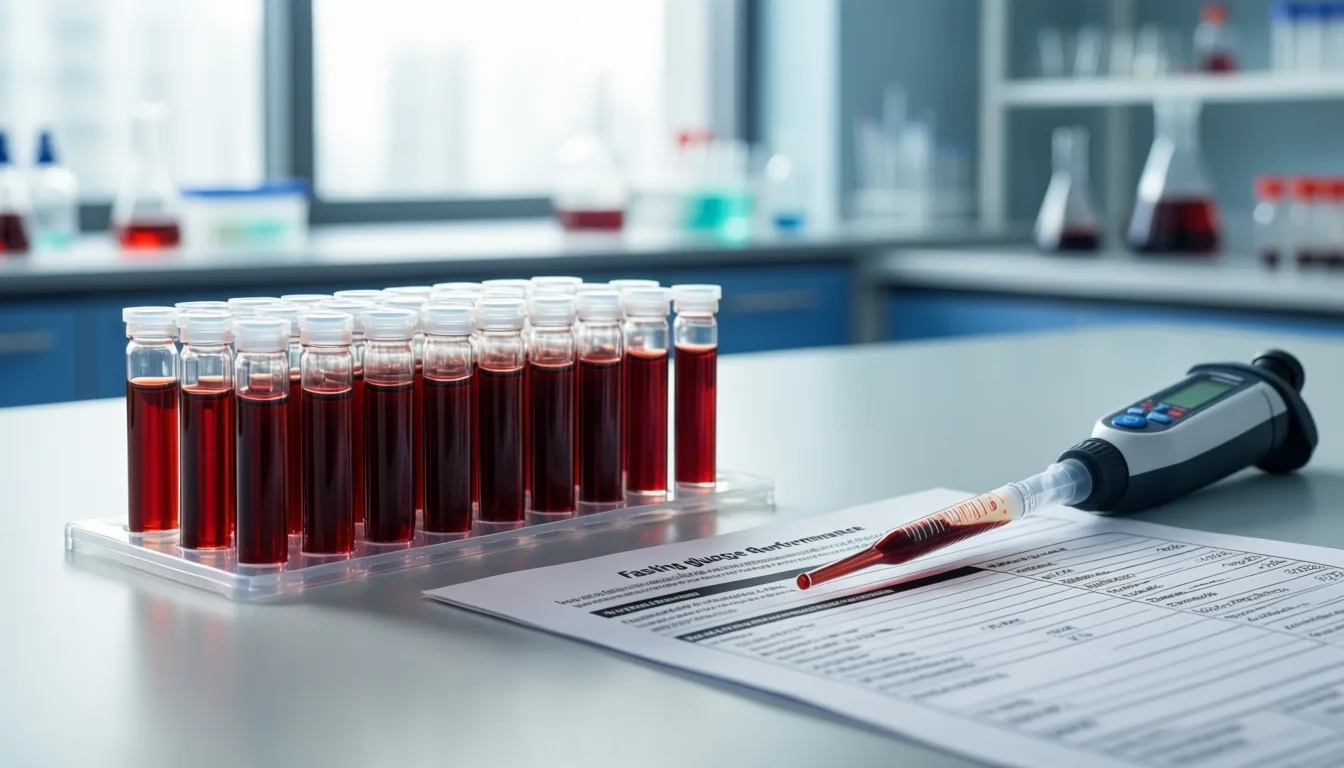
HOMA-B and HOMA-IR are derived from fasting glucose, insulin, and C-peptide — useful proxies, not direct measures of β-cell mass.
If a small molecule can mimic — and on these markers, exceed — a weekly peptide at 26 weeks, the distribution story for incretins changes.
Reading the β-cell numbers carefully
A 123–132% jump in HOMA-B sounds dramatic, and in a sense it is. But HOMA-B reflects the relationship between fasting insulin (or C-peptide) and fasting glucose; when a drug lowers fasting glucose while preserving insulin secretion, the index can climb steeply. That does not necessarily mean the pancreas has grown new β-cells. It means the existing ones are working in a more favorable environment — less glucotoxicity, less demand, better signal-to-noise. The improvement in proinsulin and the proinsulin/insulin ratio is the more interesting biomarker tell, because elevated proinsulin reflects β-cells under strain, hurriedly releasing immature hormone. Those markers improved at orforglipron doses of 12 mg and above to a greater extent than with dulaglutide.
The HOMA-IR drop — up to 23% — is also worth contextualising. Insulin resistance in type 2 diabetes is partly weight-driven, and GLP-1 receptor agonists reliably reduce weight. Some of the sensitivity gain almost certainly rides on that. The exploratory paper does not isolate a weight-independent effect, and biohackers reading this should resist the temptation to do so on its behalf.

CGM traces are how the quantified-self crowd will read this class. The trial measured fasting markers, not 24-hour variability.
What this does and doesn't tell us
What the trial does establish: a once-daily oral non-peptide GLP-1 receptor agonist can move β-cell and insulin-sensitivity biomarkers in the same direction as the injectable class, and in this comparison, further than dulaglutide 1.5 mg at 26 weeks. What it doesn't establish: durability past 26 weeks, hard endpoints (MACE, progression to insulin), head-to-head performance against semaglutide or tirzepatide, or how the tolerability profile shakes out at scale. Phase 3 programs are the place those answers live. Until then, the appropriate posture is interested but unhurried.
For readers tracking the metabolic-drug pipeline as a category, the structural takeaway is the one to hold onto. The GLP-1 era began with peptides because peptides were what the receptor was evolved to recognize. The next era may be defined by small molecules that found a different way in. Orforglipron is not the only non-peptide GLP-1 in development, but it is, on current public data, the furthest along with a directly comparative readout. That alone makes the 26-week numbers worth filing carefully.
- Pill, not peptide. Orforglipron is a small-molecule GLP-1 receptor agonist — no injection, no cold chain.
- β-cell signal at 12 mg+. HOMA-B rose up to 123–132% by week 4 and exceeded dulaglutide across doses.
- Sensitivity improved too. HOMA-IR fell by up to 16–23% at higher doses; proinsulin markers also improved.
- Exploratory, not definitive. These are secondary biomarker analyses from a Phase 2 trial of 378 participants over 26 weeks.
- Comparator caveat. Dulaglutide 1.5 mg is a real-world dose but not the strongest injectable benchmark available.
- Phase 3 will decide. Durability, hard outcomes, and tolerability at scale remain open questions.
Frequently asked questions
How is orforglipron different from GLP-1 drugs like semaglutide or dulaglutide?
Orforglipron is a small molecule rather than a peptide, which means it can be taken as a daily pill, stored at room temperature, and requires no injection or cold chain. Existing GLP-1 drugs are built from modified peptide backbones engineered to survive in circulation long enough to be dosed weekly by injection, while oral semaglutide still requires a permeation enhancer and a strict fasted-stomach routine that few patients follow perfectly.
What did the Phase 2 trial show about beta-cell function?
At doses of 12 mg and above, HOMA-B — an index of beta-cell function — rose by as much as 123% when calculated from C-peptide and 132% from insulin by week 4, increases that were larger than those seen with dulaglutide across every orforglipron dose in that range. Fasting proinsulin and the proinsulin-to-insulin ratio, both proxies for beta-cell stress, also improved more with orforglipron than with the injectable comparator.
Does a big jump in HOMA-B mean orforglipron is growing new beta cells?
Not necessarily. The article explains that HOMA-B reflects the relationship between fasting insulin and fasting glucose, so when a drug lowers fasting glucose while preserving insulin secretion the index can climb steeply without indicating new beta-cell growth. The improvement means existing beta cells are working in a more favorable environment — with less glucotoxicity and less demand — not that the pancreas has gained new cells.
How strong is the evidence behind these findings?
The article rates the evidence as moderate: this is a Phase 2 trial of 378 participants over 26 weeks, and the beta-cell and insulin-sensitivity results are exploratory analyses, not the registered primary endpoint. HOMA-B and HOMA-IR are also indirect measures derived from fasting labs rather than gold-standard clamp studies, and the comparator — dulaglutide 1.5 mg — is not the most potent injectable available.
What questions remain unanswered that Phase 3 trials will need to address?
The trial does not establish durability past 26 weeks, hard clinical endpoints such as cardiovascular events or progression to insulin, head-to-head performance against semaglutide or tirzepatide, or how tolerability holds up at scale. The article also flags whether orforglipron's pill-and-room-temperature profile could meaningfully improve access in markets where cold-chain logistics are a barrier.
Sources

Could Ozempic Slow Aging Itself? The First Human Signal Is In
A post-hoc analysis of a randomized trial found semaglutide reduced multiple DNA-methylation aging clocks. It's early, narrow, and genuinely intriguing.
For three years, semaglutide has been the drug everyone is talking about and almost no one is talking about correctly. It has been a weight-loss story, a diabetes story, a cardiovascular story, a cultural story. Now, quietly, it has become something else: the first GLP-1 receptor agonist with a published human signal that it may slow the biology of aging itself. A new post-hoc analysis of a randomized, placebo-controlled trial reports that 32 weeks of semaglutide lowered several DNA-methylation aging clocks — the molecular odometers researchers use to estimate how fast a body is wearing down. The finding is small. It is preliminary. It is also, if it holds up, the kind of result that reshapes a category.
- What's new: A randomized trial in adults with HIV-associated lipohypertrophy found semaglutide reduced multiple epigenetic aging clocks versus placebo.
- How big a signal: Reductions ranged from roughly 1.4 to 4.9 "years" depending on the clock, plus a ~9% slower pace of aging on DunedinPACE.
- How strong the evidence: Early. It's a post-hoc analysis of one small trial (n=84) in a specific population — hypothesis-generating, not practice-changing.
- Why it matters for women 55+: Inflammation, brain and heart clocks moved most — the same systems that shift with menopause.
- What to do now: Nothing prescriptive. If you're already considering a GLP-1 for a clinical reason, this is context. It is not a green light to chase the drug for longevity.
What an "aging clock" actually measures
Epigenetic clocks read patterns of DNA methylation — small chemical tags that sit on top of your genes and shift with age, stress, illness and behavior. Trained on tens of thousands of blood samples, these clocks estimate a biological age that can run ahead of, or behind, the number on your driver's license. Newer versions go further. GrimAge and PhenoAge correlate with mortality and disease risk. DunedinPACE estimates the rate at which you are aging right now, in real time. They are not crystal balls, and they are not interchangeable with how you feel. But across large cohorts, they track outcomes that matter.
Until now, the interventions shown to nudge these clocks in humans have been modest and lifestyle-shaped: caloric restriction, certain dietary patterns, exercise. A pharmaceutical that meaningfully moves multiple clocks in a randomized trial would be a first. That is the claim worth examining carefully.

Epigenetic clocks are built from methylation patterns at hundreds to thousands of sites across the genome.
What the trial actually did
The analysis, posted as a preprint by Corley and colleagues, is built on a 32-week, double-blind, placebo-controlled phase 2b trial in adults with HIV-associated lipohypertrophy — a condition in which fat redistributes in ways linked to metabolic and inflammatory stress. Forty-five participants received once-weekly semaglutide; thirty-nine received placebo. Researchers profiled paired peripheral-blood methylomes before and after treatment and ran them through multiple generations of aging clocks, adjusting the results for sex, BMI, hsCRP and sCD163 — a marker of monocyte and macrophage activation.
That adjustment matters. Semaglutide reliably reduces weight and inflammation. The interesting question is whether anything is left after you account for those effects. According to the authors, something was.
Across the panel, the direction was consistent. PCGrimAge fell by 3.1 years (P=0.007), GrimAge V1 by 1.4 years (P=0.02), GrimAge V2 by 2.3 years (P=0.009), PhenoAge by 4.9 years (P=0.004), and DunedinPACE by 0.09 units — roughly a 9% slower pace of aging during the trial window. A multi-omic clock called OMICmAge and a clock focused on transposable elements, RetroAge, each dropped by about 2.2 years.
Then the researchers looked at organ-system clocks — methylation signatures tuned to specific tissues and physiologies. Eleven moved in the same direction, with the largest shifts in inflammation, brain and heart. One clock, designed to capture "intrinsic capacity" — a composite of reserve across domains — did not budge.
The interesting question is whether anything is left after you account for weight and inflammation. Something was.

Why this matters more for women over 55
The clocks that moved most — inflammation, brain, heart — are precisely the systems that shift in the years around and after menopause. Estrogen's decline is not just a hot-flash story; it changes vascular reactivity, cognitive resilience and the inflammatory tone of the immune system. Any drug that durably softens that inflammatory tone is, mechanistically, worth taking seriously for this cohort.
But — and this is where the early evidence rating earns its keep — the trial population was not women over 55 navigating menopause. It was adults with HIV-associated lipohypertrophy, a group with distinctive metabolic and inflammatory biology. Whether the same epigenetic shifts would appear in a healthy 60-year-old woman taking semaglutide for weight or cardiometabolic risk is, at this moment, unknown.
How to hold this finding
There is a temptation, every few months, to anoint a new longevity drug. Rapamycin had its moment. Metformin had several. Semaglutide arrives with more momentum than either, because millions of people are already taking it for reasons that have nothing to do with aging research. That is both the opportunity and the trap. The opportunity: large, real-world cohorts will generate follow-up data quickly. The trap: cultural enthusiasm tends to outrun evidence, and GLP-1s carry real trade-offs — gastrointestinal effects, lean-mass loss, cost, supply, and unknowns about long-duration use in people who are not metabolically ill.
For a reader weighing what to do with this, the honest answer is: very little, yet. If you are already considering a GLP-1 with your clinician for a clinical reason — type 2 diabetes, obesity, cardiovascular risk — this study adds an interesting line of context to that conversation. If you are healthy and curious about longevity, this is not yet a reason to seek the drug out. The trial is small, the population is specific, and the clocks, while validated, are not the same as years added to your life.
What it does change is the research agenda. The authors frame their work as justification for further evaluation of GLP-1 receptor agonists as gerotherapeutics, and that case is now meaningfully stronger. Expect larger, longer trials, in broader populations, with aging biomarkers built in from the start. That is how a hint becomes a finding — and how a finding, eventually, becomes guidance you can act on.
- Hold it loosely. One small trial, one population, post-hoc analysis.
- Watch the replications. Larger trials with aging biomarkers built in are the next signal worth tracking.
- Don't chase the drug for longevity alone. The risk-benefit math only makes sense for an existing clinical indication.
- Talk to your clinician. Especially around menopause, where inflammation, brain and heart trajectories are already in flux.
Frequently asked questions
What did the study find about semaglutide and biological aging?
A post-hoc analysis of a 32-week, double-blind, placebo-controlled trial found that semaglutide reduced multiple DNA-methylation aging clocks compared to placebo. Reductions ranged from roughly 1.4 to 4.9 estimated "years" depending on the clock used, and participants also showed approximately a 9% slower pace of aging on the DunedinPACE measure.
What is an epigenetic aging clock and how does it work?
Epigenetic clocks read patterns of DNA methylation — small chemical tags that sit on top of your genes and shift with age, stress, illness, and behavior. Trained on tens of thousands of blood samples, these clocks estimate a biological age that can run ahead of or behind your actual age. Newer versions like GrimAge and PhenoAge correlate with mortality and disease risk, while DunedinPACE estimates the rate at which you are aging right now.
Who were the participants in this trial, and does that limit what we can conclude?
The trial enrolled adults with HIV-associated lipohypertrophy, a condition linked to metabolic and inflammatory stress — not the general population. The article notes that whether the same epigenetic shifts would appear in a healthy 60-year-old woman taking semaglutide for weight or cardiometabolic risk is, at this moment, unknown.
Why might these findings be particularly relevant for women over 55?
The clocks that moved most — inflammation, brain, and heart — are precisely the systems that shift in the years around and after menopause, when estrogen's decline changes vascular reactivity, cognitive resilience, and the inflammatory tone of the immune system. Any drug that durably softens that inflammatory tone is described as mechanistically worth taking seriously for this group.
Does this study mean people should seek out semaglutide for longevity?
The article is explicit that this study is not yet a reason for healthy people to seek out the drug, because the trial is small, the population is specific, and epigenetic clocks are not the same as years added to life. GLP-1 medications also carry real trade-offs including gastrointestinal effects, lean-mass loss, cost, and unknowns about long-duration use in people who are not metabolically ill.
Sources
- Semaglutide Slows Epigenetic Aging in People with HIV-associated lipohypertrophy: Evidence from a Randomized Controlled Trial. — medRxiv : the preprint server for health sciences