Ergothioneine: The Mushroom Thiol Quietly Climbing the Healthspan Charts
A single mechanism paper gives a long-suspected 'longevity vitamin' its first credible story — in worms and aged rats. Humans are not worms.
Every few years, a molecule with an unpronounceable name gets a turn at the longevity microphone. The latest is ergothioneine — a sulfur-containing amino acid that humans can't synthesize, that fungi can, and that quietly accumulates in our tissues through a dedicated transporter we apparently went to the evolutionary trouble of keeping. Researchers have long called it a candidate "longevity vitamin." What it lacked was a story for what it actually does. A new paper in Cell Metabolism offers one — in worms and aged rats. Whether it does the same in people is, for now, a separate question.
- What's new: A 2025 Cell Metabolism study reports ergothioneine extends lifespan in C. elegans and improves endurance, muscle mass, and NAD+ in aged rats.
- The mechanism: Ergothioneine acts as a substrate for the enzyme CSE, generating H₂S that persulfidates more than 300 proteins — including one that drives NAD+ production.
- Evidence grade: Animal-preclinical. No human randomized trial has tested these endpoints.
- Dietary context: Mushrooms are by far the richest food source; the molecule is concentrated in specialty varieties more than in white button.
- Bottom line: A genuinely interesting mechanism, not a license to stock the medicine cabinet. Talk to a clinician before supplementing.
The molecule that wouldn't go away
Ergothioneine has been on the longevity watch-list for over a decade, largely on circumstantial evidence: humans express a transporter (OCTN1/SLC22A4) that seems specifically built to ferry it into cells, and tissue levels decline with age and certain chronic diseases. That is suggestive, not dispositive. A transporter tells you the body bothers; it doesn't tell you why.
The new work, led by Milos Filipovic's group and published in Cell Metabolism, attempts to answer the why. In a series of experiments spanning C. elegans and aged rats, ergothioneine extended worm lifespan, improved mobility, and reduced several age-associated biomarkers. In rats, supplementation was associated with greater exercise endurance, increased muscle mass, improved muscle vascularization, and higher NAD+ levels in muscle tissue.
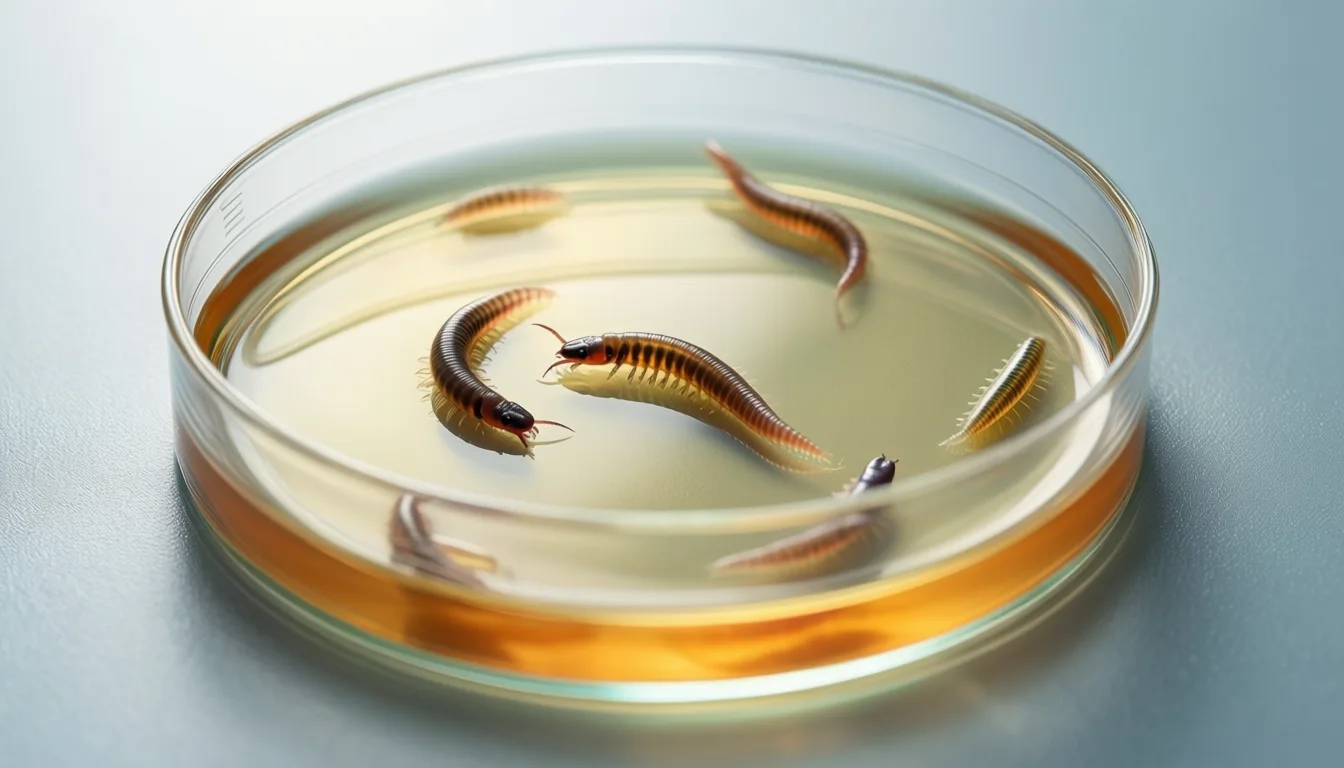
The lifespan signal came first in C. elegans — a useful, but distant, proxy for human aging.
A mechanism, finally
The interesting part isn't the endpoints — plenty of compounds extend worm lifespan — it's that the authors traced a chain of causation. Ergothioneine, they report, serves as an alternative substrate for cystathionine gamma-lyase (CSE), an enzyme better known for producing hydrogen sulfide (H₂S). That H₂S then modifies cysteine residues on more than 300 proteins through a process called persulfidation — essentially a sulfur-based post-translational switch. One of those targets, cytosolic glycerol-3-phosphate dehydrogenase (cGPDH), gets activated by persulfidation and appears to account for most of the NAD+ bump observed in muscle.
The proof-of-mechanism is the part that should make even skeptical readers sit up: in animals lacking either CSE or cGPDH, ergothioneine's effects disappeared. That is the kind of causal scaffolding mechanism papers are supposed to provide, and it is largely what this one delivers.
A transporter tells you the body bothers. It doesn't tell you why.
What this is not
It is not a human trial. It is not evidence that taking an ergothioneine capsule will make you live longer, run farther, or rebuild aging muscle. The leap from C. elegans to a 45-year-old at a desk is, to put it gently, considerable; the leap from aged rats is shorter but still real. Rodent muscle physiology is informative, not predictive. NAD+ in particular has a long résumé of preclinical promise that has translated unevenly into human benefit, and the field has been burned before by extrapolating endurance gains from rodent treadmills to the human gym.
It is also worth naming what the study does not address: optimal dose, duration, bioavailability differences between food and supplement forms, long-term safety in humans, and interactions with the medications and conditions that actually populate the lives of the people most interested in "healthspan." Those are not nitpicks. They are the questions a clinician would ask before recommending anything.

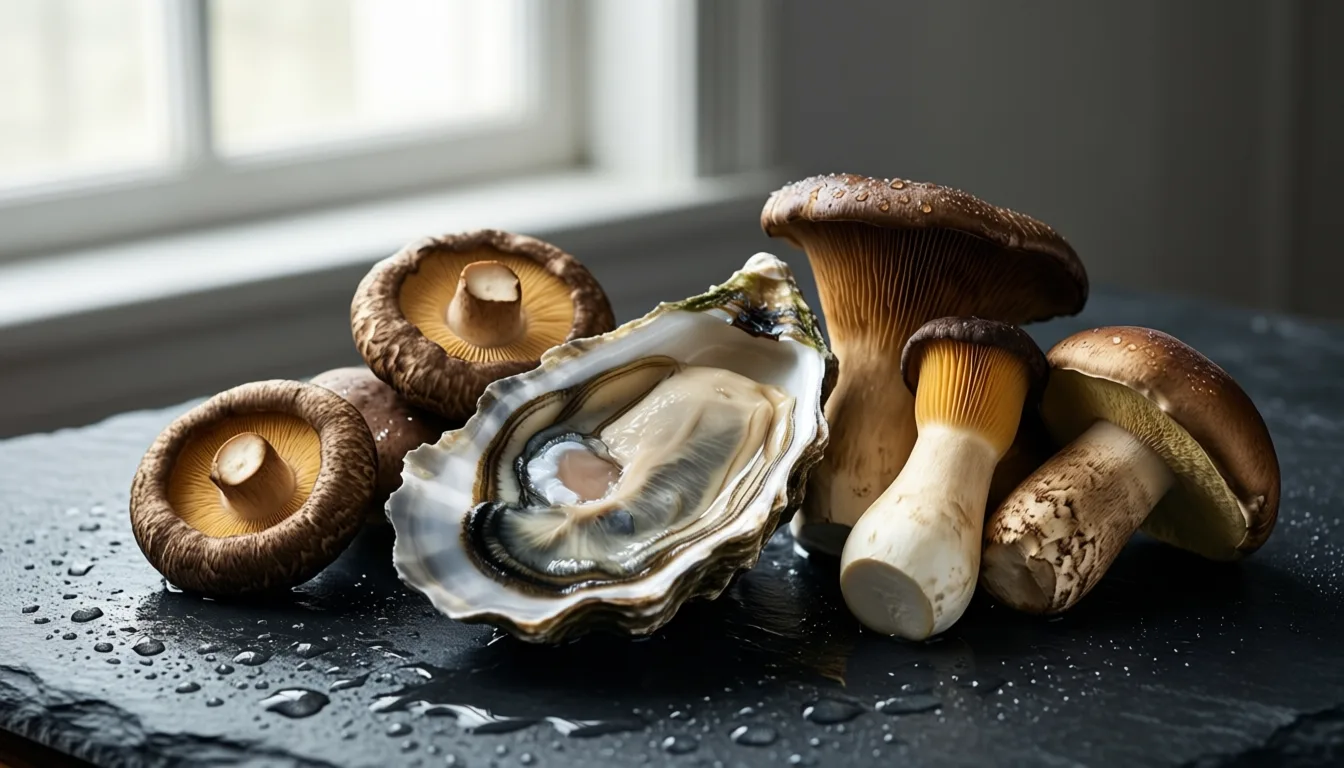
Specialty mushrooms — oyster, shiitake, king trumpet, porcini — carry meaningfully more ergothioneine than common white buttons.
The food angle, which is the easy part
Here is where the story gets boringly sensible. Ergothioneine is concentrated in fungi, and humans get essentially all of theirs from the diet. Eating more mushrooms — especially the specialty varieties — is a low-risk, high-upside move whether or not the longevity claims hold up, because the rest of what mushrooms bring to a plate (fiber, B vitamins, a tidy umami substitute for some of the salt and fat in a dish) is well-established on its own merits. You do not need a mechanism paper to justify a sautéed king trumpet.
Capsules are a different conversation. The supplement industry has moved faster than the evidence, as it tends to, and ergothioneine products now sit on shelves with marketing copy that runs well ahead of what a single preclinical study can support. The mechanism is real and interesting. The human outcome data are not yet there.
What we'd want to see next
The honest answer for any preclinical finding this interesting is: a well-designed human trial. Specifically, randomized, placebo-controlled work in older adults measuring the things this paper actually moved in animals — muscle endurance, lean mass, and tissue NAD+ — with a dose rationale, a duration long enough to matter, and safety monitoring. Until that exists, ergothioneine sits in the same category as several other plausible-and-unproven aging compounds: worth watching, not worth overstating.
It is, on the merits, one of the more credible entries on that list. The transporter is real. The dietary source is benign. The mechanism is now mapped. That is a better starting position than most. It is still a starting position.
- Eat the mushrooms. The dietary case is solid on general nutrition grounds alone.
- Hold the capsules — for now. Human outcome data don't yet exist for the endpoints in this study.
- Mind the marketing. Mechanism ≠ proven benefit. The leap from rat muscle to human healthspan is not trivial.
- Ask a clinician before adding any supplement, especially if you take medication or manage a chronic condition.
Frequently asked questions
What is ergothioneine and why do researchers consider it a longevity candidate?
Ergothioneine is a sulfur-containing amino acid that humans cannot synthesize but obtain through diet, primarily from fungi. Researchers have tracked it as a longevity candidate for over a decade partly because humans express a dedicated transporter, OCTN1/SLC22A4, that appears specifically built to ferry it into cells, and tissue levels decline with age and certain chronic diseases.
What did the 2025 Cell Metabolism study actually find?
The study found that ergothioneine extended lifespan in C. elegans, improved mobility, and reduced several age-associated biomarkers. In aged rats, supplementation was associated with greater exercise endurance, increased muscle mass, improved muscle vascularization, and higher NAD+ levels in muscle tissue.
How is ergothioneine thought to produce its effects in the body?
According to the study, ergothioneine acts as an alternative substrate for the enzyme CSE, which generates hydrogen sulfide that then modifies cysteine residues on more than 300 proteins through a process called persulfidation. One of those protein targets, cGPDH, gets activated by persulfidation and appears to account for most of the NAD+ increase observed in muscle tissue.
Which mushrooms are the best dietary sources of ergothioneine?
Specialty mushrooms — oyster, shiitake, king trumpet, and porcini — carry meaningfully more ergothioneine than common white button mushrooms. Humans obtain essentially all of their ergothioneine from the diet, with fungi being the concentrated source.
Does this research mean people should start taking ergothioneine supplements?
The article cautions against that conclusion, noting that no human randomized trial has tested the endpoints measured in this study, and the research involved only worms and aged rats. The study also does not address optimal dose, duration, bioavailability differences between food and supplement forms, or long-term safety in humans, and the article recommends treating any supplement decision as a conversation with a clinician.
Join the conversation
Comments are moderated and reviewed before they appear. Be constructive — this is health information.
Add your comment