
Fatty Liver Is a Cardiovascular Disease in Disguise
New research links liver fibrosis to clogged arteries — and reframes a condition once filed under 'gastro' as a heart-and-metabolism story parents can't afford to ignore.
You are standing in the kitchen at 6:14 a.m., one sock on, the baby monitor squawking, when a friend texts you her annual-physical results. Her doctor used a phrase she'd never heard before: fatty liver. She isn't a drinker. She isn't, by any visible measure, unwell. She wants to know if she should worry. The honest answer — the one supported by a quietly growing pile of research — is that fatty liver may be less a liver problem than a heart problem wearing a liver costume. And because roughly a third of adults are walking around with some version of it, this is a conversation worth having before the second cup of coffee.
The condition now goes by an unlovely acronym: MASLD, for metabolic dysfunction-associated steatotic liver disease. (You may remember it by its older name, NAFLD — non-alcoholic fatty liver disease.) A 2025 review in Clinical and Experimental Hepatology describes it as the most common chronic liver disease in the world, affecting about 30% of adults and roughly 10% of children. Those numbers may be undercounts — MASLD is famously quiet, often producing no symptoms until something else, like a routine blood panel or an ultrasound for a different complaint, flags it.
What's changing is not the prevalence of fatty liver but the company it keeps. The same review names MASLD outright as an important cardiovascular risk factor, and frames it inside a familiar cluster of weight-dependent problems: insulin resistance, prediabetes, type 2 diabetes, lipid disorders, hypertension. If you've ever seen the words "metabolic syndrome" on a lab printout, MASLD lives in that neighborhood.
The liver-to-artery connection, in plainer English
Here is the part that reframes the whole conversation. A 2025 cross-sectional study in the Middle East Journal of Digestive Diseases looked at 200 patients with coronary artery disease who were headed for angiography, then measured both their fatty-liver severity (by ultrasound) and their carotid arteries (by Doppler). The carotids are the big vessels in your neck that feed the brain; narrowing there is one of the markers cardiologists watch closely.
The pattern was striking. Among patients with carotid stenosis, 44% had grade 2–3 fatty liver, compared with 19% of patients without stenosis. Higher scores on the FIB-4 index — a simple blood-test-based estimate of liver scarring — tracked with more severe coronary involvement and a higher prevalence of carotid narrowing. This is a single cross-sectional study, not proof of cause and effect, and the patients were already known to have heart disease. But it adds to a body of work suggesting that the inflamed, fibrotic liver is not minding its own business — it appears to be part of the same vascular story.
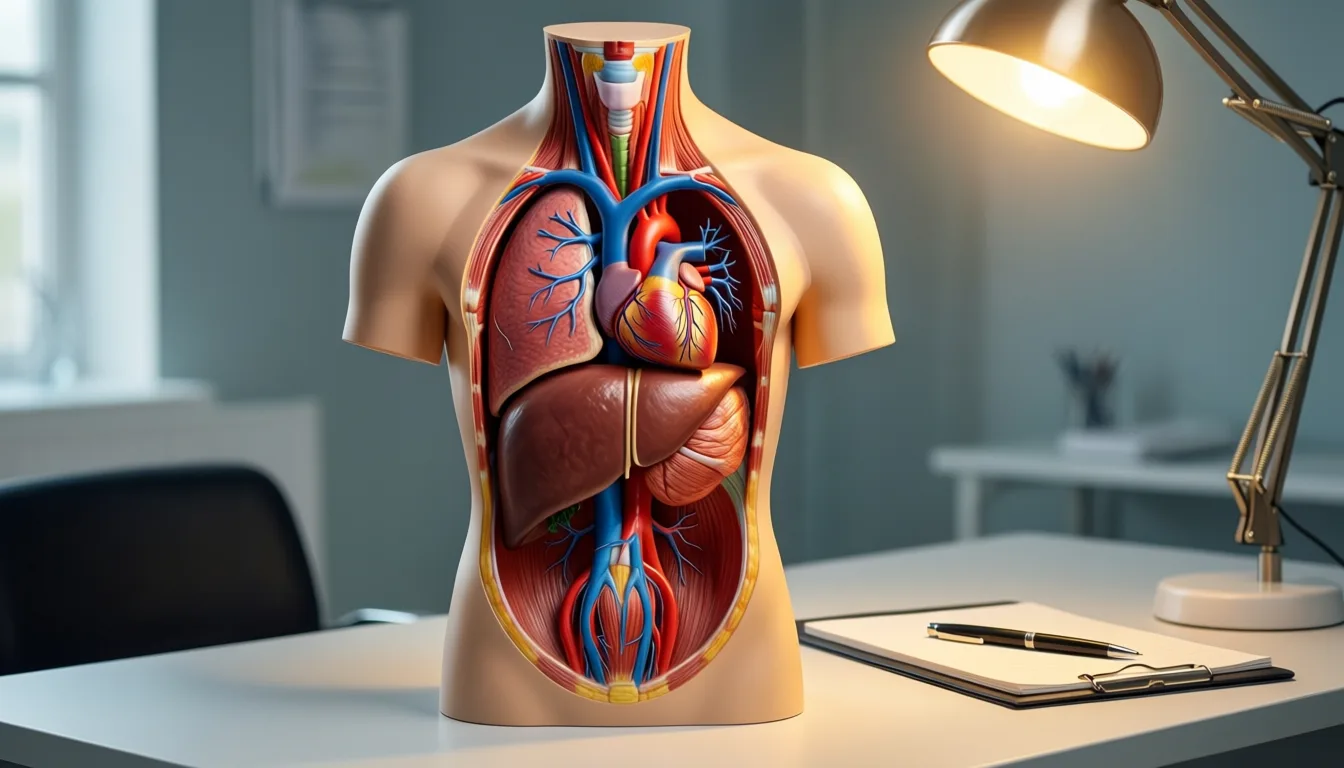
Researchers are increasingly treating the liver and the arteries as part of the same conversation, not separate specialties.
Fatty liver may be less a liver problem than a heart problem wearing a liver costume.
Why an exhausted parent should care
If you're reading this between feedings, here is the version that fits on a sticky note: the drivers of fatty liver are the drivers of heart disease. The review authors are direct about this — the foundation of prevention and treatment is weight reduction through diet and regular physical activity, plus management of the cardiometabolic factors: diabetes, lipid disorders and hypertension. Drug therapy aimed at the liver itself, they note, remains limited; many candidates are still in clinical trials.
That's not a thrilling headline, but it is a kind one. It means the small, ordinary things — a 20-minute walk with the stroller, swapping one ultra-processed snack for something with fiber, not skipping the boring annual check-in with your GP — are doing real work on more than one organ at once. You are not behind because you haven't optimized a supplement stack. The evidence base is moderate, not miraculous; the levers are familiar.
A second front: hepatitis C, cured but not closed
There's a related strand of this story for anyone who has been treated for hepatitis C. Modern antivirals clear the virus in the great majority of cases, but a 2025 expert position statement in Clinical and Experimental Hepatology argues that the cardiometabolic aftermath needs its own care plan. The authors note that HCV is now considered a new, non-classical cardiovascular risk factor, and that the constellation of obesity, insulin resistance, diabetes, lipid problems and fatty liver that follows infection is significant enough to have its own name: metabolic-viral syndrome. Their recommendations focus on hypolipidemic and antithrombotic therapy in patients treated with direct-acting antivirals, with attention to drug interactions. It's a specialist document, but the takeaway for the rest of us is the same: clearing the virus is the start of the conversation, not the end.

The interventions with the strongest evidence are unglamorous and cumulative.
- MASLD is common and quiet. Roughly 30% of adults and 10% of children are affected, often without symptoms.
- It's a cardiometabolic signal, not just a gut issue. Reviewers explicitly classify MASLD as a cardiovascular risk factor.
- Liver scarring tracked with artery narrowing in one 2025 cross-sectional study of CAD patients — suggestive, not definitive.
- The first-line tools are lifestyle. Weight, activity, blood sugar, lipids and blood pressure do double duty for liver and heart.
- If you've cleared hepatitis C, ask your clinician about ongoing cardiometabolic follow-up; specialists now treat this as a distinct risk profile.
- Talk to your doctor before changing medications or starting supplements, especially if you're managing diabetes, cholesterol or post-HCV care.
None of this is a verdict. The evidence connecting fatty liver to cardiovascular disease is growing and increasingly hard to ignore, but much of it — including the carotid study above — is observational, and the disease-modifying drug story is still being written. What has shifted is the framing. A generation ago, fatty liver was the thing your doctor mentioned in passing on the way out of the room. Today, the people who study it are asking whether it belongs on the same page as your blood pressure and your cholesterol.
For a tired parent, that reframing is, oddly, good news. It means the work you might already be trying to do — sleep when you can, move when you can, eat something that didn't come out of a foil pouch — counts toward more than one ledger. Pour the second coffee. Text your friend back. Tell her it's worth a conversation with her doctor, not a spiral at 2 a.m.
Frequently asked questions
What is MASLD, and is it the same as NAFLD?
MASLD stands for metabolic dysfunction-associated steatotic liver disease, and it is the updated name for what was previously called NAFLD, or non-alcoholic fatty liver disease. It is described as the most common chronic liver disease in the world, affecting about 30% of adults and roughly 10% of children. The condition is often silent, producing no symptoms until something like a routine blood panel or an ultrasound flags it.
Why is fatty liver considered a cardiovascular risk factor?
Reviewers explicitly classify MASLD as an important cardiovascular risk factor, situating it within the same cluster of metabolic problems — insulin resistance, prediabetes, type 2 diabetes, lipid disorders, and hypertension — that drive heart disease. A 2025 cross-sectional study found that among patients with carotid artery narrowing, 44% had grade 2–3 fatty liver, compared with 19% of patients without stenosis, suggesting the liver and the arteries may be part of the same vascular story.
What are the recommended first-line treatments for MASLD?
According to the review authors, the foundation of prevention and treatment is weight reduction through diet and regular physical activity, along with management of cardiometabolic factors such as diabetes, lipid disorders, and hypertension. Drug therapy aimed specifically at the liver remains limited, with many candidates still in clinical trials.
If I was treated for hepatitis C and the virus was cleared, do I still need follow-up care?
Yes, according to a 2025 expert position statement cited in the article, clearing the virus is the start of the conversation, not the end. HCV is now considered a non-classical cardiovascular risk factor, and the cluster of obesity, insulin resistance, diabetes, lipid problems, and fatty liver that can follow infection is significant enough to warrant its own ongoing cardiometabolic care plan.
What is one practical step I can take if this article made me concerned about my liver health?
The article suggests asking your doctor, at your next routine appointment, whether your most recent labs — including ALT, AST, fasting glucose or A1c, and a lipid panel — fit the pattern that warrants a closer look at your liver. No new diet or app is required; the article frames it as a 90-second question on a form you already fill out.
Sources
- Potential pharmacotherapy pathways in metabolic dysfunction-associated steatotic liver disease. — Clinical and experimental hepatology
- The Relationship between Carotid Artery Stenosis and the Severity of Fatty Liver in Patients with Coronary Artery Disease Who Are Candidates for Angiography. — Middle East journal of digestive diseases
- Recommendations for hypolipidemic and antithrombotic therapy in HCV-infected patients treated with direct-acting antiviral agents: expert position statement. — Clinical and experimental hepatology
Join the conversation
Comments are moderated and reviewed before they appear. Be constructive — this is health information.
Add your comment