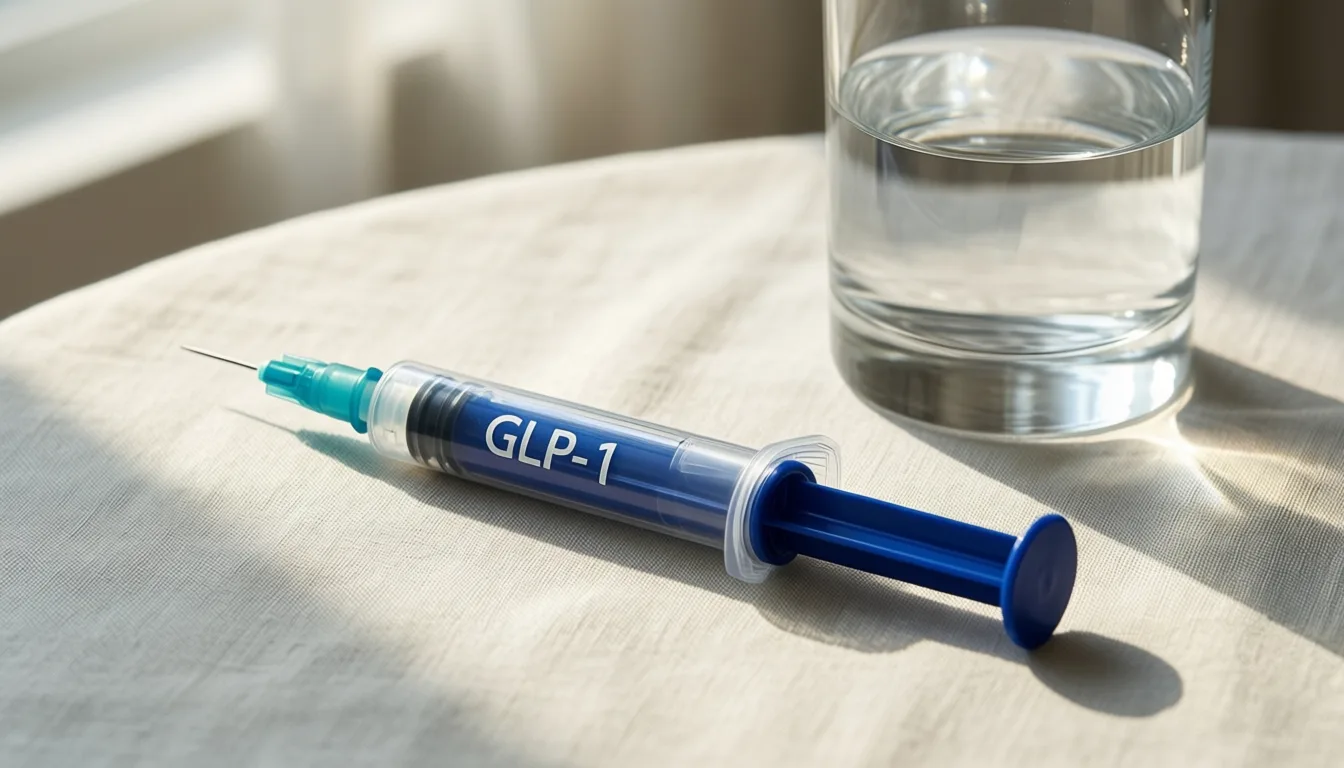
GLP-1 Nation: What the First Federal Tally of Injectable Use Reveals About America's Metabolic Moment
A new federal survey puts a real number on how many Americans with diabetes are now on GLP-1 shots — and it's reshaping what we should expect from the next wave of metabolic drugs.
For a class of drugs that has dominated dinner-party gossip, magazine covers, and group chats for three solid years, it took a remarkably long time for the federal government to tell us how many Americans are actually using them. That number — the first nationally representative one — finally arrived this year, and if you've been wondering whether the GLP-1 boom is as big as your feed suggests or quieter than the headlines, the answer is, satisfyingly, somewhere in between.
According to a new National Center for Health Statistics data brief drawn from the 2024 National Health Interview Survey, 26.5% of U.S. adults with diagnosed diabetes were using an injectable GLP-1 medication at the time they were interviewed. That's roughly one in four. Not the half-the-country figure the cultural noise might suggest, but not a niche prescription either — it's a baseline, and the first real one we've had.
Why does a single percentage matter enough to build a story around? Because until now, almost everything we knew about GLP-1 uptake came from pharmacy claims databases, manufacturer earnings calls, and survey panels with their own quirks. A federal household survey is a different animal. It's the kind of number researchers will be comparing against for the next decade as oral GLP-1s, dual agonists, and triple-receptor drugs roll out of the pipeline. Think of 26.5% as the line drawn in the sand.
The midlife bulge in the data
Here's the part that should make any woman navigating her late 40s sit up. The NCHS brief found that GLP-1 use climbed steadily with age and peaked at 33.3% among adults ages 50 to 64 before falling off sharply to 20.8% in the 65-and-over group. In other words, the heaviest real-world adoption is happening exactly in the years when perimenopause, shifting body composition, and a creeping uptick in fasting glucose tend to collide.
The brief doesn't tell us why the 50–64 cohort is leaning in hardest, and it's worth being careful here. This is a snapshot, not a mechanism. It could reflect more aggressive prescribing in patients with longer diabetes duration, higher cardiovascular risk, or simply better insurance coverage during peak earning years. The drop-off after 65 is just as interesting and just as unexplained — Medicare coverage rules, polypharmacy concerns, and clinical caution in older adults are all plausible suspects, but the data brief doesn't adjudicate between them.
What it does establish is that GLP-1 injectables are not a young person's drug, nor a retiree's drug. They are, statistically speaking, a midlife drug.

The heaviest real-world GLP-1 use clusters in the 50–64 age band — the same window where metabolic shifts of midlife become hardest to ignore.
One in four. Not the half-the-country figure the cultural noise suggests, but not niche either — it's a baseline.
Who's on them, and who isn't
The demographic breakdown is where the brief gets more textured. Hispanic adults with diagnosed diabetes reported the highest use at 31.3%, followed by Black non-Hispanic adults at 26.5% and White non-Hispanic adults at 26.2%. Asian non-Hispanic adults reported markedly lower use at 12.1%. That last gap is large enough to warrant a careful read.
It could reflect differences in diabetes phenotype — Asian adults are more likely to develop type 2 diabetes at lower body mass indexes, which may shape prescribing patterns. It could reflect differences in access, preference, or clinical guideline interpretation. The NCHS data brief doesn't try to explain the gap; it just documents it. But anyone watching the next round of drug rollouts should mark it down, because equitable adoption is going to be one of the defining stories of this drug class.
The brief also reports that GLP-1 use rose alongside body mass index, and was higher among adults who were also taking insulin (31.3%) or oral glucose-lowering medications. That pattern is consistent with how these drugs are typically layered into diabetes care — added on, not swapped in — though the survey is a single point in time and can't tell us about sequencing.
What this baseline does — and doesn't — tell us
Let's be honest about the limits. The NHIS asks people what they're taking; it doesn't verify prescriptions, distinguish between specific molecules, or capture dose, duration, or whether someone started and stopped. The methodology assumes that a diabetic respondent reporting a non-insulin injectable for blood sugar or weight loss is on a GLP-1 — a reasonable assumption in 2024, but a category, not a clinical chart.
The brief also focuses on adults with diagnosed diabetes. It does not estimate use among the much larger population taking GLP-1 drugs primarily for weight management without a diabetes diagnosis, which is where much of the cultural conversation has lived. That's a different study, for a different day.
What it gives us is a credible national anchor. When the next federal survey lands — and when oral semaglutide, retatrutide, and the broader dual- and triple-agonist pipeline start showing up in real prescriptions — we'll be able to measure movement against 26.5%. That's not nothing. That's the entire point of a baseline.

The data is a snapshot, not a prescription. Decisions about GLP-1 therapy belong in a conversation with your own clinician.
- The first federal number is 26.5%. Roughly one in four U.S. adults with diagnosed diabetes was on a GLP-1 injectable in 2024 — a real baseline, not a hype cycle estimate.
- Midlife is the peak. Use topped out at 33.3% in the 50–64 age band before dropping to 20.8% after 65.
- Adoption is uneven. Hispanic adults reported the highest use at 31.3%; Asian non-Hispanic adults the lowest at 12.1%, a gap the brief documents but does not explain.
- It's mostly an add-on. GLP-1 use was higher among diabetics also taking insulin or oral glucose-lowering drugs, consistent with layered prescribing.
- The brief has limits. It's self-reported, single-time-point, diabetes-only, and doesn't capture the weight-loss-only population.
- Treat this as a starting line. Decisions about whether a GLP-1 is right for you belong in a conversation with your clinician, not a cultural trend piece.
The temptation with a number like 26.5% is to declare a winner — to say the GLP-1 era has arrived, or alternatively, that it's smaller than the hype implied. Both readings miss the point. What the NCHS brief actually delivers is the first honest measuring stick. The interesting story isn't where we are. It's what the next survey, the next drug, and the next five years of midlife metabolic care look like measured against it.
Frequently asked questions
What share of American adults with diabetes were using a GLP-1 injectable in 2024?
According to a National Center for Health Statistics data brief drawn from the 2024 National Health Interview Survey, 26.5% of U.S. adults with diagnosed diabetes were using an injectable GLP-1 medication at the time they were interviewed. That works out to roughly one in four.
Which age group has the highest rate of GLP-1 use?
Use peaked at 33.3% among adults ages 50 to 64, making it statistically a midlife drug. It then dropped sharply to 20.8% among adults 65 and older, though the data brief does not explain why.
Are there differences in GLP-1 use across racial and ethnic groups?
Yes. Hispanic adults with diagnosed diabetes reported the highest use at 31.3%, followed by Black non-Hispanic adults at 26.5% and White non-Hispanic adults at 26.2%. Asian non-Hispanic adults reported markedly lower use at 12.1%, a gap the brief documents but does not attempt to explain.
Does this federal data capture people taking GLP-1 drugs purely for weight loss, without a diabetes diagnosis?
No. The brief focuses exclusively on adults with diagnosed diabetes and does not estimate use among the larger population taking GLP-1 drugs primarily for weight management. The article notes that population is "a different study, for a different day."
How reliable is this data, and what are its main limitations?
The survey is self-reported and captured at a single point in time, so it cannot verify prescriptions, distinguish between specific GLP-1 molecules, or track dose, duration, or whether someone started and stopped. It also does not cover the weight-loss-only population, which is where much of the public conversation has centered.
Join the conversation
Comments are moderated and reviewed before they appear. Be constructive — this is health information.
Add your comment