The Gut Microbe That Turns Dietary Fat Into an Appetite Brake
A common gut bacterium called Blautia wexlerae appears to rewrite dietary fats into signals that nudge GLP-1 release. The science is early — but the mechanism is genuinely new.
Every conversation about weight in 2026 eventually circles back to the same three letters: GLP-1. The injectable drugs that mimic this gut hormone have reshaped how we think about appetite, fullness, and what it actually means to feel satisfied after a meal. But here is the quieter story underneath the noise — your own gut already makes GLP-1, all day, in response to what you eat. And a new preprint suggests one of the microbes living in there may be helping translate the fat on your plate into the very signal that tells your brain to put the fork down.
The microbe in question is Blautia wexlerae, a common human gut commensal you have almost certainly never heard of. In a 2026 bioRxiv preprint, a team led by researchers at Boston Children's Hospital, the Broad Institute and the NIH reported that B. wexlerae carries a unique acyl transferase enzyme that lets it stitch dietary fatty acids onto amine building blocks, producing a class of molecules called acyl amines. Those molecules then act on the enteroendocrine cells lining your gut, prompting them to release GLP-1 and other peptide hormones that govern hunger and blood sugar. In their experiments, the bacterial acyl amines were more potent triggers of GLP-1 release than the acyl amines your own cells make.
If you have spent the last few years reading microbiome headlines that promise everything and deliver vibes, your skepticism is well-earned. What makes this paper different is that it does not stop at correlation. It proposes a specific enzymatic pathway, identifies the molecules involved, shows they activate human enteroendocrine cells in a dish, and then demonstrates that feeding those same molecules to mice improved glycemic control and decreased appetite. That is a real mechanism, not a vibe.
Why this matters for the rest of us
For women navigating the metabolic weirdness of the late thirties and forties — the creeping insulin resistance, the post-meal energy crashes, the way a glass of wine now lands differently than it did at 32 — the appeal of a story like this is obvious. Perimenopause shifts the way your body partitions fuel, and any plausible lever on appetite and glucose handling is worth understanding.
The human side of this paper is where things get interesting, and also where the language has to stay careful. The researchers report that people whose stool samples carried higher levels of Blautia DNA encoding the acyl amine synthesis genes correlated with leanness and lower dietary fat intake, and that colonization with B. wexlerae correlated with healthier eating behaviors. Correlated. Not caused. Not yet.
Your gut already makes GLP-1 all day. One of its microbial roommates may be helping translate the fat on your plate into that signal.
The pathway is specific and chemically defined — a real step up from the usual "this microbe was associated with that outcome" microbiome story.
What an acyl amine actually is, in plain English
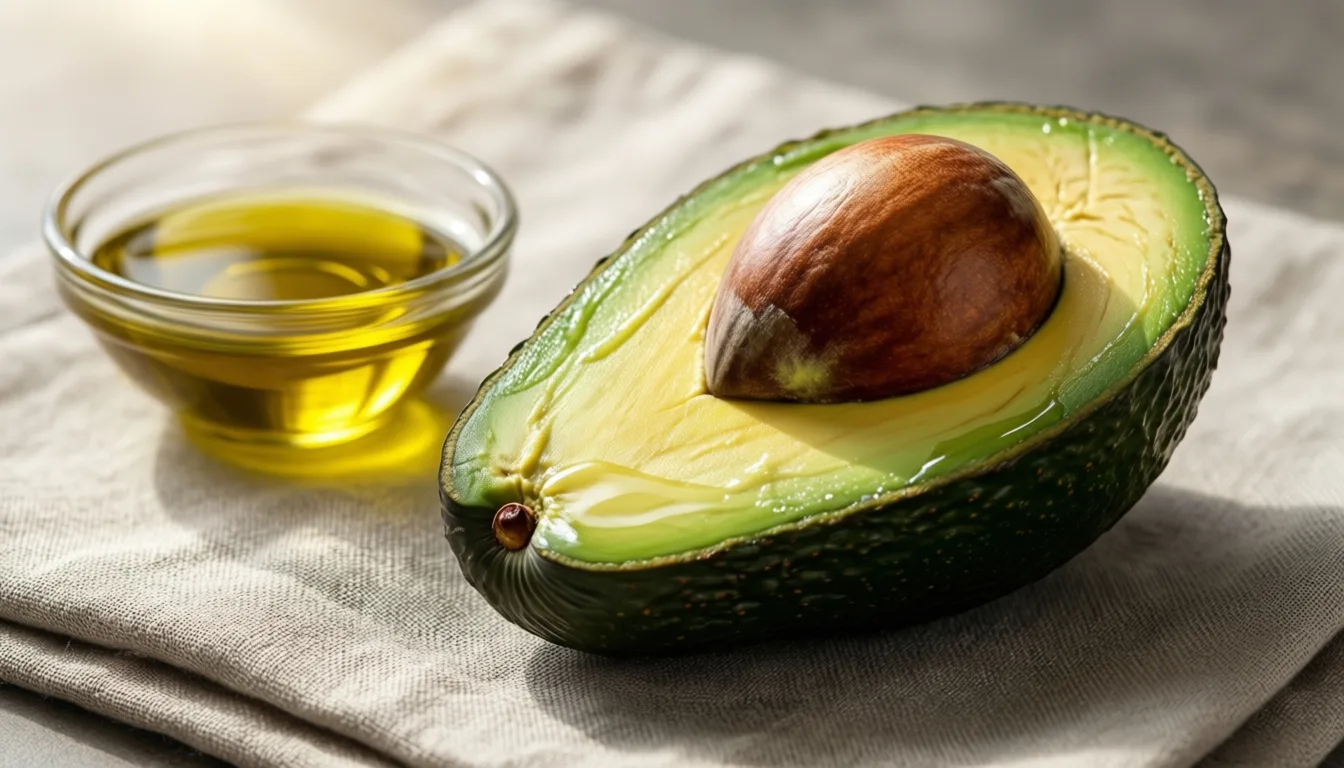
Think of a fatty acid — the kind in olive oil, salmon, avocado — as a long chemical tail. Your gut lining cells have receptors that respond when those tails get hooked onto a small nitrogen-containing handle (an amine). The resulting hybrid molecule, an acyl amine, fits a particular lock on enteroendocrine cells, which respond by squirting out GLP-1 and friends. Your own body makes these molecules in modest amounts. What the new work suggests is that B. wexlerae is unusually good at building them, using a transferase enzyme that appears to be specific to this microbe. In effect, the bug acts as a small chemical factory sitting between your dinner and your hunger hormones.
That framing — microbe as translator, not just passenger — is genuinely new. It also helps explain a puzzle that has nagged at metabolic researchers for a while: why two people eating the same diet can have such different appetite and glucose responses. Part of the answer may live in whose acyl-amine factory is open for business.
Where the hype gets out over its skis
Here is the part where your sharp-friend duty obligates honesty. The mouse data is mechanistically suggestive, not a human trial. The human data is correlational, drawn from stool samples and eating-behavior measures — it cannot tell us whether more Blautia makes people leaner, or whether leaner people with certain diets happen to host more Blautia. The paper is a preprint, meaning it has not yet completed peer review. And nobody has tested whether deliberately seeding someone's gut with B. wexlerae, or feeding them the relevant precursors, reliably moves the needle on weight or A1C in a randomized trial.
That is the responsible read. The exciting read is that the field finally has a defined molecular pathway to interrogate — which means probiotic strains, prebiotic substrates and small-molecule mimics all become testable rather than aspirational. Expect the next eighteen months of microbiome-and-metabolism news to lean heavily on this story.

No, you cannot buy B. wexlerae in a capsule today, and the fermented-food aisle has not been validated against this specific pathway.
So what do you actually do with this on a Tuesday
Almost nothing, and that is okay. There is no clinical recommendation that flows from a single preprint, and anyone selling you a Blautia supplement on the back of this paper is freelancing. What the research reinforces, though, is the broader case for the unglamorous habits that tend to favor a diverse gut community: plants, fiber, fermented foods if you tolerate them, and a willingness to actually eat the fat in your meal instead of fearing it — because the fat is, in this story, the substrate.
If you are already on a GLP-1 medication or considering one, this work does not change that calculus; it sits alongside it. The drugs deliver a pharmacologic dose of a GLP-1-mimicking molecule. The microbe, if the story holds up, helps tune your own endogenous signal. Those are different levers, and a thoughtful clinician is still the right person to help you decide which, if any, belongs in your plan.
- The mechanism is new and specific. Blautia wexlerae carries an acyl transferase that converts dietary fats into acyl amines, which trigger gut hormone release.
- The evidence is early. Mouse experiments plus human correlations in a 2026 preprint — promising, not proven, and not yet peer-reviewed.
- The bacterial molecules outperformed the body's own at stimulating GLP-1 release from human enteroendocrine cells in a dish.
- Higher levels of the relevant Blautia genes correlated with leanness and lower dietary fat intake in humans — correlation, not causation.
- There is no consumer product to act on yet. No validated probiotic, no dosing guidance, no clinical trial showing this reshapes weight or glucose in people.
- Talk to your clinician before changing anything about a GLP-1 medication, diet, or supplement routine based on early science.
Frequently asked questions
What is Blautia wexlerae and what makes it relevant to appetite?
Blautia wexlerae is a common human gut commensal bacterium. It carries a unique acyl transferase enzyme that converts dietary fatty acids into molecules called acyl amines, which act on enteroendocrine cells lining the gut to trigger the release of GLP-1 and other peptide hormones that govern hunger and blood sugar.
Are the bacterial acyl amines more effective at releasing GLP-1 than the body's own?
According to the research described in the article, the bacterial acyl amines produced by Blautia wexlerae were more potent triggers of GLP-1 release than the acyl amines the body's own cells make, based on experiments with human enteroendocrine cells.
What did the study show in mice?
In mouse experiments, feeding the acyl amine molecules improved glycemic control and decreased appetite. The article notes this data is mechanistically suggestive but has not yet been tested in a human randomized trial.
What are the limitations of this research?
The paper is a 2026 preprint that has not yet completed peer review. The mouse data cannot be directly applied to humans, and the human findings are correlational — drawn from stool samples — meaning researchers cannot yet determine whether higher Blautia levels make people leaner or whether leaner people simply tend to host more Blautia.
Can I take a Blautia wexlerae supplement based on this research?
No validated Blautia wexlerae probiotic product is available, and the article states there is no dosing guidance or clinical trial showing it reshapes weight. The article notes that anyone selling a Blautia supplement on the back of this paper is acting without clinical support.
Sources
- Transforms Dietary Fatty Acids to Activate Enteroendocrine Signaling and Improve Metabolic Health in Mice and Humans. — bioRxiv : the preprint server for biology
Join the conversation
Comments are moderated and reviewed before they appear. Be constructive — this is health information.
Add your comment