
Lactate Isn't Waste — It's a Signal: Why Hard Exercise May Reverse Fat-Tissue Insulin Resistance
A new mouse study reframes the molecule behind your burning legs as a messenger, not a metabolic leftover — and hints at why intense training keeps outperforming easy cardio on the metrics that matter.
For a century, lactate was the villain of the gym: the burn in your quads, the supposed sludge of fatigue, the thing your body had to clear before it could feel good again. That story was wrong in the textbooks decades ago, and a new preclinical paper in American Journal of Physiology — Endocrinology and Metabolism pushes the rewrite further. In obese, insulin-resistant mice, the lactate produced by hard exercise behaved less like exhaust and more like a memo — one that fat tissue actually reads.
The study, published in 2026 by Lin and colleagues, asked a deceptively simple question: when intense exercise floods the bloodstream with lactate, is that just a side effect of fuel use — or is the lactate itself doing something useful? Working with diet-induced obese and insulin-resistant (DIO-IR) mice, the team put one group through high-lactate exercise training and watched what happened in the epididymal white fat pad, a depot that tends to go metabolically deaf in obesity. The result, in their words, was a marked easing of both adipose-tissue and whole-body insulin resistance after training, with parallel effects when isolated fat cells were dosed with lactate in a dish. The link between the two settings was a receptor most readers have never heard of: GPR81.
The receptor that reads the burn
GPR81 is a G-protein-coupled receptor expressed on fat cells (among other tissues) whose preferred ligand is lactate itself. In the new work, acute bouts of high-lactate exercise raised lactate levels in both the bloodstream and the white adipose tissue, and that rise tracked with higher GPR81 expression and a stronger glucose-uptake signal inside the fat cells. Crucially, an l-lactate injection — no exercise involved — produced a similar pattern, which is the kind of overlap researchers look for when they want to argue that the molecule, not the movement, is doing the talking. Overexpressing GPR81 in insulin-resistant 3T3-L1 adipocytes mimicked the benefit, tightening the case that the receptor is the relevant switch.
Mechanistically, the researchers traced the downstream chain: lactate engages GPR81, which potentiates the classical insulin pathway inside the fat cell — insulin receptor substrate 1 (IRS1) to AKT to GLUT4, the glucose transporter that actually pulls sugar out of the blood. In insulin-resistant cells, that chain is sluggish; with lactate/GPR81 signaling turned up, it moved closer to normal. Adipokine secretion — the hormonal chatter fat tissue uses to talk to the rest of the body — also shifted in a more favorable direction.
The burn in your quads may be less a waste product than a message your fat cells are listening for.
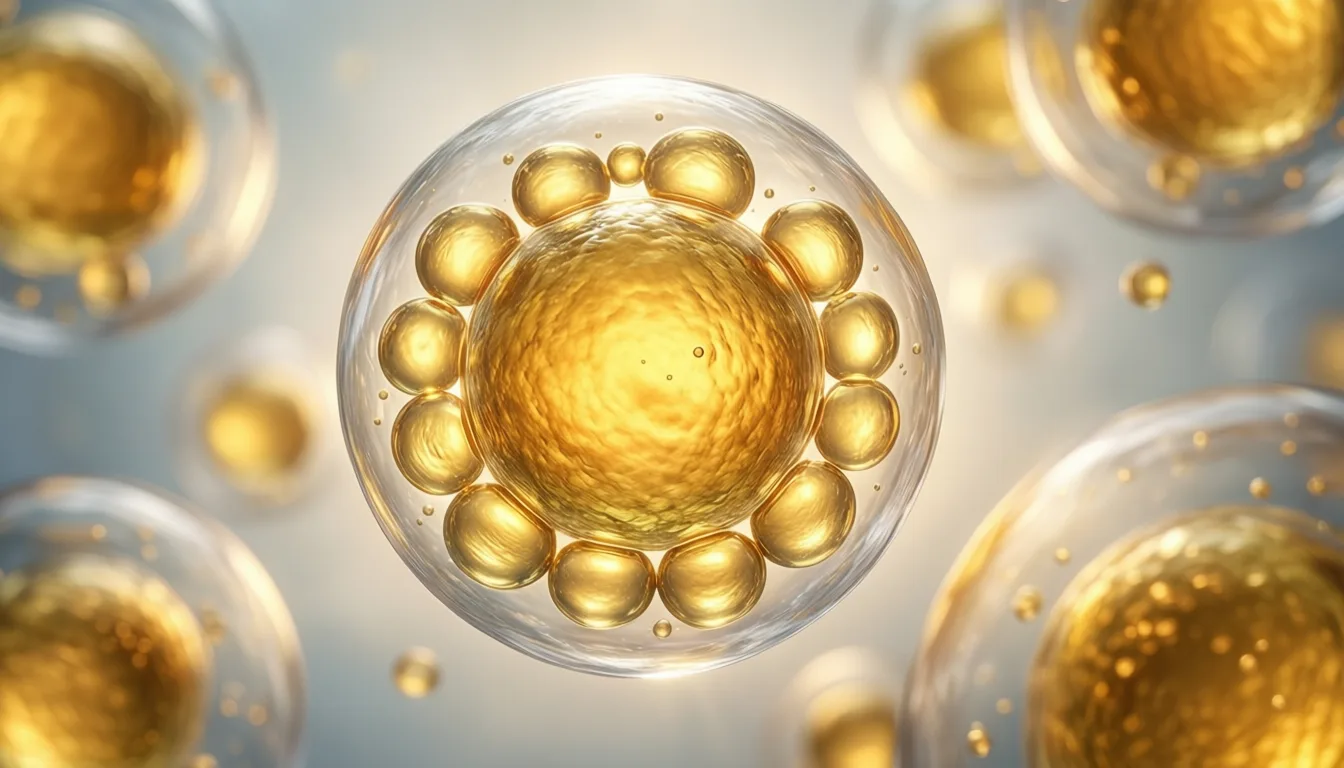
In isolated insulin-resistant fat cells, lactate alone reproduced much of what exercise did in the whole animal.
Why this matters for the intensity debate
Exercise physiologists have known for years that harder efforts tend to deliver outsized metabolic benefits per minute spent, and that lactate production is one of the clearest markers separating an easy jog from a real interval session. What has been missing is a clean mechanistic story for why the harder work pays off in tissues like fat, which don't contract and don't obviously care how fast you ran. A signaling role for lactate offers one plausible thread: the same molecule that marks the intensity of the effort is also the molecule that knocks on the door of the fat cell and asks it to behave more like a healthy one. In the DIO-IR mouse model, high-lactate training did exactly that.
This is the part where the writer earns his keep by saying what the study is not. It is preclinical. The animals are mice on a diet designed to make them obese and insulin-resistant; the cells are an immortalized adipocyte line. None of this is a human trial, none of it speaks to GLP-1 users specifically, and none of it tells you how many intervals, at what intensity, for how many weeks, would translate the mouse finding into a measurable change in your own fasting insulin. The mechanism is suggestive. The dosing is unknown.
- Lactate may be a messenger, not a leftover. In obese, insulin-resistant mice, exercise-induced lactate activated GPR81 on fat cells and improved glucose handling.
- The pathway is plausible. Lactate/GPR81 signaling fed into the classic IRS1–AKT–GLUT4 chain that insulin normally uses.
- Intensity is the implied lever. Higher-intensity work produces more lactate; easy cardio produces far less.
- This is animal-preclinical work. Human dosing, durability, and clinical relevance remain open questions.
- Talk to your clinician. If you're on a GLP-1 or managing insulin resistance, training changes belong in that conversation.
Intervals are the most reliable way to push lactate higher than a steady jog will.
What an honest reader should take from this
Two things, in tension. First, the biology is getting more interesting, not less. The idea that fat tissue has a dedicated receptor tuned to a molecule your muscles dump into the blood during hard work is the kind of detail that quietly reorganizes how we think about exercise. It fits a broader pattern in which intense training keeps showing up as metabolically distinct from easy movement — not better in every way, but different in ways that seem to matter for insulin sensitivity.
Second, the gap between a mouse paper and a training prescription is large, and anyone selling you a closed loop between the two is overselling. The authors themselves frame the work as uncovering a previously underappreciated mechanism, not as a clinical recommendation. For readers on GLP-1 therapy or working through diet-driven insulin resistance, the practical move is unchanged: protect muscle, include some genuinely hard efforts if your clinician agrees they're safe for you, and let the next wave of human studies decide how much of this mouse signal survives the translation.

The training stimulus implied by the research — repeated, genuinely hard bouts — is not the same as a comfortable hour on the bike.
For now, the most defensible read is the simplest one. Lactate is not the enemy your high-school coach said it was. It is, increasingly, a courier — and at least in mice, fat tissue is signing for the package. Whether that quietly changes how clinicians eventually frame exercise for insulin resistance, or whether the human evidence narrows the claim, is the next chapter. The current one is worth reading carefully, and not a sentence further than it goes.
Frequently asked questions
What is GPR81, and why do the researchers think it matters?
GPR81 is a G-protein-coupled receptor expressed on fat cells whose preferred ligand is lactate itself. In the study, raising lactate levels through high-intensity exercise tracked with higher GPR81 expression and a stronger glucose-uptake signal inside fat cells. Overexpressing GPR81 in insulin-resistant adipocytes mimicked the benefit of exercise, tightening the case that the receptor is the relevant switch.
Does the benefit require actual exercise, or does lactate alone produce the same effect?
According to the article, an injection of l-lactate with no exercise produced a similar pattern to high-lactate training. In isolated insulin-resistant fat cells, lactate alone also reproduced much of what exercise did in the whole animal, which the researchers took as evidence that the molecule itself, not the movement, is doing the signaling work.
How does lactate signaling improve insulin resistance inside a fat cell?
The article describes a downstream chain in which lactate engages GPR81, which then potentiates the classical insulin pathway: insulin receptor substrate 1 (IRS1) to AKT to GLUT4, the glucose transporter that pulls sugar out of the blood. In insulin-resistant cells that chain is sluggish, and with lactate and GPR81 signaling turned up, it moved closer to normal.
Why can't readers use this study to design a specific training program?
The article states plainly that the study is preclinical work conducted in obese, insulin-resistant mice and an immortalized adipocyte cell line, not a human trial. It does not tell readers how many intervals, at what intensity, or for how many weeks would translate the mouse finding into a measurable change in human fasting insulin. The authors themselves frame the work as uncovering a mechanism, not as a clinical recommendation.
What does the article say about exercise intensity and lactate production?
The article notes that higher-intensity work produces more lactate while easy cardio produces far less, making intensity the implied lever in this signaling story. It also distinguishes that the training stimulus suggested by the research — repeated, genuinely hard bouts — is not the same as a comfortable hour on the bike.
Sources
- Exercise ameliorates adipose tissue insulin resistance by activating the lactate/GPR81 signaling pathway in DIO-IR mice. — American journal of physiology. Endocrinology and metabolism
Join the conversation
Comments are moderated and reviewed before they appear. Be constructive — this is health information.
Add your comment