
MAFLD: The Quiet Liver Condition Now Touching One in Three Adults
Metabolic dysfunction-associated fatty liver disease has slipped into the mainstream of metabolic health. Here's what the newest evidence says about screening, food, and the people most at risk.
For something that affects roughly one in three adults, metabolic dysfunction-associated fatty liver disease — MAFLD — has had a strangely quiet rise. It doesn't trend on TikTok. It doesn't have a glossy supplement category named after it. And yet a 2026 clinical update in Australian Prescriber flags it as an under-recognised but growing driver of cirrhosis, liver cancer and transplantation, with primary care now positioned at the center of how we catch and manage it. If you've been optimizing sleep, glucose, and protein but ignoring your liver, this is the missing piece.
MAFLD is the rebrand of what many of us still call fatty liver disease. The name change matters: it ties the condition explicitly to metabolic risk — obesity, type 2 diabetes, insulin resistance — rather than framing it as a mystery diagnosis or a drinking problem. According to the 2026 update, adults with those metabolic risk factors should be assessed for it, and liver ultrasound is the recommended first-line test for spotting hepatic steatosis, the fat accumulation inside liver cells that defines the disease.
That's a meaningful shift. For years, fatty liver was treated as an incidental finding — something noted on a scan and shrugged off unless enzymes were wildly elevated. The new framing treats it as a screen-able, modifiable condition that sits squarely inside the same conversation as blood sugar, blood pressure, and waist circumference.
Why the liver is suddenly a metabolic main character
The liver has always been a metabolic organ — it just rarely gets star billing next to the pancreas or the thyroid. A 2026 perspective in Chronic Diseases and Translational Medicine describes the liver as a major regulator of systemic cardio-renal-metabolic health, which is a polite way of saying: when the liver is inflamed or fatty, the downstream effects radiate outward into heart, kidney and metabolic risk.
That same review makes a striking point about sex-chromosome biology. In Turner syndrome (monosomy X), population studies show two- to sixfold higher odds of raised liver enzymes, steatotic liver disease, advanced fibrosis, and even hepatocellular malignancy compared with age-matched controls. In Klinefelter syndrome (47,XXY), the prevalence of MASLD — the closely related steatotic-liver diagnosis — reaches approximately 45%, with testosterone deficiency, visceral fat, and systemic inflammation acting as key drivers. The authors argue this suggests sex-chromosome dosage itself, independent of sex hormones, may shape liver disease risk — an important caveat for anyone who assumes liver health is gender-neutral.
The honest read: this is a perspective review, not a randomized trial. But it lands inside a bigger pattern — the liver as a quietly central node in metabolic health, with risk distributions that are far from uniform across populations.
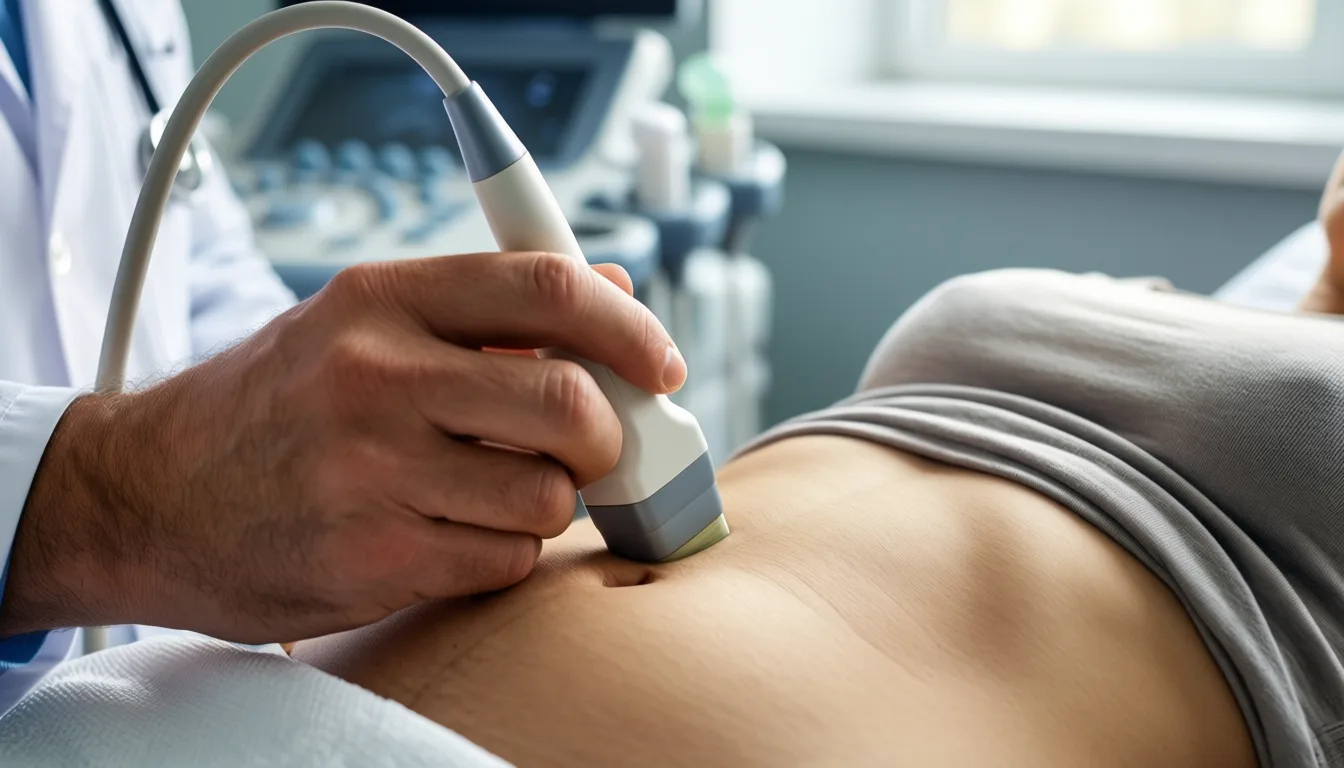
The 2026 update names liver ultrasound as the first-line test for hepatic steatosis in adults with metabolic risk factors.
For years, fatty liver was an incidental finding. Now it's the metabolic story we should have been telling all along.
What the canola oil meta-analysis actually says
Dietary fat quality is one of the few levers in this space that is both modifiable and measurable. A 2026 systematic review and meta-analysis in Food Science & Nutrition looked specifically at canola oil in adults with non-alcoholic fatty liver disease (NAFLD, the older and overlapping label). Across three randomized trials and 220 participants, canola oil intake was associated with significant reductions in ALT and AST — two of the main liver enzymes used to flag hepatic inflammation — with effect sizes of −0.47 and −0.51 respectively. Triglycerides also dropped, though with substantial heterogeneity across studies.
What the data did not show is just as important. HDL cholesterol didn't move significantly, and neither did gamma-glutamyl transferase (GGT). Three trials is a small evidence base, and the authors are careful with their conclusions. This isn't a green light to start chugging canola oil; it's a signal that, within an otherwise reasonable diet, the type of fat you cook with may nudge liver markers in the right direction. That's a moderate-strength finding, and it deserves moderate-strength language.
For a wellness audience that has been told for years that seed oils are the villain of the metabolic story, this is a useful counterpoint. The trial-level evidence in people with diagnosed fatty liver points the other way. It doesn't end the debate — but it complicates the confident TikTok version of it.

Three RCTs, 220 participants: a moderate-evidence signal, not a verdict.
What screening actually looks like
Here's where the 2026 clinical update gets practical. If you're an adult with obesity, type 2 diabetes, or other metabolic risk factors, the recommendation is to be assessed for MAFLD — typically starting with ultrasound, then layering on noninvasive testing for liver fibrosis if steatosis is found. Management focuses on addressing health risk behaviors, treating comorbidities, and — for the smaller subset who progress to cirrhosis — surveillance for hepatocellular carcinoma.
None of that is dramatic. There is no headline-grabbing drug yet that resolves MAFLD reliably for most people. The interventions that move the needle are the ones already in the metabolic-health playbook: weight reduction where clinically indicated, improved glycemic control, more movement, better dietary patterns. The liver responds to the same inputs as the rest of your metabolism — which is the optimistic reframing buried inside this so-called silent epidemic.
- It's common, and often missed. MAFLD affects roughly one in three adults; many don't know they have it until enzymes or imaging flag it.
- Screening starts with ultrasound. Adults with obesity, type 2 diabetes, or other metabolic risk factors are the priority group, per the 2026 update.
- Dietary fat quality matters — modestly. A small but consistent meta-analysis links canola oil intake to lower ALT and AST in NAFLD; HDL and GGT didn't budge.
- Risk isn't evenly distributed. Population data suggest meaningfully higher liver-disease burden in Turner and Klinefelter syndromes, hinting at a sex-chromosome influence on hepatic risk.
- The fixes are familiar. Weight, glucose, movement, and food quality remain the core levers; no miracle drug has changed that yet.
- This is educational, not a diagnosis. If you have metabolic risk factors, talk to a clinician about whether a liver assessment is appropriate for you.
The story underneath all of this is hopeful, in a moderate, evidence-respecting way. A condition that touches roughly a third of adults has, until recently, lived in clinical blind spots. Now it has a name that connects it to metabolic health, a first-line test that's widely available, and a small but growing body of dietary evidence. That's not a cure. It's something better: a clearer map of a problem we can actually do something about.
Frequently asked questions
What is MAFLD, and why is the name change from 'fatty liver disease' significant?
MAFLD stands for metabolic dysfunction-associated fatty liver disease and is a rebrand of what was commonly called fatty liver disease. The name change ties the condition explicitly to metabolic risk factors — obesity, type 2 diabetes, and insulin resistance — rather than framing it as a mystery diagnosis or a drinking problem.
How is MAFLD screened for, and who should be assessed?
According to the 2026 clinical update, adults with metabolic risk factors such as obesity or type 2 diabetes should be assessed for MAFLD, starting with a liver ultrasound as the recommended first-line test for detecting hepatic steatosis. If steatosis is found, noninvasive testing for liver fibrosis may follow.
What did the canola oil meta-analysis find regarding liver health?
A 2026 meta-analysis of three randomized trials involving 220 participants found that canola oil intake was associated with significant reductions in the liver enzymes ALT and AST, and triglycerides also dropped. However, HDL cholesterol and gamma-glutamyl transferase (GGT) did not change significantly, and the authors described this as a moderate-strength signal, not a definitive verdict.
Are some people at higher risk for MAFLD than others?
Yes — population data cited in the article suggest risk is not evenly distributed. In Turner syndrome, studies show two- to sixfold higher odds of raised liver enzymes and advanced liver disease compared with age-matched controls, while in Klinefelter syndrome the prevalence of MASLD reaches approximately 45%.
What interventions are recommended for managing MAFLD?
The article notes that management focuses on addressing health risk behaviors and treating comorbidities, with no headline-grabbing drug yet available that reliably resolves MAFLD for most people. The interventions that move the needle are familiar metabolic-health measures: weight reduction where clinically indicated, improved glycemic control, more movement, and better dietary patterns.
Sources
- Metabolic dysfunction-associated fatty liver disease: an update. — Australian prescriber
- Burden of Liver Disease Among Individuals With Turner Syndrome and Klinefelter Syndrome: A Comprehensive Perspective. — Chronic diseases and translational medicine
- Effects of Canola Oil on Hepatic and Cardiometabolic Markers in Non-Alcoholic Fatty Liver Disease: A Systematic Review and Meta-Analysis. — Food science & nutrition
Join the conversation
Comments are moderated and reviewed before they appear. Be constructive — this is health information.
Add your comment