
MASLD and Your Kidneys: The Quiet Conversation Between Two Organs
The disease formerly known as fatty liver got a new name in 2023 — and a fresh acknowledgment that it rarely travels alone. Here's what the latest review tells us about the liver-kidney link.
If you have ever tried to read a health headline while holding a toddler on one hip and a lukewarm coffee in the other hand, you already know the rules of engagement: tell me what changed, tell me if it matters, and tell me what to do before someone needs a snack. So here is the short version. In 2023, the medical world quietly renamed the most common chronic liver condition in the world. What used to be called non-alcoholic fatty liver disease is now MASLD — metabolic dysfunction-associated steatotic liver disease. The new name is clunky, but it does something important: it admits, out loud, that this is a whole-body metabolic story, and that one of the organs listening most closely is the kidney.
A new review in the Journal of Clinical and Translational Hepatology pulls together what researchers currently understand about how MASLD and chronic kidney disease (CKD) travel together — epidemiologically, biologically, and clinically. The short read: the two conditions share so much of the same metabolic plumbing that treating one without thinking about the other is starting to look like an oversight. The longer read is more careful, because the evidence here is moderate, not airtight.
For parents juggling pediatrician visits and their own postponed checkups, this matters less as a diagnosis to fear and more as a frame to keep in mind. Metabolic health is a system, not a single number on a lab slip.
Why the name change actually matters
The old label — non-alcoholic fatty liver disease — defined the condition by what it wasn't. The new criteria flip that. MASLD is diagnosed when hepatic steatosis (fat in the liver) shows up alongside cardiometabolic risk factors like elevated blood sugar, blood pressure, waist circumference, or lipid abnormalities. In other words, the diagnosis now points directly at the metabolic context the liver is sitting in.
That framing matters because it lines up with how the disease actually behaves in the body. MASLD and CKD have shown a significant global increase in comorbidity, driven largely by the rise of metabolic syndrome. They are not separate stories happening to the same people by coincidence.
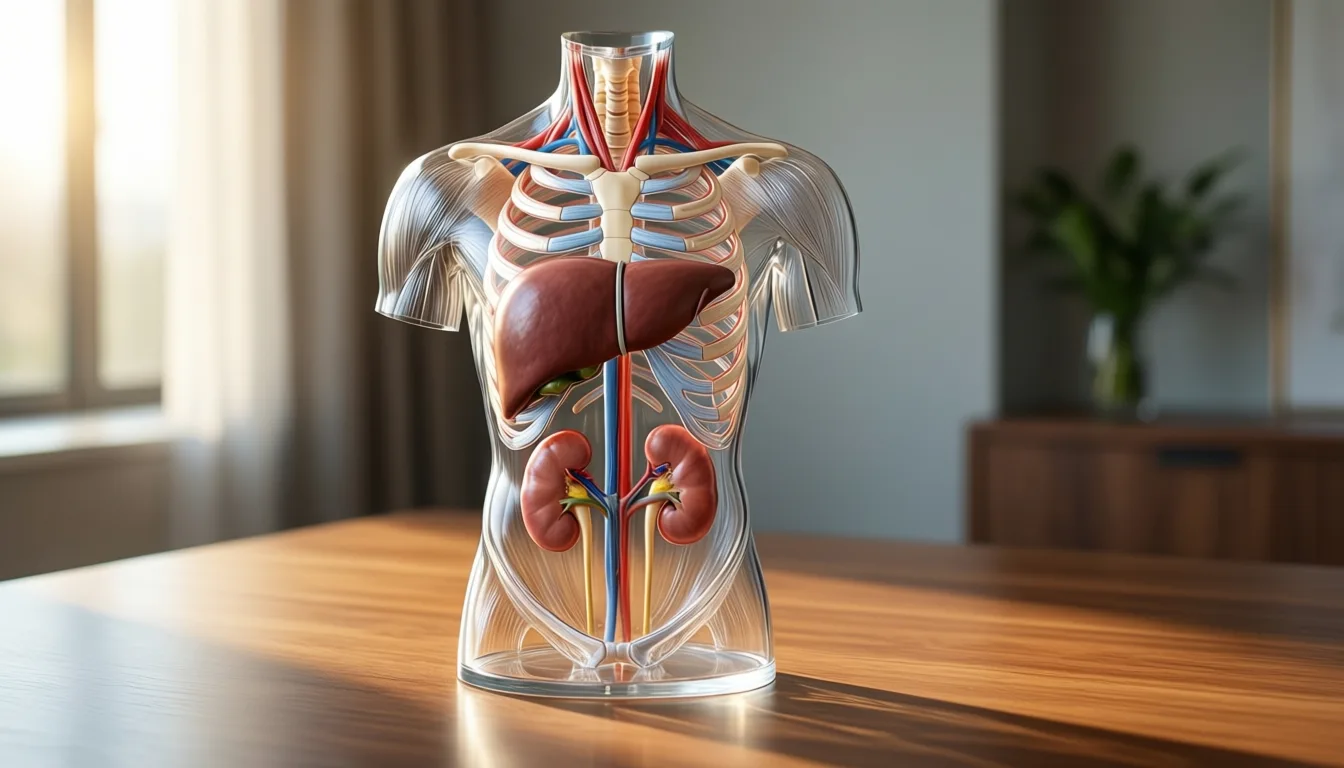
The new name codifies what clinicians have long suspected: fatty liver rarely shows up alone.
What the review found about risk
The headline finding, stated carefully: MASLD is an independent risk factor for chronic kidney disease, and the risk appears to track with the severity of liver fat and the progression of hepatic fibrosis. The more advanced the liver disease, the more the kidney signal shows up alongside it.
The relationship also seems to run in both directions. CKD may itself be a risk factor for fibrosis progression in people with MASLD, which suggests a feedback loop rather than a one-way street. When the two coexist, the review notes, the interaction may accelerate cardiovascular events and increase all-cause mortality risk.
A note on language: "may," "appears to," and "associated with" are doing real work in those sentences. The authors themselves flag that the bidirectional causal relationship — which condition is truly driving the other, and through what molecular conversation — remains unclear. This is a moderate-evidence story, not a settled one.
Metabolic health is a system, not a single number on a lab slip.
The shared machinery
Why would a liver problem and a kidney problem keep showing up at the same dinner table? Because they appear to be eating from the same plate. The review identifies several core pathophysiological mechanisms MASLD and CKD share:
- Genetic variants that influence how the body handles fat and sugar.
- Insulin resistance, the metabolic background hum of much modern chronic disease.
- Lipid metabolism disorders — the body's fat-handling system getting out of tune.
- Chronic low-grade inflammation, the kind that doesn't make you feel sick but quietly remodels tissue over years.
- Oxidative stress, an imbalance between cellular damage and repair.
- Gut microbiota dysbiosis — shifts in the bacterial communities that help regulate metabolism and inflammation.
None of these is unique to either organ. That is precisely the point. When the underlying metabolic environment tilts, multiple downstream systems tilt with it.

Everyday meals are still where most of the metabolic conversation happens.
- New name, same disease, sharper focus. MASLD replaces the old NAFLD label and explicitly ties fatty liver to cardiometabolic risk factors.
- Liver and kidneys are linked. MASLD is an independent risk factor for CKD, and severity tracks with liver fibrosis.
- The relationship looks bidirectional. CKD may, in turn, accelerate liver fibrosis — though causality is not yet nailed down.
- They share the same plumbing. Insulin resistance, inflammation, lipid handling, and gut microbiome shifts show up in both.
- The combination raises the stakes. Together, MASLD and CKD appear to push up cardiovascular and mortality risk.
- Evidence is moderate, not final. Clinical prediction tools and targeted treatments for the overlap are still works in progress.
What this means at the kitchen table
If you are running on four hours of sleep and a granola bar, here is the kind, realistic version. You do not need to memorize a new acronym or overhaul your life this week. You do not need to panic if a past blood test mentioned a fatty liver. What this body of research is gently arguing is that the levers that help one organ in this system tend to help the others: steady blood sugar, healthy blood pressure, a waistline that is not creeping, sleep that exists at all.
For a tired parent, the smallest useful step is almost always the right one. A walk after dinner. A glass of water before the second coffee. A real meal instead of finishing your kid's crusts standing up. Booking the physical you have rescheduled three times. None of that is glamorous. All of it is the same medicine the liver and the kidneys are quietly asking for.
Where the science still has homework
The review is candid about its own limits. There are significant gaps in clinical prediction tools and in targeted treatment strategies for people who have both conditions. The molecular dialogue between the organs is still being mapped. For readers, that means two things at once: this is a real and increasingly recognized clinical pattern, and the precise playbook for managing it is still being written.
That is an honest place to land. Not a miracle, not a panic — a clearer picture of a metabolic system that has always been talking to itself, and a name that finally reflects it.
Frequently asked questions
What does MASLD stand for, and why did the name change from non-alcoholic fatty liver disease?
MASLD stands for metabolic dysfunction-associated steatotic liver disease, a label adopted in 2023 to replace the old non-alcoholic fatty liver disease (NAFLD). The new name points directly at the metabolic context surrounding the diagnosis — hepatic steatosis plus cardiometabolic risk factors such as elevated blood sugar, blood pressure, waist circumference, or lipid abnormalities — rather than defining the condition by what it isn't.
Is MASLD a risk factor for chronic kidney disease, or is the link just a coincidence?
According to the review covered in the article, MASLD is an independent risk factor for chronic kidney disease, and the risk appears to track with the severity of liver fat and the progression of hepatic fibrosis. The two conditions have also shown a significant global increase in comorbidity, driven largely by the rise of metabolic syndrome, suggesting the connection is not coincidental.
Does chronic kidney disease affect the liver in return, or does the relationship only run one way?
The relationship appears to run in both directions. The review notes that CKD may itself be a risk factor for fibrosis progression in people with MASLD, pointing to a feedback loop rather than a one-way street. However, the article is careful to note that which condition is truly driving the other remains unclear.
What biological mechanisms do MASLD and chronic kidney disease share?
The review identifies several overlapping mechanisms, including insulin resistance, lipid metabolism disorders, chronic low-grade inflammation, oxidative stress, gut microbiota dysbiosis, and genetic variants that influence how the body handles fat and sugar. Because none of these is unique to either organ, a tilt in the underlying metabolic environment can affect both simultaneously.
How solid is the evidence connecting MASLD and kidney disease — is this settled science?
The article describes the evidence as moderate, not airtight. The authors of the review themselves flag that the bidirectional causal relationship between the two conditions remains unclear, and the article notes that clinical prediction tools and targeted treatment strategies for people who have both conditions are still works in progress.
Sources
- Metabolic Dysfunction-associated Steatotic Liver Disease and Chronic Kidney Disease: From Epidemiology and Pathophysiology to Clinical Prediction and Treatment Options. — Journal of clinical and translational hepatology
Join the conversation
Comments are moderated and reviewed before they appear. Be constructive — this is health information.
Add your comment