
The Metabolic-Brain Axis: Why Diabetes Drugs Are Being Tested Against Alzheimer's and Heart Disease
Early science suggests the metabolic chaos behind type 2 diabetes may also drive memory loss and silent artery damage — and that treating one upstream signal could ripple downstream.
The baby finally went down at 4:47 a.m. You are standing in the kitchen, deciding whether coffee counts as breakfast, when a headline floats past on your phone: a diabetes drug may protect the brain. Another one claims a new blood test predicts heart disease decades before symptoms. It is tempting to scroll on. But these two stories are quietly pointing at the same idea — that the metabolic weather inside your body in your thirties and forties is shaping what happens to your brain and arteries in your sixties and seventies. The science is early. The implication is not.
- One system, many symptoms. Researchers increasingly treat insulin resistance and chronic inflammation as a single upstream problem with downstream effects on the brain and heart.
- A diabetes drug, a brain signal. In a rat model combining type 2 diabetes and Alzheimer's features, the SGLT2 inhibitor empagliflozin reduced amyloid and tau pathology — promising, but not human evidence.
- A new risk index. In a long-running cohort of younger adults, a combined inflammation-and-insulin-resistance score tracked with progression of coronary artery calcium.
- The takeaway for tired parents. Sleep, movement, and the boring metabolic basics are not just about weight — they are plausibly about cognition and cardiac risk too.
- Talk to a clinician. None of this is a prescription. It is a reason to ask better questions at your next appointment.
The shared upstream
For decades, medicine has treated Alzheimer's and heart disease as separate problems with separate specialists. That is changing. Type 2 diabetes is now recognized as a meaningful contributor to dementia risk, with overlapping mechanisms — insulin resistance in brain tissue, amyloid-β accumulation, tau hyperphosphorylation — that look uncannily like the metabolic chaos seen in the rest of the body. A recent preclinical study in the European Journal of Neuroscience framed the overlap bluntly: diabetes does not just coexist with Alzheimer's pathology; it appears to accelerate it through shared biology.
If that biology is shared, the logic goes, maybe the treatments can be too. Sodium-glucose cotransporter-2 (SGLT2) inhibitors — drugs originally designed to help the kidneys excrete excess glucose — have surprised cardiologists with cardiovascular benefits that exceed what glucose control alone would predict. Now neuroscientists are asking whether they might do something similar for the brain.

SGLT2 inhibitors were designed for blood sugar. Researchers are now probing whether their effects reach the brain.
What the rats showed
In the study, researchers built a rat model that combined a high-fat diet with low-dose streptozotocin — a chemical insult to insulin-producing cells — to mimic the messy reality of type 2 diabetes complicated by Alzheimer's-like brain changes. They then compared empagliflozin against rivastigmine, a standard Alzheimer's drug that targets the cholinergic system.
Empagliflozin did the expected metabolic work: lower nonfasting glucose, better oral glucose tolerance, restored insulin levels. But it also did something less expected. The treated animals performed better on short-term and spatial memory tasks. Their brains showed less amyloid-β and less phosphorylated tau — the two pathological hallmarks of Alzheimer's. Histology revealed reduced neurodegeneration in the cortex and hippocampus, the regions most punished by the disease. The authors describe a "multifaceted neuroprotective" effect that travels alongside the metabolic one.
The caveats matter. This was a rat model, not a clinical trial. Rodent Alzheimer's is not human Alzheimer's, and the graveyard of failed dementia drugs is full of compounds that looked brilliant in animals. What the work does justify is continued investigation — and a more curious conversation about why a drug for the pancreas keeps showing up in places it was not designed to go.
A drug for the pancreas keeps showing up in places it was not designed to go.
The heart's quiet timeline
If the brain story is about a possible treatment, the heart story is about a possible warning. Coronary artery calcium (CAC) is one of cardiology's most useful crystal balls: a CT-based measure of how much calcified plaque is already sitting in the arteries. It tends to creep up silently, and once it is meaningfully present, the cardiovascular risk conversation changes.
Researchers using the long-running CARDIA cohort — adults followed since young adulthood — recently asked whether a single composite score could predict who would see their CAC progress. They combined three signals already collected at routine visits: C-reactive protein (a marker of systemic inflammation) with the triglyceride-glucose index (a proxy for insulin resistance). They called it the CTI. Among 2,655 participants with an average age in the early forties, those in the highest CTI quartile had roughly a 38% higher risk of CAC progression over nearly nine years of follow-up, compared with the lowest quartile.
The association held across subgroups — age, sex, race, body mass index, baseline CAC — and survived after excluding participants who already had diabetes or were on cholesterol-lowering drugs. That robustness is what makes the finding interesting. It suggests the inflammation-plus-insulin-resistance signal is doing real work, not just standing in for something else.
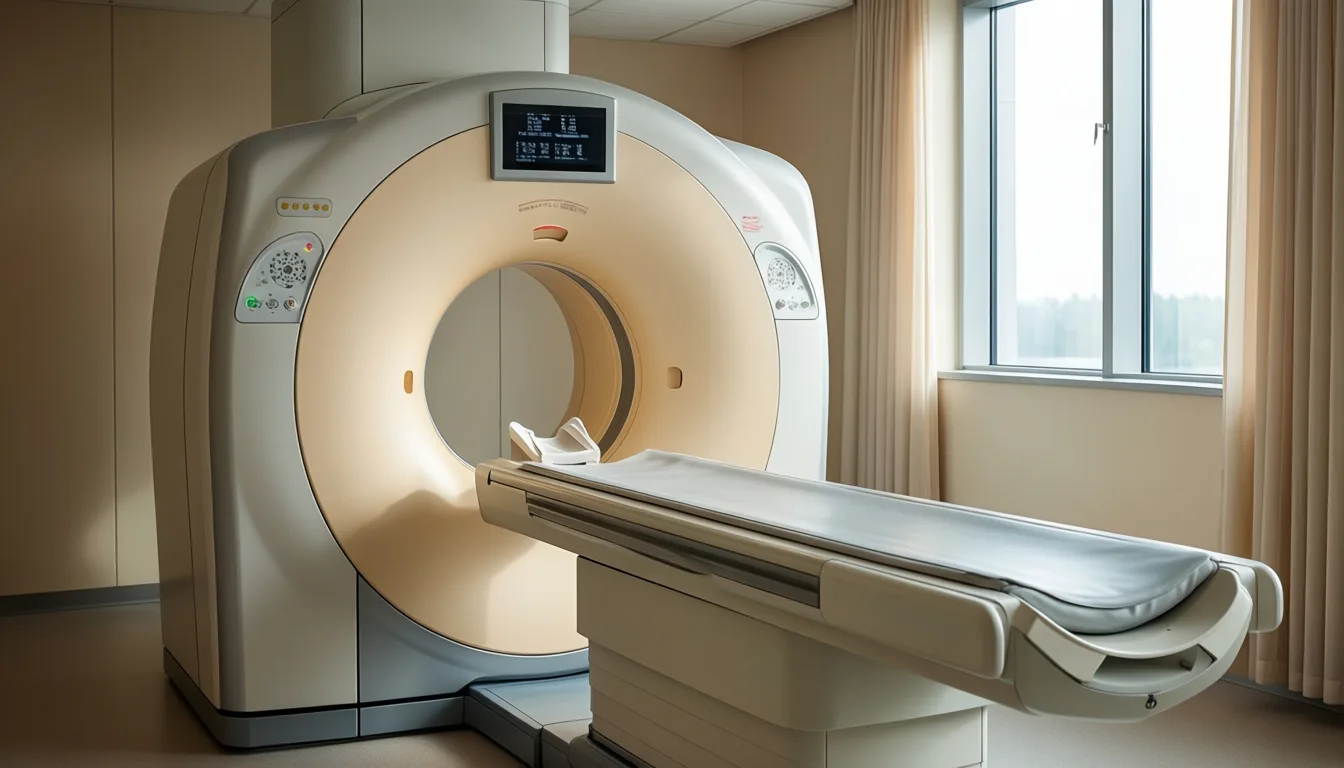
Coronary artery calcium scans turn an invisible process into a number — and increasingly, into a conversation.
Why a tired parent should care
Here is the honest version, for anyone reading this between feeds. Neither study tells you what to do tomorrow morning. The empagliflozin work is in rats. The CTI work is observational — it shows association, not cause, and a 38% relative risk increase in a group with an already-modest absolute risk is meaningful at the population level but not a personal verdict.
What both studies do, taken together, is reinforce a frame that has been quietly gathering evidence for a decade: the metabolic-inflammatory state you carry through your thirties and forties is not just about pants size or future diabetes. It is plausibly a shared upstream for some of the conditions we fear most — and the things that move it (sleep when you can get it, movement when you can fit it in, fiber, the unglamorous basics) are the same ones your clinician has been gently mentioning for years.
The new idea is not that those basics matter. It is that they may matter in more places at once than we realized.
The smallest useful step
If you are reading this on three hours of sleep, do not try to overhaul anything tonight. The research will still be there when the baby is sleeping through. The smallest useful step is usually the one you can actually do: a walk after dinner instead of the couch, water before coffee, an earlier bedtime on the nights you can choose it. The metabolic-brain axis is built one ordinary day at a time, and the evidence is increasingly clear that ordinary days are where the real medicine happens.
The dramatic interventions — the drugs, the scans, the indices — are how science learns. The boring ones are how you live. Both stories matter. Tonight, the boring one wins.
Frequently asked questions
What was empagliflozin originally designed to do, and why are researchers now interested in its effects on the brain?
Empagliflozin is an SGLT2 inhibitor originally designed to help the kidneys excrete excess glucose. It surprised cardiologists with cardiovascular benefits that exceeded what glucose control alone would predict, which led neuroscientists to ask whether it might produce similar unexpected benefits for the brain.
What did the rat study find about empagliflozin's effects on the brain?
In a rat model combining a high-fat diet and a chemical insult to insulin-producing cells, empagliflozin-treated animals performed better on short-term and spatial memory tasks. Their brains also showed less amyloid-β and less phosphorylated tau, and histology revealed reduced neurodegeneration in the cortex and hippocampus.
Why can't readers treat the rat study as proof that empagliflozin prevents Alzheimer's disease?
The article is explicit that this was a rat model, not a clinical trial, and that "rodent Alzheimer's is not human Alzheimer's." It also notes that many compounds that appeared effective in animals have gone on to fail in dementia drug development.
What is the CTI score, and what did researchers find when they applied it to the CARDIA cohort?
The CTI combined C-reactive protein, a marker of systemic inflammation, with the triglyceride-glucose index, a proxy for insulin resistance. Among 2,655 adults followed for nearly nine years, those in the highest CTI quartile had roughly a 38% higher risk of coronary artery calcium progression compared with those in the lowest quartile.
What lifestyle factors does the article say may influence the metabolic-inflammatory state linked to brain and heart risk?
The article points to sleep, movement, and fiber as the "unglamorous basics" that can shift the metabolic-inflammatory state. It suggests these same habits may matter for cognitive and cardiac risk, not just weight or future diabetes.
Sources
- Modulation of Amyloid and Tau Pathology by Empagliflozin in a High-Fat Diet and Streptozotocin-Induced Type 2 Diabetes-Associated Alzheimer's Model. — The European journal of neuroscience
- C-Reactive Protein-Triglyceride-Glucose Index and Coronary Artery Calcium Progression: A Prospective Cohort Analysis. — Clinical cardiology
Join the conversation
Comments are moderated and reviewed before they appear. Be constructive — this is health information.
Add your comment