
The Muscle Problem GLP-1s Can't Solve: Why Exercise After Weight Loss Still Wins
A new randomized trial suggests a year of structured exercise after weight loss boosts the body's own appetite-quieting GLP-1 — something the injectable drugs don't appear to do. Here's what that means for anyone serious about keeping the weight off.
For the millions of people now taking a GLP-1 medication, the central promise is elegantly simple: the drug quiets appetite, the scale moves, and a problem that felt intractable begins to yield. What the prescription cannot do — and what a new randomized trial brings into sharper focus — is teach the body to produce more of that same appetite-quieting hormone on its own. That job, it turns out, still belongs to exercise.
The study, published in Obesity in 2026, followed 195 adults who had just lost an average of 13.1 kg on a low-calorie diet. Researchers then randomized them to one of four paths for a full year: usual activity, a structured program of moderate-to-vigorous exercise, the GLP-1 receptor agonist liraglutide at 3.0 mg per day, or exercise plus the drug. The question was narrow but consequential — would any of these maintenance strategies change how much GLP-1 the body itself secretes after a meal?
The answer was striking in its asymmetry. After a year, the exercise group's late-phase postprandial GLP-1 response had climbed by 37%, a within-group increase of 25% over those doing usual activity. In the groups taking the GLP-1 drug, by contrast, endogenous secretion was unchanged versus placebo. The medication mimics the hormone; it does not appear to train the gut to make more of it.
The drug mimics the hormone. It does not appear to train the gut to make more of it.
That distinction matters because the late-phase postprandial GLP-1 signal is part of how the body naturally tells itself the meal is over. A larger endogenous response after eating is one plausible mechanism by which exercise may blunt the appetite rebound that so often follows weight loss — the biological undertow that drags people back toward their starting weight. The trial's authors are careful to frame this as exploratory, and the readout is a hormonal response rather than a long-term weight outcome, but the directional finding is consistent and biologically coherent.
The muscle problem hiding inside the success story
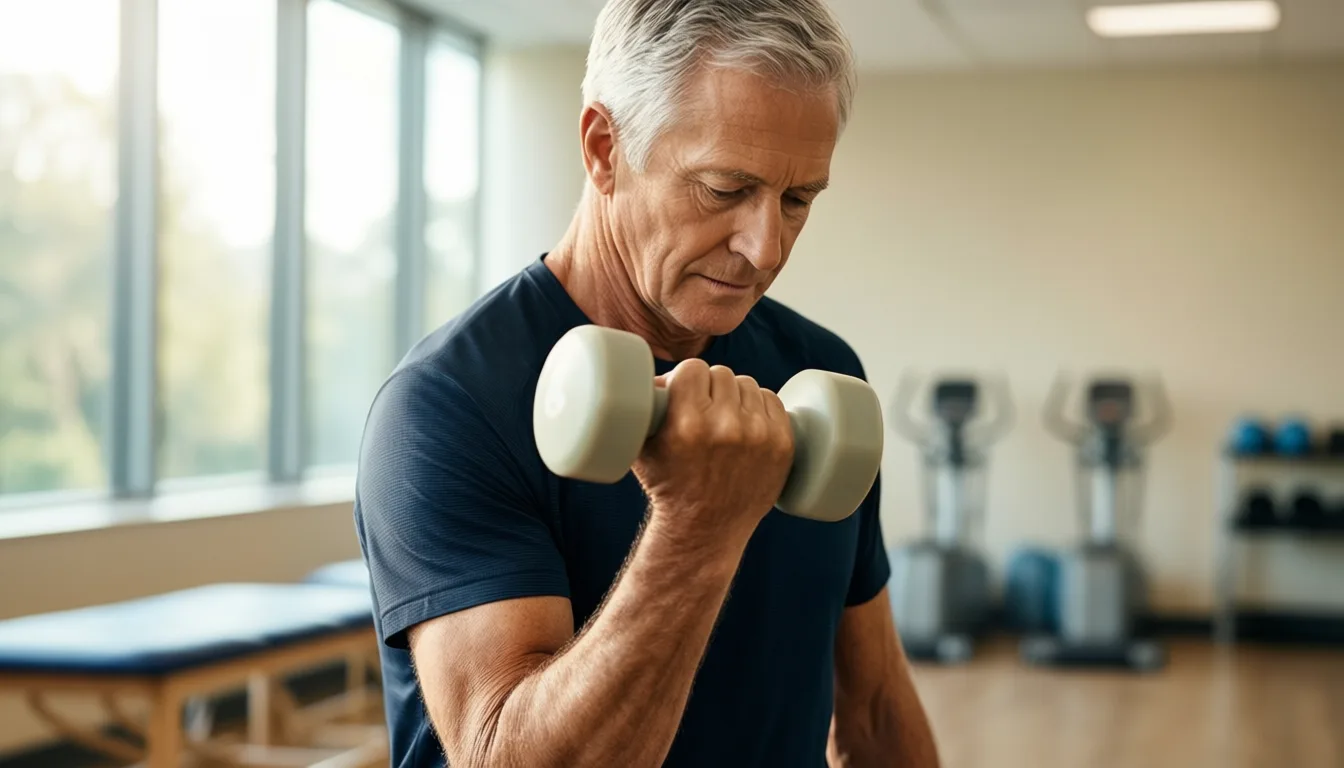
Resistance training is increasingly framed as a companion therapy to incretin drugs, not an optional extra.
The exercise finding lands at the same moment a second, quieter conversation is gathering force in the clinical literature: what GLP-1 and dual GIP/GLP-1 drugs may be doing to muscle, particularly in older adults. A 2025 perspective in Diabetes walks through the emerging concern around sarcopenic obesity — a condition the authors note affects an estimated 28.3% of people aged over 60 — and how the new drug class intersects with it.
The perspective is not anti-medication. It credits incretin therapies with meaningful reductions in weight, improvements in physical function, and gains in quality of life. But it flags a real trade-off: rapid pharmacologic weight loss carries the risk of loss of muscle mass and an increased rate of adverse events, especially in older patients whose muscle reserves are already thinning with age. The authors urge clinicians to weigh benefits against those risks and to think carefully about patient identification, monitoring, and how — and when — to discontinue.
Read together, the two papers point in the same direction. The drugs are powerful tools for getting weight off. Exercise looks increasingly necessary for keeping it off in a body that still works the way you want it to.
What the trial actually tested — and didn't
It is worth being precise about the scope. The exercise finding comes from an exploratory analysis, not the trial's primary weight-maintenance endpoint, and the measured outcome was the GLP-1 response to a three-hour liquid mixed meal test, not a head-to-head verdict on long-term weight regain. The intervention itself was substantial — 52 weeks of moderate-to-vigorous activity — not a casual uptick in step count. And the comparator drug was liraglutide at 3.0 mg, an earlier-generation GLP-1 agonist; the newer, more potent agents (semaglutide, tirzepatide) were not tested here.
None of that erases the signal. It does mean the right way to talk about it is as a plausible, biologically grounded mechanism that fits with a wider body of work on exercise and appetite regulation — not as proof that exercise beats the drugs on weight outcomes. The evidence is moderate, and the language should be too.
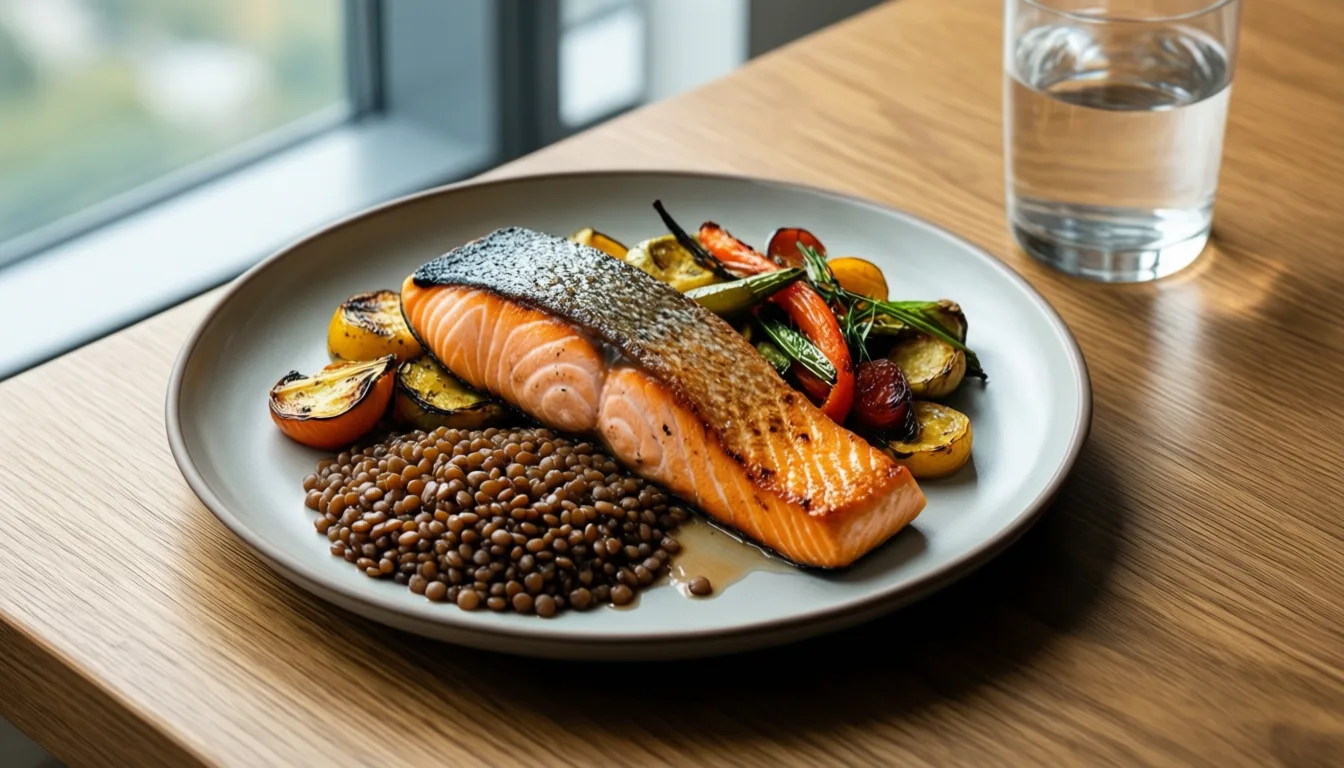
A mixed meal is the standard way researchers measure how the gut releases GLP-1 in real eating conditions.
How to think about it if you're on — or considering — a GLP-1
For readers already on an incretin, none of this argues for stopping. It argues for pairing. The clinical concern about muscle is loudest in older adults and in anyone losing weight quickly, and the obvious counterweight — resistance training plus adequate protein, alongside aerobic work — is the same advice that holds up across most of the maintenance literature. The new trial adds a second reason to take it seriously: the exercise itself may be doing hormonal work the drug isn't.
For readers considering the drugs, the framing shift is subtle but important. Exercise has often been pitched as the thing you do instead of medication, or the thing you graduate to once the medication has done its job. The emerging picture is closer to the opposite: exercise is the substrate the medication is built on top of, and the part most likely to determine what the body looks and functions like a year or five years from now.
As always, these are conversations to have with a clinician who knows your history — including how fast you're losing weight, what your baseline muscle and function look like, and what you want the next decade of your life to feel like. The drugs are real medicine. So, in a quieter and less marketable way, is the squat rack.
- Exercise raised endogenous GLP-1; the drug didn't. A year of structured exercise increased late-phase postprandial GLP-1 by 37% in an exploratory RCT analysis; liraglutide left endogenous secretion unchanged.
- The finding is exploratory, not a weight verdict. The measured outcome was a hormonal response to a meal test, not long-term weight regain — directionally meaningful, not definitive.
- Muscle is the quiet trade-off. A 2025 Diabetes perspective flags loss of muscle mass and adverse events as real risks with GLP-1 and GIP/GLP-1 drugs, especially in older adults.
- Sarcopenic obesity is more common than most people realize. An estimated 28.3% of adults over 60 are affected, raising the stakes for how weight is lost — not just whether it is.
- Pair, don't substitute. Resistance training and aerobic activity are the most plausible counterweights to muscle loss and the strongest lever for maintaining the loss.
- Talk to your clinician about monitoring. Particularly around rate of loss, muscle and function, and any plan for tapering or discontinuation.
Frequently asked questions
What did the study find about exercise and the body's own GLP-1 production?
After a year of structured moderate-to-vigorous exercise, participants' late-phase postprandial GLP-1 response increased by 37%, which was 25% greater than those doing usual activity. By contrast, the groups taking the GLP-1 drug liraglutide showed no change in endogenous GLP-1 secretion compared to placebo.
Does taking a GLP-1 medication train the gut to produce more of the hormone on its own?
Based on this trial, it does not appear to. The medication mimics the hormone, but liraglutide at 3.0 mg did not increase the amount of GLP-1 the body itself secreted after a meal. The article notes this distinction matters because the natural postprandial GLP-1 signal is part of how the body tells itself a meal is over.
Is the exercise finding proof that exercise is better than GLP-1 drugs for weight loss?
No — the article is explicit that the finding comes from an exploratory analysis and the measured outcome was a hormonal response to a meal test, not long-term weight regain. The authors describe it as a plausible, biologically grounded mechanism consistent with broader work on exercise and appetite regulation, not a head-to-head verdict on weight outcomes.
Why are GLP-1 drugs a particular concern for older adults?
A 2025 perspective cited in the article flags that rapid pharmacologic weight loss carries a risk of muscle mass loss and increased adverse events, especially in older patients whose muscle reserves are already thinning with age. The article also notes that sarcopenic obesity — a condition combining muscle loss and excess body fat — affects an estimated 28.3% of adults over 60.
If someone is already taking a GLP-1 medication, what does the article suggest about exercise?
The article argues for pairing exercise with the medication, not stopping it. It frames resistance training and aerobic activity as the most plausible counterweights to muscle loss and as a lever for maintaining weight loss, noting that exercise may be doing hormonal work the drug is not.
Join the conversation
Comments are moderated and reviewed before they appear. Be constructive — this is health information.
Add your comment