NAD+ Under Pressure: A Mouse Study Complicates the Nicotinamide Riboside Story
A 2025 GeroScience paper finds that in aged mice under chronic stress, NR protected some blood markers — but also amplified anxiety-like behavior. A wrinkle worth knowing before your next scoop.
For a molecule that most people had never heard of a decade ago, NAD+ has become an unusually loud character in the longevity conversation. Its precursor, nicotinamide riboside — NR for short — is now folded into capsules, powders, and IV bars marketed to endurance athletes and biohackers chasing a cleaner mitochondrial burn. The pitch is intuitive: NAD+ levels fall with age, NR raises them, therefore NR rewinds something. But a 2025 paper in GeroScience pokes a careful, inconvenient finger at that story. In aged mice exposed to daily physiological stress, NR did some of what the marketing promises — and then did something the marketing has not prepared anyone for.
- Preclinical only. Findings come from aged mice, not humans — treat them as hypothesis-generating.
- Mixed signal. Six weeks of NR protected against stress-induced thrombocytopenia and raised B- and T-cell frequencies.
- Behavioral cost. The same mice showed more anxiety-like behavior under chronic stress, not less.
- Cognition unchanged. NR did not measurably affect cognitive performance in this model.
- The takeaway for athletes. Stress context may matter for how NR behaves — a variable the supplement category has largely ignored.
The pitch, and the gap in it
NAD+ — nicotinamide adenine dinucleotide — is the redox workhorse that lets your mitochondria turn substrate into ATP and lets sirtuins and PARPs do their repair-and-signal business. Tissue NAD+ pools shrink with age, and NR is one of several precursors shown to refill them. That refill, in various rodent and small human studies, has been linked to improvements in markers of metabolic and immune function.
Here is the gap: most of those experiments measured NR in animals living quiet laboratory lives. Real organisms — and certainly the readers of a performance magazine — are not unstressed. Training load, sleep debt, work pressure, illness, and the slow grind of aging itself are chronic stressors. The question the new GeroScience study asks is disarmingly simple: when you add daily physiological stress on top of NR supplementation in aged animals, do the benefits hold?
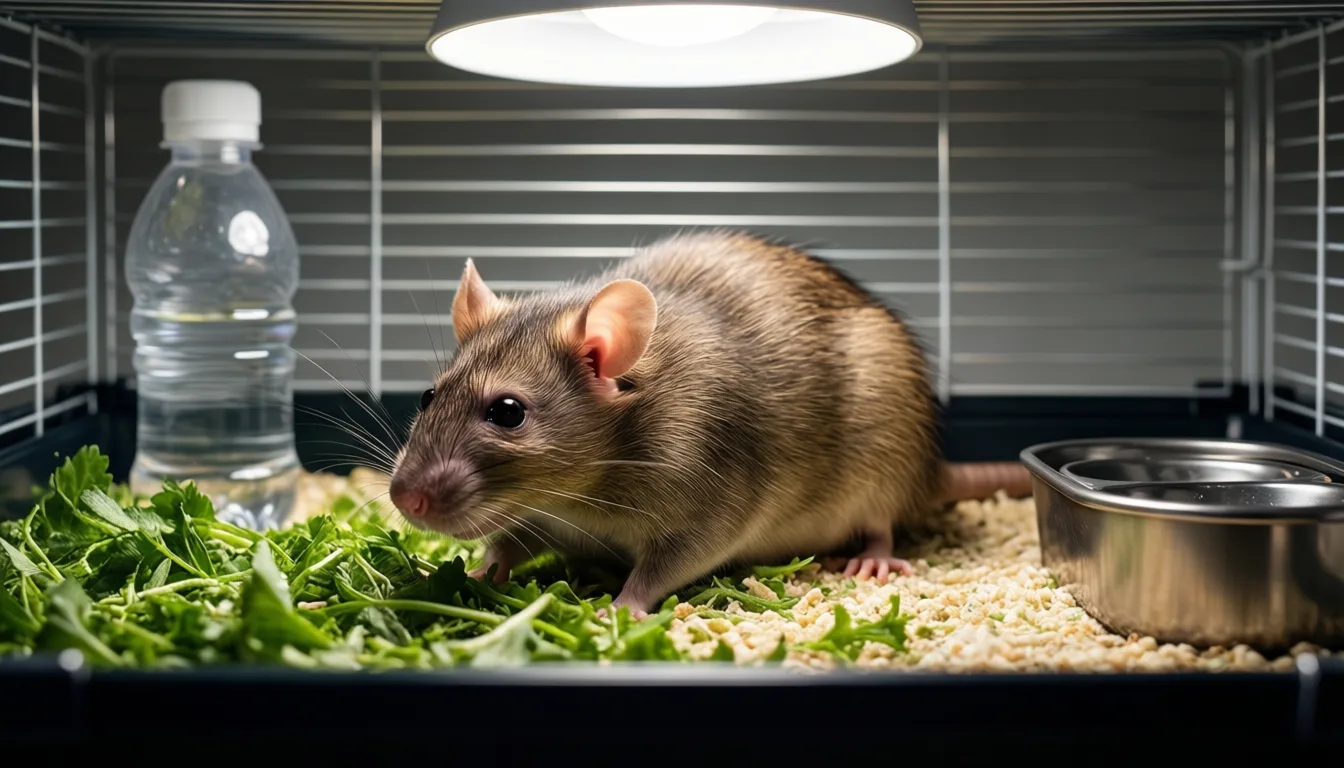
The study paired six weeks of NR with daily physiological stress in aged mice — a design meant to probe whether NR's benefits survive a less-than-pristine environment.
What the blood said
On the hematology side, NR looked good. Chronic stress in aged mice tends to push platelet counts down — stress-induced thrombocytopenia — and six weeks of NR supplementation protected against that drop. The treated animals also showed higher frequencies of B and T cells, the adaptive immune system's two main lymphocyte lineages. Read narrowly, that is the kind of result the NAD+ field has been hoping to see: a precursor that keeps the immune compartment a little more resilient when the organism is being pushed.
For a writer who follows the performance-science beat, this is the part that is genuinely interesting. Aged immune systems drift toward a state sometimes called immunosenescence — fewer naive lymphocytes, more low-grade inflammation, slower responses to new antigens. Anything that nudges lymphocyte frequencies up in an aged, stressed animal is mechanistically worth a second look. The authors are careful, though, to frame this as a frequency shift in mice, not a demonstration of better infection outcomes.
And then the behavior
Here is the wrinkle. The same supplementation regimen that protected platelets and shifted lymphocyte frequencies also, in the authors' words, heightened stress sensitivity, with increased anxiety-like behaviors in the treated animals. Cognitive performance, measured separately, did not change in either direction.
That is not the shape of result the supplement aisle is built to communicate. A clean longevity story wants the bars to all point the same way: more NAD+, better blood, calmer behavior, sharper mind. What the data actually delivered was a split — an immune-and-hematology arrow pointing one way and a behavioral arrow pointing the other. The authors call it a dual role, and the framing is appropriate: NR is doing something real in these animals, but "something real" is not synonymous with "uniformly good."
These findings suggest a dual role for NR in potentially enhancing immune function while exacerbating behavioral responses to stress. Culig et al., GeroScience, 2025
Why a performance reader should care
Mouse data is mouse data. Aged C57-style models under controlled stressors are not a stand-in for a 42-year-old marathoner stacking a build block on top of a demanding quarter at work. The cautious read is that this single paper does not overturn the broader NR literature; it adds a variable that has been largely missing from it.
The mechanistic question the paper opens — and does not answer — is whether bumping NAD+ pools in already-stressed tissue interacts with stress-response pathways in ways the unstressed studies could not see. NAD+ is a substrate for sirtuins and for the PARP family, both of which are themselves stress-responsive. It is at least biologically plausible that flooding that substrate pool while the hypothalamic-pituitary-adrenal axis is being repeatedly engaged produces different downstream effects than flooding it in a quiet cage. Plausible is not proven. It is, however, exactly the kind of question that a serious supplement category should be running toward, not past.
For an endurance reader, the practical implication is modest but real: the assumption that NR's benefits stack linearly on top of a high-stress training and life load is, at present, an assumption. The authors themselves recommend that future research on NR consider stress as a variable in order to optimize its therapeutic use in aging populations. That is a polite way of saying the existing human trials may have been answering an easier question than the one consumers are actually asking.

The honest summary
The NAD+ story is not collapsing. NR still has a coherent mechanistic rationale and a body of preclinical and early human data behind it. But the 2025 GeroScience paper is a useful corrective to a category that has, fairly or not, slid into a tone of quiet certainty. In aged mice under chronic stress, six weeks of NR produced a genuinely mixed picture: better in the blood, unchanged in the maze, worse in the open field. That is not a verdict. It is an invitation to study the molecule the way real users actually live — tired, pressured, and a long way from a quiet cage.
For a performance reader, the more interesting frontier is no longer "does NR raise NAD+?" — it does — but "under what conditions does raising NAD+ translate to the outcomes that matter?" On the evidence so far, stress is one of the conditions that belongs in the question.
Frequently asked questions
What did the 2025 GeroScience study find about NR and the immune system in aged mice?
Six weeks of NR supplementation protected against stress-induced drops in platelet counts and raised the frequency of B and T cells — the adaptive immune system's two main lymphocyte lineages — in aged mice exposed to daily physiological stress. The authors framed this as a frequency shift in mice, not a demonstration of better infection outcomes.
Did NR improve behavior or cognition in the stressed mice?
No — the study found the opposite on behavior: mice receiving NR showed heightened stress sensitivity and increased anxiety-like behaviors under chronic stress. Cognitive performance, measured separately, did not change in either direction.
Why does the article argue that earlier NR research may have been asking an easier question?
Most prior NR experiments measured effects in animals living quiet laboratory lives, meaning they did not account for chronic stress. The article notes that the assumption NR's benefits stack linearly on top of a high-stress training and life load is, at present, just an assumption — and that existing human trials may not reflect the conditions many consumers actually face.
Do these mouse findings mean NR causes anxiety in people?
According to the article, no — this is a single 2025 preclinical study in aged mice, and it does not establish that NR causes anxiety in humans. It also does not negate prior NR work showing metabolic or hematologic effects.
What do the study's authors recommend for future NR research?
The authors recommend that future research on NR consider stress as a variable in order to optimize its therapeutic use in aging populations.
Join the conversation
Comments are moderated and reviewed before they appear. Be constructive — this is health information.
Add your comment