Not All Veggies Are Equal: Why Legumes and Cruciferous Greens Stand Out for Young Adults
A new Raine Study analysis of 638 twenty-two-year-olds finds that beans, lentils, broccoli and their cousins track with lower cardiometabolic risk — sharpening the 'eat your vegetables' message for a generation already worried about long-term heart and metabolic health.
For years the dietary refrain has been blunt and unhelpfully broad: eat more vegetables. But a new analysis from Australia's long-running Raine Study suggests the produce aisle is not a monolith — and that for young adults trying to protect their long-term metabolic health, two specific groups may be doing most of the heavy lifting. In a cross-sectional study of 638 twenty-two-year-olds, legumes and cruciferous vegetables tracked more closely with lower cardiometabolic risk than any other vegetable category researchers measured.
- Not all vegetables behaved the same. Among five groups studied, legumes and cruciferous vegetables stood out for their links to lower cardiometabolic risk in young adults.
- The strongest signal was in men. After adjustment, higher legume intake was independently associated with markedly lower odds of being in the high-risk group for males.
- Cruciferous and green leafy intakes differed between risk groups in women, though the picture in females was more nuanced after adjustment.
- This is moderate, not definitive, evidence. The study is cross-sectional (n=638), so it can show association — not prove cause.
- Practical takeaway: a serve a day of beans, lentils, broccoli, cabbage or Brussels sprouts is a low-risk, evidence-aligned upgrade.
What the Raine Study actually found
The Raine Study is one of the most-followed birth cohorts in the world, tracking participants from before birth into adulthood in Western Australia. At the 22-year follow-up, researchers asked a deceptively simple question: when young adults eat vegetables, does it matter which ones?
Using food frequency questionnaires, the team sorted vegetables into five buckets — allium (think onions, garlic, leeks), cruciferous (broccoli, cabbage, Brussels sprouts, cauliflower, kale), green leafy, legumes (beans, lentils, chickpeas, peas), and the yellow-orange-red group (carrots, capsicum, tomatoes, pumpkin). Participants were then classified as 'high' cardiometabolic risk if they met two or more of the International Diabetes Federation's metabolic syndrome criteria, and 'low' risk otherwise.
When the analysts compared the two groups, two patterns jumped out: men in the lower-risk group ate more legumes, and women in the lower-risk group ate more cruciferous and green leafy vegetables. The other categories — allium and yellow-orange-red — did not show the same separation.

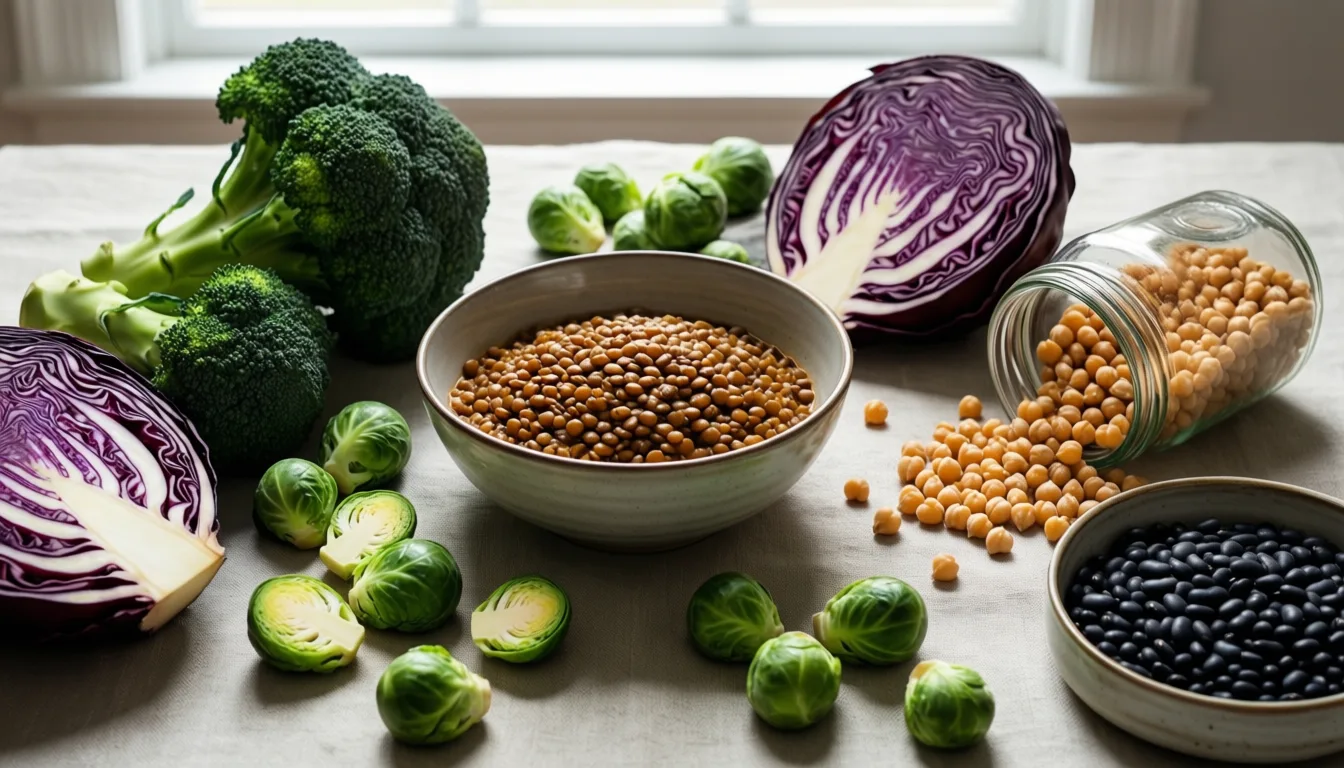
The vegetable groups linked to lower risk in the study are some of the cheapest, most shelf-stable options in the supermarket.
Why legumes — and why mostly in men?
After the researchers adjusted for sociodemographic factors, lifestyle behaviours and the rest of the diet, the legume finding in men held up: each additional 75-gram serve per day was associated with substantially lower odds of being in the high cardiometabolic risk group (odds ratio 0.278). That is a striking effect size for a single food category — and one of the reasons the paper is getting attention.
Mechanistically, the result is plausible. Legumes deliver a dense package of soluble fibre, plant protein, polyphenols, magnesium and potassium — nutrients linked in broader literature to better blood pressure, lipid profiles and insulin sensitivity. They are also one of the few foods that reliably displaces less helpful staples (refined grains, processed meats) when people eat more of them.
Why the legume signal was clearer in men is a genuinely open question. The authors note that males in the cohort started from a higher baseline cardiometabolic risk, which can make protective associations easier to detect statistically. Differences in portion sizes, body composition and hormonal physiology may also play a role. It is not evidence that women don't benefit from legumes — only that, in this dataset, the cleanest signal landed on one side of the cohort.
Each additional daily serve of legumes was associated with markedly lower odds of high cardiometabolic risk in young men. Raine Study analysis, 2026
The cruciferous question
For young women in the cohort, the unadjusted differences pointed to cruciferous and green leafy vegetables. Broccoli, cabbage, kale, Brussels sprouts and cauliflower share a family of sulfur-containing compounds called glucosinolates, which the body converts into bioactive molecules like sulforaphane. These have been studied for effects on inflammation and oxidative stress — both relevant to early cardiometabolic trajectories — though the human evidence in young adults specifically is still thin.
It's worth being precise about what the study can and can't tell us. A cross-sectional analysis captures a single snapshot: it cannot prove that eating more broccoli caused lower risk, only that the two travelled together. Reverse causation (healthier young adults eating more vegetables for other reasons) and residual confounding are always possibilities. That is exactly why the editorial evidence rating for this piece is moderate, not strong.
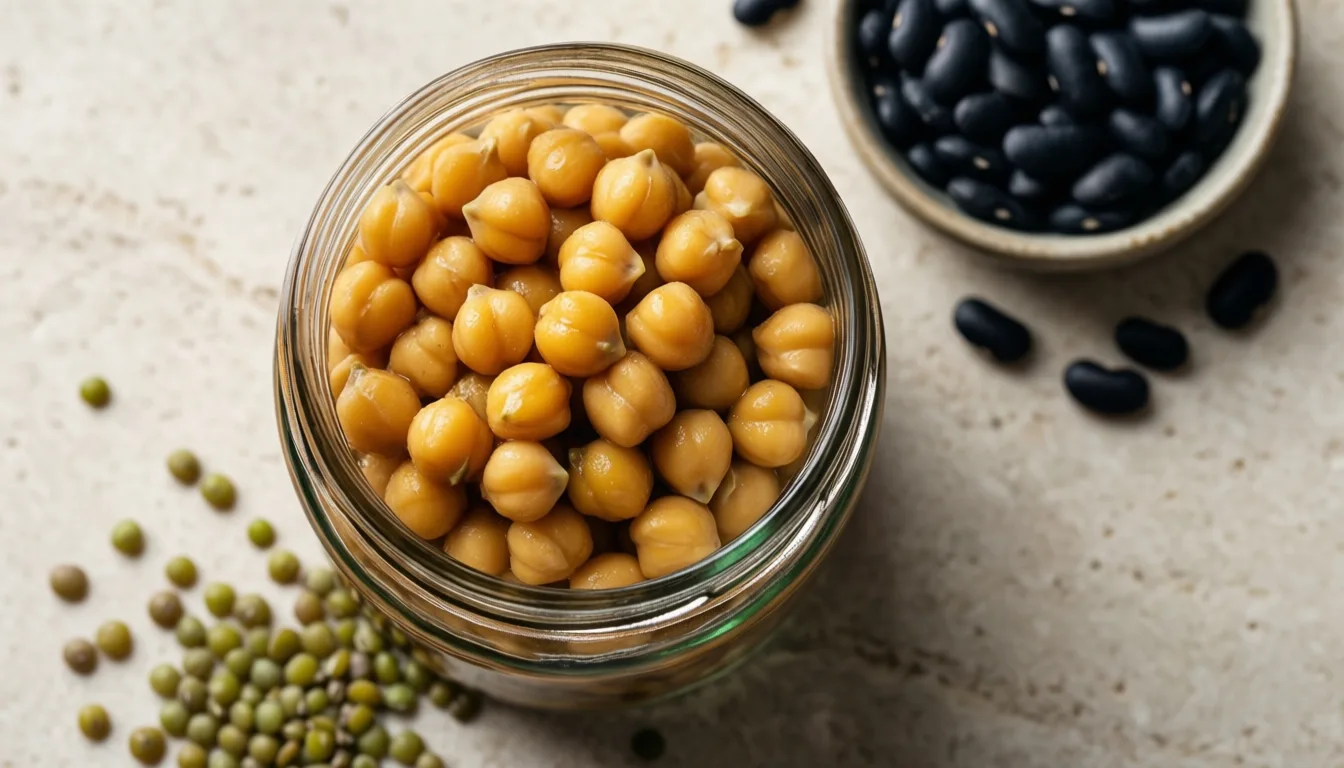
Tinned, dried or frozen — legumes count whichever way they arrive in the bowl.
How to use this without overreaching
The most defensible read of the data is also the least dramatic: among young adults, vegetable category appears to matter, and the categories that showed up best are inexpensive, widely available and easy to add. A daily serve of legumes — a half-cup of lentils in a salad, chickpeas in a curry, black beans in a burrito bowl — is a low-effort change with strong supporting biology. A few weekly meals built around cruciferous vegetables follow the same logic.
What this study does not justify is swapping out other vegetables, buying expensive supplements marketed around 'sulforaphane' or 'legume polyphenols,' or treating any single food as a hedge against the rest of the diet. The cohort that did well wasn't eating beans in isolation; they were eating beans as part of broader dietary patterns the researchers adjusted for.
If you are in your twenties and thinking about long-term metabolic health, the honest message is the unglamorous one: the evidence here is moderate, the direction is encouraging, and the specific upgrades — more lentils, more broccoli — are some of the safest bets in nutrition. Anyone with existing cardiometabolic concerns should bring questions about their own diet to a clinician or dietitian who can see the full picture.
- Add, don't subtract. Aim to introduce a serve of legumes most days before worrying about cutting anything.
- Rotate your crucifers. Broccoli, cabbage, cauliflower, Brussels sprouts and kale all count.
- Remember the limits. One cross-sectional study in 638 people is a signal, not a verdict.
- Talk to a clinician before making big dietary changes if you have existing metabolic, kidney or GI conditions.
Frequently asked questions
Which vegetable groups showed the strongest link to lower cardiometabolic risk in the study?
Among the five groups studied — allium, cruciferous, green leafy, legumes, and yellow-orange-red — legumes and cruciferous vegetables stood out. The other categories, allium and yellow-orange-red, did not show the same separation between risk groups.
Why did legumes appear to be more protective for men than for women?
The authors note that males in the cohort started from a higher baseline cardiometabolic risk, which can make protective associations easier to detect statistically. Differences in portion sizes, body composition, and hormonal physiology may also play a role, though the question remains genuinely open.
Do tinned or frozen legumes count, or do they need to be fresh?
According to the article, tinned, dried, or frozen legumes all count, whichever way they arrive in the bowl.
Does this study prove that eating more legumes or cruciferous vegetables causes lower cardiometabolic risk?
No. The study is cross-sectional, meaning it captures a single snapshot and can show association but cannot prove cause. Reverse causation and residual confounding remain possibilities, which is why the article rates the evidence as moderate, not strong.
Should I stop eating other vegetables and focus only on legumes and cruciferous greens?
The article explicitly advises against this, stating the study does not justify swapping out other vegetables. The cohort that did well was eating legumes as part of broader dietary patterns, not in isolation, and the recommended approach is to add these foods rather than subtract others.
Sources
- Higher legume and cruciferous vegetable intakes are associated with lower cardiometabolic risk in young adults: a cross-sectional study. — Nutrition, metabolism, and cardiovascular diseases : NMCD
Join the conversation
Comments are moderated and reviewed before they appear. Be constructive — this is health information.
Add your comment