Plant-Forward Eating, Reviewed: What 32 Long-Term Studies Actually Show
A 2025 systematic review maps where plant-based eating moves the metabolic needle — and where the evidence still thins out. Here's what a busy 40-year-old should actually take from it.
If you're 42, lifting three times a week, and trying to keep your waistline and your lipid panel honest, the question isn't whether plants are good for you. It's how much of your plate they need to occupy before something measurable changes — and which of those changes actually hold up when researchers stop chasing headlines and start stacking longitudinal data. A 2025 systematic review in Cureus pooled 32 long-term studies on plant-based eating and chronic disease. The picture it paints is genuinely useful — and more nuanced than the usual evangelism.
- The signal is real but moderate. Across 32 longitudinal studies, plant-forward diets consistently track with better metabolic markers — not miracle reversals.
- Type 2 diabetes and cardiovascular risk show the most reliable improvements; weight and inflammation follow.
- Gut microbiome shifts appear early and look favorable, though mechanistic detail is still thin.
- 'Plant-based' isn't one diet. Definitions vary wildly between studies, which is the biggest reason effect sizes wobble.
- The gaps matter. Few truly long studies, limited diverse populations, and a shortage of rigorous interventions.
- Practical read: shift the ratio, don't necessarily go vegan. The dose-response evidence supports incremental change.
What the review actually did
The authors synthesized 32 longitudinal studies — observational cohorts following people over years, not week-long feeding trials — examining how plant-based dietary patterns relate to type 2 diabetes, cardiovascular disease, obesity, metabolic syndrome, gut microbiome composition, and systemic inflammation. Their conclusion is measured: the patterns are consistent enough to call plant-forward eating a cornerstone of preventive medicine, but inconsistent enough that the authors flag heterogeneity, definitional drift, and a shortage of mechanistic work as real limits on how confidently we can prescribe specifics.
That's the frame to keep in mind. This isn't a single trial showing a 30% drop in anything. It's a stack of cohorts pointing in the same general direction, with the strength of the signal varying by outcome.

The diabetes signal is the strongest in the stack — and the most clinically actionable for men with creeping fasting glucose.
Where the evidence is strongest: glucose and the heart
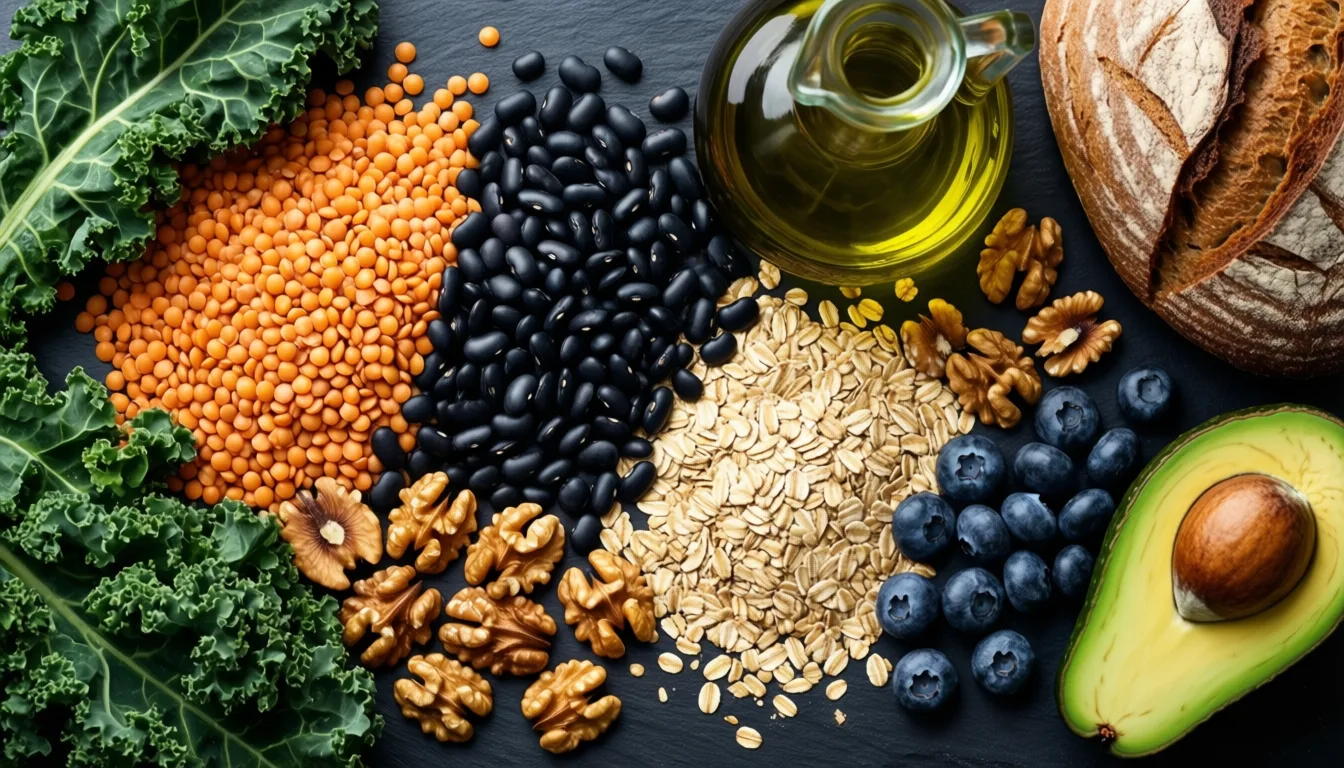
The most reliable finding across the 32 studies is metabolic: people eating predominantly plant-based patterns showed improved metabolic health and lower cardiovascular risk over time. Translated for a 40-something who's watching his fasting glucose drift up a point per year: the pattern most associated with bending that curve back is one heavy in legumes, whole grains, vegetables, nuts, and fruit, with animal products reduced rather than necessarily eliminated.
Cardiovascular risk follows the same shape. The mechanisms the review points to are familiar — fiber, polyphenols, displacement of saturated fat, lower dietary glycemic load — but the review is careful to note that mechanistic pathways still need more rigorous work. The endpoint data is more convincing than the explanation of why.
The pattern is consistent. The mechanism is still being mapped. Act on the pattern; stay humble about the mechanism.
Weight, inflammation, and the microbiome
Body weight and inflammatory markers also moved in the favorable direction across studies, though with more variability. The review groups these under "weight management" and "positive effects on inflammation," which is honest language — it's a directional finding, not a prescription. For men chasing body composition, the read is that a plant-forward shift is probably additive to your training and sleep work, not a replacement for them.
The microbiome data is the most interesting and the least settled. The review flags consistent positive effects on gut microbiome composition, which fits what we know about fiber feeding short-chain-fatty-acid-producing bacteria. But "positive" here is a coarse term. Which species, in whom, on what timeline, and with what downstream metabolic consequences — those questions remain open.
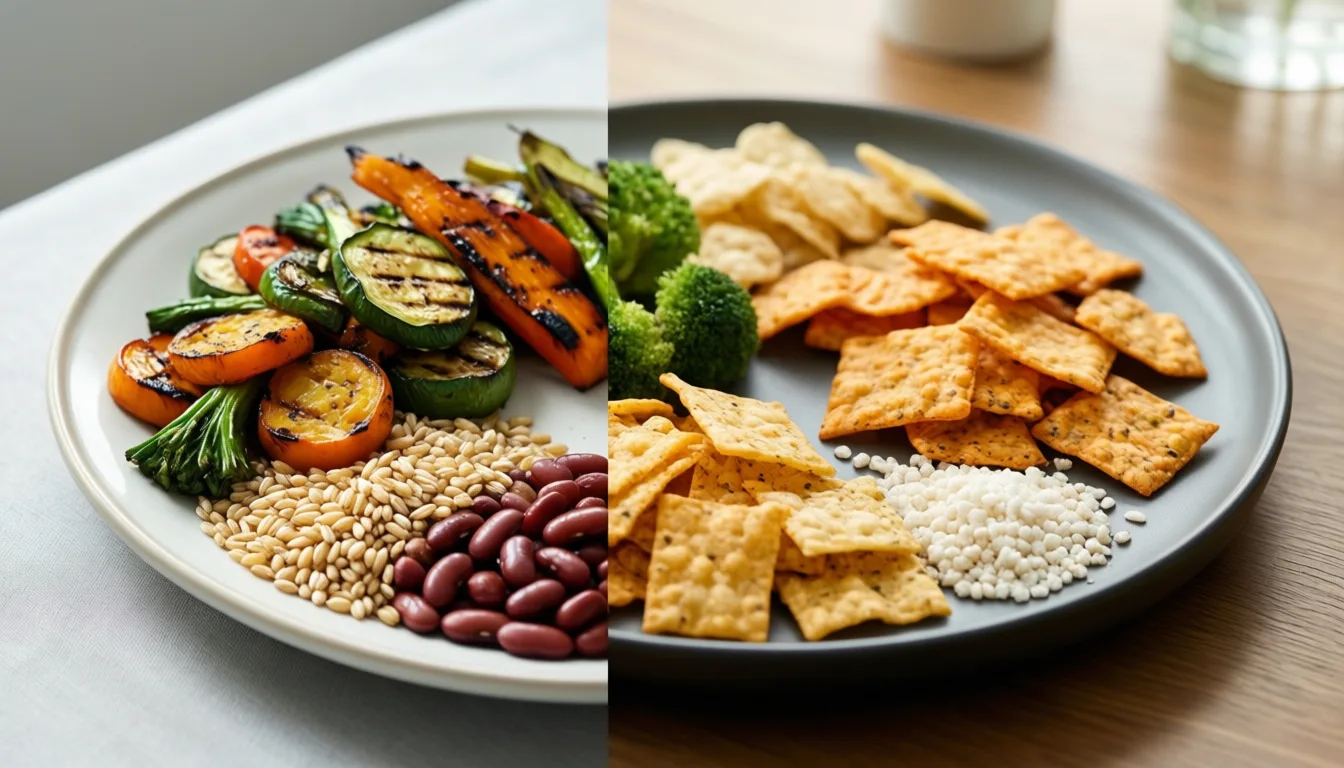
"Plant-based" covers everything from a Mediterranean pattern to ultra-processed vegan snacks. The studies don't always distinguish — and that's part of the noise.
Where the data thins out
The authors are blunt about the limits. Definitions of "plant-based" varied across studies — vegan, vegetarian, Mediterranean, flexitarian, and "healthful plant-based index" scores all get grouped under one umbrella, and they're not interchangeable. Findings on specific outcomes were mixed. Study populations skew toward narrow demographics, limiting how confidently the results generalize. And there's a shortage of truly long-term studies and rigorous interventions — most of what we have is observational, which means residual confounding (people who eat more plants also tend to exercise more, smoke less, and see doctors more often) can't be fully ruled out.
None of this invalidates the signal. It does mean the honest framing is "strong directional evidence" rather than "settled science."
What this changes for a busy 40-year-old
Pragmatically: you don't need to go vegan to capture most of what these studies are picking up. The cohorts showing benefit include flexitarian and Mediterranean patterns, which means the actionable move is ratio, not religion. More legumes, more whole grains, more vegetables and fruit, more nuts. Less ultra-processed food regardless of whether it's labeled plant-based — a vegan diet built on packaged snacks is not what the cohorts in this review were eating.
If you're tracking metabolic markers — fasting glucose, HbA1c, ApoB, triglycerides, waist circumference — a plant-forward shift is one of the better-supported nutritional levers in the preventive-medicine literature right now. It's not the only one, and it doesn't replace the conversation with your clinician about your specific numbers, family history, and medication picture. But as a default dietary pattern for a man trying to stay metabolically clean into his fifties, the 32-study stack supports the move.
Just don't expect a revolution. Expect a consistent, moderate edge — which, compounded over a decade, is the kind of edge that actually changes outcomes.
- Shift the ratio toward legumes, whole grains, vegetables, nuts and fruit — even partial shifts track with benefit.
- Watch the metabolic markers that matter: fasting glucose, HbA1c, ApoB, triglycerides, waist circumference.
- Ignore the label wars. Mediterranean and flexitarian patterns show up in the favorable data alongside stricter vegetarian patterns.
- Ultra-processed is still ultra-processed — being plant-based doesn't redeem it.
- Talk to a clinician before making big changes if you're on glucose-lowering or lipid medications; the diet can move your numbers fast enough to need dose adjustments.
Frequently asked questions
How many studies did this review include, and what kind of research were they?
The 2025 Cureus systematic review pooled 32 long-term studies. These were longitudinal observational cohorts following people over years, not short-term feeding trials.
Which health outcomes showed the most consistent improvement with plant-forward eating?
The strongest and most reliable findings were for type 2 diabetes risk and cardiovascular risk. Body weight and inflammatory markers also moved in a favorable direction, though with more variability across studies.
Do I need to go fully vegan to see these benefits?
According to the review, no. The cohorts showing benefit included flexitarian and Mediterranean patterns, meaning the evidence supports shifting the ratio of plant foods on your plate rather than eliminating animal products entirely.
Why don't the researchers draw more definitive conclusions from 32 studies?
The authors flag several limits: definitions of 'plant-based' varied widely across studies, study populations skewed toward narrow demographics, and most of the data is observational, so residual confounding — such as plant-heavy eaters also tending to exercise more and smoke less — cannot be fully ruled out.
Does eating ultra-processed vegan foods count as the kind of plant-based diet studied in this review?
The article explicitly notes that a vegan diet built on packaged snacks is not what the cohorts in this review were eating. The patterns associated with benefit centered on legumes, whole grains, vegetables, nuts, and fruit.
Join the conversation
Comments are moderated and reviewed before they appear. Be constructive — this is health information.
Add your comment