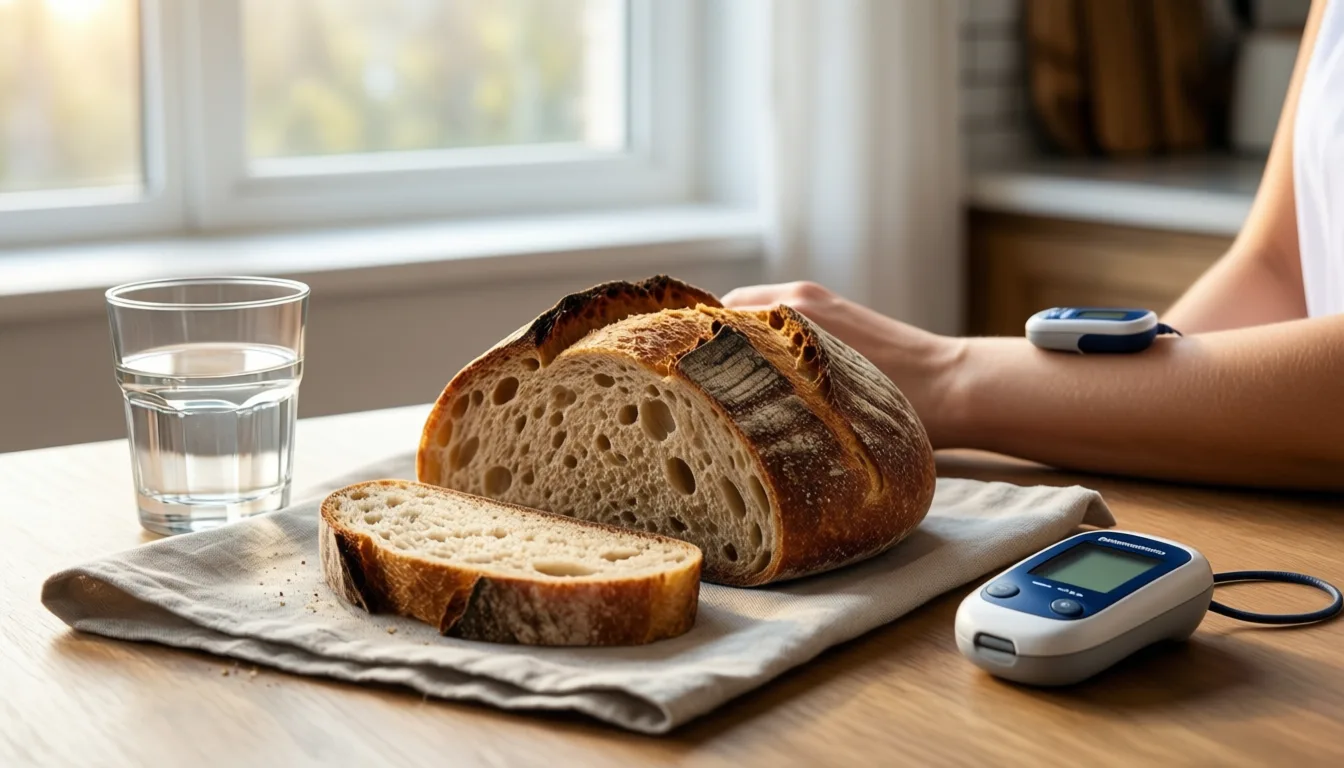
Rewiring Glucose Control: What Three New Papers Say About Gut, Liver, and Diabetes
Microbiota-targeted therapies, a newly mapped liver enzyme called HYAL1, and Mendelian evidence linking metabolic syndrome to IBD are quietly reshaping how scientists think about type 2 diabetes.
For decades, type 2 diabetes has been told as a story about two organs and one hormone: a pancreas that can't keep up, muscles and liver that stop listening, and insulin caught in the middle. That story isn't wrong — it's just getting crowded. A wave of new research is widening the cast to include the trillions of microbes in the gut, a little-known enzyme in the liver, and a surprising genetic thread that ties metabolic syndrome to inflammatory bowel disease. None of it is ready for the pharmacy shelf. All of it is worth paying attention to.
If you've spent any time on health TikTok this year, you've heard people talk about glucose spikes the way they used to talk about cortisol. The science underneath that conversation is genuinely shifting — but slowly, and in directions that don't always match the captions. Three recent papers, taken together, sketch a more interesting picture: type 2 diabetes as a whole-body conversation between the gut, the liver, and the immune system, rather than a single broken switch.
The first thread is the gut microbiome. A 2025 review in La Tunisie Medicale takes stock of a fast-moving field: people with type 2 diabetes consistently show a pattern of gut dysbiosis — a shifted balance of bacterial species — and researchers are now testing whether nudging that balance back can help correct the underlying insulin resistance. The review surveys strategies from prebiotics and probiotics to fecal microbiota transplantation, framed as a complement to (not a replacement for) the standard trio of medication, movement, and a lower-carbohydrate diet.
- Three separate findings, one direction: type 2 diabetes biology is looking less like a single broken pathway and more like a network problem across gut, liver, and immune system.
- Microbiome therapies are promising but unproven: a 2025 review catalogues the strategies; it does not declare any of them ready for routine clinical use.
- A new liver enzyme enters the chat: HYAL1 helps the liver stop making glucose after a meal — so far, shown in mice.
- Metabolic syndrome and IBD may share a causal thread: Mendelian-randomization analysis suggests waist circumference and hypertension are linked to higher risk of Crohn's and ulcerative colitis, respectively.
- None of this changes today's care: these are early signals, not prescriptions. Talk to a clinician before changing anything.
The gut: dysbiosis as a target, not just a symptom
The microbiome story in metabolic disease has been simmering for years. What's new in the recent literature is the framing: researchers are increasingly treating dysbiosis as something to act on, not just measure. The La Tunisie Medicale review summarises the current toolkit for modulating the gut microbiota to correct dysbiosis in people with type 2 diabetes, drawing on advances in metagenomics and metabolomics that finally let scientists see, at species-level resolution, what's actually shifting.
It's worth being honest about what a review like this can and can't tell us. It catalogues directions, not verdicts. The authors describe a research frontier where probiotics, prebiotics, synbiotics, dietary fibre interventions, and fecal microbiota transplantation are all being tested as ways to dent insulin resistance — but none of these are positioned as a stand-alone replacement for established care. If your feed is selling you a single capsule that fixes blood sugar, the literature is not where that confidence comes from.

Fermented foods and fibre dominate the lifestyle conversation around the microbiome — but the clinical evidence for reversing diabetic dysbiosis is still emerging.
The liver: meet HYAL1, the postprandial brake
The second thread is, in some ways, the most mechanistically satisfying. One of the defining features of type 2 diabetes is that the liver doesn't quite get the memo when you eat. Normally, after a meal, hepatic gluconeogenesis — the liver's ability to manufacture glucose from non-carbohydrate sources — should switch off, letting insulin route incoming nutrients into glycogen and fat for storage. In insulin resistance, that switch sticks.
A 2025 study in Life Metabolism proposes a new player in that switch: hyaluronidase-1, or HYAL1, a lysosomal enzyme that breaks down circulating hyaluronan after meals. In mice lacking HYAL1, gluconeogenesis stayed inappropriately switched on; in mice with extra HYAL1 in the liver, gluconeogenic activity went down, and the metabolic chaos triggered by a high-fat diet was blunted. Mechanistically, the authors trace a path through the cell's UDP-GlcNAc pool and a modification called O-GlcNAcylation, ending at the mitochondria — where less ATP synthase modification means less ATP, and less fuel for making new glucose.
That's a lot of biochemistry for a magazine paragraph, and the honest translation is this: HYAL1 looks like a previously unappreciated brake on the liver's after-meal glucose output. The asterisk, also honest: this work was done in mice. Mouse liver biology is informative, not destiny. Whether HYAL1 becomes a future drug target, a biomarker, or a footnote depends on work that hasn't been done yet.
HYAL1 looks like a previously unappreciated brake on the liver's after-meal glucose output — in mice. That's a beginning, not a verdict.
The immune angle: a Mendelian link to IBD
The third paper takes the widest lens. Epidemiologists have noticed that metabolic syndrome and inflammatory bowel disease — Crohn's and ulcerative colitis — have been rising in parallel, and that people with both tend to do worse. Correlation isn't causation, but a study technique called Mendelian randomization can get closer to causation by using genetic variants as natural experiments.
A bidirectional two-sample Mendelian-randomization analysis published in Archives of Medical Science did exactly that, in European population data. The headline finding: genetically predicted metabolic syndrome was associated with higher risk of Crohn's disease (OR 1.34, 95% CI 1.009–1.779). Drilling into components, waist circumference was linked to higher Crohn's risk (OR 1.33), and hypertension to higher ulcerative colitis risk (OR 1.61). In the reverse direction, IBD appeared to nudge triglyceride levels up, modestly.
What this is: suggestive evidence that the metabolic and the inflammatory aren't separate countries. What it isn't: a reason to assume a flat stomach prevents Crohn's, or that managing blood pressure will spare you ulcerative colitis. Mendelian randomization is powerful, but it's a statistical lens on populations, not a forecast for any individual reader.

The practical message hasn't changed: sleep, movement, fibre, and regular check-ins with a clinician still do most of the heavy lifting.
What this means if you're not a researcher
It is tempting, when three papers point in interesting new directions, to turn that into a shopping list — a probiotic to buy, a supplement to chase, a number to optimise. Resist. The most accurate read on this body of work is that the map of type 2 diabetes is getting more detailed, not that the route has changed.
The microbiome work is real but still preliminary in humans. The HYAL1 finding is elegant but lives, for now, in mice. The Mendelian-randomization signal is intriguing but statistical. Each one is a thread; none is yet a rope you can hang treatment on. If you have type 2 diabetes, prediabetes, metabolic syndrome, or IBD — or you're worried you might — the right next step is a conversation with a clinician who knows your history, not a re-org of your supplement drawer.
The reason these papers are worth reading together isn't that any one of them rewrites the textbook. It's that, taken as a set, they point toward a version of type 2 diabetes that's less about a single failed organ and more about a conversation — between gut microbes, hepatic enzymes, and immune signalling — that can go off-key in many places at once. That's a more complicated story. It's also, eventually, a more hopeful one, because a network has more places to intervene than a single broken switch.
For now, the assignment is unglamorous and unchanged: sleep, move, eat enough fibre to make your gut bacteria happy, see your doctor, and treat your feed's certainty with affectionate skepticism. The science is moving. The hype is moving faster. The gap between them is where careful readers live.
Frequently asked questions
What is dysbiosis, and why do researchers think it matters for type 2 diabetes?
Dysbiosis refers to a shifted balance of bacterial species in the gut. Researchers are increasingly treating it as something to act on rather than just measure, because people with type 2 diabetes consistently show this pattern, and studies are testing whether correcting it can help address the underlying insulin resistance.
What is HYAL1, and what role might it play in blood sugar regulation?
HYAL1, or hyaluronidase-1, is a lysosomal enzyme in the liver that breaks down circulating hyaluronan after meals. Research in mice suggests it acts as a brake on the liver's after-meal glucose production, with mice lacking HYAL1 showing inappropriately elevated gluconeogenesis and those with extra HYAL1 showing reduced gluconeogenic activity.
Was the HYAL1 research conducted in humans?
No. The HYAL1 findings come from mouse studies. The article notes that mouse liver biology is informative but not destiny, and whether HYAL1 becomes a drug target, a biomarker, or a footnote depends on research that has not yet been done.
What did the Mendelian randomization study find about the link between metabolic syndrome and inflammatory bowel disease?
The analysis found that genetically predicted metabolic syndrome was associated with a higher risk of Crohn's disease, with waist circumference specifically linked to Crohn's risk and hypertension linked to higher ulcerative colitis risk. In the reverse direction, IBD appeared to modestly raise triglyceride levels.
Do any of these three research findings change what people with type 2 diabetes should do today?
According to the article, none of these findings change current care — they are described as early signals, not prescriptions. The article states that sleep, movement, fibre, and regular check-ins with a clinician still do most of the heavy lifting, and advises talking to a clinician before changing anything.
Sources
- New therapeutic approaches based on modulation of the intestinal microbiota to correct dysbiosis in patients with type 2 diabetes. — La Tunisie medicale
- Hyaluronidase-1 mediates postprandial suppression of hepatic gluconeogenesis. — Life metabolism
- Association between metabolic syndrome and inflammatory bowel disease: a bidirectional two-sample Mendelian randomized study. — Archives of medical science : AMS
Join the conversation
Comments are moderated and reviewed before they appear. Be constructive — this is health information.
Add your comment