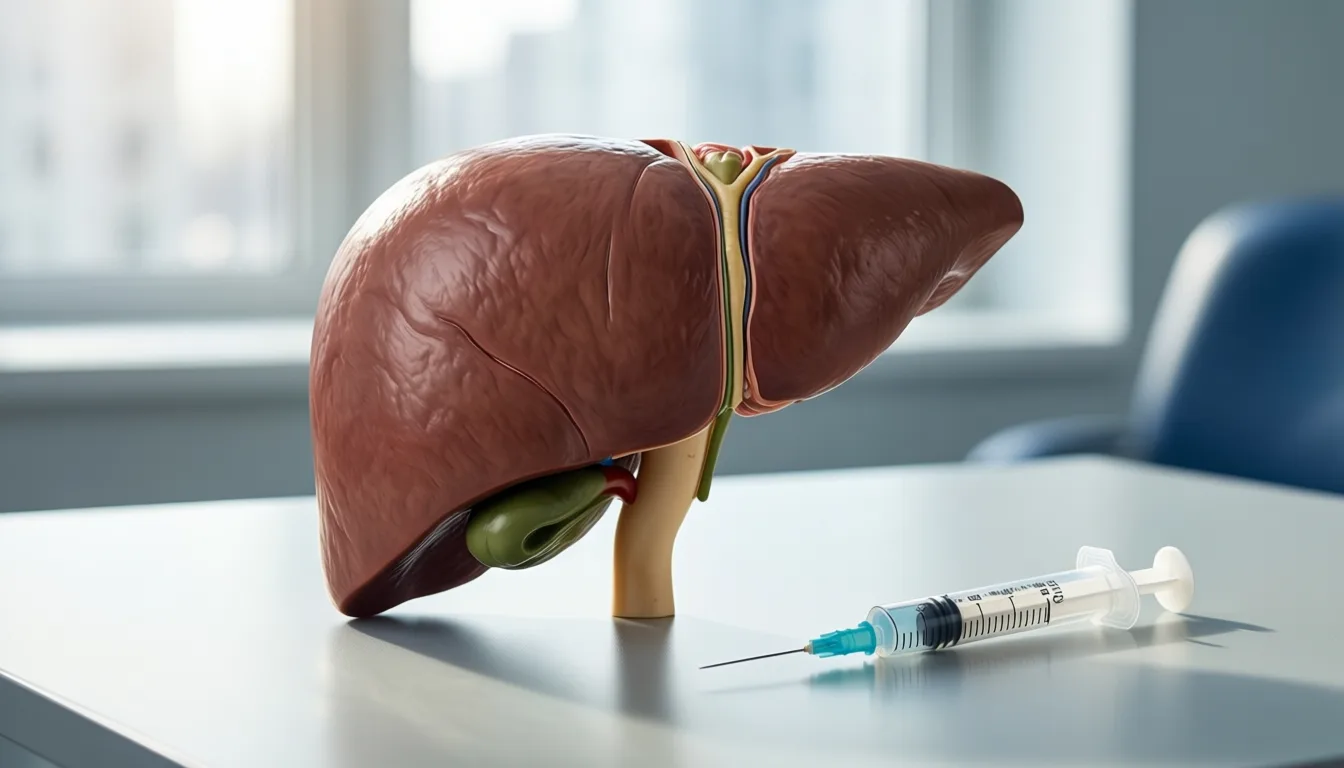
Tirzepatide for MASH: Phase 2 Signals Reshape the Liver-Metabolic Playbook
A dual GIP/GLP-1 agonist already changing diabetes and obesity care is now posting credible early signals against the fatty-liver disease that often travels with them.
For a decade, the liver has been the quiet organ in the metabolic story. While obesity and type 2 diabetes drew the headlines — and, more recently, the GLP-1 spotlight — a related condition was building underneath: metabolic dysfunction-associated steatohepatitis, or MASH, the inflammatory, fibrosing form of fatty liver disease that often travels with weight gain and insulin resistance. Until very recently, no drug was approved to treat it. Now, a familiar name from the diabetes and obesity world is showing up in MASH trials with results serious enough to reshape how clinicians think about the whole liver-metabolic axis.
That name is tirzepatide, a once-weekly injectable that activates two gut hormone receptors at once — GIP and GLP-1 — to enhance insulin release, blunt appetite and improve glucose handling. It is already approved for adults with type 2 diabetes and for weight management in people with obesity or weight-related complications, according to a 2025 expert review in Expert Opinion on Investigational Drugs summarizing the phase 2 evidence in MASH. What is new is the question now in play: can the same mechanism that reshaped diabetes care meaningfully reverse the fatty, inflamed, scarring liver that so often accompanies it? The review argues the early answer is a cautious yes — with emphasis on cautious.
What SYNERGY-NASH actually showed
The pivotal data point so far is SYNERGY-NASH, a phase 2 trial in patients with biopsy-confirmed MASH and stage 2 or 3 fibrosis — meaning real, measurable scarring, not just a fatty liver on imaging. In that study, tirzepatide achieved MASH resolution without worsening of fibrosis in a significantly higher proportion of patients than placebo. That endpoint matters: it is the standard regulators have asked drug developers to hit, and it is the one earlier metabolic candidates repeatedly missed.
A second signal pointed the same direction. More patients on tirzepatide than placebo achieved at least a one-stage improvement in fibrosis without worsening of their underlying steatohepatitis. But the review is careful to flag a caveat that often gets lost in headlines: the study was not powered to detect that fibrosis change. In plain terms, the trial wasn't designed to prove the scarring really regressed — only to suggest it might. And noninvasive blood and imaging biomarkers of fibrosis, the tools clinicians actually use day to day, did not show statistically significant improvement.
That is the texture behind the optimism. The headline endpoint moved. The supporting endpoints whispered rather than shouted.
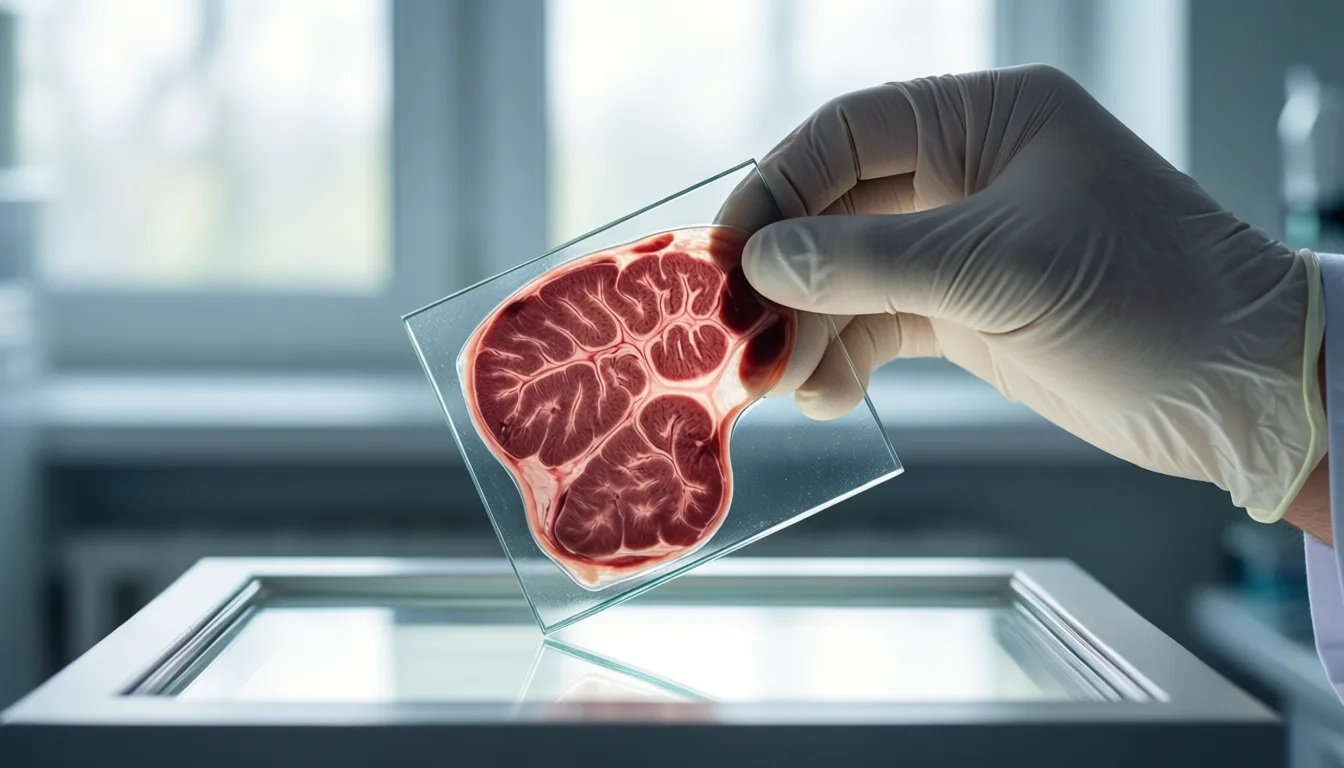
MASH is still diagnosed and staged by biopsy — one reason noninvasive biomarkers matter so much for the next phase of trials.
The headline endpoint moved. The supporting endpoints whispered rather than shouted.
Why a metabolic drug might work on the liver
The mechanistic logic is straightforward, and it is part of why these results land as plausible rather than surprising. MASH is, at its root, a downstream consequence of disordered metabolism: excess calories, insulin resistance and ectopic fat deposition that the liver cannot keep up with. Anything that reduces caloric intake and improves insulin sensitivity should, in principle, take pressure off hepatocytes.
Tirzepatide does both. As the review notes, its dual GIP/GLP-1 activity reduces food intake and improves glucose metabolism and insulin resistance — and improvements in insulin sensitivity and body weight are themselves established drivers of reduced hepatic steatosis and fibrosis. In that sense, tirzepatide is not so much a new liver drug as a metabolic drug whose effects appear to travel downstream to the liver.
The open question is how much of the observed MASH benefit is the direct biology of incretin signaling on liver cells, and how much is the indirect, but powerful, effect of meaningful weight loss and better glucose control. The review is honest that the current data cannot fully disentangle these. For readers, the practical implication is the same either way: the benefit is real in the data, but the mechanism is still being mapped.
What this is — and isn't — yet
It is worth being clear about register. Phase 2 results are an invitation to a larger, longer, more rigorous trial — not a license to prescribe. The authors of the review explicitly call for larger clinical trials before drawing firm conclusions about tirzepatide's role in MASH. Until a properly powered phase 3 reads out with hard liver endpoints and durable fibrosis improvement, the responsible framing is: promising, plausible, unproven at scale.
That framing matters because tirzepatide is already widely used for diabetes and obesity, which means many readers — and many people in clinics today — already have it in hand. The temptation to assume that a positive MASH signal automatically translates into a MASH indication is understandable, but premature. Off-label hopes are not the same as approved use. People with known or suspected fatty liver disease who are already on a GLP-1 or GIP/GLP-1 agonist for another reason should treat this as a conversation to have with their hepatologist or primary clinician, not a green light to self-direct therapy.

Weight loss and improved insulin sensitivity remain the foundation of MASH care — and likely a significant part of why tirzepatide's signal looks credible.
The bigger picture: convergence
Step back and the more interesting story is the convergence. For years, obesity medicine, diabetology and hepatology operated on parallel tracks with overlapping patients. The arrival of effective incretin therapies has begun to collapse those tracks. A single weekly injection is being evaluated, in different programs, against weight, glycemic control, cardiovascular events, kidney outcomes and now liver histology. Whatever the eventual labeled indications, the practical implication for patients with the cluster of metabolic conditions is real: one decision can plausibly move several dials at once.
That is also where the discipline matters. A drug that moves several dials at once will be marketed — and remembered — as a drug that moves several dials at once, even where the evidence on any single dial is still maturing. MASH is the newest of those dials, and the one where the evidence is youngest. Treating the phase 2 signal as the beginning of a story rather than the end of one is the honest read.
- The signal is real but early. In phase 2, tirzepatide resolved MASH without worsening fibrosis in significantly more patients than placebo.
- Fibrosis improvement is suggestive, not settled. The trial was not powered to confirm that scarring regressed, and noninvasive biomarkers did not move significantly.
- The mechanism is plausible. Better insulin sensitivity, reduced food intake and weight loss are already known to ease hepatic steatosis and fibrosis.
- It is not yet an approved MASH therapy. Larger phase 3 trials are needed before tirzepatide can be considered a treatment for steatohepatitis.
- Bring it to your clinician. If you have known fatty liver disease and are using or considering a GLP-1 or GIP/GLP-1 agonist, this is a discussion, not a decision to make alone.
For now, the most useful posture is the same one that has served readers well through the broader GLP-1 era: take the science seriously, take the marketing skeptically, and let the next round of evidence do its work before the language gets ahead of it.
Frequently asked questions
What is MASH, and how is it connected to obesity and diabetes?
MASH, or metabolic dysfunction-associated steatohepatitis, is the inflammatory, fibrosing form of fatty liver disease that often travels with weight gain and insulin resistance. At its root, MASH is a downstream consequence of disordered metabolism: excess calories, insulin resistance, and ectopic fat deposition that the liver cannot keep up with.
What did the SYNERGY-NASH trial actually find?
SYNERGY-NASH was a phase 2 trial in patients with biopsy-confirmed MASH and stage 2 or 3 fibrosis. Tirzepatide achieved MASH resolution without worsening of fibrosis in a significantly higher proportion of patients than placebo, and more patients on tirzepatide also showed at least a one-stage improvement in fibrosis without worsening of their underlying steatohepatitis.
Why are the fibrosis results from SYNERGY-NASH considered uncertain?
The trial was not powered to detect fibrosis change, meaning it was not designed to prove scarring actually regressed — only to suggest it might. Additionally, noninvasive blood and imaging biomarkers of fibrosis, the tools clinicians use day to day, did not show statistically significant improvement.
Is tirzepatide currently approved to treat MASH?
No. Tirzepatide is already approved for adults with type 2 diabetes and for weight management in people with obesity or weight-related complications, but it does not have an approved indication for MASH. The review's authors explicitly call for larger clinical trials before drawing firm conclusions about tirzepatide's role in MASH.
What should someone with fatty liver disease do if they are already taking tirzepatide for another reason?
According to the article, people with known or suspected fatty liver disease who are already on a GLP-1 or GIP/GLP-1 agonist for another reason should treat this as a conversation to have with their hepatologist or primary clinician, not a green light to self-direct therapy.
Sources
- Tirzepatide for metabolic dysfunction-associated steatohepatitis: results from phase II clinical trials and perspectives. — Expert opinion on investigational drugs
Join the conversation
Comments are moderated and reviewed before they appear. Be constructive — this is health information.
Add your comment