
Your Workout Has a Gut Feeling: How HIIT and Steady Cardio Reshape the Microbiome
A new narrative review suggests the intensity of your training — not just whether you sweat — may sculpt the gut bugs that govern metabolism. The evidence is early, but intriguing.
Scroll through any wellness corner of the internet and you'll find two camps shouting past each other: the HIIT loyalists who swear by all-out intervals, and the Zone 2 devotees who insist slow and steady wins the metabolic race. A new narrative review in Gut Microbes adds an unexpected variable to that debate — the trillions of microbes living in your intestines. According to the authors, exercise intensity may shape which bugs flourish, which fade, and which metabolic byproducts they produce. The catch: most of the data still comes from mice, and the human evidence is just getting started.
- Dose matters. A 2026 review found moderate-intensity training (MIT) and high-intensity interval training (HIIT) produced the most consistent gut shifts; low-intensity training did very little.
- The evidence base is small. The review pulled from 17 animal studies and just 5 human studies — meaning the human picture is still blurry.
- Two recurring 'good' bugs. Akkermansia and the Christensenellaceae family showed up across studies, both linked in other research to metabolic health.
- The mechanism is plausible. Intensity-linked changes appear to affect short-chain fatty acids, bile acids, gut-barrier proteins and inflammatory signaling.
- It's early. No one can yet prescribe an exercise 'dose' for a specific microbial outcome — and you shouldn't expect a clinician to.
What the new review actually found
The paper is a narrative review synthesizing 17 animal models and 5 human studies on how different exercise intensities influence the gut microbiome in the context of obesity. Its headline conclusion is deceptively simple: not all workouts speak to your microbes the same way. Moderate-intensity training and HIIT generated the most consistent microbial shifts across studies, while low-intensity movement produced minimal change.
That doesn't mean a daily walk is wasted — walking has well-established cardiometabolic benefits the review didn't set out to measure. But if the question is specifically can exercise nudge the microbiome?, the early answer is that the nudge appears to require some effort.

Diet remains the dominant lever on the microbiome — exercise appears to be a smaller, complementary one.
Meet the bugs that keep showing up
Two microbial names recur across the studies the review examined. Akkermansia — a genus that lives in the mucus layer of the gut — and Christensenellaceae, a bacterial family often associated with leaner metabolic profiles in other research, both appeared more consistently in trained animals and humans across the studies surveyed.
It's tempting to label these as 'good bugs' and call it a day. Resist. The review describes associations, not proof that boosting them via exercise causes weight loss or metabolic repair in humans. Microbiome science has a long history of charismatic single species turning out to be more complicated than the first headlines suggested.
The early answer is that nudging the microbiome appears to require some effort — a daily stroll may not be enough to register. On the Gut Microbes 2026 review
How a hard interval might reach your gut
The proposed mechanism is where this gets genuinely interesting. The reviewers describe a chain of effects in which intensity-dependent microbial changes influence short-chain fatty acid (SCFA) and bile acid metabolism, gut-barrier integrity, endotoxemia, and inflammatory signaling. SCFAs — molecules like butyrate, produced when microbes ferment fiber — are messengers that talk to the cells lining your gut and, through them, to the rest of your metabolism.
HIIT and moderate training were also linked to improved expression of tight-junction proteins — ZO-1, Claudin, and Occludin — reduced circulating lipopolysaccharide (LPS), and increased SCFA-producing taxa. In plain English: a sturdier gut wall, less inflammatory leakage into the bloodstream, and more of the fermentation-derived molecules your metabolism likes. That's a coherent story. It's also a story largely told in rodents so far.
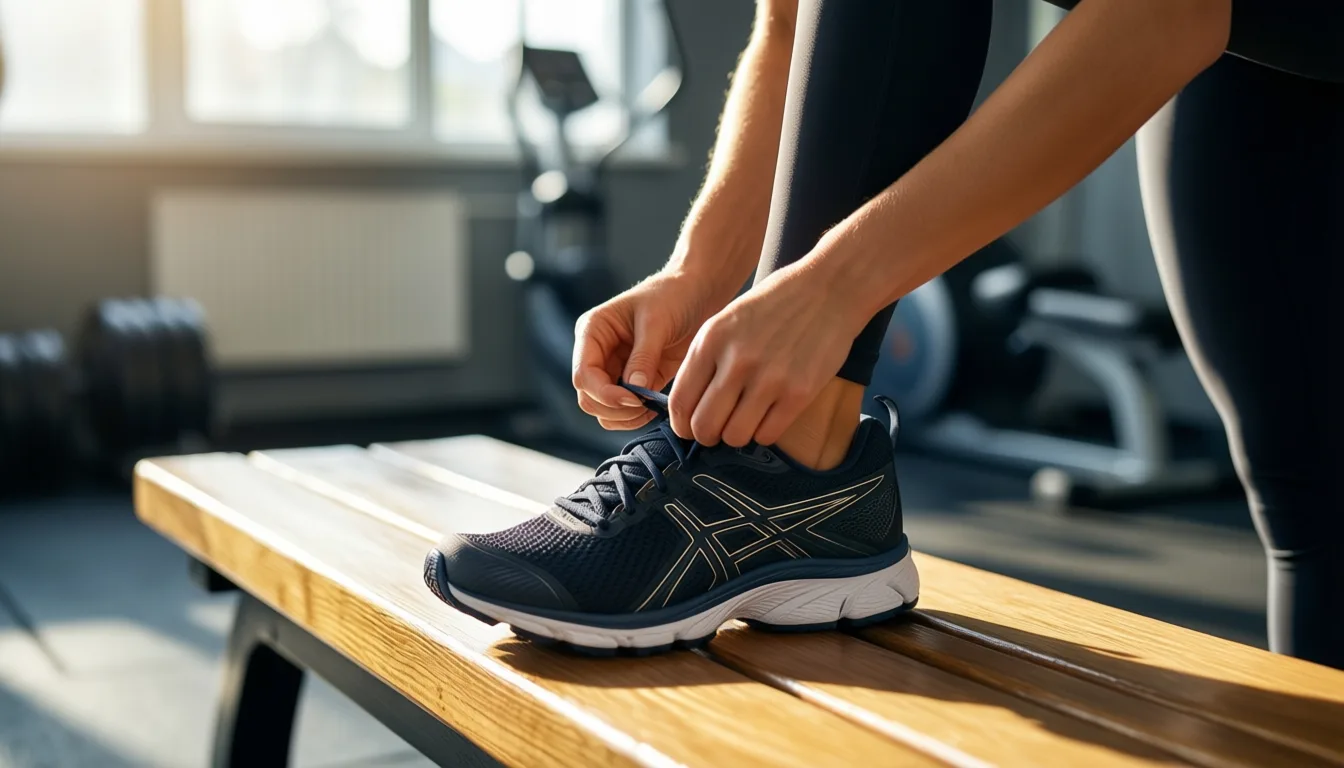
The training prescription is the easy part. What it does downstream is where the science is still catching up.
Why the human picture is still blurry
Five human studies is not a lot. The review itself flags inconsistent findings between species and substantial interindividual variability as real limitations. Microbiomes are deeply personal — two people doing the same intervals can end up with different microbial responses depending on baseline diet, sleep, medications, body composition, and genetic background.
There's also a directionality problem the review doesn't resolve. Did the microbial shifts cause the metabolic benefits, or are they fellow travelers alongside the well-documented effects of exercise on insulin sensitivity, mitochondrial function, and inflammation? Probably some of both, but the order of operations matters if anyone wants to design a microbiome-targeted training plan.
What this means for how you train (for now)
If you're already mixing some harder efforts into a base of easier movement, the takeaway is reassuring: that combination maps onto what the early evidence suggests is most likely to engage the gut. If you're a low-intensity-only exerciser hoping movement alone will reshape your microbiome, the early signal is that you may need to add some intensity to see microbial change — though the cardiometabolic case for walking remains rock-solid on its own merits.
What you probably shouldn't do is overhaul your training based on a narrative review of mostly mouse data. The most reliable microbiome interventions we have today are still the unsexy ones — fiber diversity, fermented foods, sleep, stress reduction. Exercise intensity is shaping up to be a complementary lever, not the master switch.
Exercise intensity is shaping up to be a complementary lever on the microbiome — not the master switch.
The most honest framing of this research right now is: a coherent hypothesis, a small but suggestive evidence base, and a lot of follow-up work needed in humans. That's not a reason to dismiss it. It's a reason to watch the space — and to keep doing the hard intervals you were going to do anyway.
Frequently asked questions
Which exercise intensities had the biggest effect on gut microbiome changes?
According to the review, moderate-intensity training and HIIT produced the most consistent microbial shifts across studies. Low-intensity training did very little to change the microbiome, though the article notes that walking still has well-established cardiometabolic benefits the review was not designed to measure.
Which gut bacteria kept appearing across the studies, and what does that mean?
Akkermansia, a genus that lives in the mucus layer of the gut, and Christensenellaceae, a bacterial family often associated with leaner metabolic profiles, both appeared more consistently in trained animals and humans. The article cautions that the review describes associations, not proof that boosting these bacteria through exercise causes weight loss or metabolic repair in humans.
How might intense exercise actually change what's happening in the gut?
The review describes a chain of effects in which intensity-dependent microbial changes influence short-chain fatty acid and bile acid metabolism, gut-barrier integrity, and inflammatory signaling. HIIT and moderate training were linked to improved expression of tight-junction proteins, reduced circulating LPS, and increased bacteria that produce short-chain fatty acids — pointing to a sturdier gut wall, less inflammatory leakage, and more fermentation-derived molecules.
Why is it hard to draw firm conclusions from this research?
The review was built on 17 animal studies but only 5 human studies, which the authors themselves flag as a real limitation. The human picture is further complicated by substantial interindividual variability — two people doing identical workouts can end up with different microbial responses depending on baseline diet, sleep, medications, body composition, and genetic background.
Should I overhaul my training routine to improve my gut microbiome?
The article advises against changing your training based on a narrative review of mostly mouse data. It describes exercise intensity as a complementary lever on the microbiome rather than the master switch, and notes that the most reliable microbiome interventions remain fiber diversity, fermented foods, sleep, and stress reduction.
Join the conversation
Comments are moderated and reviewed before they appear. Be constructive — this is health information.
Add your comment