
In This Issue

Metabolic Health
-
 Not All Veggies Are Equal: Why Legumes and Cruciferous Greens Stand Out for Young Adults
A new Raine Study analysis of 638 twenty-two-year-olds finds that beans, lentils, broccoli and their cousins track with lower cardiometabolic risk — sharpening the 'eat your vegetables' message for a generation already worried about long-term heart and metabolic health.
Not All Veggies Are Equal: Why Legumes and Cruciferous Greens Stand Out for Young Adults
A new Raine Study analysis of 638 twenty-two-year-olds finds that beans, lentils, broccoli and their cousins track with lower cardiometabolic risk — sharpening the 'eat your vegetables' message for a generation already worried about long-term heart and metabolic health.
-
 Tirzepatide for MASH: Phase 2 Signals Reshape the Liver-Metabolic Playbook
A dual GIP/GLP-1 agonist already changing diabetes and obesity care is now posting credible early signals against the fatty-liver disease that often travels with them.
Tirzepatide for MASH: Phase 2 Signals Reshape the Liver-Metabolic Playbook
A dual GIP/GLP-1 agonist already changing diabetes and obesity care is now posting credible early signals against the fatty-liver disease that often travels with them.

GLP-1s Keep Surprising Us: New Signals on Asthma, the Heart, and a Strange Ear Problem
The same drugs reshaping body composition are now generating clinical surprises in both directions — including a side effect nobody saw coming.
The GLP-1 story stopped being a weight-loss story a while ago. What started as a diabetes drug, then a body-composition tool, is now generating clinical surprises in places nobody was looking — the lungs, the vasculature, and, in one strange new report, the middle ear. For a busy 40-year-old weighing whether these molecules belong in his health stack, the practical question isn't whether GLP-1s work. It's what else they do once they're in the system, and how confident anyone actually is about it.
Three 2025 papers, taken together, sketch the current state of play. One uses machine learning to ask which asthma patients on GLP-1s see fewer attacks. One maps the molecular fingerprints these drugs leave on the heart and vessels. And one — a small, sober case series from a German otolaryngology clinic — describes a side effect that, until last year, didn't appear in the GLP-1 conversation at all. None of these is the final word. All of them widen the frame.
The asthma signal: real, but narrow
Using a machine-learning method called high-dimensional iterative causal forest on MarketScan claims data from 2016–2020, a research team compared new GLP-1 users with new sulfonylurea users among patients with documented asthma. In the overall cohort, GLP-1 use was associated with a modest absolute reduction in acute asthma exacerbations — hospital admissions or ED visits — over six months. The benefit was concentrated in a specific subgroup: patients with two or more systemic-steroid fills in the lookback window, a marker of harder-to-control disease.
That's a meaningful nuance. The drugs didn't appear to do much for low-severity asthma in this analysis, but in the steroid-heavy subgroup the effect size was several times larger than the population average. This is hypothesis-generating, not prescriptive — it's a claims-database analysis, not a randomized trial — and it tells you nothing about causality at the airway level. But it's the kind of signal that earns a properly designed trial, which is probably what comes next.

If a real airway benefit exists, current data suggests it shows up in patients whose asthma is already steroid-dependent.
The cardiometabolic case keeps thickening
The cardiovascular upside is the most established part of the GLP-1 portfolio, and a 2025 review in the International Journal of Molecular Sciences tries to explain why at a mechanistic level. Pooling 131 publications, the authors argue that GLP-1 receptor agonists and DPP-4 inhibitors reduce major adverse cardiovascular events through a cluster of effects: dampened oxidative stress, lower vascular inflammation, better endothelial function, improved mitochondrial performance, and cleaner lipid handling.
For a non-clinician reader, the practical translation is this. The cardioprotective effect doesn't appear to be a side benefit of weight loss alone — it looks like the drugs are doing distinct work on the vessel wall and the myocardium. That's consistent with the outcome trials that drove the cardiology label expansions, and it's why endocrinologists and cardiologists are increasingly thinking about these agents in patients who don't need a single additional pound shed, but do carry vascular risk.
Worth keeping the rating honest: a narrative review aggregates mechanism, not new outcomes. The hard cardiovascular endpoints come from earlier randomized trials. What this review adds is a coherent biological story for why those trials read out the way they did.
The cardioprotective effect doesn't appear to be a side benefit of weight loss alone — the drugs are doing distinct work on the vessel wall.
The ear thing — small, weird, real enough to flag
Then there's the surprise. A single otolaryngology clinic in Germany published a retrospective case series of seven adults who developed patulous Eustachian tube — a condition where the tube connecting the middle ear to the back of the throat fails to stay closed at rest — after losing 8.2% to 18.7% of body weight on semaglutide or tirzepatide. The symptoms are unmistakable once you've heard them described: autophony (your own voice booming in your head), aural fullness, and the strange sensation of hearing your own breathing.
Five patients were female, two male, ages 28 to 56. PET appeared after four to ten months of therapy. One patient improved with conservative management; six needed in-office injections to bulk up the tubal walls. The proposed mechanism is mundane: rapid loss of peritubal fat removes a soft-tissue cushion that normally keeps the tube collapsed.
Seven cases from one clinic is not an epidemic. It is, however, the first formal report of this association, and it's a reminder that very fast weight loss has anatomical consequences in places we don't usually monitor.

Peritubal fat is one of the small anatomical buffers that quietly disappears during rapid weight loss.
- Asthma signal is real but narrow. Benefit concentrates in steroid-dependent patients in a claims-data ML analysis — not a randomized trial.
- Cardiometabolic story is the strongest piece. A 2025 mechanistic review ties GLP-1 cardioprotection to oxidative stress, inflammation, endothelial and mitochondrial function — beyond weight loss alone.
- Patulous Eustachian tube is a new flag. Seven cases after ≥8% weight loss; rare, but worth knowing if autophony or aural fullness shows up.
- Rate of loss matters. Most surprise side effects of GLP-1s correlate with how fast composition changes, not just how much.
- These are still prescription decisions. The data widens the conversation with your clinician; it does not replace it.
What this actually changes for a 40-year-old
Not much, yet — and that's the honest answer. If you're already on a GLP-1 for weight or glycemic reasons, none of these papers argues for stopping. The cardiometabolic review, if anything, strengthens the case for staying on. The asthma data is interesting if you happen to sit in the steroid-dependent subgroup, but it's not a reason on its own to seek the drug. The ear side effect is rare enough that it shouldn't drive the decision, but specific enough that you'd want to recognize it.
The broader point is that GLP-1s are behaving the way most powerful drugs eventually do: revealing both upside and downside as the denominator of users grows. The optimization move isn't to chase every new signal. It's to stay current, work with a clinician who's doing the same, and let the evidence base mature before treating any single 2025 paper as a verdict.
Frequently asked questions
Which asthma patients saw the most benefit from GLP-1s in the study described in the article?
The benefit was concentrated in patients who had two or more systemic-steroid fills in the lookback window, a marker of harder-to-control disease. In that steroid-dependent subgroup, the effect size was several times larger than the population average, while patients with low-severity asthma showed little benefit.
Is the cardiovascular protection from GLP-1s simply a byproduct of losing weight?
According to a 2025 mechanistic review pooling 131 publications, the cardioprotective effect does not appear to be a side benefit of weight loss alone. The review argues the drugs do distinct work on the vessel wall and the myocardium through effects including dampened oxidative stress, lower vascular inflammation, better endothelial function, improved mitochondrial performance, and cleaner lipid handling.
What is patulous Eustachian tube, and why might GLP-1s cause it?
Patulous Eustachian tube is a condition where the tube connecting the middle ear to the back of the throat fails to stay closed at rest, producing symptoms such as autophony (your own voice booming in your head), aural fullness, and the sensation of hearing your own breathing. The proposed mechanism is that rapid weight loss removes peritubal fat, a soft-tissue cushion that normally keeps the tube collapsed.
How strong is the evidence linking GLP-1s to the asthma benefit described in the article?
The analysis is based on insurance claims data, not a randomized trial, so it cannot establish causality at the airway level. The article describes it as hypothesis-generating and notes that the signal is the kind that earns a properly designed trial, which is probably what comes next.
How many patients developed patulous Eustachian tube in the case series, and how were most of them treated?
Seven adults at a single otolaryngology clinic in Germany developed the condition after losing 8.2% to 18.7% of body weight on semaglutide or tirzepatide. One patient improved with conservative management, while the remaining six needed in-office injections to bulk up the tubal walls.
Sources
- Glucagon-like Peptide-1 Receptor Agonists in Asthma Exacerbations: An Application of High-Dimensional Iterative Causal Forest to Identify Subgroups. — Pharmacoepidemiology and drug safety
- Molecular Insights into the Potential Cardiometabolic Effects of GLP-1 Receptor Analogs and DPP-4 Inhibitors. — International journal of molecular sciences
- First report on a case series of Patulous Eustachian tube following GLP-1 receptor agonist-induced weight loss. — European archives of oto-rhino-laryngology : official journal of the European Federation of Oto-Rhino-Laryngological Societies (EUFOS) : affiliated with the German Society for Oto-Rhino-Laryngology - Head and Neck Surgery
Not All Veggies Are Equal: Why Legumes and Cruciferous Greens Stand Out for Young Adults
A new Raine Study analysis of 638 twenty-two-year-olds finds that beans, lentils, broccoli and their cousins track with lower cardiometabolic risk — sharpening the 'eat your vegetables' message for a generation already worried about long-term heart and metabolic health.
For years the dietary refrain has been blunt and unhelpfully broad: eat more vegetables. But a new analysis from Australia's long-running Raine Study suggests the produce aisle is not a monolith — and that for young adults trying to protect their long-term metabolic health, two specific groups may be doing most of the heavy lifting. In a cross-sectional study of 638 twenty-two-year-olds, legumes and cruciferous vegetables tracked more closely with lower cardiometabolic risk than any other vegetable category researchers measured.
- Not all vegetables behaved the same. Among five groups studied, legumes and cruciferous vegetables stood out for their links to lower cardiometabolic risk in young adults.
- The strongest signal was in men. After adjustment, higher legume intake was independently associated with markedly lower odds of being in the high-risk group for males.
- Cruciferous and green leafy intakes differed between risk groups in women, though the picture in females was more nuanced after adjustment.
- This is moderate, not definitive, evidence. The study is cross-sectional (n=638), so it can show association — not prove cause.
- Practical takeaway: a serve a day of beans, lentils, broccoli, cabbage or Brussels sprouts is a low-risk, evidence-aligned upgrade.
What the Raine Study actually found
The Raine Study is one of the most-followed birth cohorts in the world, tracking participants from before birth into adulthood in Western Australia. At the 22-year follow-up, researchers asked a deceptively simple question: when young adults eat vegetables, does it matter which ones?
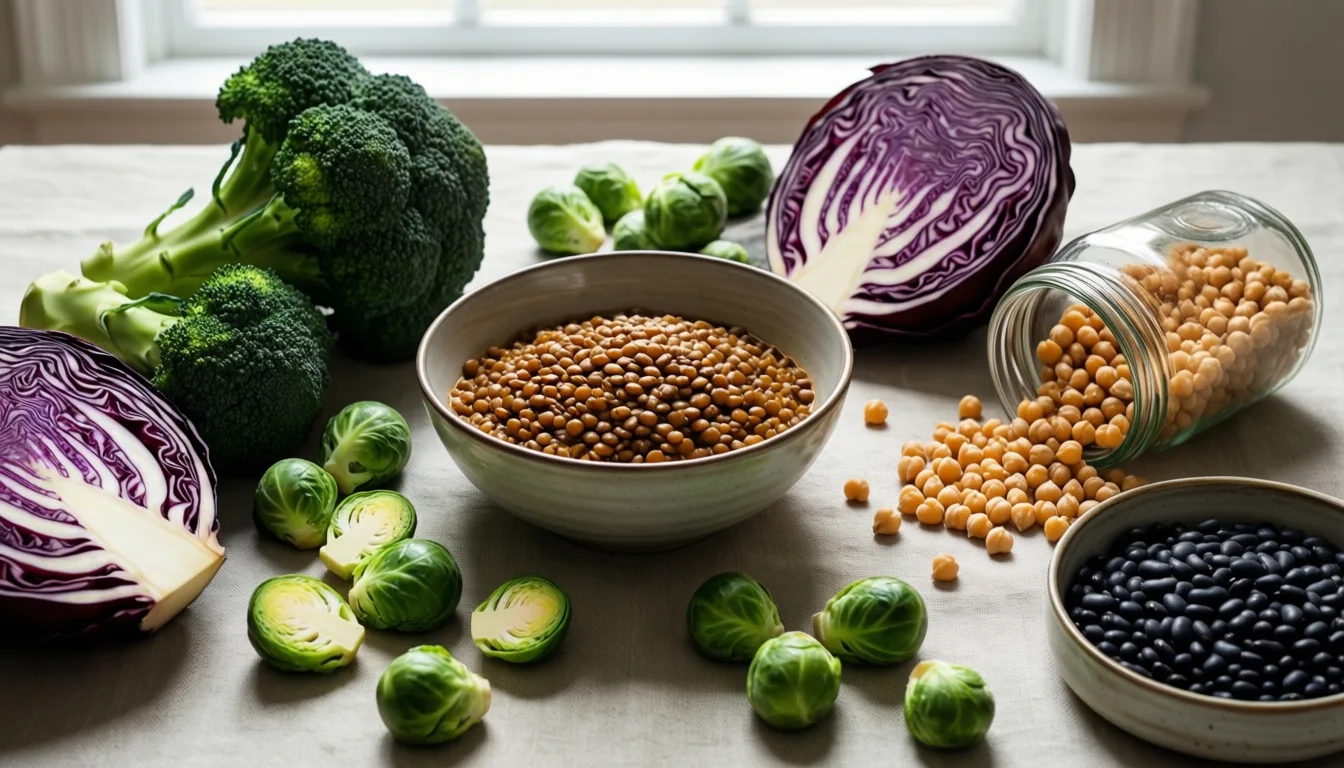
Using food frequency questionnaires, the team sorted vegetables into five buckets — allium (think onions, garlic, leeks), cruciferous (broccoli, cabbage, Brussels sprouts, cauliflower, kale), green leafy, legumes (beans, lentils, chickpeas, peas), and the yellow-orange-red group (carrots, capsicum, tomatoes, pumpkin). Participants were then classified as 'high' cardiometabolic risk if they met two or more of the International Diabetes Federation's metabolic syndrome criteria, and 'low' risk otherwise.
When the analysts compared the two groups, two patterns jumped out: men in the lower-risk group ate more legumes, and women in the lower-risk group ate more cruciferous and green leafy vegetables. The other categories — allium and yellow-orange-red — did not show the same separation.

The vegetable groups linked to lower risk in the study are some of the cheapest, most shelf-stable options in the supermarket.
Why legumes — and why mostly in men?
After the researchers adjusted for sociodemographic factors, lifestyle behaviours and the rest of the diet, the legume finding in men held up: each additional 75-gram serve per day was associated with substantially lower odds of being in the high cardiometabolic risk group (odds ratio 0.278). That is a striking effect size for a single food category — and one of the reasons the paper is getting attention.
Mechanistically, the result is plausible. Legumes deliver a dense package of soluble fibre, plant protein, polyphenols, magnesium and potassium — nutrients linked in broader literature to better blood pressure, lipid profiles and insulin sensitivity. They are also one of the few foods that reliably displaces less helpful staples (refined grains, processed meats) when people eat more of them.
Why the legume signal was clearer in men is a genuinely open question. The authors note that males in the cohort started from a higher baseline cardiometabolic risk, which can make protective associations easier to detect statistically. Differences in portion sizes, body composition and hormonal physiology may also play a role. It is not evidence that women don't benefit from legumes — only that, in this dataset, the cleanest signal landed on one side of the cohort.
Each additional daily serve of legumes was associated with markedly lower odds of high cardiometabolic risk in young men. Raine Study analysis, 2026
The cruciferous question
For young women in the cohort, the unadjusted differences pointed to cruciferous and green leafy vegetables. Broccoli, cabbage, kale, Brussels sprouts and cauliflower share a family of sulfur-containing compounds called glucosinolates, which the body converts into bioactive molecules like sulforaphane. These have been studied for effects on inflammation and oxidative stress — both relevant to early cardiometabolic trajectories — though the human evidence in young adults specifically is still thin.
It's worth being precise about what the study can and can't tell us. A cross-sectional analysis captures a single snapshot: it cannot prove that eating more broccoli caused lower risk, only that the two travelled together. Reverse causation (healthier young adults eating more vegetables for other reasons) and residual confounding are always possibilities. That is exactly why the editorial evidence rating for this piece is moderate, not strong.
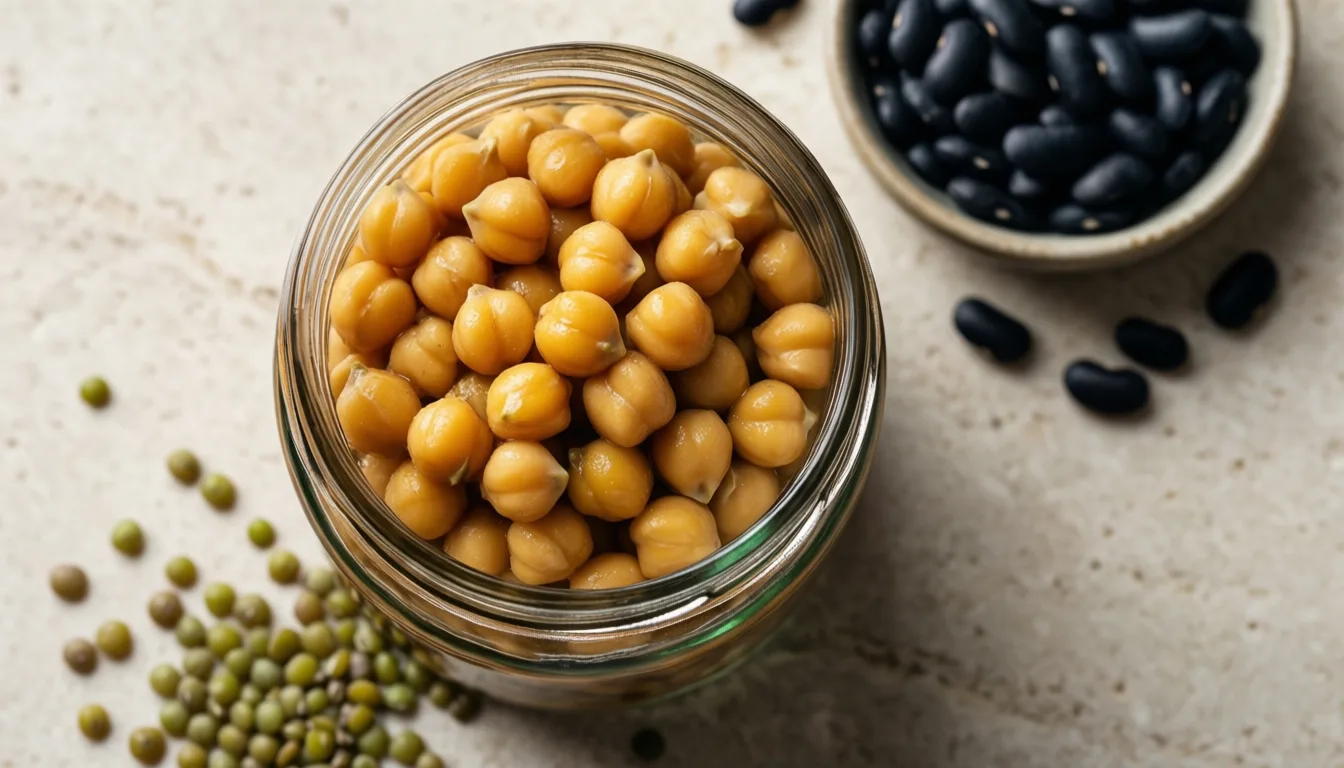
Tinned, dried or frozen — legumes count whichever way they arrive in the bowl.
How to use this without overreaching
The most defensible read of the data is also the least dramatic: among young adults, vegetable category appears to matter, and the categories that showed up best are inexpensive, widely available and easy to add. A daily serve of legumes — a half-cup of lentils in a salad, chickpeas in a curry, black beans in a burrito bowl — is a low-effort change with strong supporting biology. A few weekly meals built around cruciferous vegetables follow the same logic.
What this study does not justify is swapping out other vegetables, buying expensive supplements marketed around 'sulforaphane' or 'legume polyphenols,' or treating any single food as a hedge against the rest of the diet. The cohort that did well wasn't eating beans in isolation; they were eating beans as part of broader dietary patterns the researchers adjusted for.
If you are in your twenties and thinking about long-term metabolic health, the honest message is the unglamorous one: the evidence here is moderate, the direction is encouraging, and the specific upgrades — more lentils, more broccoli — are some of the safest bets in nutrition. Anyone with existing cardiometabolic concerns should bring questions about their own diet to a clinician or dietitian who can see the full picture.
- Add, don't subtract. Aim to introduce a serve of legumes most days before worrying about cutting anything.
- Rotate your crucifers. Broccoli, cabbage, cauliflower, Brussels sprouts and kale all count.
- Remember the limits. One cross-sectional study in 638 people is a signal, not a verdict.
- Talk to a clinician before making big dietary changes if you have existing metabolic, kidney or GI conditions.
Frequently asked questions
Which vegetable groups showed the strongest link to lower cardiometabolic risk in the study?
Among the five groups studied — allium, cruciferous, green leafy, legumes, and yellow-orange-red — legumes and cruciferous vegetables stood out. The other categories, allium and yellow-orange-red, did not show the same separation between risk groups.
Why did legumes appear to be more protective for men than for women?
The authors note that males in the cohort started from a higher baseline cardiometabolic risk, which can make protective associations easier to detect statistically. Differences in portion sizes, body composition, and hormonal physiology may also play a role, though the question remains genuinely open.
Do tinned or frozen legumes count, or do they need to be fresh?
According to the article, tinned, dried, or frozen legumes all count, whichever way they arrive in the bowl.
Does this study prove that eating more legumes or cruciferous vegetables causes lower cardiometabolic risk?
No. The study is cross-sectional, meaning it captures a single snapshot and can show association but cannot prove cause. Reverse causation and residual confounding remain possibilities, which is why the article rates the evidence as moderate, not strong.
Should I stop eating other vegetables and focus only on legumes and cruciferous greens?
The article explicitly advises against this, stating the study does not justify swapping out other vegetables. The cohort that did well was eating legumes as part of broader dietary patterns, not in isolation, and the recommended approach is to add these foods rather than subtract others.
Sources
- Higher legume and cruciferous vegetable intakes are associated with lower cardiometabolic risk in young adults: a cross-sectional study. — Nutrition, metabolism, and cardiovascular diseases : NMCD
Tirzepatide for MASH: Phase 2 Signals Reshape the Liver-Metabolic Playbook
A dual GIP/GLP-1 agonist already changing diabetes and obesity care is now posting credible early signals against the fatty-liver disease that often travels with them.
For a decade, the liver has been the quiet organ in the metabolic story. While obesity and type 2 diabetes drew the headlines — and, more recently, the GLP-1 spotlight — a related condition was building underneath: metabolic dysfunction-associated steatohepatitis, or MASH, the inflammatory, fibrosing form of fatty liver disease that often travels with weight gain and insulin resistance. Until very recently, no drug was approved to treat it. Now, a familiar name from the diabetes and obesity world is showing up in MASH trials with results serious enough to reshape how clinicians think about the whole liver-metabolic axis.
That name is tirzepatide, a once-weekly injectable that activates two gut hormone receptors at once — GIP and GLP-1 — to enhance insulin release, blunt appetite and improve glucose handling. It is already approved for adults with type 2 diabetes and for weight management in people with obesity or weight-related complications, according to a 2025 expert review in Expert Opinion on Investigational Drugs summarizing the phase 2 evidence in MASH. What is new is the question now in play: can the same mechanism that reshaped diabetes care meaningfully reverse the fatty, inflamed, scarring liver that so often accompanies it? The review argues the early answer is a cautious yes — with emphasis on cautious.
What SYNERGY-NASH actually showed
The pivotal data point so far is SYNERGY-NASH, a phase 2 trial in patients with biopsy-confirmed MASH and stage 2 or 3 fibrosis — meaning real, measurable scarring, not just a fatty liver on imaging. In that study, tirzepatide achieved MASH resolution without worsening of fibrosis in a significantly higher proportion of patients than placebo. That endpoint matters: it is the standard regulators have asked drug developers to hit, and it is the one earlier metabolic candidates repeatedly missed.
A second signal pointed the same direction. More patients on tirzepatide than placebo achieved at least a one-stage improvement in fibrosis without worsening of their underlying steatohepatitis. But the review is careful to flag a caveat that often gets lost in headlines: the study was not powered to detect that fibrosis change. In plain terms, the trial wasn't designed to prove the scarring really regressed — only to suggest it might. And noninvasive blood and imaging biomarkers of fibrosis, the tools clinicians actually use day to day, did not show statistically significant improvement.
That is the texture behind the optimism. The headline endpoint moved. The supporting endpoints whispered rather than shouted.

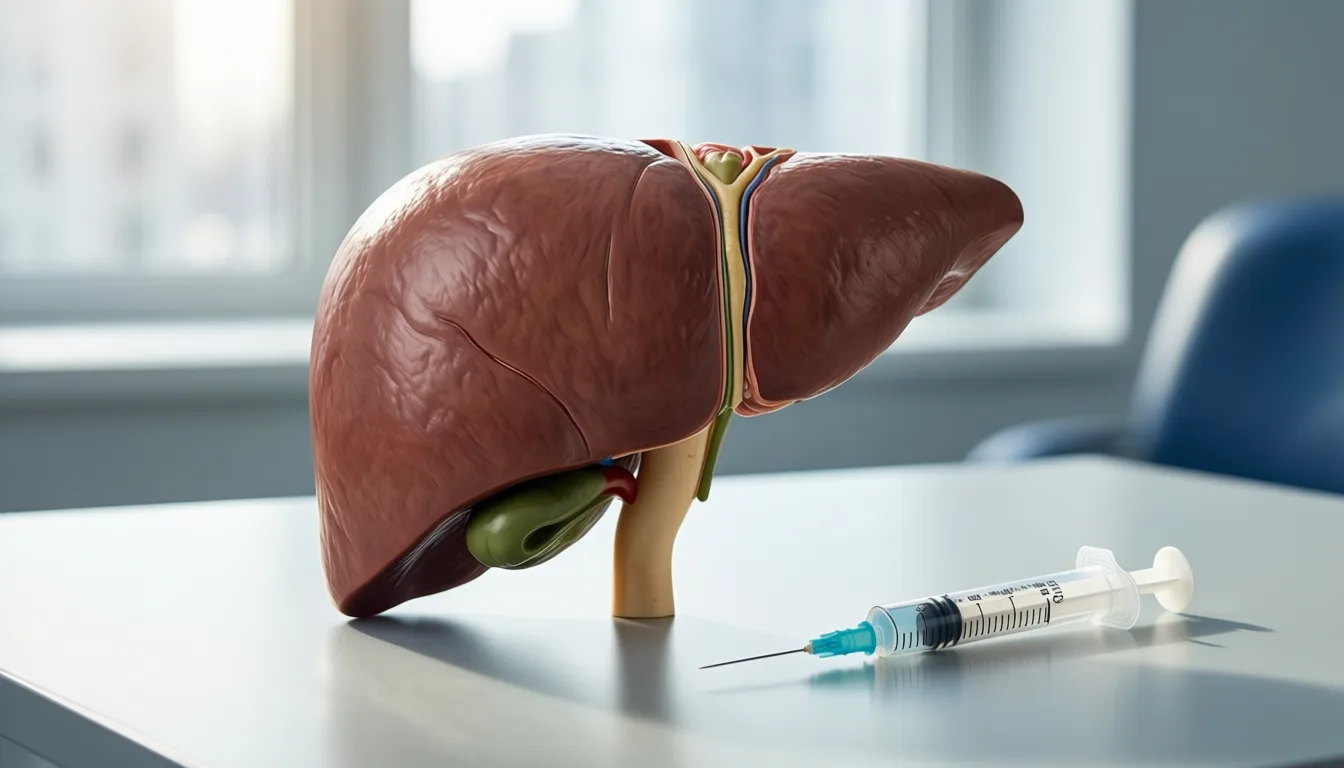
MASH is still diagnosed and staged by biopsy — one reason noninvasive biomarkers matter so much for the next phase of trials.
The headline endpoint moved. The supporting endpoints whispered rather than shouted.
Why a metabolic drug might work on the liver
The mechanistic logic is straightforward, and it is part of why these results land as plausible rather than surprising. MASH is, at its root, a downstream consequence of disordered metabolism: excess calories, insulin resistance and ectopic fat deposition that the liver cannot keep up with. Anything that reduces caloric intake and improves insulin sensitivity should, in principle, take pressure off hepatocytes.
Tirzepatide does both. As the review notes, its dual GIP/GLP-1 activity reduces food intake and improves glucose metabolism and insulin resistance — and improvements in insulin sensitivity and body weight are themselves established drivers of reduced hepatic steatosis and fibrosis. In that sense, tirzepatide is not so much a new liver drug as a metabolic drug whose effects appear to travel downstream to the liver.
The open question is how much of the observed MASH benefit is the direct biology of incretin signaling on liver cells, and how much is the indirect, but powerful, effect of meaningful weight loss and better glucose control. The review is honest that the current data cannot fully disentangle these. For readers, the practical implication is the same either way: the benefit is real in the data, but the mechanism is still being mapped.
What this is — and isn't — yet
It is worth being clear about register. Phase 2 results are an invitation to a larger, longer, more rigorous trial — not a license to prescribe. The authors of the review explicitly call for larger clinical trials before drawing firm conclusions about tirzepatide's role in MASH. Until a properly powered phase 3 reads out with hard liver endpoints and durable fibrosis improvement, the responsible framing is: promising, plausible, unproven at scale.
That framing matters because tirzepatide is already widely used for diabetes and obesity, which means many readers — and many people in clinics today — already have it in hand. The temptation to assume that a positive MASH signal automatically translates into a MASH indication is understandable, but premature. Off-label hopes are not the same as approved use. People with known or suspected fatty liver disease who are already on a GLP-1 or GIP/GLP-1 agonist for another reason should treat this as a conversation to have with their hepatologist or primary clinician, not a green light to self-direct therapy.

Weight loss and improved insulin sensitivity remain the foundation of MASH care — and likely a significant part of why tirzepatide's signal looks credible.
The bigger picture: convergence
Step back and the more interesting story is the convergence. For years, obesity medicine, diabetology and hepatology operated on parallel tracks with overlapping patients. The arrival of effective incretin therapies has begun to collapse those tracks. A single weekly injection is being evaluated, in different programs, against weight, glycemic control, cardiovascular events, kidney outcomes and now liver histology. Whatever the eventual labeled indications, the practical implication for patients with the cluster of metabolic conditions is real: one decision can plausibly move several dials at once.
That is also where the discipline matters. A drug that moves several dials at once will be marketed — and remembered — as a drug that moves several dials at once, even where the evidence on any single dial is still maturing. MASH is the newest of those dials, and the one where the evidence is youngest. Treating the phase 2 signal as the beginning of a story rather than the end of one is the honest read.
- The signal is real but early. In phase 2, tirzepatide resolved MASH without worsening fibrosis in significantly more patients than placebo.
- Fibrosis improvement is suggestive, not settled. The trial was not powered to confirm that scarring regressed, and noninvasive biomarkers did not move significantly.
- The mechanism is plausible. Better insulin sensitivity, reduced food intake and weight loss are already known to ease hepatic steatosis and fibrosis.
- It is not yet an approved MASH therapy. Larger phase 3 trials are needed before tirzepatide can be considered a treatment for steatohepatitis.
- Bring it to your clinician. If you have known fatty liver disease and are using or considering a GLP-1 or GIP/GLP-1 agonist, this is a discussion, not a decision to make alone.
For now, the most useful posture is the same one that has served readers well through the broader GLP-1 era: take the science seriously, take the marketing skeptically, and let the next round of evidence do its work before the language gets ahead of it.
Frequently asked questions
What is MASH, and how is it connected to obesity and diabetes?
MASH, or metabolic dysfunction-associated steatohepatitis, is the inflammatory, fibrosing form of fatty liver disease that often travels with weight gain and insulin resistance. At its root, MASH is a downstream consequence of disordered metabolism: excess calories, insulin resistance, and ectopic fat deposition that the liver cannot keep up with.
What did the SYNERGY-NASH trial actually find?
SYNERGY-NASH was a phase 2 trial in patients with biopsy-confirmed MASH and stage 2 or 3 fibrosis. Tirzepatide achieved MASH resolution without worsening of fibrosis in a significantly higher proportion of patients than placebo, and more patients on tirzepatide also showed at least a one-stage improvement in fibrosis without worsening of their underlying steatohepatitis.
Why are the fibrosis results from SYNERGY-NASH considered uncertain?
The trial was not powered to detect fibrosis change, meaning it was not designed to prove scarring actually regressed — only to suggest it might. Additionally, noninvasive blood and imaging biomarkers of fibrosis, the tools clinicians use day to day, did not show statistically significant improvement.
Is tirzepatide currently approved to treat MASH?
No. Tirzepatide is already approved for adults with type 2 diabetes and for weight management in people with obesity or weight-related complications, but it does not have an approved indication for MASH. The review's authors explicitly call for larger clinical trials before drawing firm conclusions about tirzepatide's role in MASH.
What should someone with fatty liver disease do if they are already taking tirzepatide for another reason?
According to the article, people with known or suspected fatty liver disease who are already on a GLP-1 or GIP/GLP-1 agonist for another reason should treat this as a conversation to have with their hepatologist or primary clinician, not a green light to self-direct therapy.
Sources
- Tirzepatide for metabolic dysfunction-associated steatohepatitis: results from phase II clinical trials and perspectives. — Expert opinion on investigational drugs