Biological Age, Decoded: Blood-Based Clocks and the Hunt for Geroprotectors
A seven-marker aging clock built on nearly 60,000 blood samples and machine-learning screens for natural geroprotectors hint at a clinic-ready future for longevity medicine — with caveats.
For a decade, biological age has lived mostly in the gray zone between provocative research finding and consumer curiosity — a number you could pay for, post about, and never quite know what to do with. That is beginning to change. A new generation of aging clocks is being engineered not for headlines but for hospitals: simpler inputs, corrected biases, organ-specific signals, and validation across continents. At the same time, machine learning is starting to comb the natural world for molecules that might slow the underlying biology these clocks are trying to measure. The two threads — measurement and intervention — are finally converging, and the picture they paint is cautiously promising.
The most interesting recent move in the measurement camp is a deliberate simplification. Writing in Scientific Reports, a team led by Meyer and colleagues built a clinical aging clock from routine blood biochemistry across 59,741 healthy samples in a Southeast Asian cohort, using just seven biomarkers — the kind of panel that already sits in millions of electronic health records. The pitch is not novelty for its own sake. It is translatability: a clock that runs on what your doctor already orders.
What sets the work apart is less the seven inputs than the math wrapped around them. First-generation clocks have long suffered from a systematic skew — they tend to overestimate youth in older subjects and overestimate aging in younger ones, muddying the very concept of "age acceleration" that makes the tool clinically interesting. The authors introduce a correction method designed to neutralize that bias, and they argue it sharpens the link between age acceleration and downstream disease risk.
- Simpler inputs, clinical reach: A seven-biomarker clock built on routine blood chemistry could plausibly run inside existing primary-care workflows.
- Bias correction matters: A new statistical adjustment improves age-acceleration estimates without leaning on mortality data.
- Organ-specific signal: The clock surfaces disease-driven and organ-level aging patterns, hinting at where in the body trouble is brewing.
- Robust to noise: Predictions hold up during acute infections and transient immune activation — a meaningful real-world test.
- Geroprotector pipeline: Structure-based ML is now screening natural products against aging-hallmark targets, though candidates remain preclinical.
- Still early: Evidence is moderate; none of this is a prescription, and clinical use should be discussed with a qualified physician.
From research curiosity to clinical instrument
The authors report that their clock predicts both self-reported and physician-annotated ICD-coded health outcomes, with elevated hazard ratios associated with accelerated biological age. Just as importantly, they tested it under stress: the predictions remained stable in the presence of acute infections and transient immune activation, conditions that have tripped up earlier inflammation-heavy clocks. To address the perennial criticism that aging clocks are trained on one population and then quietly assumed to generalize, the team validated their approach against both NHANES and UK Biobank data, an honest test of multi-ethnic robustness.
None of this makes biological age a finished clinical tool. It does, however, move the conversation from "interesting biomarker" toward "plausible preventive instrument." The interpretability angle matters here. A clock that can point at organ-specific aging processes — rather than producing one inscrutable number — gives a clinician something to do with the result, which is the gap that has kept earlier clocks stranded in research papers and wellness apps.
The promise of a translatable clock is not a new test — it's a new way of reading tests doctors already order.
A clock that can point at organ-specific aging — rather than producing one inscrutable number — gives a clinician something to do with the result.
The hunt for geroprotectors
Measurement is only half the story. The other half is what to do when the number is high. That is where geroprotectors come in — molecules proposed to maintain homeostasis by acting on the so-called hallmarks of aging: genomic instability, telomere attrition, mitochondrial dysfunction, cellular senescence, and the rest of the now-familiar list. The field has long had candidates; it has lacked an efficient way to find more.
A second 2025 paper, published in the Journal of Cheminformatics, applies structure-based machine learning to screen natural products for geroprotector potential. The authors frame the problem plainly: age-related diseases and syndromes are a growing burden on healthcare systems, pharmacological interventions targeting aging itself have been proposed for years, and machine learning is reshaping drug discovery by making the early stages faster, cheaper, and more systematic. Their screen is a step toward putting those three threads together.
The honest caveat: this is candidate identification, not clinical proof. A natural product flagged by a structure-based model has cleared the lowest bar in a long ladder that includes biochemical assays, cellular work, animal models, and — eventually, for any compound that survives — human trials. The value of ML screens is in narrowing where to look, not declaring what works.
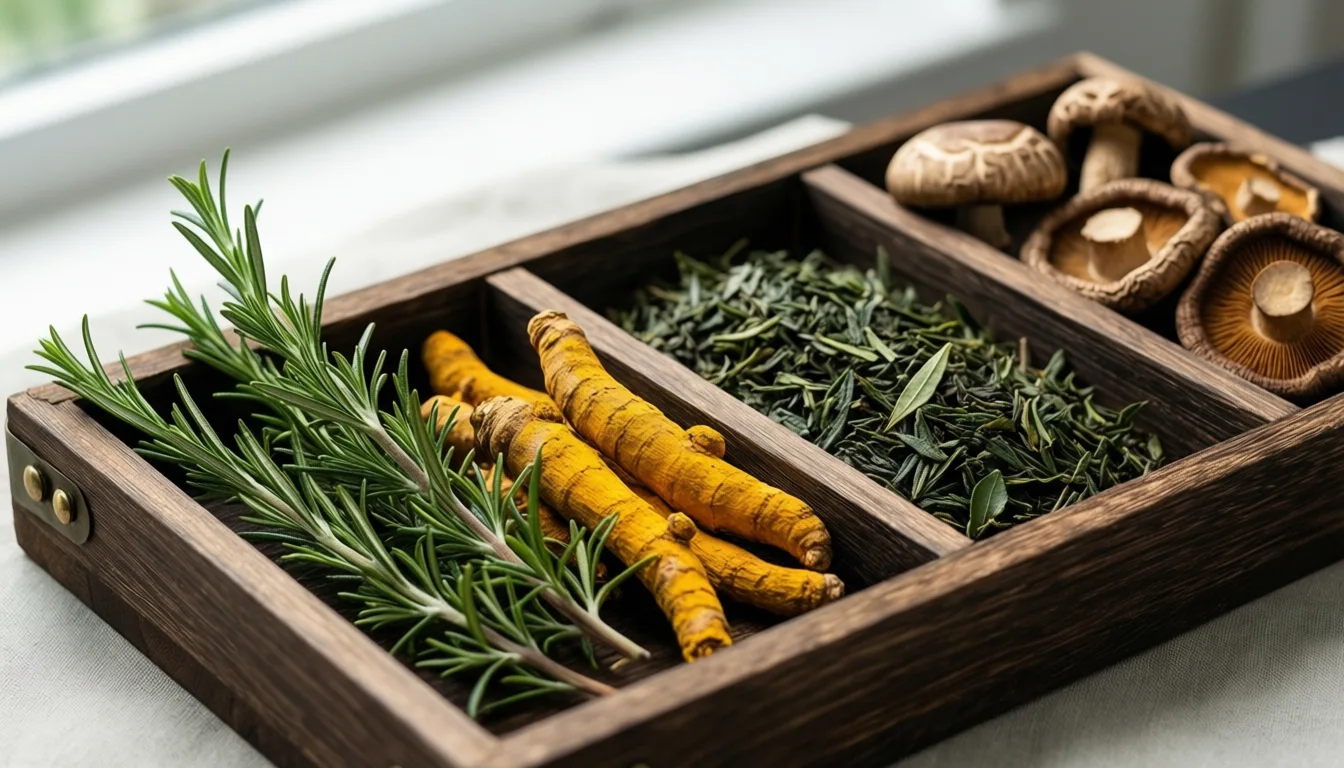
Natural-product libraries are vast and chemically diverse — the kind of search space machine learning is built for.
Why the convergence matters
Each paper on its own is a useful brick. Together they sketch the architecture of preventive longevity medicine as it might actually be practiced. A robust, low-cost clock turns a vague concept — "how is this person aging?" — into a number a clinician can track over time and across organ systems. A pipeline of ML-prioritized candidates, if any of them survive rigorous testing, would eventually give that clinician something to do with an unfavorable trend other than recommend the usual lifestyle changes.
It is worth being precise about the strength of the evidence. The clock paper is a well-validated methodological advance, not a randomized trial showing that acting on a clock reading improves outcomes. The geroprotector screen is preclinical computational work, not a demonstration that any specific natural product extends healthy lifespan in humans. The field's history is littered with promising mechanisms — senolytics, NAD precursors, rapalogs — that have moved through this same arc with mixed, unfinished, and sometimes disappointing human results.
What is genuinely new is the discipline. Bias-corrected, multi-cohort, infection-robust clocks built on the panels doctors already run. Structure-aware ML screens that respect the messy reality of natural-product chemistry. The hype-to-substance ratio in longevity research is finally moving in the right direction. The numbers on the page are not yet a prescription. They are, increasingly, a credible map.
The hype-to-substance ratio in longevity research is finally moving in the right direction.

The destination is ordinary clinical practice — not a boutique longevity clinic, but the corridor down the hall.
Frequently asked questions
Why does this new aging clock only need seven blood biomarkers instead of a specialized test?
The clock was deliberately designed for clinical translatability, using biomarkers from the kind of routine blood panel that already sits in millions of electronic health records. The goal is that it could plausibly run inside existing primary-care workflows without requiring any new or specialized testing.
What was the bias problem with earlier aging clocks, and does this one fix it?
First-generation clocks have a systematic skew: they tend to overestimate youth in older subjects and overestimate aging in younger ones, which muddies the concept of age acceleration. The new clock introduces a statistical correction method designed to neutralize that bias and sharpen the link between age acceleration and downstream disease risk.
Will having a cold or infection throw off the clock's reading?
According to the article, the clock's predictions remained stable in the presence of acute infections and transient immune activation — conditions that have tripped up earlier inflammation-heavy clocks. The authors describe this as a meaningful real-world test of robustness.
What is a geroprotector, and how are researchers looking for new ones?
Geroprotectors are molecules proposed to maintain homeostasis by acting on the hallmarks of aging, which include genomic instability, telomere attrition, mitochondrial dysfunction, and cellular senescence. A 2025 paper applied structure-based machine learning to screen natural products for geroprotector potential, using ML to narrow where to look across vast and chemically diverse natural-product libraries.
Can I use these findings to pick supplements or start an anti-aging protocol on my own?
Neither paper supports specific supplements, dosing, or self-directed protocols. The ML geroprotector screen identifies candidates, not therapies, and any candidate that survives still faces a long ladder of biochemical, cellular, animal, and human trials. The article states that if you are considering aging-related testing or interventions, the right next step is a conversation with a qualified clinician.
Sources
- A sex-adjusted 7-biomarker clinical aging clock for translational preventative medicine. — Scientific reports
- Structure-based machine learning screening identifies natural product candidates as potential geroprotectors. — Journal of cheminformatics
Join the conversation
Comments are moderated and reviewed before they appear. Be constructive — this is health information.
Add your comment