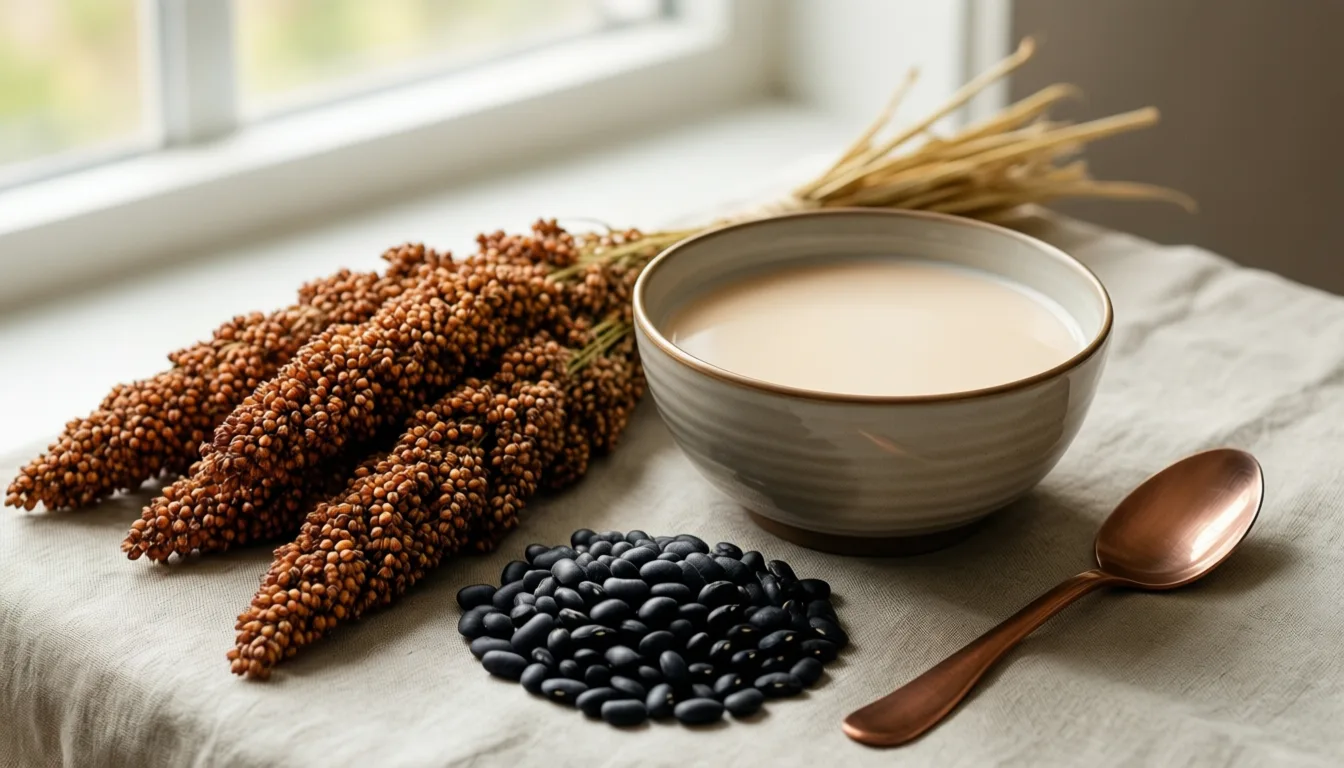
Protein After 70: What a New Tracer Study Reveals About How Older Bodies Actually Absorb Amino Acids
A small but methodologically rigorous crossover trial measured how well young and older adults extract amino acids from milk, sorghum, and black beans — and the answer depends on the food.
For decades, the question of how much protein an older body actually uses — not just chews and swallows, but breaks down, absorbs, and delivers to muscle — has been argued more than it has been measured. Recommendations have crept upward. Marketing has galloped. And women in their sixties and seventies, told to eat more protein for bones, balance, and lean mass, have been left to guess whether a glass of milk, a bowl of beans, or a porridge of sorghum is doing the same work in their bodies as it did at twenty-two. A new randomized crossover trial, published this year in The American Journal of Clinical Nutrition, finally puts numbers on part of that question — and the numbers are more nuanced than the headlines will likely be.
The study, conducted by researchers in the Netherlands, used what nutrition scientists consider the gold-standard technique for measuring amino acid digestibility in humans: the dual isotope tracer method. Ten healthy young adults (average age 22) and ten healthy older adults (average age 73) consumed test meals containing 20 grams of protein from one of three sources — milk, sorghum, or black beans — on three separate days. The protein in each meal was labeled with deuterium (²H); a reference mixture of amino acids labeled with carbon-13 (¹³C) was ingested alongside. By comparing the ratio of the two isotopes in blood plasma hours later, the researchers could calculate how much of the dietary protein's amino acids had actually crossed into circulation. The trial focused on two indispensable amino acids in particular: lysine and threonine, both critical for building and maintaining muscle.
The result that will travel furthest is also the most specific. For sorghum, the plasma-to-meal isotope ratio for lysine and threonine was 19 percent lower in older adults than in young adults — a statistically significant gap. For milk and for black beans, however, the difference between the age groups did not reach statistical significance. In other words, the aging gut did not uniformly underperform. It underperformed on one particular plant protein.
Why the protein source matters more than the headline
To make sense of this, it helps to know what the dual tracer method is really measuring. It is not measuring how full you feel, or how much nitrogen leaves in stool, or how strong your grip becomes after twelve weeks of eating more eggs. It is measuring something narrower and more mechanistic: of the indispensable amino acids you swallowed, how many showed up in your bloodstream over the next several hours? That number is the raw material your body has to work with — for muscle protein synthesis, for enzymes, for immune cells, for repair.
Milk and black beans appeared, in this trial, to deliver their lysine and threonine roughly as efficiently to older adults as to young ones. Sorghum did not. That pattern fits a long-standing hypothesis in protein nutrition: that the matrix of a food — the way its protein is packaged inside cell walls, starch granules, and fiber — can make some plant proteins harder to fully digest, and that age-related changes in the digestive tract may amplify that difficulty. The authors are careful in their conclusion, noting that lysine and threonine digestion "might be lower in older compared with young adults, but the effect differed among protein sources."
That qualifier matters. It is the difference between "older adults absorb protein worse" — a sweeping claim the data do not support — and "older adults may absorb certain plant proteins less efficiently, depending on the food." The second sentence is less satisfying. It is also closer to what was measured.
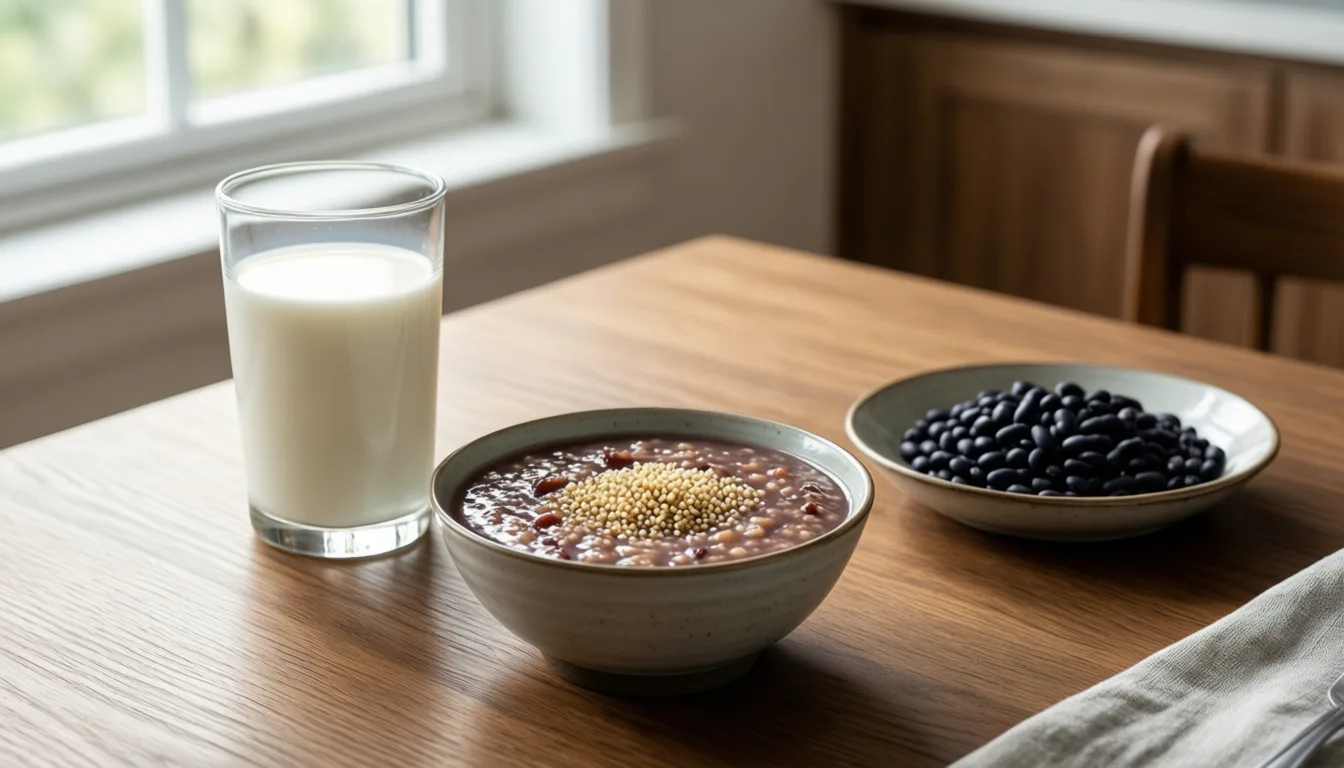
Three protein sources, three different stories at the cellular level.
The aging gut did not uniformly underperform. It underperformed on one particular plant protein.
What the study can — and cannot — tell us
The strengths of this work are real. The dual tracer method is widely regarded as the most direct way to quantify amino acid absorption in living humans, and a crossover design — in which each participant serves as her own comparison across all three foods — controls for many of the individual differences that muddy nutrition research. The fact that the protein doses, the test conditions, and the blood-sampling windows were standardized across groups gives the comparison real bite.
The limits are equally real, and worth naming. With ten participants per age group, this is a small trial. The older adults were, by design, healthy seventy-somethings, not the broader population of women navigating menopause, polypharmacy, reduced appetite, or gastrointestinal conditions that can further alter digestion. The study measured plasma appearance of two amino acids, not downstream outcomes like muscle protein synthesis, strength, or function. And it tested single foods in isolation — not the mixed meals most of us actually eat, in which a splash of milk in coffee or a handful of seeds on a bean stew can change the amino acid profile considerably.
This is why the editorial evidence rating here is moderate, not strong. The method is rigorous; the sample is small; the implications for daily eating are suggestive rather than prescriptive.
What a thoughtful reader might take from it
If you are a woman over fifty-five thinking about protein, the practical takeaway is not to fear plants. Black beans, in this trial, held their own. Milk did too. The more useful framing is variety and quality: leaning on a single plant protein — particularly one like sorghum, which is less common in Western diets but a staple elsewhere — may not deliver the same amino acid yield in an older body as it does in a younger one. Mixing protein sources across a day, and pairing plant proteins with complementary foods, is a reasonable response to a finding like this. So is talking with a clinician or registered dietitian if you have concerns about meeting your protein needs, especially around menopause, bone loss, or recovery from illness.
What this study does not justify is panic, overhaul, or the purchase of yet another powder. It is one careful measurement in a long conversation about how aging bodies handle food. The conversation is finally being conducted in numbers rather than assumptions — and that, more than any single result, is the real news.
- One source stood out. Older adults showed roughly 19% lower plasma appearance of lysine and threonine from sorghum compared with young adults.
- Milk and black beans did not differ significantly between age groups in this trial — a reassuring signal for two common protein sources.
- The method is the gold standard, but the sample is small (n=20 healthy adults), so findings are suggestive rather than definitive.
- Protein source and food matrix matter — not all plant proteins behave the same way in an older digestive tract.
- Variety is a sensible response. Mixing protein sources across the day hedges against any single food underdelivering.
- This is educational, not prescriptive. Personal protein needs around menopause and aging are best discussed with a clinician or dietitian.
Frequently asked questions
Does this study mean older adults need more protein overall?
Not directly. The trial measured how efficiently amino acids from specific foods reached the bloodstream, not how much total protein older adults require. The findings suggest the source of protein may matter, but the study was not designed to set a daily intake target.
Should I stop eating sorghum or other whole grains?
No. The study compared one plant protein head-to-head with milk and black beans in a small group of healthy adults. Sorghum is a nutritious whole grain in many global diets. The finding is a reason to favor variety, not to avoid a single food.
Were black beans really just as well absorbed as milk?
In this trial, the difference in lysine and threonine uptake between young and older adults was not statistically significant for either milk or black beans. That is a meaningful — and encouraging — signal for plant-forward eaters, though it comes from a small sample.
How big was this study and who was in it?
Twenty healthy adults total: ten young (average age about 22) and ten older (average age about 73). Each participant tested all three protein sources on separate days, which strengthens within-person comparisons but limits how broadly the results generalize.
What should I actually do with this information?
Treat it as one data point in a larger conversation. Aim for variety across protein sources, include some animal or legume protein if your diet allows, and bring questions about your specific protein needs — especially around menopause, bone health, or recovery — to a clinician or registered dietitian.
The protein-after-seventy debate will not be settled by twenty participants and three test meals. But it will be moved forward by them — and by the steady accumulation of trials that bother to measure rather than assume. For now, the most honest answer to how does an older body handle protein? is the one this study quietly offers: it depends on the food.
Sources
- Differences in amino acid digestibility between young and older adults: a randomized crossover study using the dual tracer method. — The American journal of clinical nutrition
Join the conversation
Comments are moderated and reviewed before they appear. Be constructive — this is health information.
Add your comment