
Blood Proteins as an Aging Clock: The Proteomic Panel Coming for Methylation
A new systematic review pools 17 plasma proteomics datasets into a shortlist of candidate proteins — the scaffolding for a next-generation aging clock that may one day rival DNA methylation.
For a decade, the most talked-about way to measure how old you really are has been written in methyl groups — chemical tags clinging to your DNA, decoded by epigenetic clocks with names like Horvath and GrimAge. But the next contender for the title of definitive aging biomarker may not live in the nucleus at all. It may be circulating, right now, through the vein in your arm. A 2024 systematic review in the International Journal of Molecular Sciences argues that plasma proteins — the workhorses, messengers, and debris of human physiology — can be assembled into a consensus panel precise enough to anchor the next generation of biological-age tests.
The work, led by a team including Alexey Moskalev — a familiar name in longevity research — did something unfashionably methodical. Rather than launch yet another proprietary clock, the authors pooled 17 publicly available plasma proteomics datasets and asked a simple question: which proteins keep showing up as associated with aging, across studies, across cohorts, across mass-spec platforms? The result is an integrated list of candidates, ranked by how reliably they can actually be detected in human plasma by mass spectrometry — a practical filter that matters enormously if the goal is a test that runs in a real clinical lab rather than a one-off academic showcase. The authors propose this consensus list as the scaffolding for a future proteomic aging clock.
Why proteins, and why now? Epigenetic clocks have been transformative, but they have known limitations. They measure regulatory state — what your cells are set up to do — rather than what your body is currently doing. Proteins are closer to the action: they carry inflammatory signals, ferry lipids, repair tissues, and clean up debris. If aging is fundamentally a story of slow systemic dysregulation, the proteome is where that story is being narrated in real time.
What the consensus list actually highlights
Two biological themes dominate the proteins that survived the review's filter: inflammation and lipid metabolism. That is not a surprise to anyone tracking the longevity literature — chronic low-grade inflammation ("inflammaging") and shifting lipid handling are among the most replicated hallmarks of biological aging. But the review's framing is novel in a specific way: it argues, for the first time at this scale, that proteins already associated with overt systemic disease — including some with FDA-approved clinical uses — may double as markers of the aging process itself.
That is a subtle but important reframing. It suggests the boundary between "disease biomarker" and "aging biomarker" is more porous than the field has often assumed. A protein elevated in cardiovascular risk panels may not just signal disease — it may be reading out the same underlying drift that is making the rest of you older. If that holds up under prospective validation, it means parts of the proteomic aging clock could be built from assays that already exist in hospital chemistry labs.
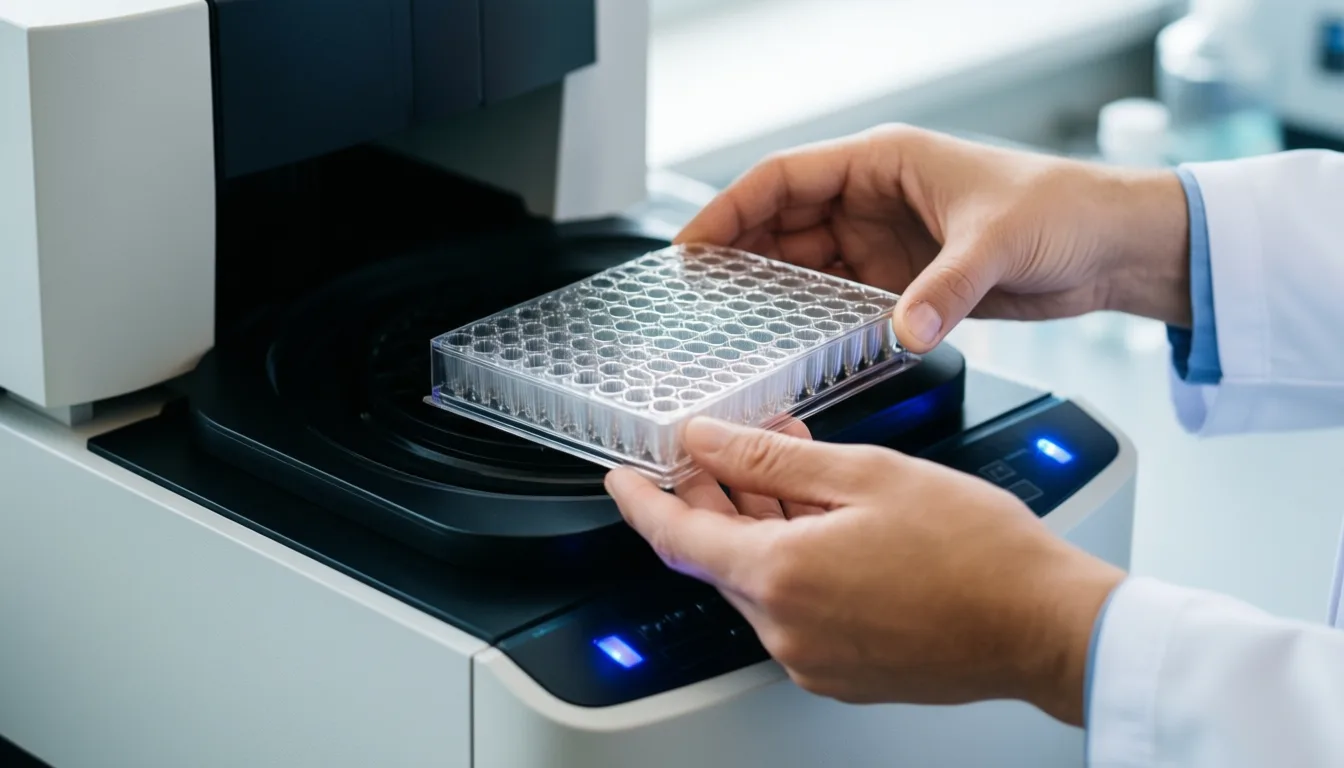
Mass-spec detectability was a hard filter in the review: a protein only made the consensus list if it could be reliably measured in plasma at scale.
How this compares to methylation clocks
To be clear about where the evidence sits: the review is a synthesis, not a head-to-head trial. It proposes a panel; it does not yet demonstrate that this panel beats GrimAge or PhenoAge at predicting mortality, healthspan, or response to interventions. That work is still to come. What it offers is a credible, transparent starting point — built from public data, filtered for analytical feasibility — that other groups can now stress-test in independent cohorts.
Methylation clocks have a head start of more than a decade and an enormous validation literature behind them. Proteomic clocks have an arguably better mechanistic story: proteins are closer to phenotype, more responsive to interventions on a meaningful timescale, and — once a target panel is locked — measurable by targeted mass spectrometry or immunoassays without sequencing infrastructure. The honest answer to "which one wins?" is that they will likely coexist, and the most informative consumer tests of the next few years will probably blend signals from both.
Proteins are closer to the action — they carry inflammatory signals, ferry lipids, and clean up debris in real time.
What this means if you are tracking your biomarkers
For readers who already order biological-age tests, the practical near-term implication is patience. The consensus protein list is a research blueprint, not a product. No validated consumer proteomic clock built on this specific panel exists yet, and any company that markets one in the next year should be asked, politely but firmly, to show its validation cohort, its test-retest reliability, and its mortality or healthspan associations in independent data. "Built on a systematic review" is not the same as "validated against outcomes."
The longer-term implication is more interesting. If proteomic clocks mature along the trajectory this review sketches, biological-age testing could shift from a niche, mail-order curiosity to something more like a standard panel — measured on equipment hospitals already own, anchored to proteins clinicians already recognize, and updated frequently enough to actually track whether a lifestyle change, a drug, or an intervention is moving the needle. Decisions about your health, of course, belong with a clinician who knows your full picture, not a dashboard.

- A consensus shortlist exists. A 2024 systematic review pooled 17 plasma proteomics datasets into a ranked candidate list for a proteomic aging clock.
- Inflammation and lipid metabolism dominate. The proteins that survived the filter cluster around the same biology implicated in inflammaging and metabolic decline.
- Disease proteins may double as aging markers. The review argues, for the first time at this scale, that some FDA-recognized clinical biomarkers may also index biological age.
- It is a blueprint, not a product. No validated consumer test built on this exact panel exists yet — prospective validation in independent cohorts is the next step.
- Methylation isn't dethroned. Proteomic and epigenetic clocks will likely complement each other; mechanistically, proteins are closer to phenotype.
- Ask your clinician. Biomarker testing belongs inside a real medical conversation, not a standalone dashboard.
The bigger picture is that aging biology is finally producing the kind of layered, multi-omic measurement infrastructure it has long needed. Methylation gave the field its first reliable yardstick. Proteomics may give it the second — one that speaks the same language as the rest of clinical medicine, and that, in time, could make "how old is my body actually behaving?" a question with a careful, quantitative, and useful answer.
Frequently asked questions
What is the source of the proposed proteomic aging panel, and who led the research?
A 2024 systematic review pooled 17 publicly available plasma proteomics datasets to identify proteins that consistently appear associated with aging across studies, cohorts, and mass-spectrometry platforms. The work was led by a team that included Alexey Moskalev. The result is a ranked candidate list filtered for whether each protein can actually be detected in human plasma by mass spectrometry.
Which biological themes dominate the proteins on the consensus list?
Two themes dominate: inflammation and lipid metabolism. The review notes that chronic low-grade inflammation, sometimes called inflammaging, and shifting lipid handling are among the most replicated hallmarks of biological aging.
How do proteomic clocks differ from methylation clocks like GrimAge or Horvath?
Methylation clocks measure regulatory state — what cells are set up to do — rather than what the body is currently doing, and they have more than a decade of validation literature behind them. Proteins are described as closer to phenotype, more responsive to interventions on a meaningful timescale, and measurable without sequencing infrastructure. The article concludes the two types will likely coexist and complement each other.
Is there a consumer test available based on this proteomic panel right now?
No. The article states the consensus protein list is a research blueprint, not a product, and that no validated consumer proteomic clock built on this specific panel exists yet. Prospective validation in independent cohorts is described as the necessary next step before such a test could be considered credible.
What is the significance of some proteins on the list already having FDA-approved clinical uses?
The review argues, for the first time at this scale, that proteins already associated with overt systemic disease — including some with FDA-recognized clinical uses — may also serve as markers of the aging process itself. If that holds up under prospective validation, it would mean parts of a proteomic aging clock could be built from assays that already exist in hospital chemistry labs.
Sources
- Proteomic Markers of Aging and Longevity: A Systematic Review. — International journal of molecular sciences
Join the conversation
Comments are moderated and reviewed before they appear. Be constructive — this is health information.
Add your comment