Building a Nutrition-Based Aging Clock: A New Way to Read the Years
Chinese researchers built an early-stage 'aging clock' from amino acids, vitamins and oxidative-stress markers — a promising step toward biological age you might actually be able to nudge.
For most of the last decade, the phrase biological age has meant one thing in the longevity world: a methylation panel. You spit in a tube, a lab reads chemical tags on your DNA, and an algorithm tells you whether your cells are running fast or slow for your birthday. Useful, but abstract. You cannot eat your way to a different methylation pattern by Thursday. Now a group of Chinese researchers has tried a different tack — building an aging clock out of the nutrients and stress markers floating in your blood and urine. It is early work, on a small sample, but the idea is worth a careful look.
The study, published in Frontiers in Nutrition, enrolled 100 healthy adults between the ages of 26 and 85. The team measured plasma concentrations of nine amino acids and thirteen vitamins, two urinary markers of oxidative stress with the unlovely names 8-oxoGuo and 8-oxodGuo, and body composition by bioelectrical impedance. They then fed the data into a machine-learning model and asked it to predict chronological age. The model landed within roughly two and a half years of the truth, with a coefficient of determination of 0.88 — respectable numbers for a first attempt at this kind of clock, as reported in the original paper.
What makes this interesting is not the accuracy. Plenty of clocks predict age tightly. What matters is the inputs. Methylation marks are downstream chemistry; amino acids and vitamins are upstream — closer to the plate, the pharmacy, and the gym. If a biomarker on your dashboard moves when you change what you eat, that biomarker is, at least in principle, actionable. That is the bet the authors are placing.
What the clock actually reads
Three families of measurements drive the model. The first is plasma amino acids, the building blocks your body uses to repair muscle and make enzymes and neurotransmitters. The second is vitamins — fat-soluble and water-soluble — many of which serve as cofactors in the metabolic machinery that slows with age. The third is oxidative stress: 8-oxoGuo reflects damage to RNA, 8-oxodGuo to DNA. Both rise when the body's antioxidant defenses fall behind the wear and tear of ordinary living.
The headline pattern in the data is unsurprising but worth saying plainly: the younger participants had significantly lower oxidative-stress markers than the older ones, and several amino acids and vitamins shifted predictably with the decades, according to the study authors. Translation: as people aged, the chemistry of repair looked a little more frayed, and the chemistry of damage a little more elevated. None of this is news to a gerontologist. The contribution here is folding all those threads into a single number you can track.
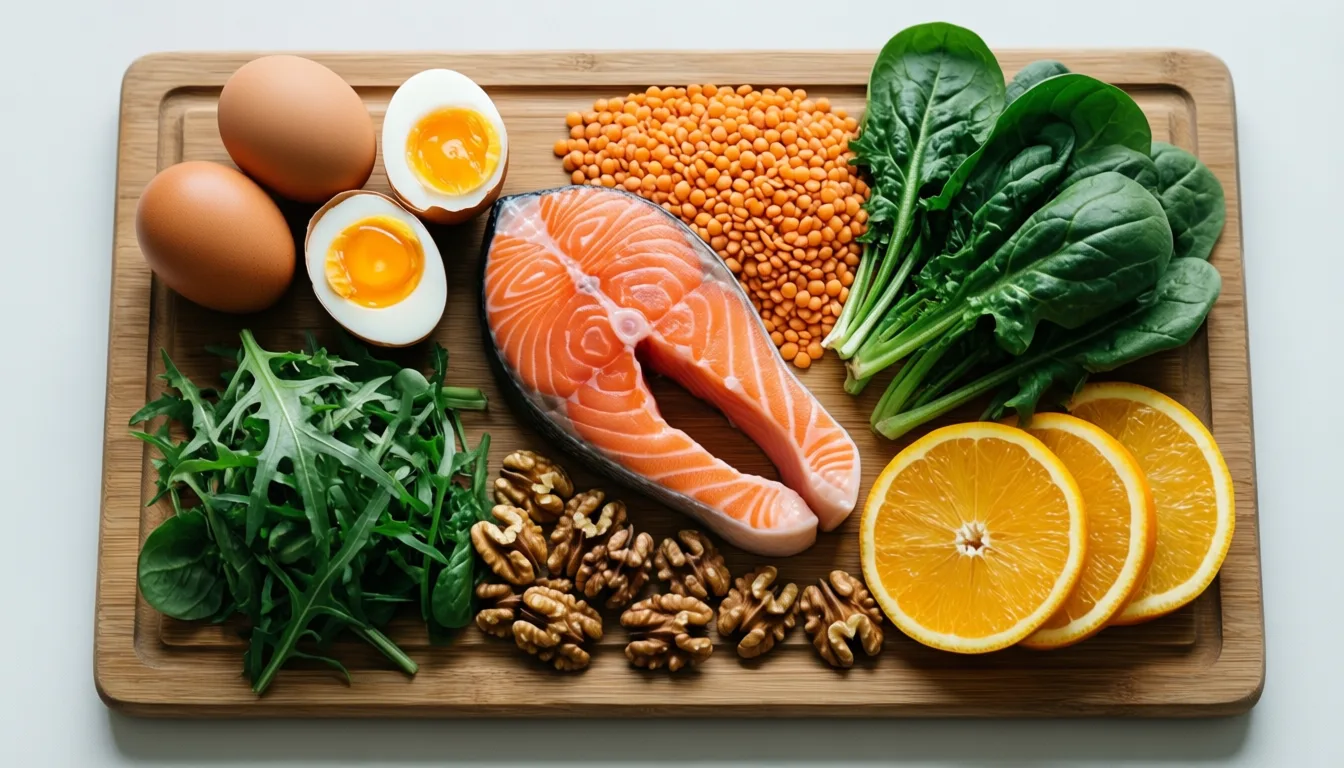
The clock's inputs — amino acids, vitamins, oxidative-stress markers — sit closer to diet and lifestyle than the DNA methylation marks that dominate today's biological-age tests.
Why 'modifiable' is the key word
The promise of a nutrition-based clock is straightforward. If your predicted age runs ahead of your real one, and the model is leaning on, say, a low vitamin or a high oxidative-stress reading, you have something concrete to work on with your doctor. You cannot say the same about a methylation score, which is harder to move on any timescale shorter than years. The authors are explicit that one of their goals is to support targeted intervention strategies — better diet, better supplementation where warranted, better attention to the metabolic basics.
That promise comes with a long list of caveats, and the authors deserve credit for not waving them away. One hundred participants is a small pool. They were all healthy, all drawn from a single Chinese population, and the model has not yet been validated in anyone else. A clock trained on this group may or may not read accurately on a 68-year-old in Cleveland with two stents and a statin prescription. And like every machine-learning model, this one is only as good as the data it was fed; a different lab, a different assay, a different season of the year, and the numbers could shift.
Methylation tells you the cell's mood. Amino acids and vitamins tell you what's on the grocery list.
What it does not say
A few things are worth keeping straight. The study did not show that taking a vitamin made anyone biologically younger. It did not test a diet, a supplement, or any intervention at all. It is a snapshot — a cross-section of 100 people at one point in time — not a trial. The authors built a model and showed it correlates with chronological age and with various physiological markers. Whether moving the inputs moves the outcome is a question for the next study, not this one.
It also does not replace the clocks already in use. Methylation panels, telomere assays, and proteomic clocks each measure something different, and the smart money is on a future where several of these are read together rather than one being crowned. A nutrition clock would slot in alongside the others, not on top of them.

The basics — protein adequacy, micronutrient sufficiency, less oxidative wear — remain the levers most worth pulling, with or without a fancier dashboard.
- The clock is new and small. One hundred healthy adults in a single Chinese cohort — promising, not yet proven.
- Accuracy was respectable. Mean error of about 2.6 years and an R² of 0.88 against chronological age.
- The novelty is the inputs. Amino acids, vitamins, and oxidative-stress markers sit closer to diet than methylation does.
- No intervention was tested. The study did not show that changing the inputs changes the outcome.
- Don't trade your clinician for a dashboard. Talk to your doctor before chasing any biomarker on your own.
The unglamorous truth is that nothing in this paper rewrites the playbook for staying strong and sharp into your seventies and eighties. Eat enough protein. Cover your micronutrient bases. Move daily. Sleep. See your doctor. Those levers were the right ones before this study and remain the right ones after it. What a nutrition-based clock might eventually offer is a better way to see whether the levers you are pulling are actually doing something. That would be a real advance. We are not there yet — but for once, the dashboard and the dinner plate are pointed in the same direction.
Frequently asked questions
What biomarkers does this nutrition-based aging clock measure?
The clock draws on three families of measurements: plasma concentrations of nine amino acids and thirteen vitamins, two urinary markers of oxidative stress called 8-oxoGuo and 8-oxodGuo, and body composition measured by bioelectrical impedance. In total, 24 biomarkers were measured per person.
How accurate was the model at predicting a person's age?
The machine-learning model predicted chronological age within roughly two and a half years, with a mean absolute error of about 2.6 years and a coefficient of determination of 0.88. The authors described these as respectable numbers for a first attempt at this kind of clock.
How is this clock different from standard DNA methylation biological-age tests?
Methylation marks are described in the article as downstream chemistry, whereas amino acids and vitamins are upstream — closer to diet, supplementation, and lifestyle. Because these inputs can shift when a person changes what they eat, the authors argue they are more actionable than a methylation score, which is harder to move on any timescale shorter than years.
Does the study prove that improving your diet or taking supplements will make you biologically younger?
No. The study did not test any diet, supplement, or intervention of any kind. It is a cross-sectional snapshot of 100 people at one point in time, not a trial, and the authors acknowledge that whether moving the inputs moves the outcome is a question for future research.
What are the main limitations of this research?
The study enrolled only 100 participants, all healthy and drawn from a single Chinese population, so the model has not been validated in other groups or health histories. The authors also note that results could shift with a different lab, assay, or even a different season, and that the findings need replication in larger, more varied populations before firm conclusions can be drawn.
Join the conversation
Comments are moderated and reviewed before they appear. Be constructive — this is health information.
Add your comment