Centenarian Blood: Why the Longest-Lived Humans Carry Youth-Like Red Cells and Acetyl Marks
Two 2025 studies converge on measurable biological signatures that set centenarians—and long-lived mammals—apart. The evidence is intriguing, the mechanisms partial, the hype unwarranted.
For as long as people have lived past a hundred, the rest of us have wanted to know what is in their blood. The wish is half-poetic and half-pharmacological: surely something measurable, something bottle-able, distinguishes the centenarian from the merely old. Two peer-reviewed studies published in 2025 offer the most disciplined answer yet. They do not name an elixir. They name signatures—patterns in red blood cells and in the chemical tags that decorate proteins—that travel with extreme longevity. They are clues, not cures, and that distinction is the whole story.
The first clue lives in the humblest of cells. Red blood cells are usually treated as oxygen couriers and little else: no nucleus, no drama, a four-month working life. Yet a study in Aging Cell reports that the erythrocytes of longevity individuals behave, biochemically, more like those of young adults than of typical elderly people. Their oxygen-release function is preserved, their metabolite profile is reorganized in youthful directions, and the differences are pronounced enough to separate the longevity group from the elderly on metabolomic grounds alone.
The second clue is written one rung up, on proteins themselves. In Nature Communications, researchers built a computational tool called PHARAOH and trained it on acetylome and proteome data across 107 mammalian species—creatures whose maximum lifespans differ roughly 100-fold. The output is a kind of evolutionary ledger: 482 acetylated lysine sites in mice and 695 in humans that track significantly with longevity. At many of these positions, short-lived species carry a reversibly acetylated lysine while long-lived species carry a fixed mimic—glutamine (constant 'on') or arginine (constant 'off')—as if evolution had decided the switch should stop flickering.
What red cells are doing differently
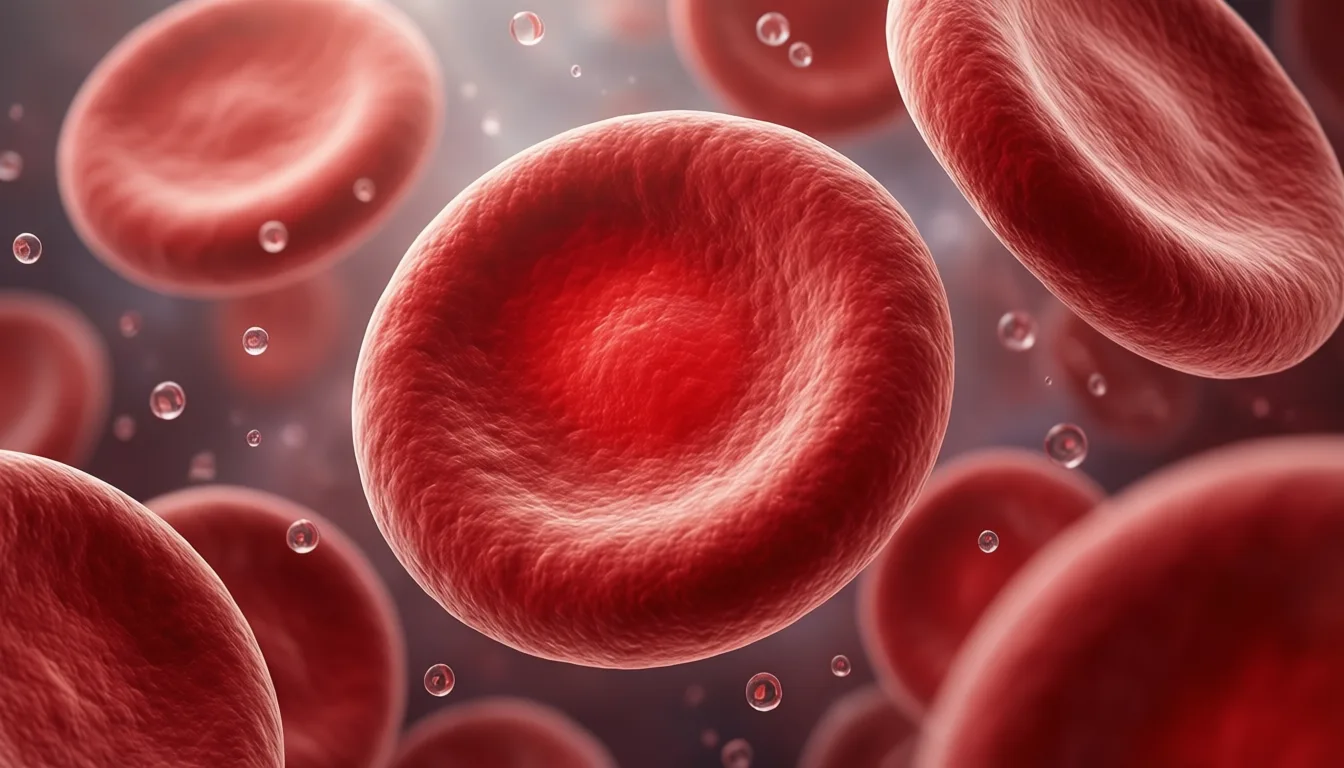
Erythrocytes outlive their reputation as passive couriers; their metabolism reorganizes with age—except, apparently, in the very long-lived.
The mechanistic sketch the Aging Cell authors propose is specific enough to be testable. In longevity erythrocytes, the enzyme bisphosphoglycerate mutase (BPGM) is elevated and the transporter MFSD2B is reduced. Together, those shifts raise intracellular sphingosine-1-phosphate (S1P), which nudges the enzyme GAPDH off the membrane and into the cytosol. The downstream effect is a glucose-handling reroute through the Rapoport–Luebering shunt and more 2,3-bisphosphoglycerate—the molecule that tells hemoglobin to let go of its oxygen. The same cells also show higher glutathione production via boosted glutamine and glutamate transport, a plausible buffer against the oxidative wear that accumulates with age.
Named on the longevity side of the ledger are adenosine, S1P, and glutathione-related amino acids. None of these is novel to aging biology; what is new is finding them clustered, in a coherent pattern, inside the red cells of people who reached extreme old age. Whether that pattern is cause, consequence, or correlate of long life is not settled by a cross-sectional comparison—a caveat the data themselves enforce.
Evolution appears to have decided, in long-lived species, that certain switches should stop flickering.
An acetyl ledger across mammals
The PHARAOH analysis is comparative rather than clinical, and that is its strength. By looking across species whose maximum lifespans span two orders of magnitude, the authors can ask which acetylation sites move with longevity rather than with any one organism's quirks. The pathways flagged—mitochondrial translation, cell cycle control, fatty acid oxidation, transsulfuration, and DNA repair—read like a roll call of the usual aging suspects, which is reassuring rather than surprising.
The validation experiments are where the paper earns its keep. Swapping a single lysine for arginine at position 386 of mouse cystathionine beta synthase—nudging it toward the human sequence—increased the enzyme's pro-longevity activity. Conversely, replacing acetylated lysine 714 in human USP10 with arginine, the residue found in short-lived mammals, blunted its anti-neoplastic function. Two edits do not a therapy make, but they do convert a correlation into a mechanistic claim worth taking seriously.

Acetylation tags decorate lysine residues; in long-lived species, many of those switches are fixed rather than flipped.
How much should this change what you do?
Honestly: not much, yet. Neither study tests an intervention in healthy adults. Neither identifies a supplement, a dose, or a habit that reliably reproduces these signatures. The erythrocyte work is observational and based on people who already lived a long time; we cannot tell whether their red-cell metabolism is something they were born with, something they earned through decades of low disease burden, or something cultivated by behaviors the study did not measure. The acetylome work is brilliant comparative biology, but a residue swap in an enzyme assay is several long steps from a clinical recommendation.
What both papers do, persuasively, is push the field past the vague language of 'rejuvenation molecules' toward specific, measurable phenotypes—oxygen-release kinetics in red cells, a defined map of acetylation sites—that future trials can actually target. That is the kind of progress that does not photograph well but tends to matter.
- Two convergent signatures. Centenarian red cells show youth-like oxygen-release function and metabolite profiles; long-lived mammals share a distinctive map of protein acetylation sites.
- Specific molecules named. Adenosine, sphingosine-1-phosphate, and glutathione-related amino acids cluster in longevity erythrocytes, alongside elevated BPGM and reduced MFSD2B.
- Pathways implicated. Mitochondrial translation, DNA repair, fatty acid oxidation, and transsulfuration recur in the longevity-associated acetylome.
- Mechanism, not yet medicine. Enzyme-level swaps validate causal plausibility, but no human intervention has been shown to reproduce these signatures.
- Caveat the evidence. Both studies are observational or comparative; cause versus consequence remains genuinely open.
- Talk to a clinician before acting on any longevity narrative—especially the supplement-shaped ones these findings will inevitably spawn.
It is tempting, with findings this elegant, to skip to the bottle. The discipline of the work argues otherwise. The longest-lived humans are not telling us what to swallow. They are telling us, in the metabolism of their red cells and the chemistry of their proteins, where to look next.
Frequently asked questions
What makes centenarian red blood cells different from those of typical older adults?
According to the Aging Cell study, the red blood cells of longevity individuals behave biochemically more like those of young adults than of typical elderly people. Their oxygen-release function is preserved, their metabolite profile is reorganized in youthful directions, and the differences are pronounced enough to separate the longevity group from the elderly on metabolomic grounds alone.
Which specific molecules were found clustered in the red blood cells of long-lived people?
Adenosine, sphingosine-1-phosphate (S1P), and glutathione-related amino acids were found clustered in a coherent pattern inside the red cells of people who reached extreme old age. The same cells also showed elevated BPGM enzyme activity and reduced MFSD2B transporter levels.
What is PHARAOH, and what did it reveal about longevity?
PHARAOH is a computational tool built by researchers and trained on acetylome and proteome data across 107 mammalian species whose maximum lifespans differ roughly 100-fold. It identified 695 acetylated lysine sites in humans and 482 in mice that track significantly with longevity, finding that long-lived species often carry fixed amino acid substitutions at these positions rather than reversible acetylation switches.
Do these studies suggest people should take supplements to replicate longevity signatures?
Neither study tests an intervention in healthy adults, and neither identifies a supplement, dose, or habit that reliably reproduces these signatures. The article explicitly warns that the molecules measured were found inside the red blood cells of people who had already lived past a hundred—not delivered as pills shown to make anyone live longer.
Were the acetylation findings just correlations, or was causation demonstrated?
The researchers conducted validation experiments that moved beyond correlation: swapping a single lysine for arginine at position 386 of mouse cystathionine beta synthase increased the enzyme's pro-longevity activity, while replacing an acetylated lysine in human USP10 with arginine blunted its anti-neoplastic function. The article describes these as converting a correlation into a mechanistic claim, while noting that two edits do not constitute a therapy.
Sources
- Longevity Humans Have Youthful Erythrocyte Function and Metabolic Signatures. — Aging cell
- The mammalian longevity associated acetylome. — Nature communications
Join the conversation
Comments are moderated and reviewed before they appear. Be constructive — this is health information.
Add your comment