
The Centenarian Code: What Hypothalamic NPY, Spermidine, and Rare Gene Variants Reveal About Brain Aging
A new wave of 2025 research points to specific molecular levers that distinguish the brains of healthy agers from the rest — and hints at what the rest of us might one day borrow.
For most of medical history, the brain was treated as a clock we could only watch wind down. Memory thinned, processing slowed, and the best advice on offer was to be grateful for the years. That framing is quietly eroding. A cluster of 2025 papers — one on a tiny hypothalamic peptide in mice, one on a polyamine called spermidine in fruit flies, and one on the genomes of people who live past 100 — converges on a more interesting idea: brain aging is not a single tide. It is a set of biological levers, some of which we are beginning to identify, and a few of which, in time, we may learn to move.
None of these findings are ready to walk into a doctor's office. Two are in animals; the third is statistical, drawn from the genomes of extraordinary survivors. But read together, they sketch a coherent map of what a slowly aging brain might actually look like at the molecular level — and where the most plausible interventions of the next decade will aim.
This piece is about that map. Not a protocol. Not a prescription. A map.
- NPY, a hypothalamic peptide, declines with age. Restoring it in a mouse model of premature aging delayed several aging features, including memory loss.
- Spermidine supports a translation factor called eIF5A that protects aging brain mitochondria — and in flies, it extended lifespan and preserved memory independent of protein intake.
- Centenarians carry more protective gene variants against Alzheimer's than ordinary agers, even setting aside the well-known APOE gene.
- The protection is real but modest — roughly one extra protective allele per five additional years of life in the longest-lived.
- None of this is clinical guidance yet. The relevance is conceptual: brain aging has identifiable levers, and that changes what's worth researching, and asking your clinician about.
The hypothalamus, quietly in charge
The hypothalamus is a structure about the size of an almond, tucked deep beneath the cerebral cortex. It governs body temperature, hunger, thirst, sleep cycles, and the hormonal cascades that ripple through the rest of the body. In recent years it has also emerged as a candidate conductor of whole-body aging — a region whose decline reverberates outward.
One of its signaling molecules is neuropeptide Y, or NPY, which becomes scarcer in the hypothalamus as animals age. NPY is interesting because it appears to switch on autophagy — the cell's housekeeping system for clearing damaged proteins and organelles — and because it seems to mediate some of the benefits of caloric restriction, the most reproducible longevity intervention biology has.
In a 2025 GeroScience paper, researchers asked a direct question: if NPY falls with age, what happens if you restore it? Using a mouse model of premature aging — the Zmpste24-knockout mouse, which develops a syndrome resembling progeria — they reestablished hypothalamic NPY levels and reported that aging-associated features including lipodystrophy, hair loss, and memory deficits were delayed. The authors frame NPY as a potential caloric-restriction mimetic: a way of capturing some of the benefits of eating less without eating less.
The caveats are worth saying clearly. This is a mouse study. The mouse in question is not a normally aging animal but one engineered to age prematurely. And restoring a peptide in a specific brain region of a mouse is several long steps from a therapy in a human. What the study earns is a hypothesis: that hypothalamic signaling may be a leverage point for the brain's aging trajectory, and that it deserves the next round of work.
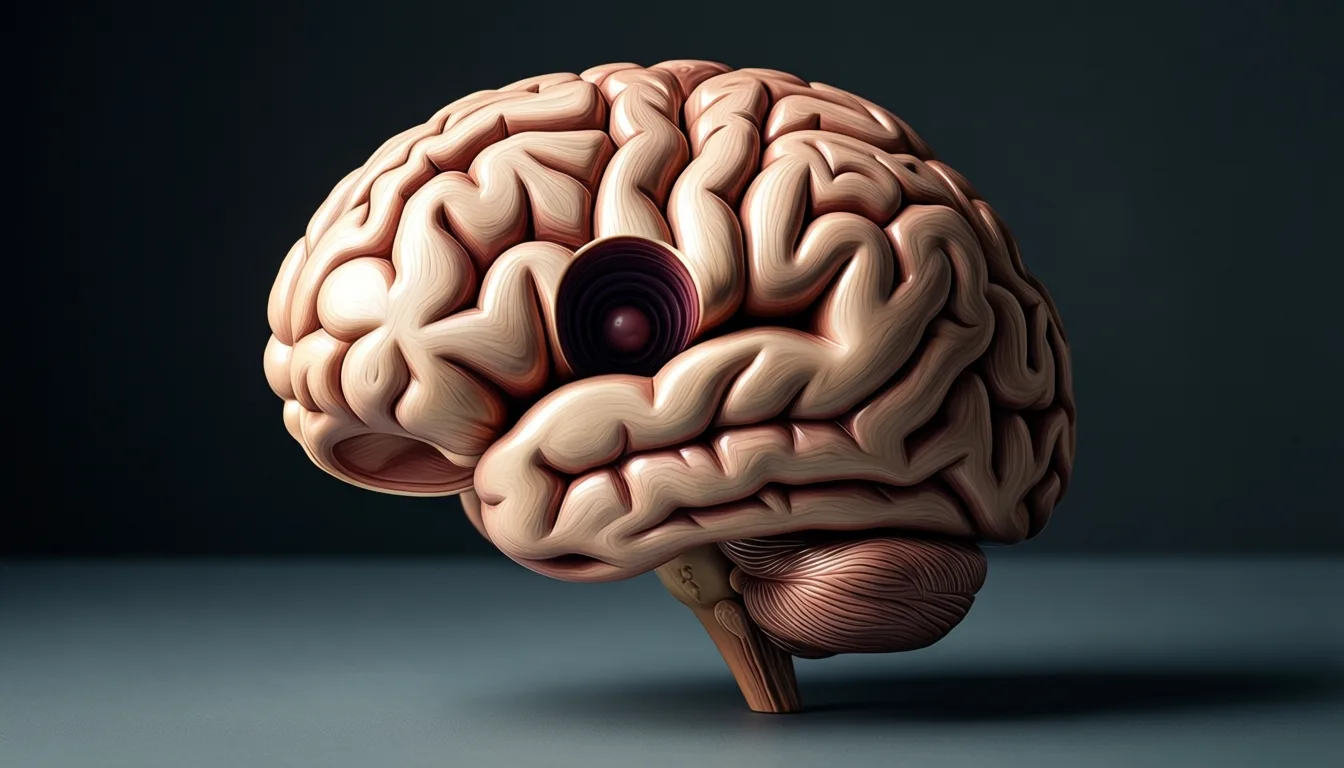
The hypothalamus, deep beneath the cortex, is increasingly viewed as a conductor of systemic aging — not just a regulator of hunger and sleep.
Spermidine and the mitochondria of memory
Brain aging is not a single tide. It is a set of biological levers, some of which we are beginning to identify.
The second thread runs through a molecule called spermidine — a polyamine your cells already make, also found in foods such as wheat germ, aged cheese, mushrooms, and soybeans. Spermidine has drawn attention because it appears to support the function of a translation factor called eIF5A through a process called hypusination, which in turn helps maintain mitochondrial integrity in aging brains.
In a 2025 study published in Aging, researchers crossed spermidine supplementation with high- and low-protein diets in fruit flies. The choice of model matters: flies live weeks, not years, which lets scientists test dietary combinations in ways impossible in humans. They reported that effective hypusination was essential for normal lifespan on both diets, and that spermidine supplementation increased longevity, protected against age-related locomotion decline, and improved memory scores in older flies regardless of protein intake.
The deeper finding is mechanistic. Protein restriction and spermidine both improve brain mitochondrial function, but the study suggests they do so through largely distinct pathways. That matters because it implies the benefits could, in principle, stack rather than overlap — an early hint, in an invertebrate, that fasting-style interventions and polyamine biology are not the same lever wearing two hats.
Again: flies. The leap to a 60-year-old human brain is enormous. Spermidine supplements are widely sold; the human trial evidence for cognitive benefit is still thin, and dosing, safety, and population-specific effects remain open questions worth raising with a clinician rather than settling at a checkout page.
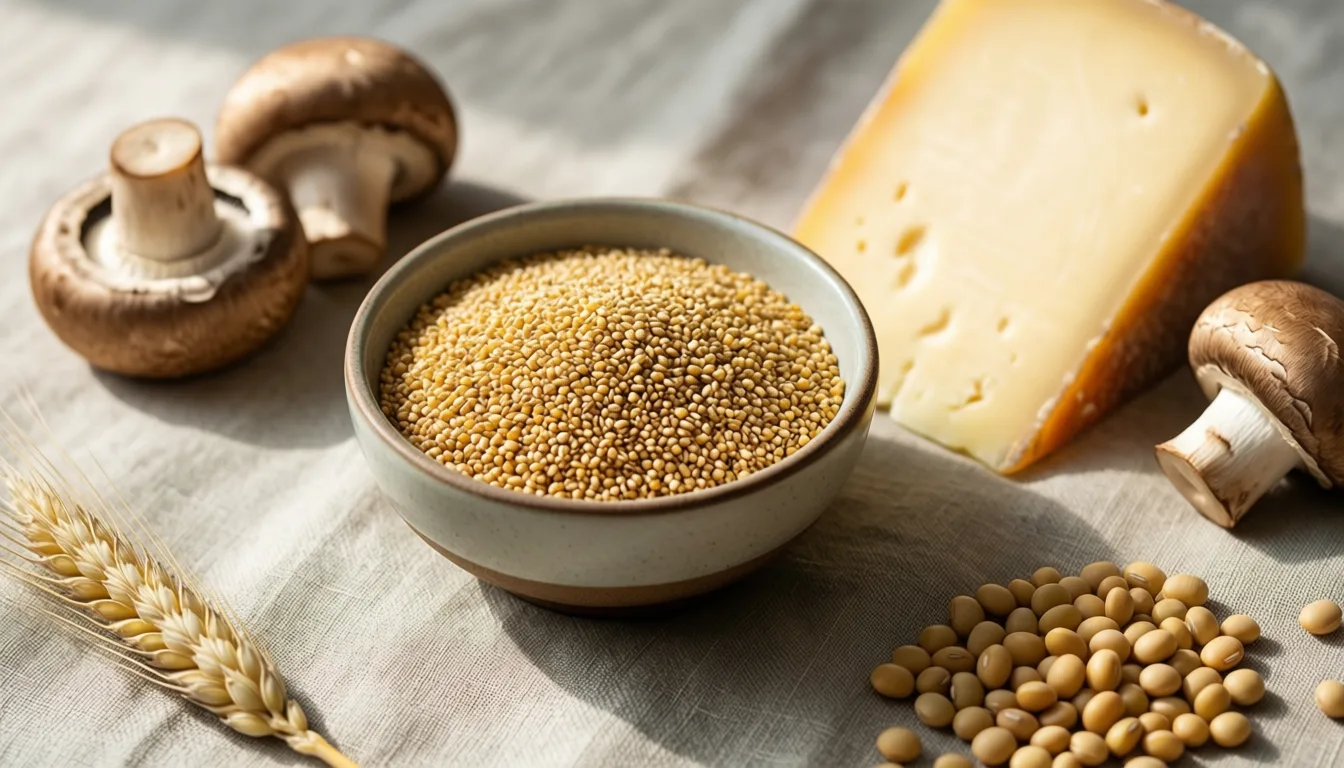
Dietary sources of spermidine include wheat germ, aged cheeses, mushrooms, and soybeans. Food-level intake is not the same as supplementation, and human trial data remain early.
What centenarians' genomes actually say
The third paper looks not at molecules to add but at people who already have something the rest of us don't. Researchers built a polygenic protective score for Alzheimer's disease — deliberately excluding the well-known APOE gene — and applied it across five cohorts of healthy agers and centenarians in the United States, Europe, and Asia.
Their finding: centenarians carry stronger genetic protection against Alzheimer's than people without familial longevity, and this protection appears to increase across centenarians, semi-supercentenarians (105–109), and supercentenarians (110+). Higher scores were also associated with better cognitive function and lower mortality.
The honest sentence in the paper is the most important one: the effect is modest. The authors estimate roughly one additional protective allele per five years of additional lifespan among the extreme-aged. This is not a hidden master gene. It is a quiet accumulation of small advantages, distributed across many positions in the genome.
That has two implications for the rest of us. First, much of what looks like luck in late-life cognitive health probably is, at least in part, written before birth. Second — and more usefully — a polygenic score robust across continents is exactly the kind of target that drug developers can build around, because it points to biology that nature has already validated.
What it adds up to — and what it doesn't
Set the three papers side by side and a shape emerges. A hypothalamic signal (NPY) that may help the brain mimic the benefits of eating less. A dietary polyamine (spermidine) that supports the machinery keeping aging neurons' mitochondria functional. And a polygenic background that, in the longest-lived among us, tilts the odds against Alzheimer's by a small but measurable amount.
What they share is a thesis: the aging brain has identifiable molecular levers, and the people who age best are, in part, the ones whose biology happens to pull on them. What they do not yet share is a clinical pathway. Two studies are in animals. The third is a statistical portrait, not a prescription. None of them tell a 58-year-old woman what to do on Monday morning.
That is not a reason to dismiss them. It is a reason to track them — and to bring them into the conversation with your own clinician rather than the supplement aisle. Ask what the human evidence actually shows for any intervention claiming to harness these pathways. Ask what your own risks and family history change about the calculus. The most useful posture toward early science is neither faith nor cynicism. It is informed patience.
- Treat the findings as a map, not a manual. They identify pathways worth watching, not regimens to adopt.
- Animal data is a hypothesis generator. Mice and flies have taught us a great deal, and misled us many times — both are true.
- Modest genetic effects matter. A small per-allele advantage, multiplied across the genome, is exactly the territory in which good drugs get built.
- Bring this to your clinician, not the supplement aisle. The right dose of any of these stories is a conversation, not a purchase.
Frequently asked questions
What is NPY and why do researchers think it matters for brain aging?
NPY, or neuropeptide Y, is a signaling molecule in the hypothalamus that becomes scarcer as animals age. It appears to switch on autophagy — the cell's system for clearing damaged proteins and organelles — and may mediate some of the benefits of caloric restriction. In a mouse model of premature aging, restoring hypothalamic NPY levels delayed aging features including memory deficits.
What foods naturally contain spermidine?
According to the article, dietary sources of spermidine include wheat germ, aged cheese, mushrooms, and soybeans. The article notes that food-level intake is not the same as supplementation, and that human trial evidence for cognitive benefit from spermidine remains thin.
How does spermidine relate to brain mitochondria?
Spermidine supports a translation factor called eIF5A through a process called hypusination, which in turn helps maintain mitochondrial integrity in aging brains. In fruit fly research, effective hypusination was described as essential for normal lifespan, and spermidine supplementation improved memory scores in older flies regardless of their protein intake.
What did the centenarian genome study find about Alzheimer's protection?
Researchers found that centenarians carry stronger genetic protection against Alzheimer's disease than people without familial longevity, with protection increasing across centenarians, semi-supercentenarians (105–109), and supercentenarians (110+). The authors describe the effect as modest, estimating roughly one additional protective allele per five years of additional lifespan among the extreme-aged.
Do protein restriction and spermidine work through the same biological pathway?
The article reports that the fruit fly study suggests they do not — protein restriction and spermidine both improve brain mitochondrial function, but apparently through largely distinct pathways. The article describes this as an early hint that their benefits could in principle stack rather than overlap, while stressing that the leap from flies to humans is enormous.
Sources
- Restoring neuropetide Y levels in the hypothalamus ameliorates premature aging phenotype in mice. — GeroScience
- Spermidine supplementation and protein restriction protect from organismal and brain aging independently. — Aging
- Increased genetic protection against Alzheimer's disease in centenarians. — GeroScience
Join the conversation
Comments are moderated and reviewed before they appear. Be constructive — this is health information.
Add your comment