The Cognitive-Reserve Math: How Education and Movement Buy Brain-Healthy Years
A new multistate study of nearly 2,000 older Chileans puts real numbers on the years of cognitive-impairment-free life that schooling and physical activity may add.
Okay, real talk: most longevity advice about your brain sounds like a horoscope. Stay curious! Keep moving! Learn a language! Cool — but how much does any of that actually buy you? A new study out of Chile finally puts a number on it, and the number is bigger than I expected.
Here's the setup. Researchers tracked 1,959 Chileans aged 60 and up between 2017 and 2019, watching how their cognitive states changed over time. Then they ran the data through something called a multistate model — basically a way of estimating not just how long people live, but how many of those years they spend with their thinking still sharp. That metric has a name: cognitive-impairment-free life expectancy, or CIFLE for short. Think of it as the brain-health version of "healthy years" on top of total years.
The big finding: higher education was associated with an average increase of 4.7 years of cognitive-impairment-free life, and 4.5 extra such years specifically for women. That is not a rounding error. That is a meaningful slice of someone's later life spent recognizing their grandkids, managing their own finances, and finishing the crossword.
The cognitive-reserve idea, in plain English
The theory behind all this is called cognitive reserve. The shorthand: your brain builds up a kind of buffer over a lifetime of learning, problem-solving, and staying engaged. When age-related wear and tear shows up later, a bigger buffer means the damage takes longer to show on the outside. Education is the classic proxy for that buffer — not because a diploma is magic, but because years of school tend to track with a lifetime of mentally demanding work, reading, and social complexity.
What's new here isn't the theory. It's the math. Until recently, "cognitive reserve helps" was the kind of thing experts would nod about without being able to tell you, in years, what "helps" means. This study tries to answer that question directly — at least for one country, in one time window.

Education is a stand-in for a lifetime of mental engagement — the buffer researchers call cognitive reserve.
Where movement comes in
Here's the part I keep thinking about. Education is largely set by the time you're an adult — you can't retroactively go to more school in your 30s and 40s in any meaningful biological sense. So what about the people who didn't get those years? Are they just out of luck?
Apparently not. The researchers found that physical activity added 5.5 years of cognitive-impairment-free life expectancy for women with lower educational attainment — enough that the authors describe it as a "powerful compensatory effect" and a mechanism for narrowing the gender gap in brain-healthy years. In other words: movement seems to be doing some of the same protective work that schooling does, and it's available later in life.
Why might that be? The leading explanations are unglamorous and overlapping: better blood flow to the brain, lower vascular risk, improved sleep, less inflammation, more social contact when you walk with a friend or take a class. None of these are miracle mechanisms. They're the same boring levers that protect the heart — which, it turns out, are also the levers that protect the thing the heart is feeding.
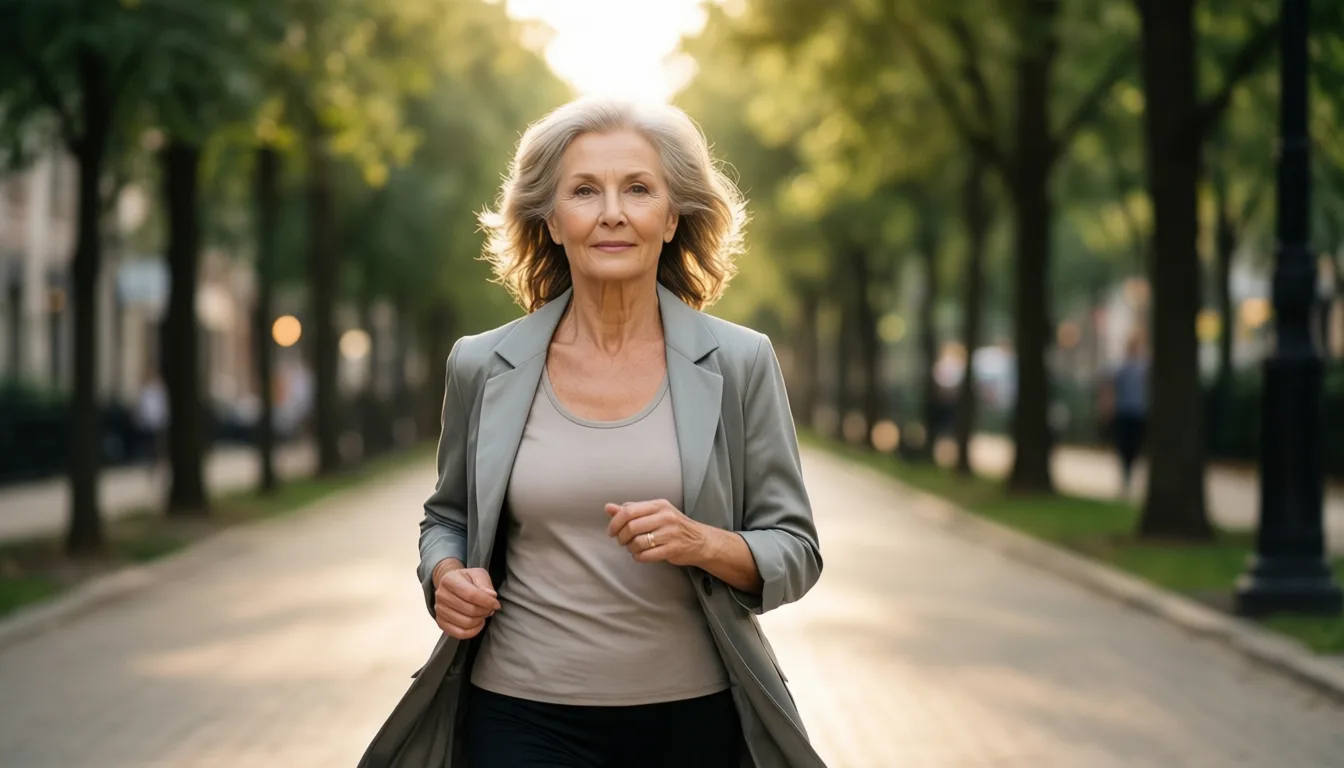
Movement seems to be doing some of the same protective work that schooling does — and it's available later in life.

The footnote that matters: where you live
One more piece of the study deserves attention, because it complicates the cheerful headline. The same paper reports that older adults in regions outside Chile's metropolitan area faced up to a 30% higher risk of cognitive impairment. National averages, the authors note, mask very different local realities.
That is a polite way of saying: your zip code is doing some of the heavy lifting that we like to credit to personal choices. Access to clinics, walkable neighborhoods, clean air, schools, social services — all of these shape both the education line and the physical-activity line in the data. Cognitive reserve isn't only a personal project. It's also, partly, an infrastructure project.
How seriously to take the numbers
A few honest caveats, because this is one study and the evidence here is moderate, not settled. The data come from a two-year window in a single country, which is short for a question about decades-long brain aging. The protective factors are observational associations — the researchers can't prove that going for walks causes the extra years; people who exercise also tend to differ in income, diet, social connection, and baseline health. And the model estimates life expectancy from current patterns, which always smuggles in assumptions.
What the study does well is give a shape to something that's usually hand-waved. "Education and exercise protect your brain" is true but slippery. "Roughly 4 to 5 extra years of clear thinking" is something you can actually plan around.
- Education tracked with ~4.7 extra cognitive-impairment-free years in this Chilean cohort — a proxy for a lifetime of mental engagement, not a magic diploma effect.
- Physical activity added about 5.5 such years for women with less schooling, suggesting movement can partly compensate for missed cognitive-reserve building earlier in life.
- Geography mattered a lot. Living outside the metro region carried up to a 30% higher risk of cognitive impairment, a reminder that environment shapes brain aging too.
- The evidence is moderate, not definitive. These are associations from one panel study over two years; the effect sizes are striking but should be read as direction, not a prescription.
- The practical translation is unsexy and consistent: regular movement, ongoing learning, and social engagement remain the most defensible bets. Talk to a clinician before changing an exercise routine, especially later in life.
The takeaway I'm sitting with: cognitive reserve isn't a vibe. It's a buffer you can measure, and at least in this snapshot of nearly 2,000 lives, the things that grow it are stubbornly familiar. Keep learning. Keep moving. And maybe pay a little more attention to the neighborhoods and systems that make those two things easier — or harder — for the people aging around you.
Frequently asked questions
What does 'cognitive-impairment-free life expectancy' actually mean?
Cognitive-impairment-free life expectancy, or CIFLE, is a metric that estimates not just how long people live, but how many of those years they spend with their thinking still sharp. The article describes it as the brain-health version of 'healthy years' on top of total years.
How many extra years of clear thinking did higher education add in the study?
Higher education was associated with an average of 4.7 extra cognitive-impairment-free years, and 4.5 extra such years specifically for women. The article frames this as a meaningful slice of later life spent recognizing family members, managing finances, and staying mentally engaged.
Can physical activity compensate for less education when it comes to brain health?
According to the study, physical activity added about 5.5 cognitive-impairment-free years for women with lower educational attainment, which the researchers describe as a 'powerful compensatory effect.' The article notes that movement appears to do some of the same protective work that schooling does, and importantly, it is available later in life.
Why does where you live affect your risk of cognitive impairment?
The study found that older adults outside Chile's metropolitan area faced up to a 30% higher risk of cognitive impairment. The article explains this reflects differences in access to clinics, walkable neighborhoods, clean air, schools, and social services — factors that shape both education and physical activity levels.
How reliable are the study's findings?
The article cautions that the data come from a two-year window in a single country, which is a short timeframe for questions about decades-long brain aging. The protective associations are observational, meaning researchers cannot prove that exercise or education directly causes the extra years, and people who exercise tend to differ in other ways such as income and diet.
Sources
- Cognitive health and protective factors: from a life expectancy approach. — Social science & medicine (1982)
Join the conversation
Comments are moderated and reviewed before they appear. Be constructive — this is health information.
Add your comment