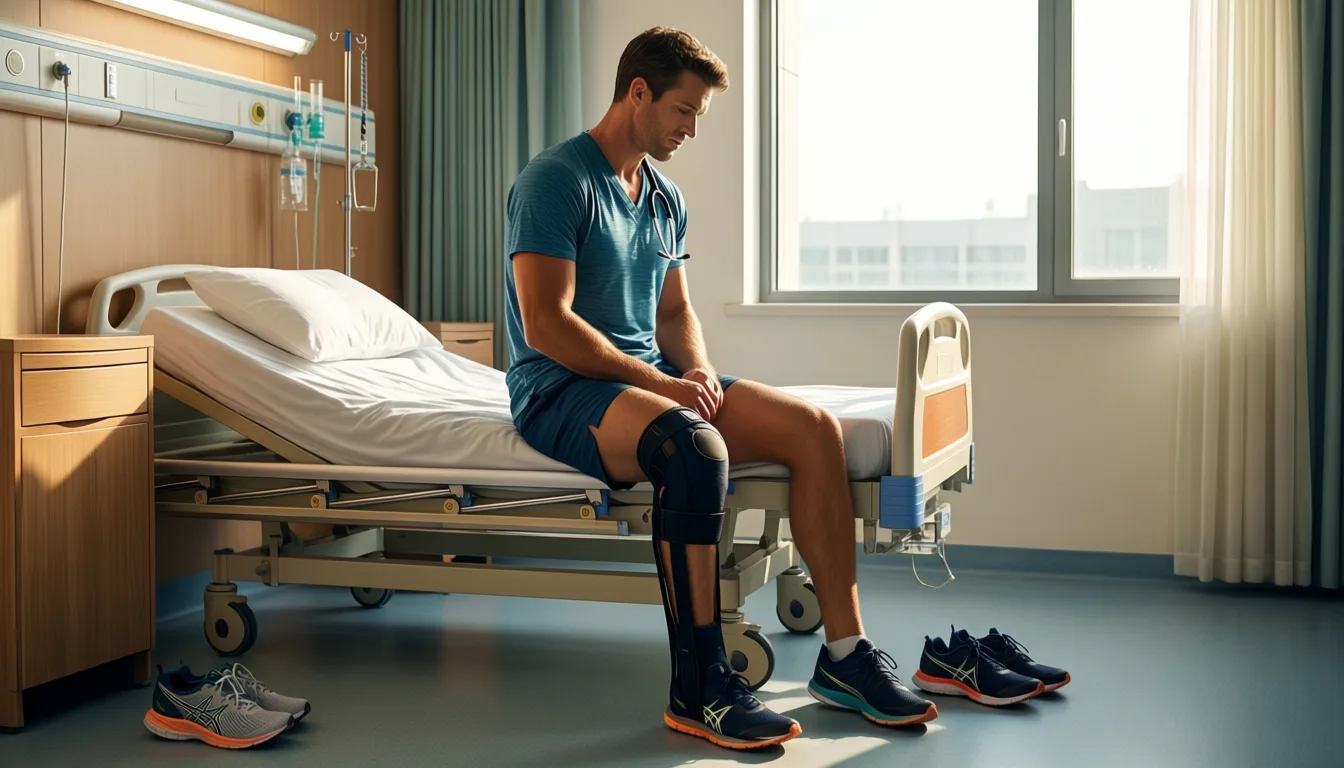
The Disuse Penalty: How Fast Fat Invades Resting Muscle
A new PRISMA-grade systematic review puts numbers on what endurance athletes intuit — even a short layoff lets fat creep into the muscle itself, and that may be the spark for the insulin resistance that follows.
Ask any endurance athlete what they fear about a forced layoff and they will tell you about VO2 max sliding, mitochondria thinning, the cruel first run back. What they rarely mention — because until recently the data were scattered — is the quieter change happening inside the muscle itself. Fat moves in. Not the visible kind around the waistband, but a finer, more consequential kind: droplets wedged between fibers and pooled around them, marbling a tissue that is supposed to be lean. A new systematic review in Experimental Physiology finally puts numbers on how fast that marbling appears when you stop moving, and the numbers are smaller than the tabloid headlines but more interesting than the shrug response.
The review, published in 2026 by Prokopidis, Reyes and Duque, followed PRISMA methodology across PubMed, Scopus, Web of Science and the Cochrane Library, with bias assessed using RoB2 and ROBINS-I. Nine clinical trials in healthy adults met the bar. The question was narrow and useful: when otherwise healthy people undergo bed rest or unilateral lower-limb immobilization, what happens to intramuscular adipose tissue (IntraMAT, the fat stored within the muscle) and intermuscular adipose tissue (InterMAT, the fat sitting between muscle groups beneath the fascia)? Both depots are increasingly viewed as mechanistic players in insulin resistance, not just passive consequences of it.
The headline finding for the postural muscles is the one that should make desk-bound athletes sit up straighter. Bed rest increased IntraMAT in the lumbar multifidus by 18.7%, with smaller but measurable bumps of 5.4% in the erector spinae and 4.5% in the quadratus lumborum. These are the deep stabilizers of the spine — exactly the tissue that endurance athletes rely on to hold form in hour four of a ride or kilometer 35 of a marathon. The lower-limb picture from immobilization studies was more mixed, with InterMAT changes in the thigh that did not always reach statistical significance, but the direction of travel was consistent.
Why marbling matters for metabolism
To appreciate why a few percentage points of fat infiltration is interesting, you have to remember what muscle is supposed to do beyond moving you forward. Skeletal muscle is the body's largest sink for postprandial glucose. Insulin opens the door, GLUT4 transporters surface, and glucose floods in to be burned or stored as glycogen. When lipid metabolites accumulate inside or around fibers, that signaling cascade gets noisier — diacylglycerols and ceramides interfere with insulin receptor substrate phosphorylation, and the door stops opening as cleanly. The authors of the review explicitly frame IntraMAT and InterMAT accumulation as a plausible mechanistic link between disuse and the insulin resistance that reliably appears after bed rest.
The evidence rating here is moderate, and worth holding honestly. Nine trials is a modest pool. Imaging methods varied. Healthy adults are not the same population as a recovering surgical patient or a long-haul traveller, and narrative synthesis cannot deliver the tidy pooled effect size a meta-analysis would. What the review does establish is that the signal is real and reproducible enough to take seriously, and that the postural muscles seem unusually susceptible — perhaps because they are the ones most completely unloaded when you are horizontal.
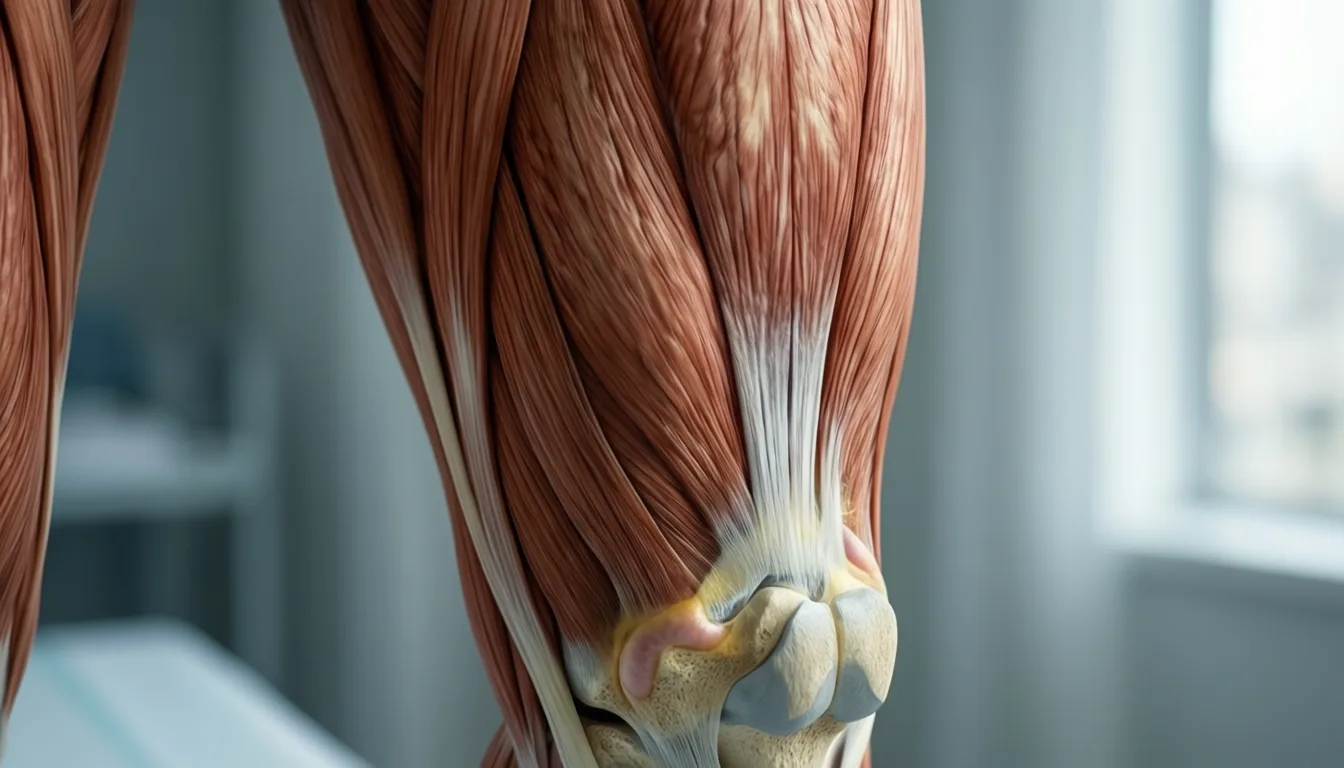
IntraMAT sits within the muscle; InterMAT pools between muscle groups beneath the fascia. Both are visible on MRI and CT, and both rise with disuse.
The deep stabilizers of the spine showed the largest fat infiltration — exactly the tissue endurance athletes rely on to hold form deep into a session.
The mechanistic logic for movement during downtime
The practical reading is not panic. It is permission to take the small stuff seriously. The conditions studied — frank bed rest and limb casting — are extremes, but the directionality is consistent with what's been observed in step-reduction protocols and post-surgical immobilization elsewhere in the literature. If multifidus marbling can shift measurably in days of horizontal stillness, the case for ankle circles on a long-haul flight, a daily walk during a flu, or sub-maximal cycling around a foot injury is not aesthetic. It is mechanistic.
For the performance-minded reader, the more interesting question is whether load-matched movement — even tiny, sub-aerobic doses — can blunt the IntraMAT response while the inflammatory or structural reason for the layoff resolves. The review does not answer this; it sets the table. Future trials with controlled, partial-loading arms are the next move, and the authors point at that gap. For now, the takeaway is that disuse changes muscle composition, not just muscle size, and the composition change is the kind that matters for how your body handles its next meal.
- Disuse changes composition, not just size. Even short bed rest pushes measurable fat into the muscle itself.
- Postural muscles are most exposed. The lumbar multifidus showed an 18.7% IntraMAT rise in pooled bed-rest data.
- The metabolic stakes are real. Intramuscular lipid accumulation is mechanistically linked to insulin resistance.
- Evidence is moderate, not definitive. Nine trials, narrative synthesis, varied imaging — directional but not pooled.
- Movement during downtime is plausible insurance. Even sub-aerobic loading may matter; ask a clinician what's safe for your situation.
The romance of training is in the hard sessions — the threshold intervals, the long runs, the calibrated suffering. But what this review quietly underlines is that the architecture you build in those sessions has a maintenance cost paid in ordinary, unglamorous movement. Muscle is not just contractile machinery; it is a metabolic organ, and its composition is being negotiated, week by week, by how often you ask it to work. The disuse penalty is small per day, and that is exactly why it deserves attention. Small daily things, repeated, are how physiology actually changes.
Frequently asked questions
What is the difference between IntraMAT and InterMAT?
IntraMAT (intramuscular adipose tissue) is fat stored within the muscle itself, while InterMAT (intermuscular adipose tissue) pools between muscle groups beneath the fascia. Both depots are visible on MRI and CT, and both rise with disuse.
Which muscles showed the greatest fat infiltration during bed rest?
The deep postural muscles of the spine were most affected. Bed rest increased IntraMAT in the lumbar multifidus by 18.7%, with smaller but measurable rises of 5.4% in the erector spinae and 4.5% in the quadratus lumborum. Lower-limb immobilization data were more variable and did not always reach statistical significance.
Why does fat accumulating inside muscle matter for metabolism?
Skeletal muscle is the body's largest sink for postprandial glucose, and when lipid metabolites such as diacylglycerols and ceramides build up inside or around fibers, they interfere with insulin receptor substrate phosphorylation, disrupting the signaling that allows glucose to enter the muscle. The review authors explicitly frame IntraMAT and InterMAT accumulation as a plausible mechanistic link between disuse and the insulin resistance that reliably appears after bed rest.
How reliable is the evidence in this review?
The authors rate the evidence as moderate. This is a narrative systematic review of nine clinical trials — not a meta-analysis — imaging methods varied across studies, and findings from healthy adult cohorts may not generalize to older or post-surgical populations where baseline IntraMAT is already higher. The review establishes that the signal is real and reproducible enough to take seriously, but the percentages should be treated as directional rather than definitive.
Does the review show that staying active during a layoff can prevent muscle fat infiltration?
The review does not answer this question directly; it describes that gap as the next area for future trials with controlled, partial-loading arms. The authors do note that the case for sub-maximal movement during downtime — such as ankle circles on a long-haul flight or cycling around a foot injury — is mechanistic, not merely aesthetic, based on the consistent direction of the disuse findings.
Join the conversation
Comments are moderated and reviewed before they appear. Be constructive — this is health information.
Add your comment