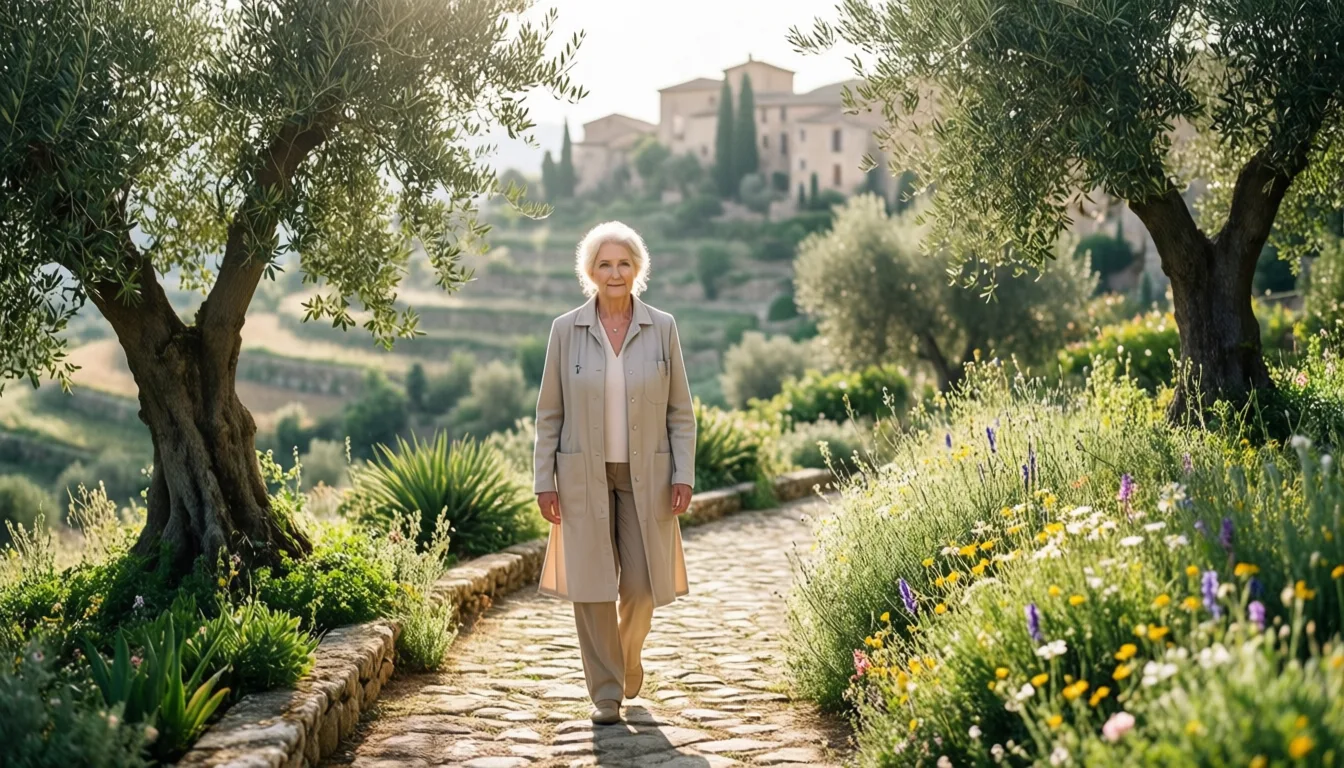
The Exposome: Why Your Environment May Matter More Than Your Genes for a Long Life
A new review reframes the world's longest-lived communities through the 'exposome' — the cumulative environmental, microbial, and social inputs that quietly shape how we age.
Okay, real talk: if you've spent any time on longevity TikTok, you've probably been told the secret is your genes, a fancy supplement stack, or a $400 sleep ring. So here's the question I keep coming back to — why do certain tiny villages in Italy, Japan, and Greece keep producing people who breeze past 90 without a biohacker in sight? A 2025 review in Nutrients has a pretty compelling answer, and it's not in your DNA. It's something researchers call the exposome — basically, the giant running total of everything your body soaks up from the world around you.
Quick gloss, because I had to look it up too: the exposome is the sum of your environmental exposures across a lifetime — the air, the soil, the food, the bugs in your gut, the people you eat dinner with, even the stress you carry home from work. Think of it as the opposite of the genome. Your genome is the script you were born with. The exposome is everything that happens after the cameras start rolling.
The new review pulls together two decades of research on the world's so-called longevity hotspots — the Blue Zones (Okinawa, Sardinia, Ikaria, Nicoya, Loma Linda) and the Cilento region of southern Italy — and argues that what these places share isn't a magic gene pool. It's a stack of overlapping environmental inputs that, together, seem to nudge people toward longer, healthier lives. The authors call out biodiverse natural surroundings, plant-forward Mediterranean-style diets rich in polyphenols and probiotics, daily movement, tight social networks, and psychological resilience as the recurring cast.
So what is the exposome, really?
Here's the analogy that finally made it click for me: your genome is the recipe, but the exposome is the kitchen. Same recipe in a sunny Cilento courtyard with fresh greens, neighbors dropping by, and a long walk to the market? You get one dish. Same recipe in a fluorescent-lit office with takeout and a two-hour commute? You get a different one.
The Nutrients review frames the exposome as a dynamic network of environmental, social, and biological factors that can either protect you or wear you down. That includes obvious stuff — pollution, diet, exercise — but also the less obvious: how diverse the microbes are in your gut, how often you see your friends, whether you have a reason to get out of bed.
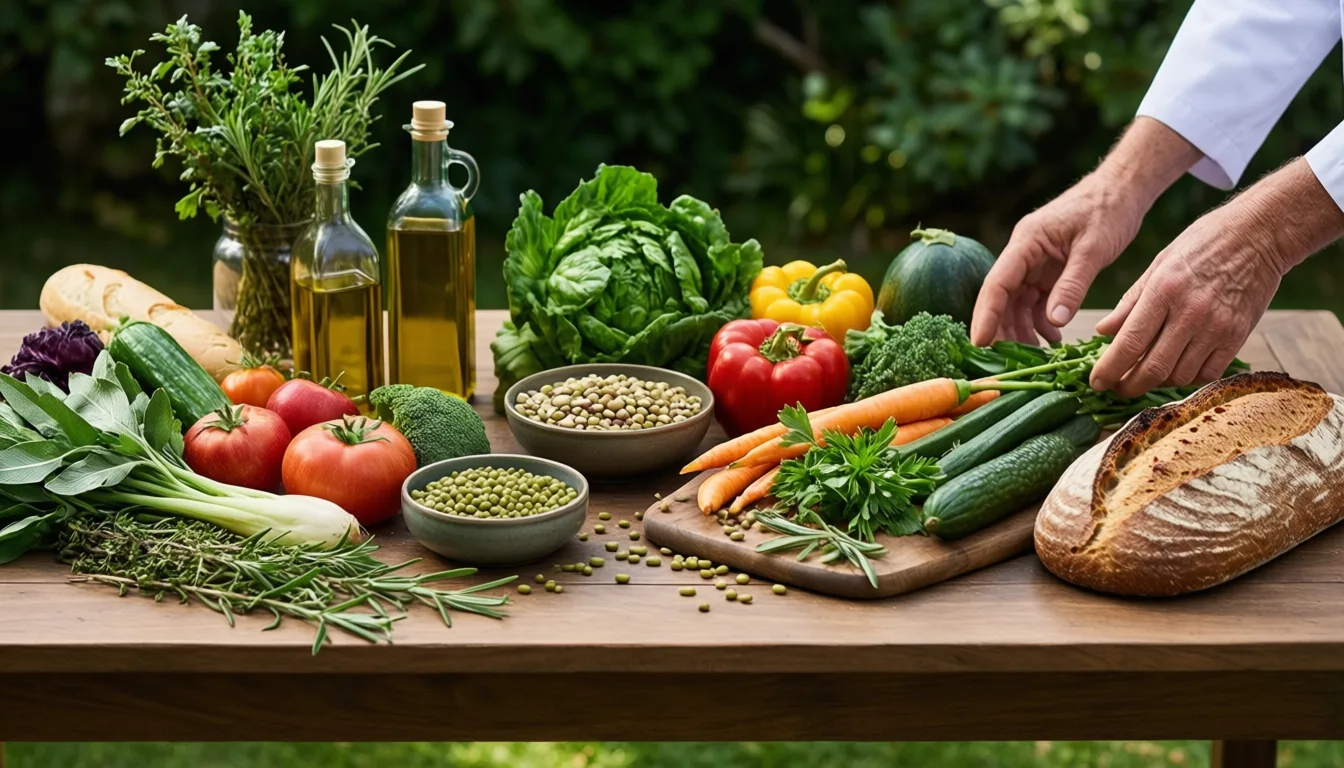
Blue Zone diets lean heavily plant-forward and polyphenol-rich — a recurring thread the review highlights across longevity hotspots.
What the Blue Zones (and Cilento) actually share
The review does something I appreciated: it doesn't pretend each longevity hotspot is identical. Okinawan diets aren't Sardinian diets. Loma Linda's Seventh-day Adventist community looks very different from a Greek fishing village. But when the authors line them up, a handful of common protective factors keep showing up:
- Biodiverse surroundings. People are outside, often, in environments rich with plants and microbes.
- Plant-forward eating. Mediterranean or similarly plant-based patterns loaded with polyphenols (the colorful plant compounds in olive oil, berries, herbs) and naturally fermented foods.
- Movement woven into the day. Not gym sessions — gardening, walking, hauling things up hills.
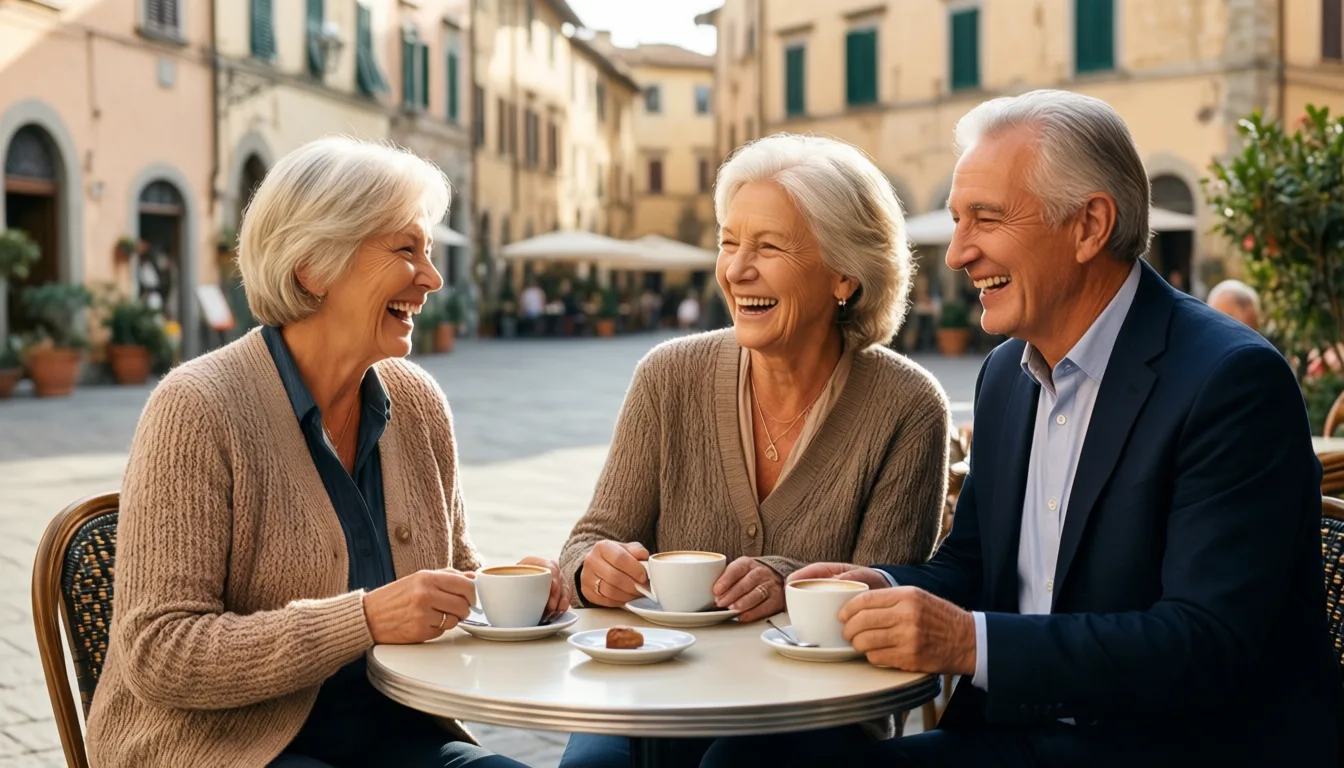
- Strong social ties. Multi-generational households, communal meals, neighbors who actually know your name.
- Psychological resilience. A sense of purpose and ways of handling stress that don't involve doomscrolling.
None of those, on their own, is a headline grabber. Stacked together over a lifetime? That's the exposome.
Your genome is the recipe. The exposome is the kitchen. on reframing longevity
The microbiome plot twist
One of the more interesting threads the review pulls is the role of the gut microbiome — the trillions of tiny tenants in your intestines. The authors highlight microbiome diversity as a recurring feature in long-lived populations, and it tracks: a more varied diet, more time outdoors around plants and animals, and traditionally fermented foods all feed a more varied internal ecosystem.
Worth saying clearly, though — this is a review synthesizing observational research, not a randomized trial proving that a specific microbe makes you live longer. The evidence rating here is moderate: the pattern is consistent and biologically plausible, but causation in human longevity is famously hard to pin down. So treat this as a frame for thinking, not a prescription.
Why this beats chasing single supplements
Here's what I find genuinely refreshing about the exposome framing: it gives up on the idea that longevity is one thing you can buy. The review's whole point is that the protective effect is in the stack — diet plus movement plus relationships plus environment plus resilience, all reinforcing each other. Pull one out and put it in a capsule, and you've lost the thing that made it work.
That doesn't mean any single change is pointless. It means the question to ask isn't "what's the one supplement?" It's "what does my exposome look like, and what's one small thing I could shift?" More plants on the plate this week. A walk with a friend instead of a solo scroll. A window open. A meal eaten slowly, with other humans.
- The exposome is the sum of your lifetime environmental exposures — diet, microbes, air, relationships, stress — and a 2025 Nutrients review argues it may matter more than genes for healthy aging.
- Blue Zones and Cilento share a recurring stack: biodiverse surroundings, plant-forward diets, daily movement, tight social bonds, and psychological resilience.
- Microbiome diversity shows up as a common thread, plausibly linked to varied diets, fermented foods, and time outdoors.
- The protective effect is cumulative. No single food, supplement, or habit replicates the whole pattern.
- Evidence is moderate, not definitive. The review is observational synthesis — useful as a frame, not a prescription.
- Small, stackable shifts are the realistic takeaway: more plants, more walking, more people, more outside.
If there's a takeaway from sitting with this review, it's that the longevity conversation gets a lot more interesting — and a lot less expensive — when you stop hunting for the one trick. The people living longest aren't optimizing. They're just embedded in an environment that quietly does the work for them. The rest of us have to be a little more deliberate about building one.
Frequently asked questions
What is the exposome, and how is it different from the genome?
The exposome is the sum of your environmental exposures across a lifetime — the air, food, gut microbes, social connections, and stress you encounter from birth onward. Your genome is the script you were born with; the exposome is everything that happens after. The article uses the analogy that the genome is the recipe and the exposome is the kitchen.
Which longevity hotspots does the review examine, and what do they share?
The review compares six hotspots: the Blue Zones of Okinawa, Sardinia, Ikaria, Nicoya, and Loma Linda, plus the Cilento region of southern Italy. Despite their differences, the authors identify five recurring protective factors across all of them: biodiverse natural surroundings, plant-forward diets rich in polyphenols and fermented foods, daily movement woven into routine, strong social ties, and psychological resilience.
What role does the gut microbiome play in longevity according to this review?
The review highlights microbiome diversity as a recurring feature in long-lived populations, plausibly linked to varied diets, traditionally fermented foods, and regular time outdoors around plants and animals. The authors note the pattern is consistent and biologically plausible, but stress this is observational research — not a randomized trial proving any specific microbe extends life.
How strong is the evidence behind these findings?
The article rates the evidence as moderate, not definitive. The review synthesizes existing observational research rather than running new experiments, and the authors acknowledge that genetics, healthcare access, and reporting quirks also play a role. It is presented as a useful frame for thinking, not a prescription.
Why can't a single supplement replicate the longevity benefits seen in these communities?
According to the review, the protective effect lies in the cumulative stack — diet, movement, relationships, environment, and resilience all reinforcing each other over a lifetime. Isolating any one element and putting it in a capsule loses the thing that made it work. The article's suggested takeaway is to ask what small, stackable shifts you can make across multiple areas, rather than searching for one solution.
Join the conversation
Comments are moderated and reviewed before they appear. Be constructive — this is health information.
Add your comment