
Geroscience Goes Clinical: Targeting Aging Itself to Prevent Disease
A new wave of reviews argues that aging biology — not individual diseases — is medicine's highest-leverage target. Heart failure may be the proving ground.
For most of modern medicine, aging has been treated as scenery — the immutable backdrop against which diseases play out. Cardiologists treat hearts. Oncologists treat tumors. Neurologists treat brains. And aging, the single largest risk factor for nearly all of it, sits politely off-stage, considered non-modifiable. A new wave of clinical reviews is arguing that this division of labor is exactly backwards: that the biology of aging is itself malleable, and that intervening upstream in that biology may prevent more disease, more efficiently, than treating each downstream illness one at a time.
The framework driving this shift is the geroscience hypothesis: the proposition that a small set of shared mechanisms — the so-called hallmarks of aging — simultaneously drive cancer, cardiovascular disease, neurodegeneration, and frailty, and that slowing those mechanisms could compress disease burden across organ systems at once. A 2025 review in Transactions of the American Clinical and Climatological Association lays out the case in unusually plain terms, noting that aging is the strongest risk factor for the conditions that dominate morbidity and health-care costs, and that evidence for causal links between the hallmarks and disease is becoming rapidly more robust.
The hallmarks themselves have grown. First proposed as a set of nine in 2013, they were expanded in 2023 to include disabled macroautophagy, chronic inflammation, and dysbiosis, as summarized in a report from the inaugural Longevity Med Summit. The current working list runs to twelve interlocking processes — genomic instability, telomere attrition, epigenetic drift, loss of proteostasis, faulty autophagy, deregulated nutrient-sensing, mitochondrial dysfunction, cellular senescence, stem-cell exhaustion, altered intercellular communication, chronic inflammation, and microbiome disruption — and the central insight is that they do not act in isolation. They reinforce one another, which is precisely why a systems-level intervention could, in principle, pay off across multiple diseases.
- The thesis. Aging biology — not any single disease — may be medicine's highest-leverage therapeutic target.
- The framework. Twelve hallmarks of aging now anchor geroscience, expanded in 2023 to include faulty autophagy, chronic inflammation, and microbiome disruption.
- The flagship. Heart failure is emerging as an early clinical test case, with human-first omics narrowing the field of druggable targets.
- The caveat. Causal evidence is strengthening but not settled; most candidate interventions remain in preclinical or early-stage development.
- The stakes. Success could compress disease burden across organs at once — but also reshape population structure, economics, and ethics.
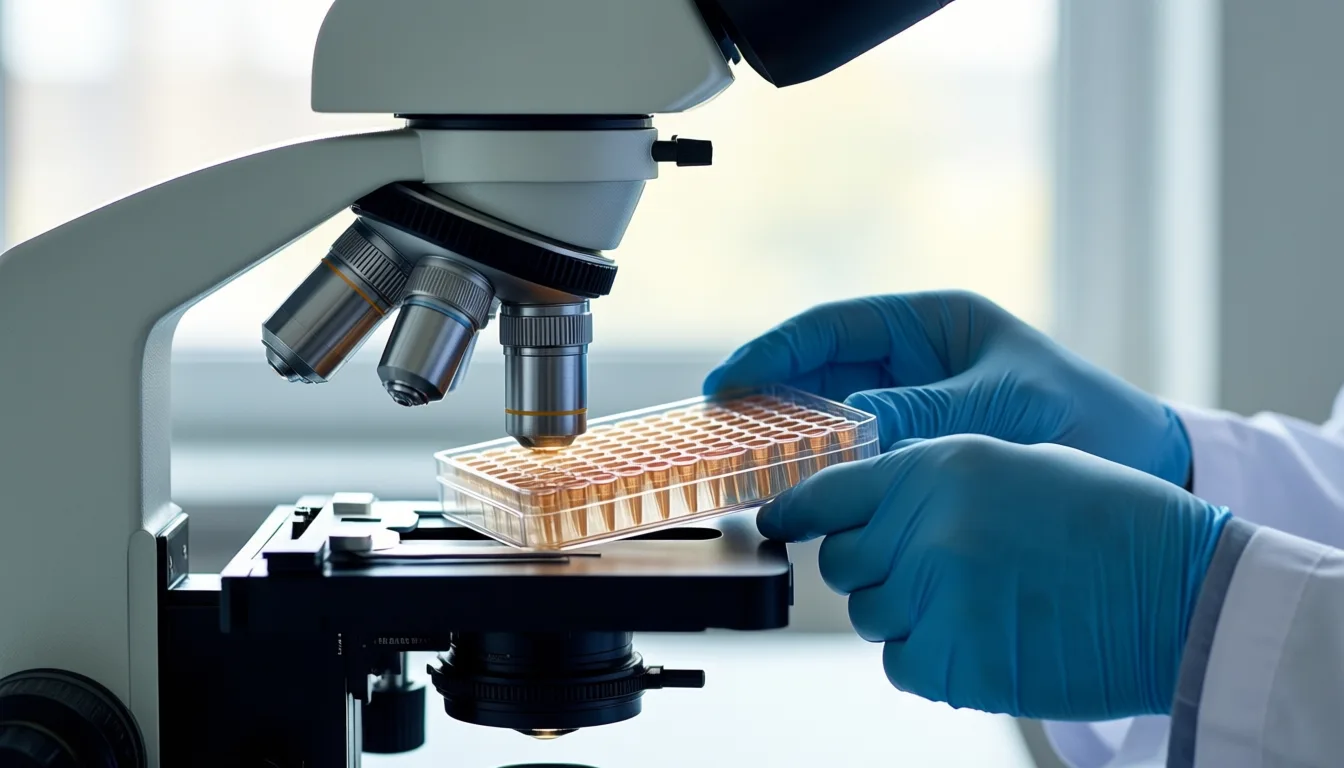
The translational challenge: moving from cellular hallmarks to interventions that hold up in human trials.
Why heart failure became the proving ground
If geroscience needs a flagship indication, heart failure is a natural choice. It is overwhelmingly a disease of older adults, its prevalence climbs steeply with each decade of life, and existing therapies — while improved — still leave a substantial residual burden. A 2025 review in The Journal of Cardiovascular Aging argues that aging biology represents a new frontier for therapeutic target discovery in heart failure, and proposes a specific strategy: start in humans.
That sequencing matters. Much early geroscience work has leaned on model organisms — worms, flies, mice — whose lifespans are tractable but whose biology only approximates ours. The cardiovascular review proposes inverting the usual pipeline: begin with human omics data to identify the aging mechanisms most relevant to human heart failure, then return to preclinical models for rigorous functional validation, and only then advance into early-stage clinical development. The authors describe this human-first approach as already generating candidate gerotherapeutic programs for heart failure.
The appeal is partly philosophical and partly pragmatic. Philosophically, it acknowledges that aging-related disease is a human phenomenon shaped by decades of exposure, behavior, and physiology that no mouse can fully replicate. Pragmatically, it raises the prior probability that a target identified in human tissue will survive the long march to a clinical endpoint — historically the graveyard of translational medicine.
Aging biology represents a new frontier for therapeutic target discovery — but the path from promise to success is riddled with obstacles. Synthesis of the 2025 geroscience reviews

The goal of geroscience is not simply more years, but more years of preserved function and independence.
Healthspan, not just lifespan
One framing that recurs across these reviews is the gap between healthspan — the years lived in good health — and lifespan. The Longevity Med Summit report frames this gap as carrying substantial economic and societal implications, with extended periods of compromised health at the end of life driving much of the cost and suffering attributed to aging. The geroscience pitch is not primarily about extending the maximum human lifespan. It is about compressing the period of disability and multi-morbidity that currently bookends most lives.
That reframing changes the regulatory and ethical conversation. A drug that demonstrably preserves function and independence — even by a modest margin, across a broad older population — could be more consequential than one that lowers a single biomarker in a single disease. But it also raises a hard methodological question: how do you run a trial whose endpoint is the prevention of multiple diseases at once? Current regulatory pathways are built around one indication at a time, and geroscience is, by design, indication-agnostic.
Promise, and perils
The Transactions review is unusually candid about the downside. Even if geroscience-based interventions deliver on their promise, the authors note, success itself can have negative impacts on human populations and our planet that will require major shifts in society — implications for pension systems, intergenerational equity, labor markets, climate, and access. A therapy that meaningfully extends healthspan would not be ethically neutral, particularly if its initial distribution mirrored the inequities of existing high-cost medicine.
There are scientific perils, too. The hallmarks framework is useful precisely because it is a framework — a way of organizing a vast literature — and the strength of causal evidence varies considerably across the twelve. Some, like cellular senescence and chronic inflammation, are supported by converging lines of mechanistic and interventional work. Others remain more correlative. Translating any single hallmark into a safe, durable, broadly applicable human therapy is not a foregone conclusion; it is a research program with a high failure rate baked in.
The honest summary, then, is that geroscience has crossed a threshold from speculative to plausible without yet crossing the one from plausible to proven. The reviews converge on a moderate read: the underlying biology is real, the translational strategy is sharpening, and the first credible clinical tests — heart failure prominent among them — are now in view. None of that is a green light for self-experimentation, and none of the supplied literature endorses specific supplements or off-label drug use as a substitute for established cardiovascular care. The reasonable posture for a reader tracking this field is attentive patience: watch the trials, watch the human-first targets, and discuss any personal decisions with a clinician who knows your history.
For now, the most interesting thing about geroscience is not any single molecule. It is the reframing: the willingness, finally, to treat aging itself as a target rather than a setting. Whether that reframing produces durable clinical wins in the next decade or the one after, it is reshaping how the field thinks about what medicine is for — and what it could, with discipline and luck, become.
Frequently asked questions
What are the hallmarks of aging, and how many are there now?
There are currently twelve hallmarks of aging: genomic instability, telomere attrition, epigenetic drift, loss of proteostasis, faulty autophagy, deregulated nutrient-sensing, mitochondrial dysfunction, cellular senescence, stem-cell exhaustion, altered intercellular communication, chronic inflammation, and microbiome disruption. The list was originally proposed as nine in 2013 and expanded in 2023 to add disabled macroautophagy, chronic inflammation, and dysbiosis. Crucially, these hallmarks do not act in isolation — they reinforce one another.
Why is heart failure considered an early test case for geroscience?
Heart failure is overwhelmingly a disease of older adults, its prevalence climbs steeply with each decade of life, and existing therapies still leave a substantial residual burden. Researchers have proposed a human-first approach — starting with human omics data to identify the aging mechanisms most relevant to human heart failure, then returning to preclinical models for validation before advancing to clinical development. This sequencing is meant to raise the likelihood that a target identified in human tissue will survive the long path to a clinical endpoint.
What is the difference between healthspan and lifespan in this context?
Lifespan refers to total years lived, while healthspan refers to the years lived in good health. The geroscience goal is not primarily to extend maximum human lifespan but to compress the period of disability and multi-morbidity that currently bookends most lives. Extended periods of compromised health at the end of life are described as carrying substantial economic and societal implications.
What is the main regulatory challenge in testing geroscience-based therapies?
Current regulatory pathways are built around one indication at a time, but geroscience is, by design, indication-agnostic — its goal is to prevent multiple diseases simultaneously. This raises a hard methodological question: how do you run a trial whose endpoint is the prevention of multiple diseases at once?
Are there risks or downsides if geroscience interventions actually work?
The article notes that even successful geroscience interventions could have negative impacts on human populations and the planet, requiring major shifts in society — including implications for pension systems, intergenerational equity, labor markets, climate, and access. A therapy that meaningfully extends healthspan would not be ethically neutral, particularly if its distribution mirrored the inequities of existing high-cost medicine. On the scientific side, the causal evidence supporting each hallmark varies considerably, and translating any single hallmark into a safe, broadly applicable human therapy carries a high built-in failure rate.
Sources
- HEALTHY AGING: THE PROMISE, AND PERILS, OF GEROSCIENCE. — Transactions of the American Clinical and Climatological Association
- The Longevity Med Summit: insights on healthspan from cell to society. — Frontiers in aging
- Geroscience in heart failure: the search for therapeutic targets in the shared pathobiology of human aging and heart failure. — The journal of cardiovascular aging
Join the conversation
Comments are moderated and reviewed before they appear. Be constructive — this is health information.
Add your comment