Grip, Pinch, Tongue: Could Cheap Muscle Tests Be an Early Warning for Alzheimer's Risk?
A new study links handgrip, finger pinch, and even tongue strength to a blood marker tied to Alzheimer's pathology — hinting that simple bedside checks could one day flag risk early.
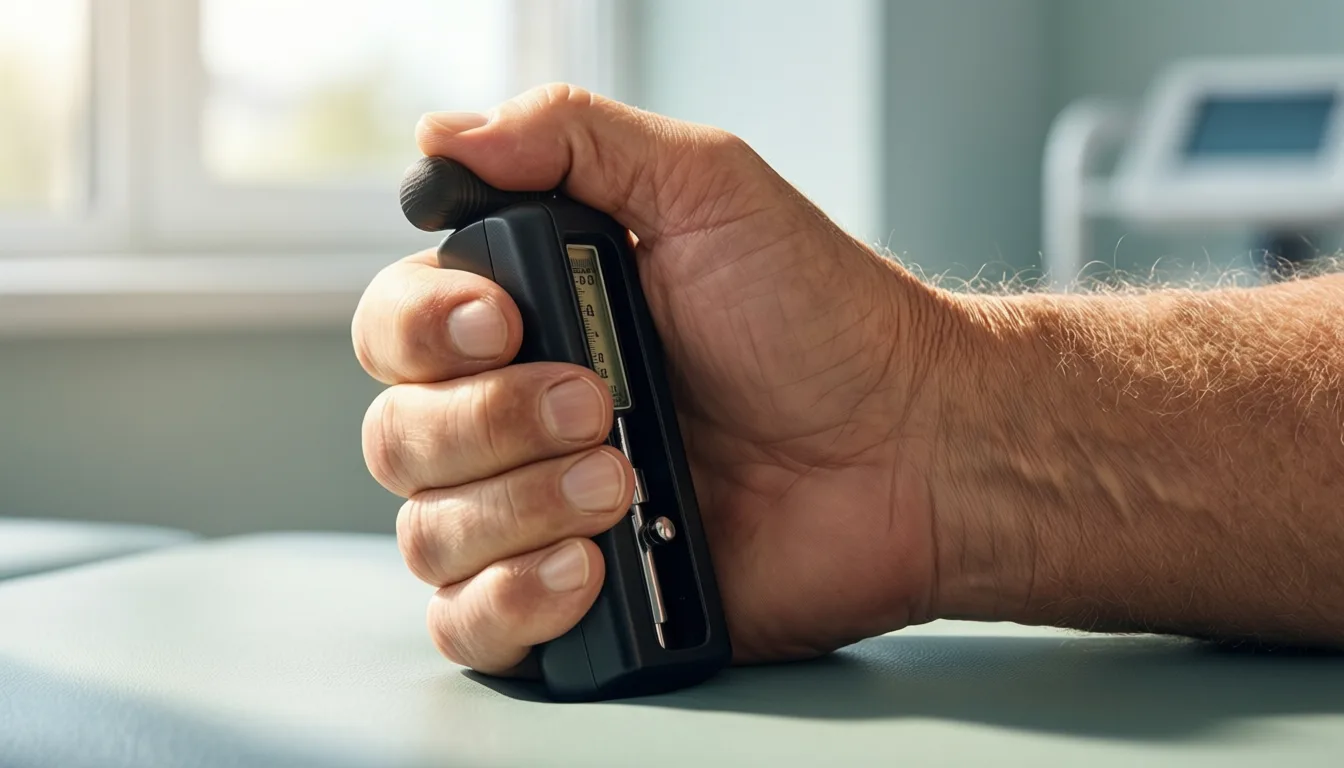
Okay, real talk: when I first read that scientists were measuring people's tongue strength to learn something about Alzheimer's risk, I laughed. Then I kept reading — and got genuinely curious. A new study suggests that three very low-tech muscle tests (how hard you can squeeze a grip meter, pinch with three fingers, and press your tongue against the roof of your mouth) line up with a blood marker tied to Alzheimer's-related brain changes. In cognitively healthy adults. Years, potentially, before anyone notices a thing.
Here's the beginner question I had to ask first: what does muscle have to do with the brain? More than you'd think. Your brain is the conductor for every squeeze, pinch, and tongue press you make. So if the wiring upstairs is quietly changing, the downstream signal — the force your muscles can produce — might shift too. That's the working theory, and it's why researchers are increasingly interested in physical tests as windows into neurological health.
The new paper, published in GeroScience, looked at 158 cognitively healthy adults aged 50 and up (mean age about 69; roughly three-quarters female) and compared their handgrip, three-finger pinch, and tongue strength against levels of plasma p-tau181 — a blood biomarker that reflects tau pathology, one of the hallmark proteins implicated in Alzheimer's disease.
Wait — what's p-tau181, in plain English?
Quick gloss: tau is a protein inside brain cells that helps keep them structured. In Alzheimer's, tau gets chemically tagged ("phosphorylated") in ways that make it misbehave. Blood-based p-tau measurements are a newer way to detect signs of that process without a brain scan or spinal tap. They're not a diagnosis — they're a signal. Think "smoke detector," not "fire department report."
What the study found: tongue strength was positively associated with handgrip strength in this group of cognitively healthy older adults, supporting the broader idea that these strength measures travel together and may carry information about brain aging. The researchers frame handgrip as a possible complementary, non-invasive marker of dementia risk, and they're floating tongue strength as a candidate worth investigating too.

Tongue strength is rarely measured outside of speech and swallowing clinics — but it may carry signals about more than just chewing.
It's not a diagnosis. It's a smoke detector — and an unusually cheap one.
Why this is exciting (and why I'm not redecorating my brain yet)
The exciting part: grip meters cost less than a nice dinner, pinch gauges fit in a drawer, and tongue strength tools already exist in speech-language pathology clinics. If these tests really do track a brain-relevant biomarker, a primary care visit could one day include a 60-second strength check that flags people for closer follow-up — long before memory issues appear.
The honest part: this is one observational study of 158 people, skewed female, in cognitively healthy adults. "Associated with" is not "predicts." It doesn't tell us that getting stronger lowers your p-tau181, or that a weaker grip means Alzheimer's is coming. It tells us the signals move together in this group, which is a reason to do bigger, longer, more diverse studies — not a reason to panic-buy a dynamometer.
That's also why our editors rated the evidence here Moderate. The finding is novel and the measurements are refreshingly practical, but it's a single snapshot, not a verdict.
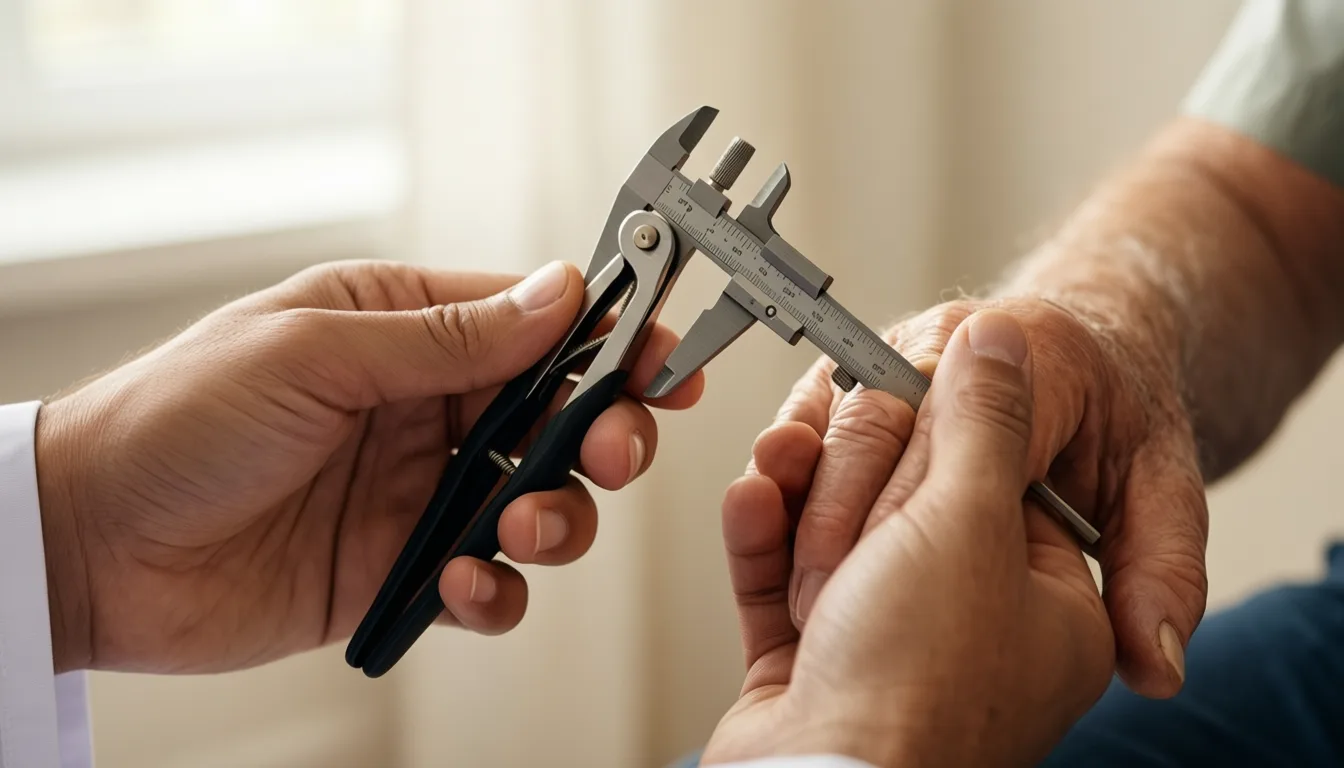
Three-finger pinch strength: another candidate in the cheap-tests-big-questions toolbox.
So… should you care about your grip?
Honestly, even setting brain biomarkers aside, grip strength has been a darling of longevity research for a while — it's a sneaky-good proxy for overall muscle health, which matters for falls, independence, and how well you age. The new GeroScience work doesn't change daily life advice; it adds another reason to take "boring" strength seriously.
The practical move isn't to chase a number. It's to keep doing the unsexy things that keep your whole body — including the muscles your brain talks to — working well: regular resistance training, protein at meals, sleep, and check-ins with your clinician about cognitive and physical health as you age. If you're worried about dementia risk specifically, that's a conversation for a doctor who knows your history, not a hand gripper from the internet.
- What's new: A study in cognitively healthy older adults found handgrip, pinch, and tongue strength were related to plasma p-tau181, a blood marker tied to Alzheimer's pathology.
- Why it matters: These tests are cheap, fast, and non-invasive — potentially useful as early screening signals.
- What it isn't: Not a diagnostic test. Not proof that weaker muscles cause Alzheimer's, or that getting stronger prevents it.
- Size and scope: 158 participants, mostly women, single time-point — bigger and longer studies are needed.
- What to do now: Keep up resistance training and general strength work, and bring cognitive or memory concerns to a clinician — not a home gadget.
I'll be watching this space. Not because I think your handshake is hiding a diagnosis — but because the idea that a 30-second muscle test could ever sit alongside a blood draw in flagging brain health early? That's the kind of accessible, low-cost medicine that actually reaches people. Bring on the bigger studies.
Frequently asked questions
What are the three muscle tests the study used?
The study used handgrip strength, three-finger pinch strength, and tongue strength — measured by pressing the tongue against the roof of the mouth. All three are low-tech, inexpensive tests, with tongue strength tools already in use in speech-language pathology clinics.
What is p-tau181, and why is it relevant to Alzheimer's?
P-tau181 is a blood biomarker that reflects tau pathology, one of the hallmark proteins implicated in Alzheimer's disease. Tau normally helps keep brain cells structured, but in Alzheimer's it becomes chemically altered in ways that make it misbehave. The article describes p-tau181 as a signal — a "smoke detector" — not a diagnosis.
Does a weaker grip mean Alzheimer's is coming?
No — the study found that grip, pinch, and tongue strength were associated with p-tau181 levels, meaning the signals move together, but "associated with" is not the same as "predicts." The study does not show that weaker muscles cause Alzheimer's or that a weaker grip means the disease is on the way.
How strong is the evidence from this study?
The article's editors rated the evidence Moderate. It is a single observational study of 158 cognitively healthy older adults, skewed female, taken at one point in time — the researchers and the article both say bigger, longer, and more diverse studies are needed before this could be considered a screening recommendation.
What should I actually do with this information?
The article recommends continuing regular resistance training, eating enough protein, getting adequate sleep, and bringing any cognitive or memory concerns to a clinician who knows your history. It explicitly advises against trying to self-screen with a home grip device, noting that dementia risk concerns are a conversation for a doctor, not a hand gripper from the internet.
Join the conversation
Comments are moderated and reviewed before they appear. Be constructive — this is health information.
Add your comment