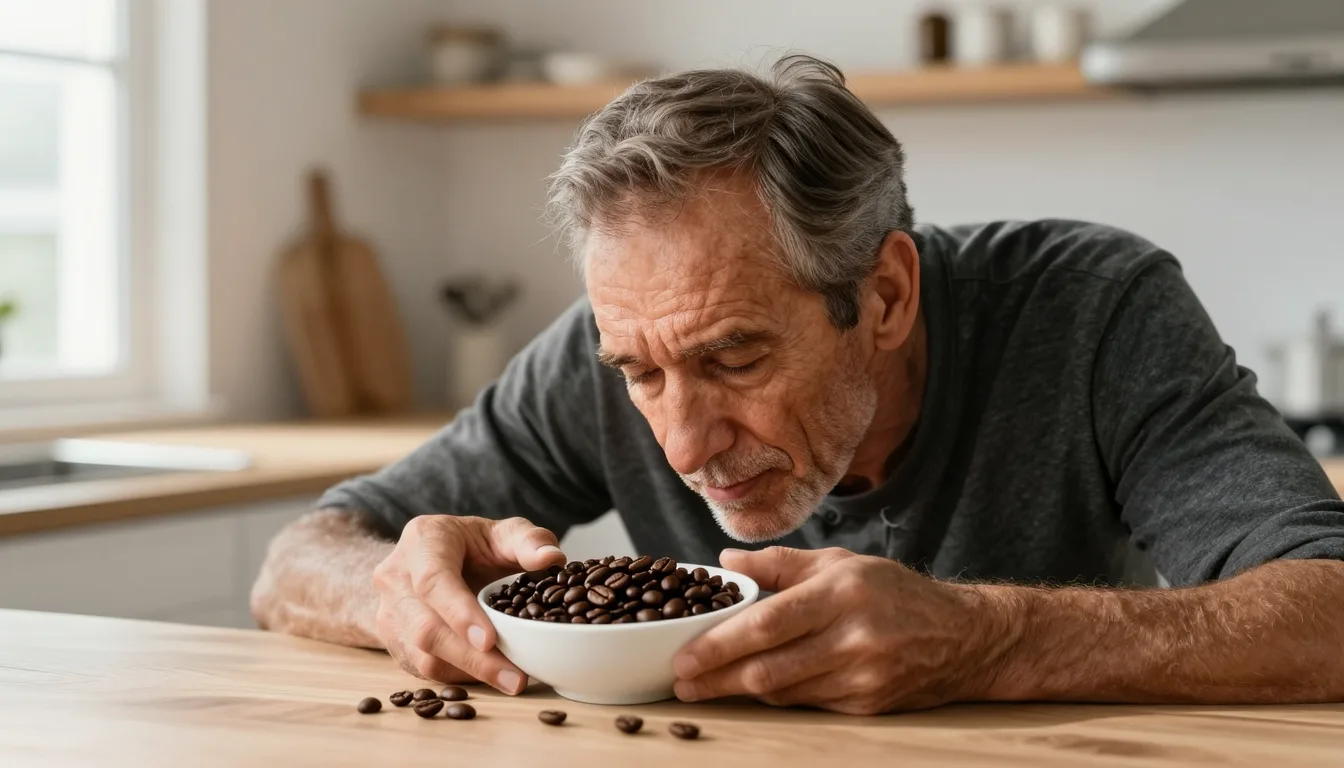
The Nose Knows: Why Fading Smell May Foretell Physical Decline
A long-running U.S. cohort study links weaker odor identification in older adults with later losses in balance, gait and grip — strengthening the case for smell as a low-cost biomarker of aging.
The cup of coffee on the counter is the same one you have brewed for forty years. The grind is the same, the water is the same, the mug is the same. But one morning the steam rises and the smell does not quite arrive. You shrug it off — a cold coming on, perhaps, or the dull edge of a long week. A new line of evidence suggests that little blank space above the cup may be worth a second thought. Not because a dim nose will hurt you on its own, but because, in a large U.S. study that tracked older adults for years, a weakened sense of smell quietly preceded the slow erosion of balance, walking pace and grip.
The work comes from the Atherosclerosis Risk in Communities (ARIC) study, a prospective cohort that has followed thousands of Americans across four communities since the late 1980s. In a recent analysis published in JAMA Otolaryngology–Head & Neck Surgery, investigators looked at 5,474 participants with an average age of 75, tested their ability to identify common odors, then tracked their physical function across three visits spanning roughly eight years. The headline finding is simple and sober: the worse a person's odor identification at the start, the worse their physical function tended to be — and the more it tended to slip in the years that followed.
What the researchers actually measured
The smell test was the 12-item Sniffin' Sticks battery, which asks participants to identify familiar scents — coffee, leather, peppermint, that sort of thing — from a short list of options. Scores were grouped as good (11–12 correct), moderate (9–10) or poor (0–8). Physical function was measured using the Short Physical Performance Battery, a standard package of three tasks: standing balance, a four-meter walk for usual pace, and rising from a chair five times. Grip strength was checked separately with a hand dynamometer.
At the baseline visit, participants with poor olfaction scored, on average, about half a point lower on the 12-point physical battery than those who could still name their scents reliably (an estimated mean difference of −0.49, with a 95% confidence interval of −0.63 to −0.35). Those in the moderate group sat in between, with a smaller but still measurable gap. Half a point on a 12-point scale is not a dramatic deficit. The interesting question is what happened next.
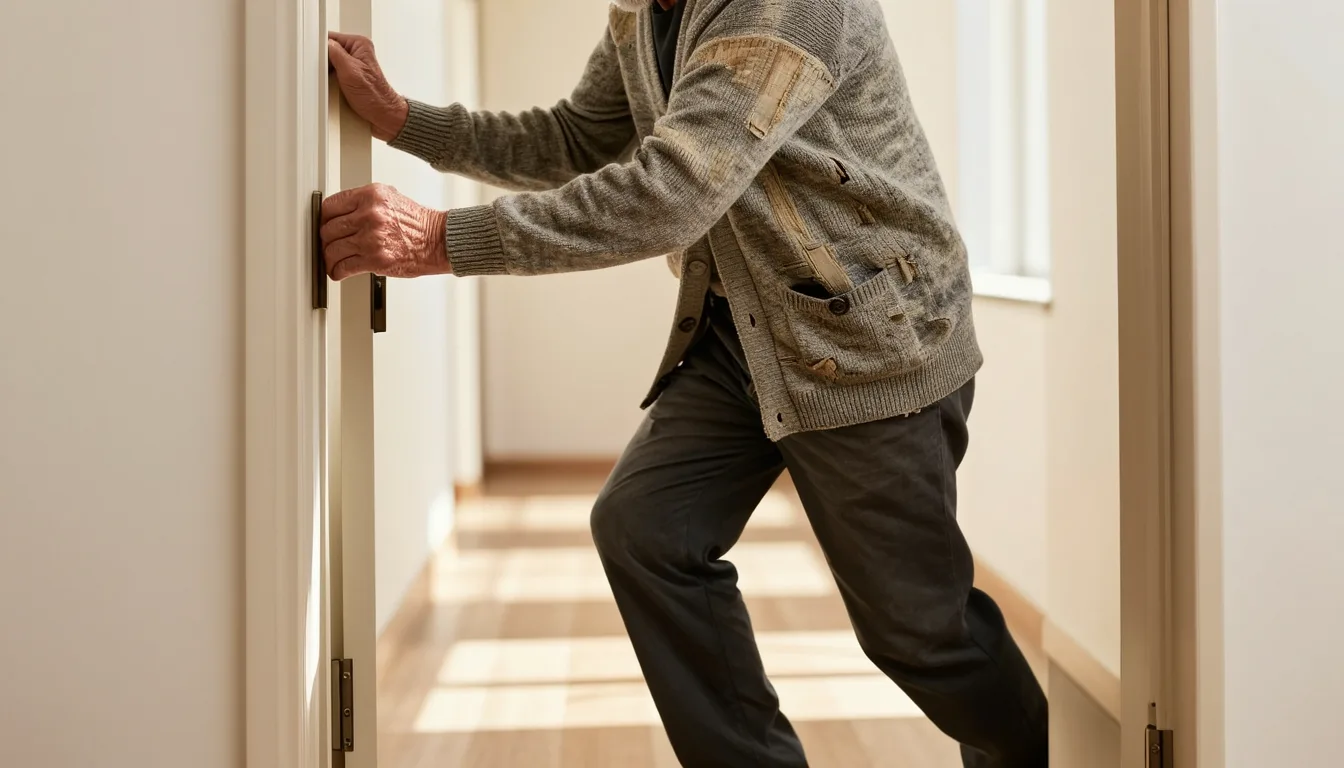
Balance, gait and chair-stand performance — the three pillars of the Short Physical Performance Battery — quietly tell a story about how the body is aging.
Smell as a forward-looking signal
This is where the study earns its keep. Plenty of earlier work has shown that older people who can no longer smell well tend to be frailer in the moment. What ARIC adds is the through-line. By following the same participants across visits five, six and seven — roughly 2011 through 2019 — the authors could ask whether a dim nose today predicts a wobblier walk tomorrow. The longitudinal analyses pointed in that direction: poorer odor identification at baseline was associated with steeper declines in physical performance over the years that followed.
Why might that be? Nobody is claiming the nose is steering the legs. The more plausible story is that olfaction sits close to vulnerable wiring. The olfactory nerve is one of the few parts of the central nervous system exposed more or less directly to the outside world, and its neurons turn over throughout life. When that machinery starts to falter, it may be reflecting the same neurodegenerative and vascular processes that, elsewhere in the body, eventually show up as a slower gait or a softer grip. Smell loss is already an established early signal in Parkinson's and Alzheimer's research. The ARIC findings suggest the same humble biomarker may be telling a broader story about biological aging.
A dim nose is not destiny. It is a quiet prompt to pay attention to the rest of the body.
How much should a careful reader make of this?
The editorial honest answer is: enough to take seriously, not enough to panic. This is one large, well-conducted observational cohort. The associations are statistically meaningful but, in absolute terms, modest. Observational data, however carefully adjusted, cannot prove that smell loss causes later weakness; both may share upstream roots in vascular health, inflammation or neurodegeneration. Sniffin' Sticks is also a research tool, not a clinic-counter screen, and the participants here were drawn from four specific U.S. communities. The findings will need replication in other populations before anyone should be writing smell tests into routine geriatric care.
That said, the practical implication is gentle and reasonable. If you have noticed that food tastes flatter than it used to, or that you cannot place the smell of cut grass or cinnamon the way you once could, mention it to your doctor the next time you go in. It is the kind of small, easily overlooked change that may earn closer attention as the evidence base grows.

Gait speed and balance remain among the best simple measures of how well an older body is holding its ground.
What stays in your hands
The biomarker story is interesting, but it is not where a man past sixty has the most leverage. The most reliable levers on the outcomes ARIC was measuring — balance, walking pace, chair stands, grip — are still the unglamorous ones. Regular resistance training preserves muscle and bone. Walking, ideally briskly and often, protects gait speed and cardiovascular reserve. Sleep, sensible eating, blood pressure under control and steady social engagement form the rest of the floor. None of that changes because of a smell test.
What does change, perhaps, is the mental model. The body is not a collection of organs reporting in isolation. The nose, the legs and the grip may be different instruments in the same orchestra, and a flat note in one section is sometimes the earliest cue that the whole ensemble is drifting. Smell loss is not destiny. Taken seriously and early, it may simply be useful information — the kind a careful reader, and a careful clinician, can act on.
- The finding. In ARIC, older adults with poorer odor identification had lower physical-function scores at baseline and tended to decline more over the following years.
- The size. The baseline gap was about half a point on a 12-point performance battery — measurable, not dramatic.
- The mechanism. Olfactory neurons are exposed and turn over throughout life; their decline may mirror broader neurodegenerative and vascular changes.
- The limits. This is observational evidence from four U.S. communities; it shows association, not causation, and needs replication.
- The practical move. Persistent smell loss is worth mentioning to a clinician, alongside the well-established habits — strength work, walking, sleep, blood-pressure control — that actually protect function.
- The frame. Think of smell as one quiet instrument in the body's orchestra, not a verdict on its own.
Frequently asked questions
What study is this research based on, and how many people did it follow?
The research comes from the Atherosclerosis Risk in Communities (ARIC) study, which has followed thousands of Americans since the late 1980s. The specific analysis looked at 5,474 participants with an average age of 75, tracking them across three visits over roughly eight years.
How was smell tested in the study?
Researchers used the 12-item Sniffin' Sticks battery, which asks participants to identify familiar scents — such as coffee, leather, and peppermint — from a short list of options. Scores were grouped as good (11–12 correct), moderate (9–10), or poor (0–8).
What physical measures were used, and how large was the gap between people with good and poor smell?
Physical function was assessed using the Short Physical Performance Battery, which covers standing balance, a timed walk, and rising from a chair five times, plus a separate grip strength test. At the start of the study, participants with poor smell scored about half a point lower on the 12-point battery than those with good smell.
Why might a weaker sense of smell be linked to physical decline?
The article explains that olfactory neurons are exposed more directly to the outside world than most of the nervous system and turn over throughout life. When that system starts to falter, it may reflect the same neurodegenerative and vascular processes that eventually show up elsewhere as a slower gait or softer grip.
Should someone who has noticed smell loss be concerned, and what is the recommended step?
The article describes the findings as serious enough to take note of but not cause for panic, since the associations are modest and the study is observational rather than proof of cause. The practical advice offered is to mention persistent smell loss to a doctor at your next visit, alongside maintaining established habits like strength training, walking, and blood-pressure control.
Sources
- Dysfunction in Olfactory Identification and Physical Function Decline in Older Adults. — JAMA otolaryngology-- head & neck surgery
Join the conversation
Comments are moderated and reviewed before they appear. Be constructive — this is health information.
Add your comment