The Nucleolus as Aging's Hidden Clock: New Mechanistic Targets for Geroprotection
A tiny structure inside every cell may act as a countdown timer for lifespan — and a new wave of AI-guided drug discovery and senescence-targeting therapies is racing to slow it down.
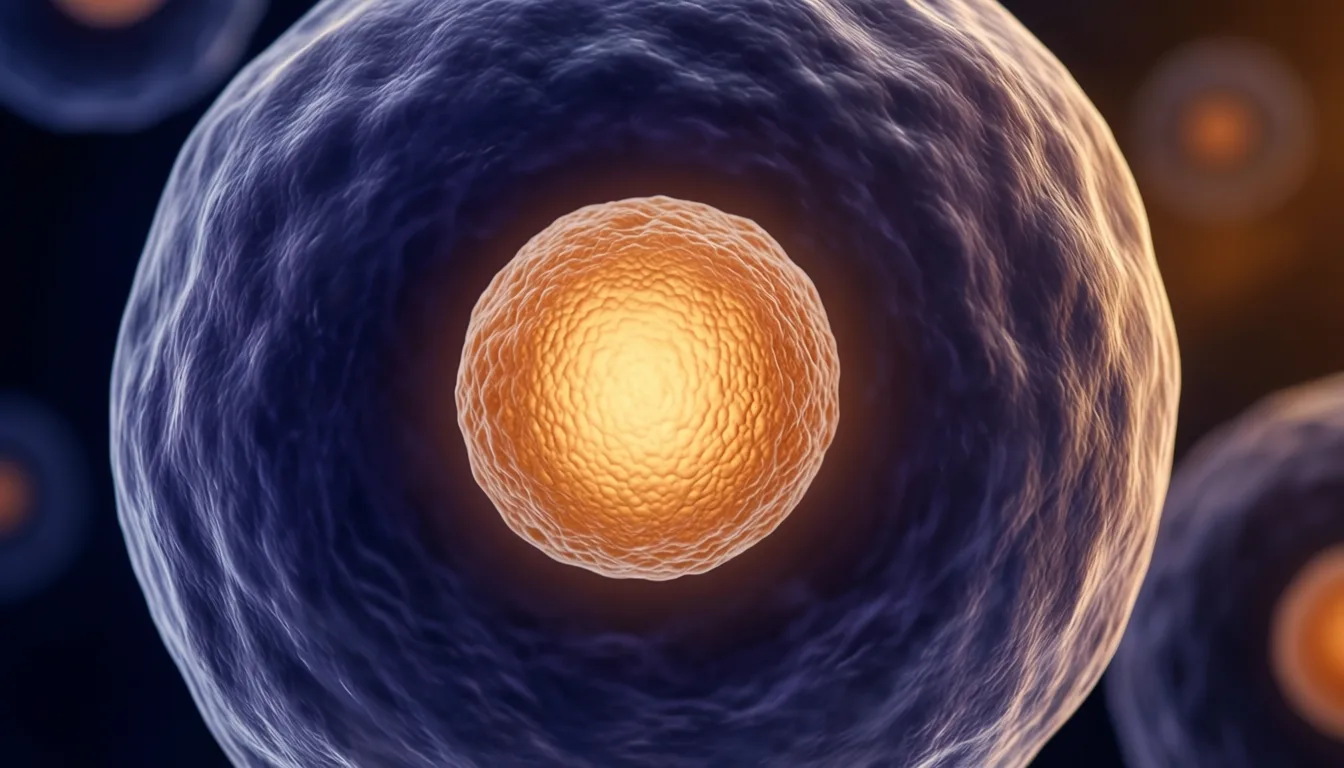
Somewhere inside nearly every cell in your body sits a small, dense knot of biology called the nucleolus. For most of the last century it was filed away as the cell's protein-assembly depot — important, but unglamorous. A new line of research is upending that quiet reputation. Scientists now suspect that the nucleolus may behave less like a factory and more like a clock: one whose ticking, when it grows too loud, helps decide how long a cell — and perhaps an organism — survives.
The provocation comes from a 2024 paper in Nature Aging by Gutierrez and Tyler, who describe what they call a 'mortality timer' based on nucleolar size. Working in budding yeast — a humble but historically powerful model for aging research — the authors engineered a way to keep nucleoli small as cells aged. The result was a robust extension of replicative lifespan. The mechanism, they argue, is not about how many proteins a cell can churn out. It is about physics.
When the nucleolus swells past a certain size threshold, its biophysical character changes. The membraneless droplet that normally keeps certain proteins out begins to leak. Among the gate-crashers is Rad52, a recombinational repair protein. Inside the nucleolus, it encounters the highly repetitive ribosomal DNA — long known to be one of the genome's most accident-prone neighborhoods. Aberrant recombination follows, then catastrophic genome instability, then death. In other words: the nucleolus does not simply reflect aging. In yeast, at least, expanding past a threshold is sufficient to drive it.
The nucleolus does not simply reflect aging. Past a threshold, it appears to drive it. On Gutierrez & Tyler, Nature Aging, 2024
It is worth being precise about what this is and isn't. This is early-stage mechanistic biology in a single-celled organism. It is not a human trial, not a drug, and not — yet — a reason to change anything you do on a Tuesday morning. But it is the kind of finding that reframes a field. Nucleolar enlargement with age has been documented from yeast all the way to mammals, and many established antiaging interventions are already known to leave nucleoli smaller. What Gutierrez and Tyler add is a candidate causal story, and a tantalizing target.
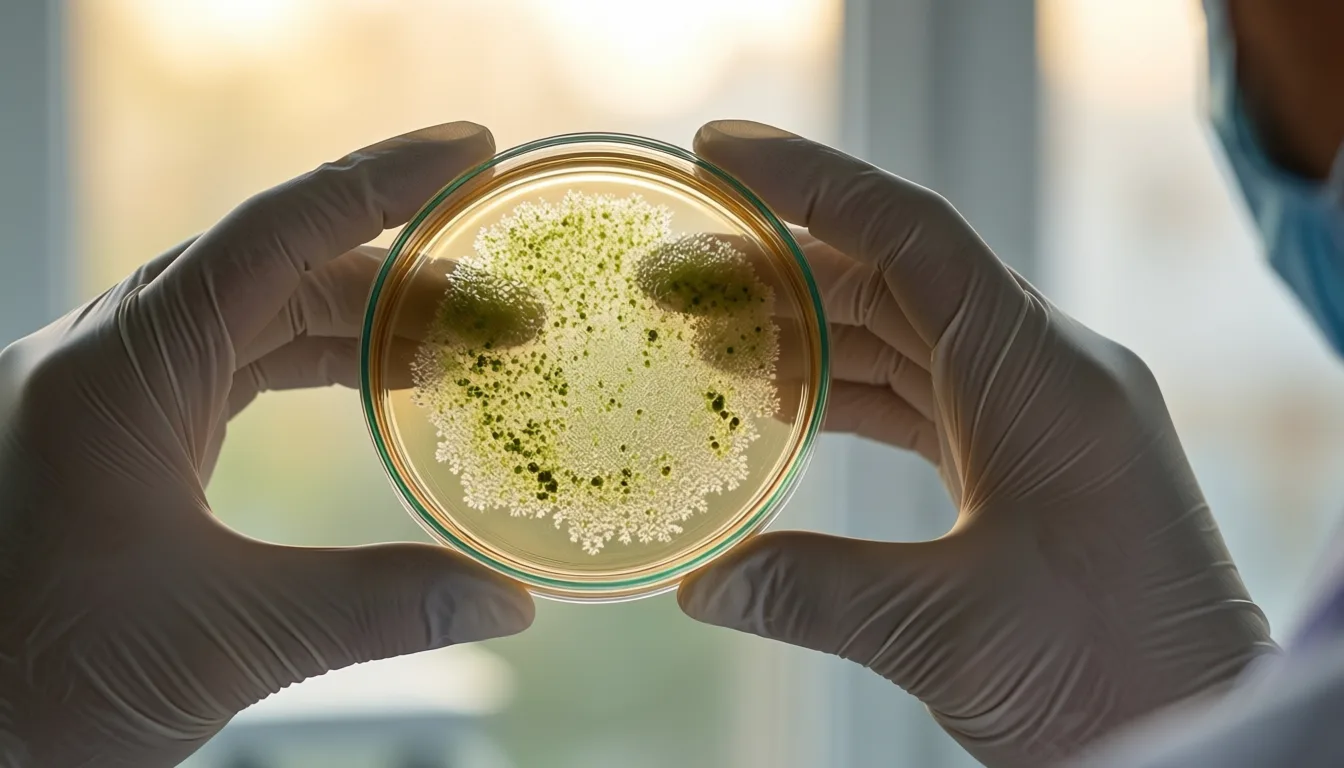
Budding yeast remains one of aging biology's most informative model organisms — small, fast, and surprisingly relevant to human cellular machinery.
From a single target to a billion candidates
If the nucleolus is one clock, geroprotectors — molecules that may slow biological aging — are the proposed brakes. The challenge has always been that chemical space is vast and biology is fussy. A second 2024 Nature Aging paper introduces AgeXtend, an explainable AI platform built to triage that space at scale. Trained on the bioactivity profiles of known geroprotective molecules, AgeXtend predicts whether a compound is likely to extend life, flags potential toxicity, and points to candidate target proteins and mechanisms.
Two things stand out. First, the platform correctly re-identified well-known geroprotectors — including metformin and taurine — that had been deliberately withheld from its training data, a basic but reassuring test of whether the model has learned something real. Second, the team ran roughly 1.1 billion compounds through it, surfacing numerous candidate geroprotectors. A subset was tested in yeast and C. elegans lifespan assays, and endogenous metabolites flagged as senescence-modulating were probed in human fibroblast assays.
This is a meaningful shift in how the field generates hypotheses. It is not, however, evidence that any of these compounds will help a human live longer or healthier. Yeast and worms are wonderful early filters; they are not people. The honest framing is that AI platforms like AgeXtend are widening the funnel — not shortening the road.
Senotherapy steps out of theory and into the lungs
The third strand of the current longevity conversation is more clinically advanced, and it is unfolding in an organ many women over 55 think about more than they used to: the lungs. A 2025 Pharmacological Reviews article by Peter Barnes lays out the rationale for senotherapy in chronic lung disease, particularly chronic obstructive pulmonary disease (COPD) and idiopathic pulmonary fibrosis (IPF). Chronic respiratory diseases now rank as the third leading cause of death worldwide, and Barnes argues that accelerated lung aging — driven by the accumulation of senescent cells — is a key part of why.
Senescent cells are cells that have stopped dividing but refuse to die quietly. Instead, they secrete a cocktail of inflammatory signals known as the senescence-associated secretory phenotype, or SASP, which can push neighboring cells into senescence and accelerate tissue damage. Protective molecules such as sirtuins decline. The lung, chronically exposed to oxidative stress, is especially vulnerable.
Two broad strategies are under investigation. Senomorphics aim to prevent senescence or quiet the SASP — examples include inhibitors of PI3K-mTOR signaling, novel antioxidants, and sirtuin activators. Senolytics selectively kill senescent cells, often by exploiting their dependence on antiapoptotic proteins such as Bcl-xL, or by targeting the FOXO4-p53 interaction, HSP90, or via repurposed cardiac glycosides. Barnes notes that senotherapies have shown efficacy in animal models of COPD and IPF. Human evidence remains preliminary, and safety questions — particularly around off-target effects — are genuine and unresolved.

Lung aging is now a central frontier in longevity research, with implications well beyond smokers.
Why these three threads belong in the same conversation
Read together, the nucleolar timer, AgeXtend, and senotherapy sketch a coherent arc. Basic biology is identifying the molecular events that make cells fail with age — including, strikingly, a physical phase change inside the nucleus. Computational platforms are screening unprecedented chemical libraries against those targets. And clinical-adjacent research is starting to translate the broader senescence framework into specific human diseases, with the lung as a leading case study.
None of this yet justifies the bolder claims circulating in wellness marketing. The yeast lifespan work is mechanistically beautiful and biologically early. The AI-discovered candidates are hypotheses, not therapies. Senolytics and senomorphics are promising but still being characterized for safety, dosing, and who actually benefits.
- Nucleolar size may be a causal lever in aging — not just a marker — at least in yeast, according to new Nature Aging work.
- AI-driven discovery is accelerating, with platforms like AgeXtend screening roughly 1.1 billion compounds for geroprotective potential.
- Senescent cells are now a clinical target in chronic lung disease, with senolytics and senomorphics under active investigation for COPD and IPF.
- The evidence is early. Most validation is in yeast, worms, or animal models; human data remain limited.
- Nothing here is a do-this-now recommendation. Decisions about supplements, repurposed drugs, or senolytics belong with a clinician who knows your history.
For readers who have spent years being told that aging is simply a matter of willpower, diet, or expensive creams, this generation of research offers something more honest: a slowly clarifying picture of why cells fail, and a credible — if still distant — path toward intervening upstream. The nucleolus is unlikely to be the only clock. It may not even be the most important one. But the fact that we can now name a specific structure, a specific threshold, and a specific cascade is a real shift. So is the fact that AI is being used not to sell a pill, but to sift a billion molecules for ones worth studying. That is the kind of progress that deserves attention without hype.
Frequently asked questions
What is the nucleolus, and why do scientists now think it plays a role in aging?
The nucleolus is a small, dense structure found inside nearly every cell, long regarded as the cell's protein-assembly depot. New research suggests it may function more like a clock: when it swells past a certain size threshold, its biophysical character changes, triggering a chain of events that in yeast appears sufficient to drive aging and cell death rather than merely reflect it.
How exactly does an enlarged nucleolus cause cellular damage?
Once the nucleolus exceeds a size threshold, the membraneless droplet that normally excludes certain proteins begins to leak, allowing a recombinational repair protein called Rad52 to enter. Inside the nucleolus, Rad52 encounters the highly repetitive ribosomal DNA — described as one of the genome's most accident-prone neighborhoods — leading to aberrant recombination and catastrophic genome instability.
What is AgeXtend, and how was it validated?
AgeXtend is an explainable AI platform trained on the bioactivity profiles of known geroprotective molecules; it predicts whether a compound is likely to extend life, flags potential toxicity, and identifies candidate target proteins. As a validation test, the platform correctly re-identified well-known geroprotectors — including metformin and taurine — that had been deliberately withheld from its training data.
What is the difference between senolytics and senomorphics?
Senomorphics aim to prevent senescence or suppress the inflammatory signals collectively known as the SASP, with examples including PI3K-mTOR inhibitors, novel antioxidants, and sirtuin activators. Senolytics instead selectively kill senescent cells, often by exploiting their dependence on antiapoptotic proteins such as Bcl-xL, or by targeting the FOXO4-p53 interaction, HSP90, or via repurposed cardiac glycosides.
Why are the lungs a leading focus for senotherapy research?
The lung is chronically exposed to oxidative stress, making it especially vulnerable to the accumulation of senescent cells and the tissue-damaging inflammatory signals they secrete. Chronic respiratory diseases now rank as the third leading cause of death worldwide, and accelerated lung aging driven by senescent cells is identified as a key factor in conditions such as COPD and idiopathic pulmonary fibrosis.
Sources
- A mortality timer based on nucleolar size triggers nucleolar integrity loss and catastrophic genomic instability. — Nature aging
- Discovering geroprotectors through the explainable artificial intelligence-based platform AgeXtend. — Nature aging
- Senotherapy for chronic lung disease. — Pharmacological reviews
Join the conversation
Comments are moderated and reviewed before they appear. Be constructive — this is health information.
Add your comment