Reading Organ Age in a Drop of Blood: What 44,000 Plasma Proteomes Tell Us About Living Longer
A massive new study suggests your body doesn't age all at once — and a single blood draw might one day map which organs are racing ahead.
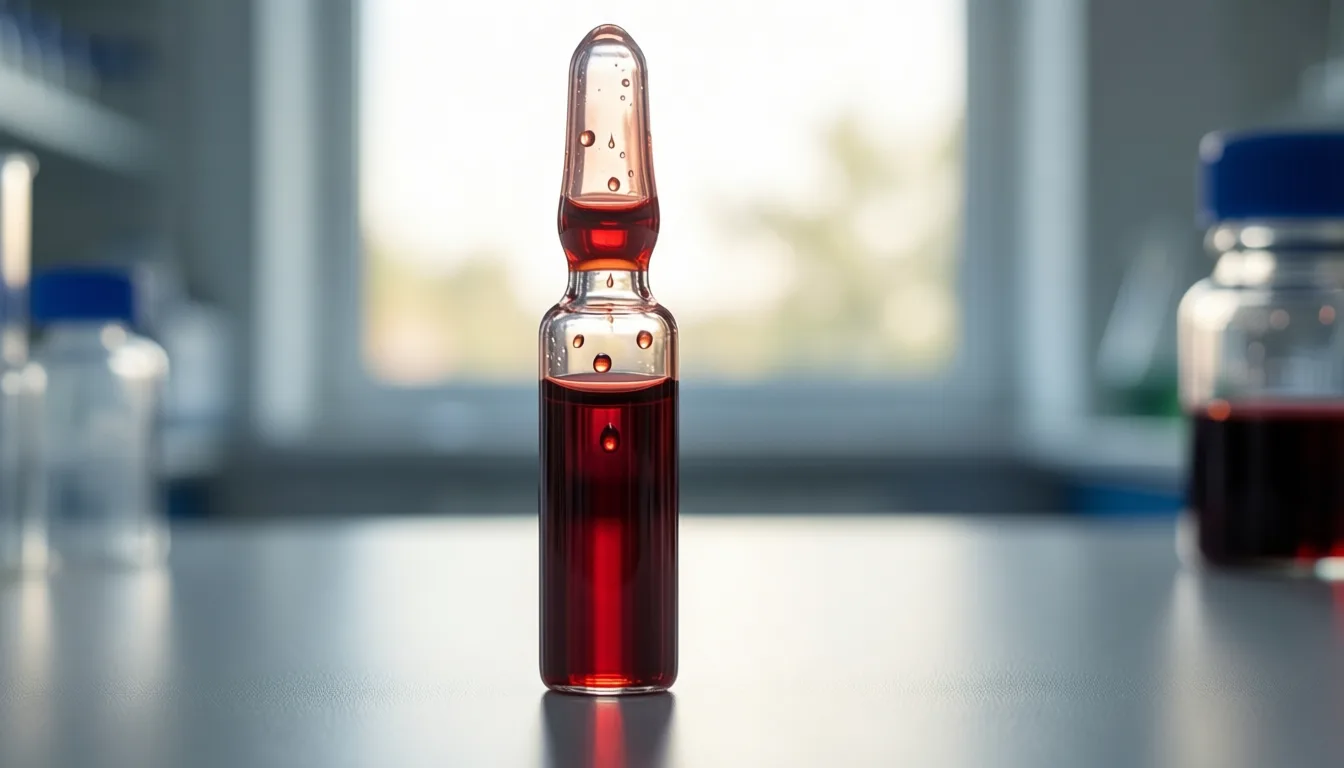
Here's a thought that rearranged my week: the number on your birthday cake might be the least interesting age you have. Scientists are starting to talk about your organ ages — plural — because your heart, your brain, your immune system, and eight other organs may each be running on their own clocks. And a recent analysis suggests we can read those clocks in something as ordinary as a vial of blood.
The study, published in Nature Medicine, looked at plasma proteins — the tiny molecular messengers floating around in the liquid part of your blood — from 44,498 people in the UK Biobank. Researchers measured almost 3,000 different proteins per person and used them to estimate the biological age of 11 separate organs. Quick gloss: "biological age" just means how old a tissue looks on the inside, based on its molecular wear and tear, regardless of the candles on the cake.
The headline finding is that those organ ages aren't just a party trick. They forecast real disease — heart failure, chronic obstructive pulmonary disease, type 2 diabetes, Alzheimer's — across a follow-up window stretching up to 17 years. That's the part that made me sit up. We're not talking about predicting next year's flu. We're talking about a blood draw today hinting at what might show up two decades from now.
The brain clock, and why it's the loudest one
Of all 11 organs, two kept stealing the spotlight: the brain and the immune system. People whose plasma proteins suggested an unusually aged brain had a risk of Alzheimer's disease roughly three times higher than average — a risk on par with carrying one copy of APOE4, the best-known genetic risk factor for late-onset Alzheimer's.
Flip it around and the story gets more hopeful. A youthful-looking brain was linked to a risk of Alzheimer's that was roughly a quarter of average — protection comparable to carrying two copies of the protective APOE2 variant, and apparently independent of which APOE genes you actually inherited. In plain language: your genes are not the whole script.
Your body doesn't age on a single clock. It ages on eleven of them — and the brain's tick is the one that echoes loudest.
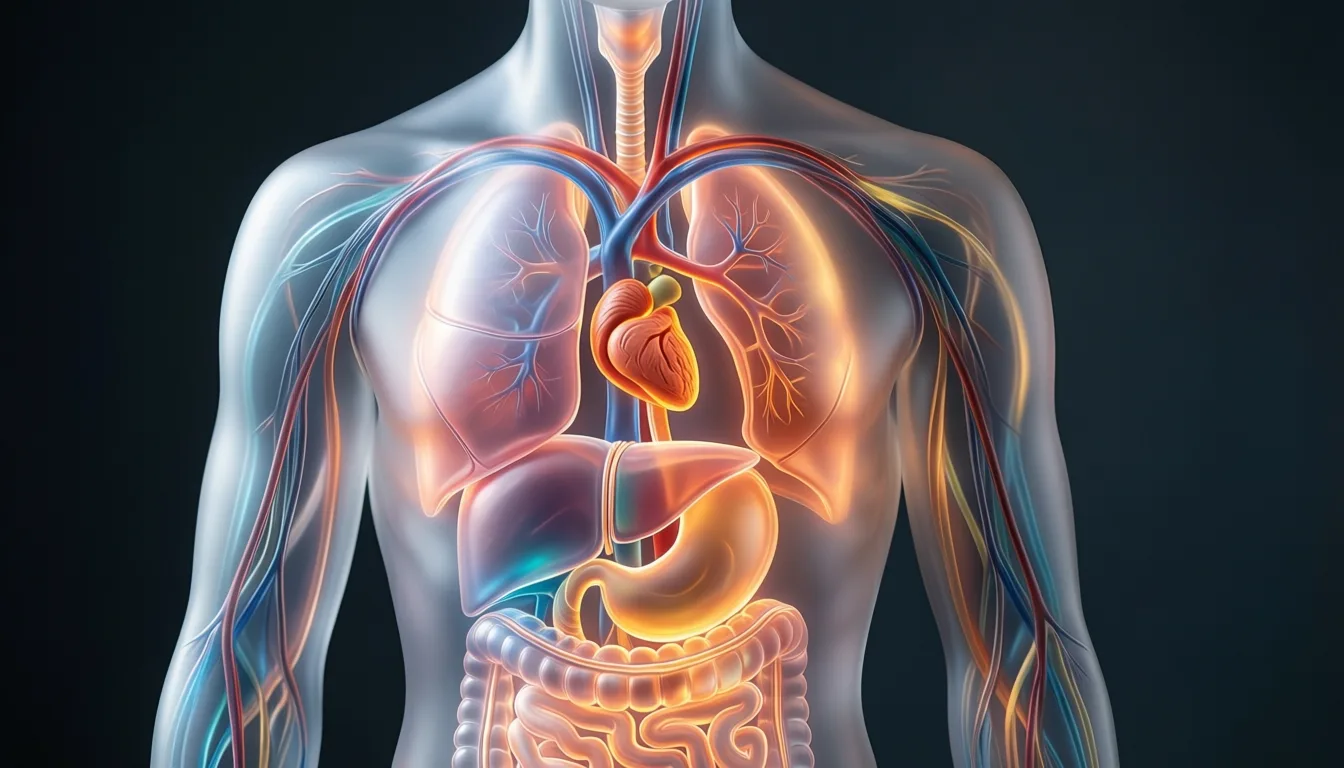
Eleven organs, eleven clocks: the study estimated biological age organ by organ rather than as a single whole-body number.
Stacking aged organs is where the risk really compounds
Here's the obvious beginner question I had to ask: does it matter if just one organ is running fast, or is it the pile-up that hurts? The data suggests it's very much the pile-up. People with two to four organs flagged as aged had roughly 2.3 times the mortality risk of peers. With five to seven, that climbed to about 4.5 times. Eight or more aged organs pushed it to roughly 8.3 times.
The mirror image is just as striking. A youthful brain alone was linked to a 40% lower mortality risk; a youthful immune system, similar. Having both youthful was associated with a risk cut by more than half. No other organ pairing carried quite the same signal, which is part of why the authors flag the brain and immune system as the most promising places to focus longevity research.

The whole pipeline starts with one small sample. The hard part is teaching the proteins to talk.
What this is — and what it isn't
Time for the careful part. This is one very large observational study. It shows associations, not proof that nudging your proteins around will buy you extra birthdays. The researchers also noted that organ age estimates shifted with lifestyle factors and medications, which is intriguing but doesn't yet tell us which specific changes move which specific clocks, or by how much.
There are also caveats baked into the cohort itself: UK Biobank participants skew healthier, whiter, and more middle-aged than the general population, so we should be cautious about assuming every finding generalizes. And while the modeling is sophisticated, organ-age tests aren't currently a clinical tool you can order at a checkup — they're a research instrument that may, eventually, become one.
- Organs age at different speeds. A single blood draw may, in research settings, estimate the biological age of 11 organs separately.
- Brain and immune age stood out. Both were strongly linked to long-term disease risk and mortality across nearly 45,000 people.
- An aged brain ≈ APOE4-level Alzheimer's risk. A youthful brain showed APOE2-level protection, independent of genotype.
- Risk stacks. Mortality risk rose with the number of organs flagged as aged — modestly at first, sharply past five.
- This is moderate evidence. One large observational study; associations, not proven cause and effect.
- Not a clinical test yet. Talk to a clinician before acting on any longevity or "biological age" product.
The part I keep coming back to is the reframe. For years, the longevity conversation has revolved around a single biological-age number — one score to rule them all. This work suggests that's the wrong resolution. A 50-year-old with a youthful brain and a tired liver is a very different person, healthwise, from a 50-year-old with the reverse. Treating them the same was always a little strange; now we have data hinting at how strange.
None of this is a permission slip to skip sleep, stress, or your next checkup. But it's a genuinely fresh way of thinking about getting older — not as one clock winding down, but as a small orchestra, each instrument keeping its own time. The next question, and it's the one researchers are racing to answer, is which instruments we can actually tune.
Frequently asked questions
How did researchers estimate the biological age of individual organs?
Researchers measured almost 3,000 plasma proteins per person from 44,498 UK Biobank participants and used those proteins to estimate the biological age of 11 separate organs. Biological age refers to how old a tissue looks on the inside based on its molecular wear and tear, regardless of a person's chronological age.
What does an 'aged brain' mean for Alzheimer's risk, according to the study?
People whose plasma proteins suggested an unusually aged brain had an Alzheimer's risk roughly three times higher than average, a level the researchers compared to carrying one copy of APOE4, the best-known genetic risk factor for late-onset Alzheimer's. Conversely, a youthful-looking brain was linked to a risk roughly a quarter of average, comparable to the protection associated with carrying two copies of the APOE2 variant, and apparently independent of which APOE genes a person actually inherited.
Does having just one aged organ raise health risk as much as having several?
The data suggests the pile-up matters most. People with two to four organs flagged as aged had roughly 2.3 times the mortality risk of peers, rising to about 4.5 times with five to seven aged organs, and roughly 8.3 times with eight or more.
Can I order this kind of organ-age test through my doctor today?
No. The organ-specific proteomic profiling described in the study is not currently a clinical tool available at a routine checkup — it is a research instrument that may eventually become one. The article advises treating any direct-to-consumer product that claims to read your organ ages with healthy skepticism and consulting a clinician before making decisions based on such a result.
What are the main limitations of this research?
This is one large observational study, meaning it shows associations rather than proof that changing protein levels will extend life. The UK Biobank cohort also skews healthier, whiter, and more middle-aged than the general population, so the findings may not generalize to everyone.
Join the conversation
Comments are moderated and reviewed before they appear. Be constructive — this is health information.
Add your comment