
The Sleep Secret Hiding in Your Calendar: Why Staying Busy May Outrank Workouts After 60
A 13-year cohort study following more than 1,000 older adults suggests that a varied, engaged life — not just exercise — tracks with better sleep in later decades.
Here is the question I kept asking while reading this study: what if the secret to sleeping well at 70 isn't a fancier mattress or a stricter bedtime — but a fuller Tuesday? A new analysis tracking more than a thousand older adults for thirteen years suggests something kind of lovely. The people who stayed engaged with life across lots of little ways — moving, thinking, connecting — tended to sleep better than those who didn't. Not dramatically better. Not miraculously. But measurably, and consistently enough that the researchers think it's worth paying attention to.
So let's back up. A team publishing in the American Journal of Health Promotion pulled data from the Chinese Longitudinal Healthy Longevity Survey, or CLHLS — a long-running study that's been checking in on older adults across China for years. They zoomed in on 1,038 people aged 60 and up, followed them from 2005 to 2018, and asked a deceptively simple question: does the variety of stuff you do in a day have anything to do with how you sleep at night? They called this idea multidimensional activity participation — basically, a checklist of ten different kinds of everyday activity, from physical movement to mental engagement.
Here's the beginner question I had to answer for myself first: what counts as "activity" here? Not just the gym kind. The researchers looked across ten domains — think household tasks, gardening, social visits, reading, playing cards, the small textures of an engaged life. Then they measured sleep two ways: a self-rated quality score, and whether people were getting too little sleep (the "short sleep duration" flag). They ran the numbers using a statistical model designed to handle people checking in over many years.
What actually moved the needle
Two findings stood out. First, physical activities were positively associated with sleep quality — the kind of result that probably surprises no one, but it's nice to see it hold up across more than a decade. Second, and more interesting to me: cognitive activities were linked to a lower likelihood of short sleep duration. Translation: people who kept their brains busy were less likely to be clocking too-few hours in bed.
I want to be honest about the size of these effects, because the language matters. We're talking about small statistical associations, not life-changing transformations. The physical-activity-to-sleep-quality link had a coefficient of 0.010. The cognitive-activity link to lower short-sleep odds came in at an odds ratio of 0.973. These are real, but they're nudges, not shoves. The strength of the evidence here is moderate — a well-designed long-term cohort, but observational, meaning it can show that two things travel together without proving one causes the other.
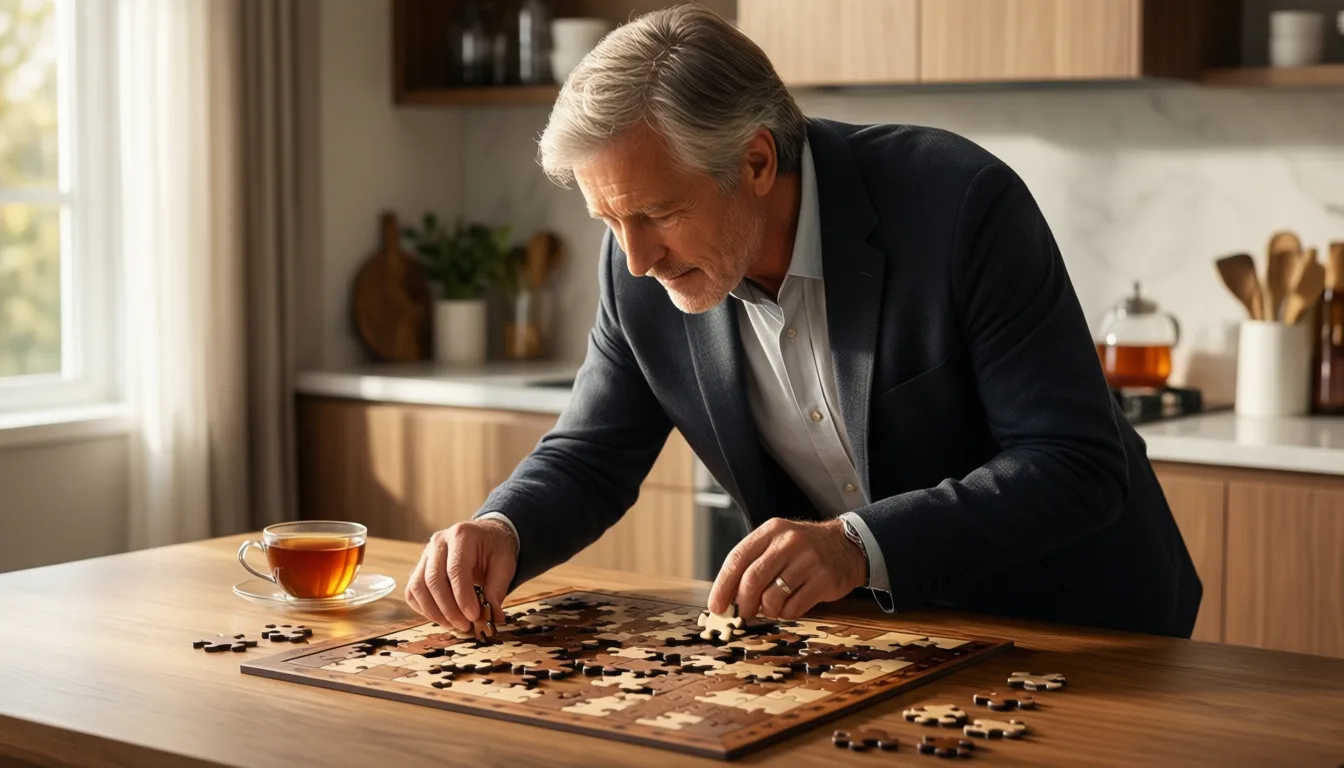
Cognitive engagement — puzzles, reading, cards — tracked with a lower likelihood of too-short sleep.
The other characters in the story
Activity wasn't the whole picture. The researchers also flagged a bunch of background factors that shaped sleep, and these are worth knowing about because they tell you who in the study was sleeping well, and who wasn't.
On the protective side: being male, living in an urban or town setting, and reporting higher quality of life, better self-rated health, and stronger mental health all tracked with better sleep quality. On the risk side, having heart disease showed up as a real burden — linked to worse sleep quality and a higher likelihood of short sleep duration. Urban living and better overall health also lined up with a lower chance of short sleep. None of this rewrites the rules of sleep science, but it's a useful reminder that sleep doesn't exist in a vacuum — it sits on top of physical health, mental health, and the daily shape of your life.
What if the secret to sleeping well at 70 isn't a fancier mattress — but a fuller Tuesday?
Why "multidimensional" is the word to remember
Most of us, when we hear "healthy aging," think about exercise. And exercise is great — this study reinforces that. But the framing the researchers use is broader. They're arguing that the variety of engagement matters, and that cognitive activity in particular shows up as its own distinct lever for sleep, not just a sidekick to physical movement. That fits with the broader "active aging" idea: that a good later life isn't built from one heroic habit, but from a portfolio of small ones.
I find that quietly hopeful. It means the bar to do something useful for your future sleep isn't "join a gym at 72." It might be "keep showing up to the card game," or "keep the garden going," or "call your friend on Thursdays." The study can't tell us which specific activities work best, or exactly how much of each — and it definitely can't prove that adding activities will fix anyone's sleep. But it adds to a growing case that staying engaged is doing something real.
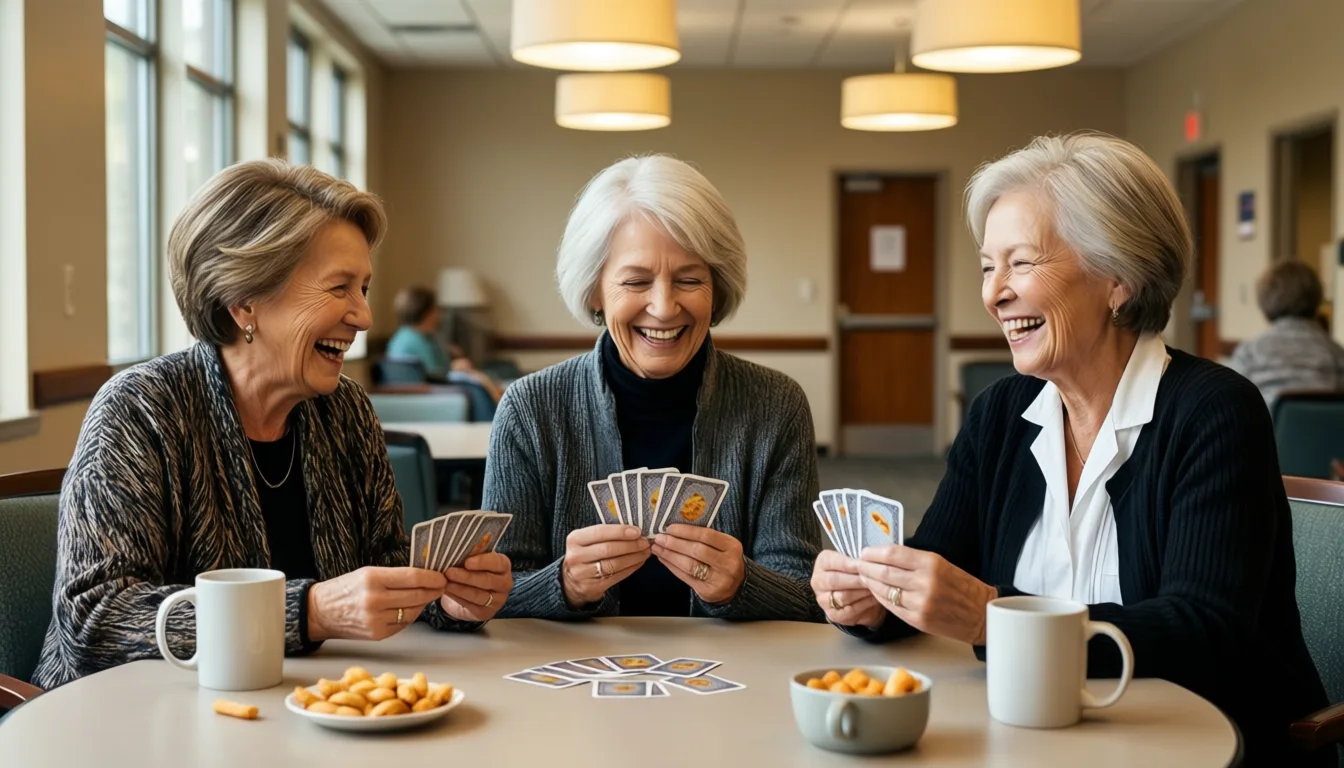
The "multidimensional" framing emphasizes variety — physical, cognitive, and social engagement together.
- The headline finding: Across 13 years and 1,038 older adults, varied daily activity tracked with better sleep quality and duration.
- Physical activity showed a positive association with sleep quality — small but consistent.
- Cognitive activity was linked to a lower likelihood of too-short sleep, suggesting brain engagement matters on its own.
- Heart disease was a notable risk factor for both worse sleep quality and short sleep duration.
- The framing matters: "Multidimensional" means variety — movement plus thinking plus connection, not one heroic habit.
- Evidence is moderate: long-term and well-designed, but observational. Patterns, not proof.
The takeaway for the rest of us
If you're younger than the study population — and most readers here are — the practical read is less "do this exact thing" and more "the architecture of an engaged day might be a longevity input we under-rate." The people sleeping best in this cohort weren't necessarily the ones with the most disciplined wind-down routines. They were the ones whose days had texture. Movement. Curiosity. Other humans. Things to look forward to.
That's not a sleep hack. It's something better: a hint that the way we build our ordinary days in our forties and fifties might be quietly shaping the nights we'll have in our seventies. Worth thinking about, the next time you're tempted to cancel the walk, skip the puzzle, or bail on the friend.
Frequently asked questions
What did the study mean by 'multidimensional activity participation'?
The researchers assessed ten different kinds of everyday activity, ranging from physical movement to mental engagement. These included household tasks, gardening, social visits, reading, and playing cards — the small textures of an engaged life. The idea was to capture variety across domains, not just one type of activity like exercise.
Which types of activity were linked to better sleep in the findings?
Physical activities were positively associated with sleep quality, while cognitive activities — such as puzzles, reading, and cards — were linked to a lower likelihood of sleeping too few hours. The researchers noted that cognitive engagement appeared to be its own distinct lever for sleep, not merely a sidekick to physical movement.
How large were the effects the researchers found?
The researchers described the associations as small — nudges, not shoves. The physical-activity-to-sleep-quality link had a coefficient of 0.010, and the cognitive-activity link to lower short-sleep odds came in at an odds ratio of 0.973. The overall evidence is rated as moderate: well-designed and long-term, but observational.
What health and lifestyle factors were associated with worse sleep in this study?
Having heart disease stood out as a notable risk factor, linked to both worse sleep quality and a higher likelihood of short sleep duration. Better sleep quality, by contrast, tracked with being male, living in an urban or town setting, and reporting higher quality of life, better self-rated health, and stronger mental health.
Does this study prove that staying active will improve your sleep?
No — because it is an observational cohort study, it can identify patterns over time but cannot prove that activity causes better sleep. People who stay active may also have better health to begin with, more social support, or fewer chronic conditions, all of which independently shape sleep. The article states that anyone with persistent sleep problems should talk to a clinician rather than self-experiment.
Sources
- The Association Between Multidimensional Activity Participation and Sleep Health in the Context of Active Aging: A Cohort Study Based on the CLHLS From 2005 to 2018. — American journal of health promotion : AJHP
Join the conversation
Comments are moderated and reviewed before they appear. Be constructive — this is health information.
Add your comment