
UV Rewrites Your Skin's Genome: A Transcriptomic Atlas of Photoaging
A new multi-age comparative study reads the molecular fingerprints UV leaves on skin — and quietly makes sunscreen the most evidence-backed anti-aging tool we have.
For decades, the case against the sun has been built mostly on what we can see: the freckling, the leathering, the slow loss of bounce along the jawline and décolletage. A new comparative study published in the Journal of Photochemistry and Photobiology B shifts the argument from the surface to the genome. By reading the transcriptomes — the active gene-expression programs — of skin from thirty women across three age brackets, the researchers were able to do something the mirror cannot: separate the aging your cells would do anyway from the aging the sun imposes on top.
The design is elegantly simple. Each volunteer donated two biopsies: one from the neck, a chronically sun-exposed site, and one from the upper chest, which sits a few centimeters lower and typically receives a fraction of the ambient ultraviolet dose. Because both samples come from the same person, genetics, hormones, diet, and sleep cancel out. What remains, when you subtract chest from neck, is a relatively clean molecular signature of cumulative photodamage. The authors then layered that contrast across young, middle-aged, and elderly cohorts to watch the signature accumulate over a lifetime.
The headline result is that photoaged neck skin shows accelerated, age-dependent transcriptomic dysregulation compared with the relatively protected chest. The dysregulation is not random noise; it clusters into a coherent set of pathways that map onto the hallmarks of aging biologists have been cataloguing for the better part of a decade.
What the genes are saying
Four signals stand out. The first is a chronically engaged DNA damage response, with checkpoint kinase CHEK1 among the genes flagged — consistent with cells repeatedly patching UV-induced lesions in their genomes. The second is sustained stress signaling through the MAPK cascade and kinases such as STK3, the molecular equivalent of an alarm that never fully resets. The third is metabolic reprogramming: shifts in AMPK and PPARG-linked programs suggest that photoaged skin is rewriting how it handles energy and lipids. The fourth, and arguably the most provocative, is the appearance of oncogenic signatures, including elevated WNT10B, a developmental gene that tends to misbehave in tumors.
Layered on top is what the authors describe as a persistent pseudo-inflammatory state, with pathway enrichment that mirrors herpes simplex virus 1 infection — not because the skin is infected, but because chronic UV appears to trip the same innate-immune wiring that a viral assault would. "Inflammaging," the low-grade smolder researchers increasingly link to age-related disease, seems to have a dermatologic dialect, and the sun fluently speaks it.

The most boring intervention in the longevity toolkit may also be the best documented.
Subtract chest from neck, and what remains is a relatively clean molecular signature of a lifetime of sun. On the study design
The sirtuin problem
Perhaps the finding that will travel furthest in longevity circles concerns the sirtuins, a family of NAD-dependent enzymes that have become shorthand for cellular resilience. In photoaged neck skin, the researchers report that SIRT1 and SIRT5 expression was severely depleted. Sirtuins have been implicated in DNA repair, metabolic regulation, and stress response — exactly the systems the rest of the transcriptome shows straining under UV. A growing supplement industry has bet on raising NAD to keep sirtuins working; this study quietly suggests that the upstream insult, photons hitting unprotected skin, may be doing the dismantling those interventions are trying to reverse.
It is worth being careful here. This is a transcriptomic snapshot of thirty women, not a randomized trial of sunscreen or an NAD precursor. Gene expression is not the same as functional protein activity, and the neck-versus-chest contrast, while clever, cannot fully exclude differences in mechanical stress, clothing friction, or microbiome between the two sites. The evidence is moderate, not definitive, and the authors frame it as a map for future mechanistic work rather than a verdict.
Why this reframes the sunscreen conversation
The longevity field has spent the last few years chasing molecules — rapamycin, metformin, NAD precursors, senolytics — each with intriguing preclinical data and a thinner column of human evidence. Topical UV protection sits in an awkward position in that conversation: too mundane to feel like biohacking, too well established to generate headlines. The new transcriptomic atlas reframes it. If chronic UV exposure is simultaneously upregulating DNA damage responses, igniting MAPK stress signaling, rewiring metabolism, nudging oncogenic pathways, and depleting sirtuins, then a broad-spectrum sunscreen is not a cosmetic indulgence. It is a daily intervention against several of the same molecular processes that more exotic longevity drugs are trying to modulate from the inside.
The honest framing is not that sunscreen will extend your lifespan in a measurable way — no trial has shown that, and this study does not claim it. It is that the molecular cost of cumulative UV is now visible at gene-expression resolution, and that the cost compounds with age. For readers who track the cutting edge of geroscience, the takeaway is less "buy SPF" than "update your model." The exposome — the sum of environmental insults a body absorbs over a lifetime — is not a vague backdrop to intrinsic aging. In skin, at least, it is a measurable accelerant.
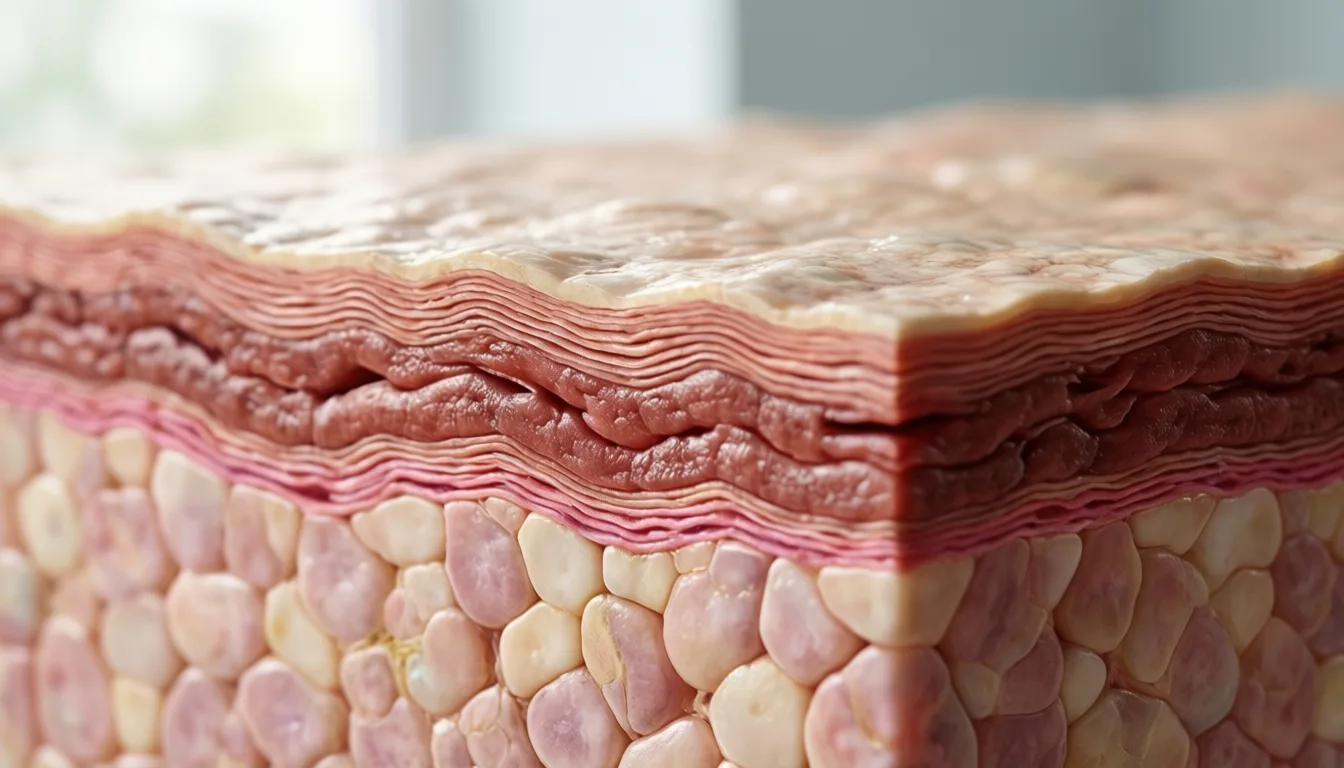
The neck-chest contrast lets researchers read photoaging as a distinct signal layered on intrinsic aging.
- Same body, two sites. Comparing neck (sun-exposed) and chest (shielded) skin in the same women isolates a relatively clean photoaging signal.
- Photoaging looks like accelerated molecular aging. DNA damage response (CHEK1), MAPK stress signaling, metabolic reprogramming, and oncogenic pathways all light up more in UV-exposed skin.
- Sirtuins take a hit. SIRT1 and SIRT5 expression was severely depleted in photoaged skin — the same enzymes many longevity supplements aim to boost.
- Chronic pseudo-inflammation. UV-exposed skin showed pathway enrichment mirroring viral infection, suggesting a smoldering innate-immune state.
- Evidence is moderate. Thirty volunteers, one transcriptomic snapshot — directionally compelling, not a clinical trial.
- Practical implication. Broad-spectrum daily UV protection is among the best-documented levers against the molecular features of skin aging. Ask a clinician about a routine that fits your skin and exposure.
For now, the most defensible reading is also the least glamorous. The cells in your neck are keeping a careful ledger of every unprotected afternoon, and that ledger is written in genes you actually need — for repair, for metabolism, for resilience. The interventions that prevent the entries from being made in the first place remain, by a wide margin, the ones with the most evidence behind them. Speak with a clinician before changing any health routine, but understand that the sunscreen conversation is no longer really a skincare conversation. It is a longevity one.
Frequently asked questions
How did researchers separate sun-related aging from normal aging in this study?
Each of the thirty volunteers donated two biopsies — one from the neck, a chronically sun-exposed site, and one from the upper chest, which typically receives far less ultraviolet exposure. Because both samples came from the same person, factors like genetics, hormones, diet, and sleep cancel out, leaving a relatively clean molecular signature of cumulative photodamage.
What specific molecular changes did the study find in sun-damaged skin?
Photoaged neck skin showed four key signals: a chronically engaged DNA damage response (flagging genes like CHEK1), sustained stress signaling through the MAPK cascade, metabolic reprogramming linked to AMPK and PPARG programs, and the appearance of oncogenic signatures including elevated WNT10B. On top of these, researchers also found a persistent pseudo-inflammatory state whose pathway enrichment mirrored that of a herpes simplex virus 1 infection.
What happened to sirtuins in sun-exposed skin, and why does that matter?
The study found that SIRT1 and SIRT5 expression was severely depleted in photoaged neck skin. Sirtuins are NAD-dependent enzymes implicated in DNA repair, metabolic regulation, and stress response — exactly the systems the rest of the transcriptome shows straining under UV — which the article notes quietly suggests that chronic sun exposure may be driving the very cellular decline that many longevity supplements aim to reverse.
What are the limitations of this research?
The authors describe it as a transcriptomic snapshot of thirty women, not a randomized trial, and note that gene expression is not the same as functional protein activity. The neck-versus-chest comparison also cannot fully exclude differences in mechanical stress, clothing friction, or microbiome between the two sites, so the authors frame the findings as a map for future mechanistic work rather than a definitive verdict.
Why does the article say this study reframes the sunscreen conversation?
The article argues that if chronic UV simultaneously upregulates DNA damage responses, ignites MAPK stress signaling, rewires metabolism, nudges oncogenic pathways, and depletes sirtuins, then broad-spectrum UV protection is acting against several of the same molecular processes that more experimental longevity drugs attempt to modulate. The key takeaway the article offers is less about a specific product recommendation and more about updating one's understanding of cumulative sun exposure as a measurable accelerant of molecular aging.
Sources
- Ultraviolet radiation reshapes the transcriptomic landscape of human skin aging: Insights from a multi-age comparative study. — Journal of photochemistry and photobiology. B, Biology
Join the conversation
Comments are moderated and reviewed before they appear. Be constructive — this is health information.
Add your comment