
What a Century-Old Cave Salamander Might Teach Us About Slow Aging
Researchers have mapped the first full transcriptome of the olm, an amphibian that lives more than 100 years in the dark. The early findings hint at how some animals stretch a lifespan — and why human biology might one day borrow the trick.
In a limestone cave somewhere under the Dinaric Alps, a salamander the color of skim milk hangs almost motionless in water that never sees the sun. It has no functional eyes. Its metabolism idles. And, against every expectation a biologist might bring to a creature of its size, it can live more than a hundred years. The olm — Proteus anguinus — has been a curiosity for centuries. Now, for the first time, researchers have mapped how its genes actually behave across its body, and the early results are interesting enough to earn the animal a seat at the same table as the naked mole rat and the Greenland shark.
The new work, published in Scientific Reports, is what scientists call a comprehensive transcriptome: a readout of which genes are switched on, and how loudly, across six different organs. The team paired that with a comparative genomics analysis, lining the olm up against other vertebrates to see what evolution has been quietly tuning. The whole dataset sits on an open web server so other labs can poke at it. You can read the paper itself here.
None of this, to be clear, is a longevity drug. It is a map. But maps are how this field moves. The naked mole rat became a star of aging research only after biologists could see, in detail, what its cells were doing differently. The olm is now at roughly that same starting line — and the first glimpse of the terrain is worth a careful look.
- A first-of-its-kind map. The study delivers the first comprehensive multi-organ transcriptome of an amphibian thought to live past 100.
- The brain stands out. Of the six organs profiled, the brain showed the largest set of organ-specific expressed genes.
- Conservation over change. Far more genes are under strong negative (purifying) selection than positive selection — the olm's biology is being carefully preserved, not radically rewritten.
- Familiar company. The processes under positive selection echo those seen in other long-lived species, suggesting shared molecular themes of slow aging.
- Early-stage evidence. This is descriptive biology, not a human intervention. No supplement, diet, or therapy follows from it yet.
Why a blind cave salamander, of all things
Comparative biology of aging is, at heart, a simple idea: if you want to understand why most mammals our size live the lives they live, study the outliers. A mouse gets a few years. A naked mole rat, similar in size, can push thirty and rarely shows cancer. A Greenland shark may drift through Arctic water for centuries. Each of these animals is a natural experiment, and each one has nudged researchers toward specific molecular pathways — DNA repair, protein quality control, inflammation control — that may matter for human healthspan too.
The olm is the amphibian entry in that catalog. According to the new analysis, its predicted maximum lifespan exceeds 100 years, which makes it the longest-lived amphibian on record. It also happens to live in near-total darkness, at cool and stable temperatures, eating rarely and moving little. Disentangling "slow life" from "durable biology" is part of what the transcriptome is meant to help with.
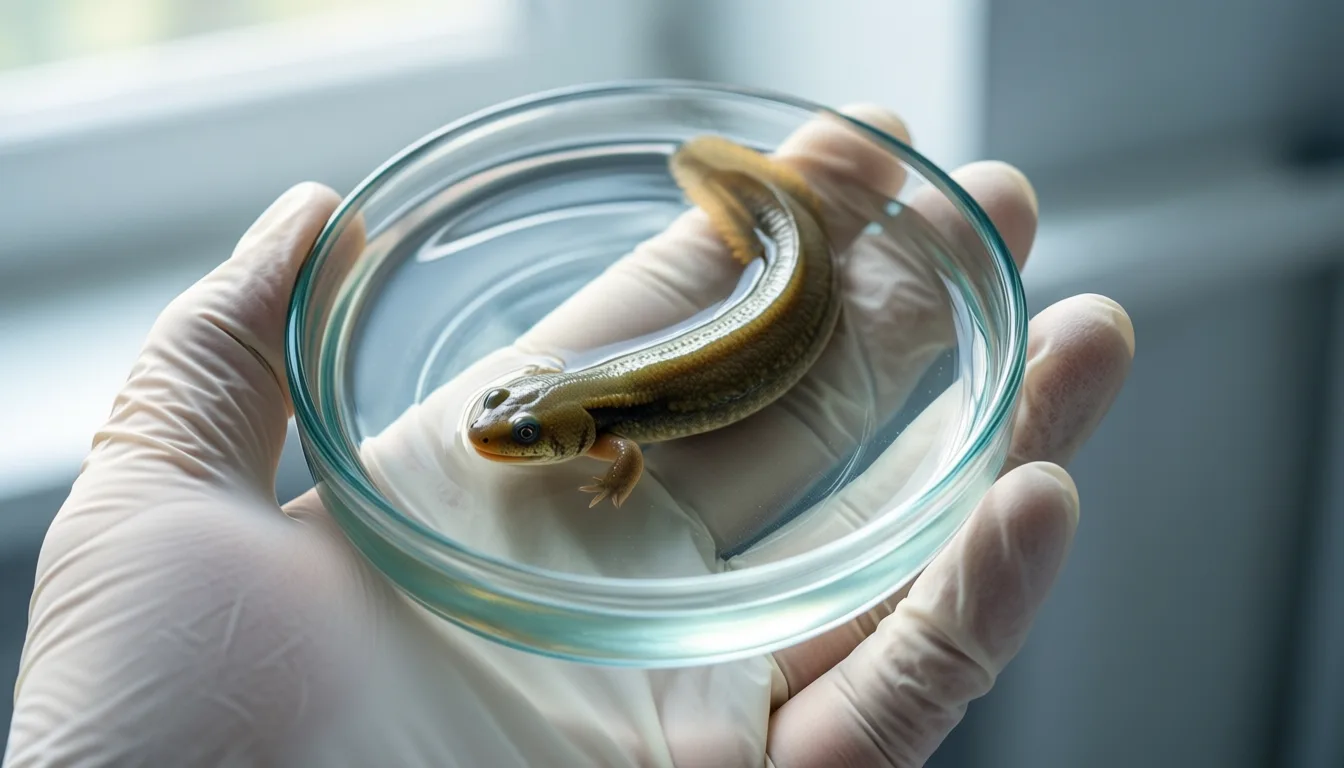
The olm is the amphibian entry in a growing catalog of long-lived outliers used to probe the biology of aging.
What the gene readout actually shows
Three findings are worth sitting with. First, the olm's organs are highly specialized at the level of gene expression — and the brain leads the pack, with the largest number of genes expressed in an organ-specific way, per the study. In an animal that navigates lightless water for a century, an unusually distinctive brain transcriptome is not shocking. It is, however, a clue about where to look next.
Second, when the researchers asked which genes show signs of evolutionary pressure, the answer was lopsided: far more genes are under strong negative selection than positive selection. Negative selection is conservation — evolution holding a gene still because changes would break something important. In other words, much of the olm's genome looks carefully guarded, especially in the brain. That is the opposite of a species frantically inventing new tricks; it is a species protecting old ones.
Third, where positive selection does appear, the underlying biological processes resemble those flagged in other long-lived species. The paper does not promise that these are the longevity genes. It notes a family resemblance — a hint that nature may keep returning to a similar toolbox when it builds an animal that lasts.
Much of the olm's genome looks carefully guarded — evolution protecting old tricks, not inventing new ones.
What this is, and what it isn't
It is worth being plain about the evidence here. A transcriptome tells you which genes are switched on in which tissues. A comparative genomics scan tells you which genes look evolutionarily interesting. Neither tells you, on its own, why an animal lives a long time, and neither translates directly into a human recommendation. There is no olm pill. There is no diet derived from this. Anyone selling one is ahead of the science by a wide margin.
What the work does provide is a foundation. With the dataset public, other labs can test specific hypotheses: Does a particular DNA-repair gene behave unusually in olm cells? Do its neurons resist the kinds of protein damage that accumulate in aging mammalian brains? Those experiments are the next decade of work, not next quarter's headline.
For readers of this column, the honest framing is the useful one. Comparative biology of aging is a slow, cumulative field. Every new long-lived species that gets a proper molecular workup makes the eventual human translation a little more plausible. The olm joining the list is real progress. It is not, yet, a reason to change anything you do on a Tuesday morning.

Stable temperature, low oxygen, sparse food: the olm's habitat is as unusual as its biology.
The long view
For men in our seventh decade and beyond, the practical levers for staying strong, sharp and independent have not moved this month. They are the same unglamorous ones: keep moving, lift something, sleep, eat like you mean it, see your doctor, stay connected to people you like. Comparative aging research is playing a longer game, and it is the right game to play. A century-old salamander in a dark Slovenian cave is not going to hand us a fountain of youth. It may, in time, hand us a better understanding of why some bodies wear down slowly — and that is the kind of knowledge that eventually changes medicine. For now, file the olm under worth watching, and get on with your walk.
Frequently asked questions
What exactly is the olm, and why are scientists paying attention to it now?
The olm (Proteus anguinus) is a blind cave salamander found under the Dinaric Alps that can live more than 100 years, making it the longest-lived amphibian on record. A new study published in Scientific Reports produced the first comprehensive multi-organ transcriptome of the animal — a readout of which genes are active across six different organs — giving researchers the first detailed molecular look at how its biology is organized.
What were the most notable findings from the gene-activity study?
Three findings stand out: the brain showed the largest number of organ-specific expressed genes of the six organs profiled; far more genes are under strong negative (purifying) selection than positive selection, meaning the olm's genome looks carefully guarded rather than rapidly evolving; and where positive selection does appear, the underlying biological processes resemble those flagged in other long-lived species, suggesting a shared molecular theme.
What does it mean that so many of the olm's genes are under 'negative selection'?
Negative selection — also called purifying selection — means evolution is holding a gene stable because changes to it would be harmful. The article describes this as the olm protecting old biological tricks rather than inventing new ones, and notes this pattern is especially pronounced in the brain.
Does this research point to any supplements, diets, or treatments people can use now?
No. The article is explicit that a transcriptome is a map, not an intervention, and that no supplement, diet, or therapy follows from this work yet. It states that anyone selling an 'olm pill' or a longevity product based on this science is 'ahead of the science by a wide margin.'
How does the olm fit alongside other long-lived animals already studied by aging researchers?
The article places the olm in the same catalog as the naked mole rat and the Greenland shark — animals used as natural experiments to identify molecular pathways relevant to aging. It notes the olm is now at roughly the same 'starting line' the naked mole rat was when it first attracted serious research attention, and that the processes flagged under positive selection in the olm echo findings in those other long-lived species.
Join the conversation
Comments are moderated and reviewed before they appear. Be constructive — this is health information.
Add your comment