What Companion Dogs Are Teaching Us About Human Aging
The Dog Aging Project's Precision Cohort turns 1,000 family pets into a living laboratory for geroscience — and a useful mirror for the rest of us.
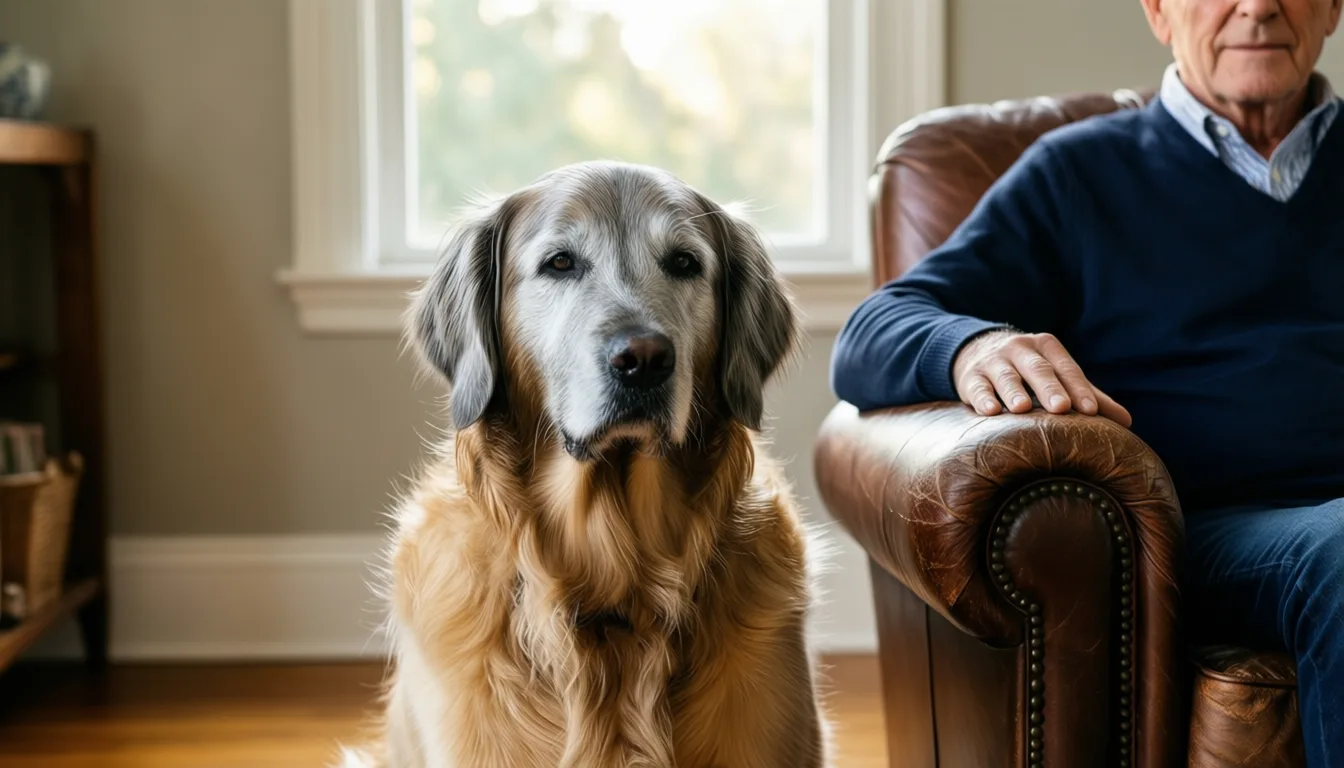
The dog at your feet is doing something quietly remarkable. He shares your couch, your kitchen scraps, your tap water and your zip code. He breathes the same air, walks the same sidewalks, and, if you are honest about it, keeps roughly the same hours. That overlap — mundane to you, extraordinary to a scientist — is the reason a thousand household dogs have become one of the more interesting longevity cohorts in the world.
The project in question is the Dog Aging Project, and its newly described Precision Cohort is a careful piece of plumbing rather than a headline-grabbing therapy. According to the cohort design paper published in GeroScience, the team recruited 1,000 dog-owner pairs, stratified by life stage, sex, body size and geography, and built the logistical scaffolding to collect blood, urine, feces and hair from those animals year after year, through their own primary-care veterinarians.
That sounds modest. It is not. Multi-omic geroscience — the study of how the metabolome, microbiome and epigenome shift with age — has long been bottlenecked by the same problem: you need a lot of well-characterized samples, from a lot of well-characterized subjects, collected the same way, over a long enough stretch of time to actually see aging happen. Primate cohorts are small and slow. Mouse work is fast but translates imperfectly. Human cohorts are gold-standard but glacial. Dogs, as the authors argue, sit in a useful middle: they age faster than we do, share our environment, and get real veterinary care that produces real clinical data.
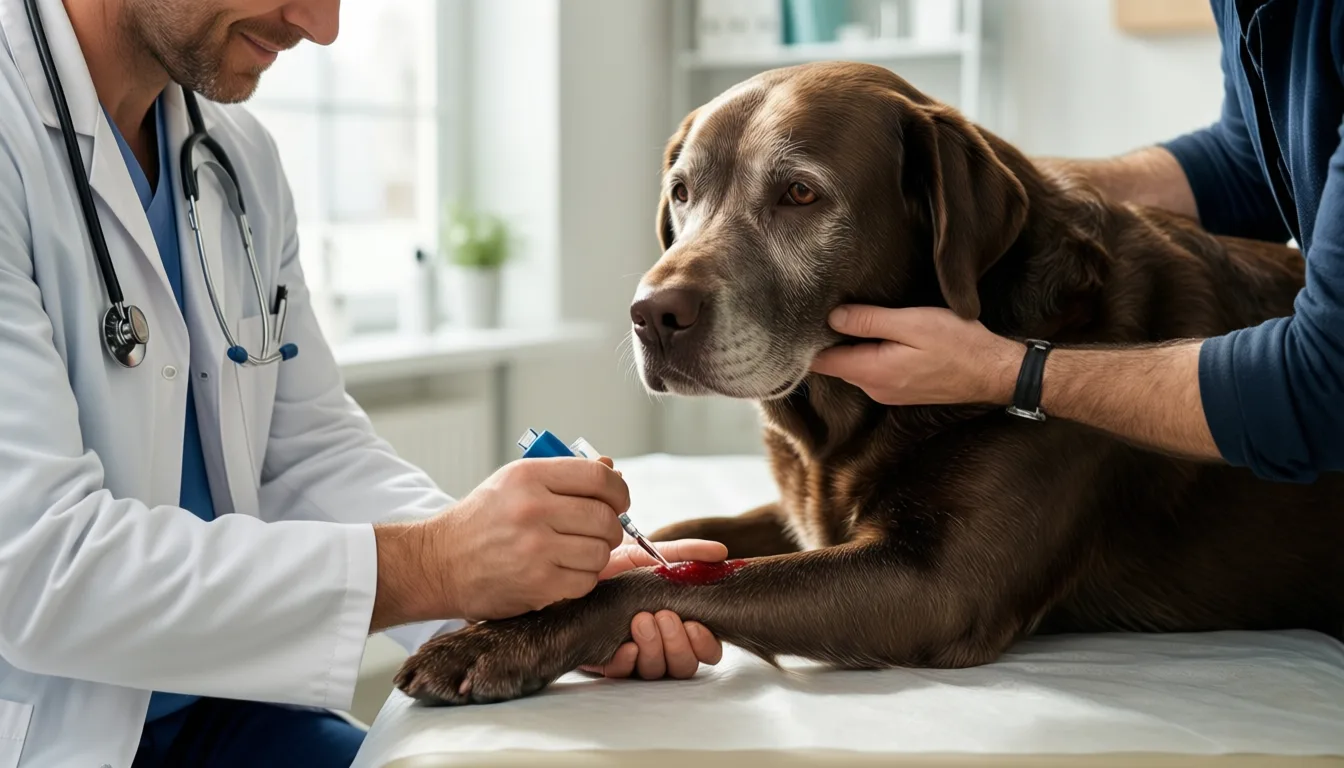
Samples are collected through the dogs' own primary-care veterinarians — a logistical choice that makes the cohort look more like a real-world population than a laboratory one.
What the cohort actually is
Of the thousand pairs enrolled, the team has so far collected and processed samples from 976 dogs, with second- and third-year collections already under way. The resulting dataset includes complete blood counts, chemistry panels, immune profiling by flow cytometry, metabolite quantification, fecal microbiome characterization, epigenomic profiling, urinalysis and the metadata that tells you how each sample was handled. In plain English: it is the kind of layered, repeated-measures data that lets researchers ask not just what changes with age, but in what order.
That ordering question is the one geroscience keeps circling. We know older bodies look different from younger ones across dozens of biological readouts. We know much less about which of those shifts are causes, which are consequences, and which are simply along for the ride. A longitudinal multi-omic cohort — measuring the same individuals over time, across several biological layers — is the kind of resource that, with patience, can begin to sort that out.
Dogs age faster than we do, share our environment, and get real veterinary care that produces real clinical data.
Why a dog is a useful mirror
The case for companion dogs as a translational model is not that they are little humans. They are not. The case is that they are exposed to roughly the same world we are — the same household dust, the same yard chemistry, the same sedentary winters and active summers — and that their lifespans are compressed enough to study within a researcher's career. A ten-year-old retriever is, in geroscience terms, well into the territory where the interesting biology happens.
The Precision Cohort is also deliberately diverse. Stratifying by size matters because large breeds age faster than small ones, a quirk of biology that has long interested researchers studying growth signaling and lifespan. Stratifying by geography matters because environment is not a footnote in aging; it is a chapter. And recruiting through ordinary veterinary practices rather than a single research hospital makes the sample look more like the country than like a clinic.
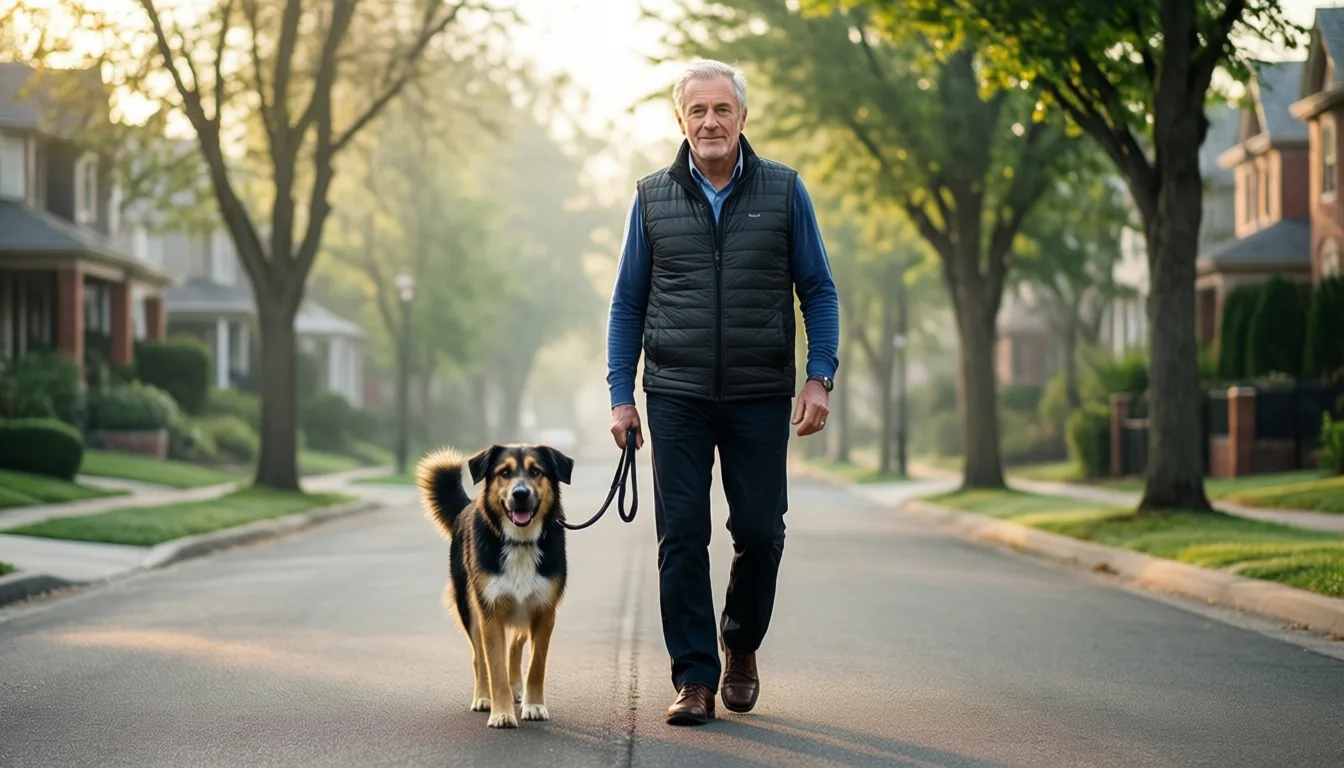
Shared environment is the point: the dog's exposures look a lot like the owner's.
What this is — and what it isn't
It is worth being careful here, because canine-aging research has lately drawn breathless coverage, much of it tied to trials of rapamycin in older dogs. The Precision Cohort paper is not a drug trial. It does not show that any intervention extends life in dogs, let alone in people. What it does is build the platform — the samples, the data, the infrastructure — on which future questions can be asked rigorously. That is a moderate, foundational contribution, not a breakthrough, and it should be read that way.
For readers who have been following the broader canine-aging story, that framing matters. A well-designed cohort like this is what makes it possible, eventually, to test whether the biological signatures that shift with age in dogs also shift in response to interventions — diet, exercise, medications — and whether any of those shifts look like the ones seen in human aging studies. None of that is settled. The infrastructure to ask it properly is what has just been laid down.
The reader's takeaway
None of this changes what you should do tomorrow morning. The levers that move human healthspan — moving your body, sleeping enough, eating like an adult, staying connected to other people, keeping up with your clinician — are not waiting on a multi-omic readout from a beagle in Ohio. They are well established and yours to pull.
What the Dog Aging Project offers is something quieter: the prospect that, a few years from now, we will understand the sequence of aging a little better than we do today, and that the understanding will have come, in part, from the animal already snoring at the end of your bed. That is a good trade.
- A platform, not a pill. The Precision Cohort is research infrastructure — 1,000 dog-owner pairs with repeated multi-omic sampling — not an intervention study.
- Dogs are a useful middle ground. They share our environment, age faster than we do, and receive real clinical care, making them a closer translational mirror than mice.
- Multi-omic and longitudinal. Blood, urine, fecal and hair samples feed metabolome, microbiome, epigenome and immune readouts across years.
- Moderate evidence, foundational role. This is design and methods work; therapeutic implications for humans are not yet on the table.
- What you can do now is unchanged. Movement, sleep, diet, connection and regular checkups remain the proven levers — talk to your clinician before changing anything.
Frequently asked questions
What exactly is the Dog Aging Project's Precision Cohort?
It is a research platform that enrolled 1,000 dog-owner pairs, stratified by life stage, sex, body size, and geography, and built the infrastructure to collect blood, urine, feces, and hair from those animals year after year through their own primary-care veterinarians. The goal is to generate layered, repeated-measures data across several biological systems over time. It is research infrastructure, not a drug trial or intervention study.
Why are companion dogs considered a useful model for studying aging?
Dogs share roughly the same environment as their owners — the same household, air, water, and neighborhood — and their lifespans are compressed enough to study within a researcher's career. They also receive real veterinary care that produces real clinical data, placing them in a useful middle ground between mice, which translate imperfectly, and human cohorts, which progress very slowly.
What kinds of biological samples and data are collected from the enrolled dogs?
Each dog provides blood, urine, feces, and hair, which feed into complete blood counts, chemistry panels, immune profiling, metabolite quantification, fecal microbiome characterization, epigenomic profiling, and urinalysis. The dataset also includes metadata describing how each sample was handled, enabling researchers to track changes in the same individual across multiple years.
Does this research show that any treatment can slow aging in dogs or humans?
No. The cohort paper does not show that any intervention extends life in dogs or in people. Its contribution is foundational — laying down the samples, data, and infrastructure needed to ask such questions rigorously in the future. Therapeutic implications for humans are not yet on the table.
Should I change my daily habits based on this research?
The article states that the proven levers for human healthspan — moving your body, sleeping enough, eating well, staying connected to other people, and keeping up with your clinician — are already well established and are not waiting on findings from this cohort. It recommends talking to your clinician before changing anything.
Join the conversation
Comments are moderated and reviewed before they appear. Be constructive — this is health information.
Add your comment