
What Smoking Still Costs Your Eyes — A New Meta-Meta-Analysis Quantifies the Damage
A synthesis of 16 systematic reviews puts hard numbers on a soft truth: the cleanest longevity move you can make for your vision is still to quit.
We talk about smoking and lungs. We talk about smoking and hearts. We rarely talk about smoking and the very specific, very personal apparatus you are using right now to read this sentence. A new synthesis in the European Journal of Ophthalmology pulled together 16 systematic reviews on smoking and ocular disease and arrived at a number that is hard to wave away: current smokers are roughly seven to twelve times more likely to develop age-related macular degeneration than people who have never smoked. If you are somewhere in the perimenopausal middle of life, quietly auditing your habits, this is a finding that deserves a seat at the table.
- The headline number. A 2025 meta-meta-analysis reports current smokers face a 7–12× higher risk of age-related macular degeneration (AMD) versus non-smokers.
- Quitting matters, but the shadow lingers. Past smokers still carried roughly a seven-fold increase in AMD risk in the pooled data.
- It's not just AMD. Current smokers had about 3× the risk of primary open-angle glaucoma and roughly 4× the risk of cataracts.
- Evidence strength: moderate. Pooled effect sizes are large but confidence intervals are wide, and observational data can't fully prove causation.
- Action item. Smoking is one of the few modifiable risk factors for vision loss — worth raising at your next eye exam or primary care visit.
What the new synthesis actually did
A meta-meta-analysis is exactly what it sounds like: a study of studies of studies. Researchers searched PubMed, SCOPUS and Web of Science through December 2024 for systematic reviews and meta-analyses on smoking and eye disease, graded each one with the 16-item AMSTAR 2 quality tool, and pooled the results. Sixteen reviews made the cut; twelve were strong enough to combine quantitatively.
Why bother layering analyses on top of analyses? Because individual meta-analyses on smoking and eyes have existed for years, and they don't always agree on the size of the risk. Stacking them is an attempt to find the signal across the noise — to ask, with more statistical horsepower than any single review, what the aggregate human evidence really says.
The short answer: it says smoking is bad for your eyes in ways that are larger, and more consistent across disease categories, than most of us casually assume.

The synthesis pulled from 16 systematic reviews graded with AMSTAR 2, a standard quality tool for evidence reviews.
The numbers, in plain English
Start with macular degeneration, the leading cause of irreversible central vision loss in older adults. In the pooled data, current smokers had an odds ratio of 11.93 (95% CI 4.40 to 32.33) and a risk ratio of 7.45 (95% CI 4.09 to 13.57) for AMD compared with people who never smoked. Translated: somewhere between a seven-fold and twelve-fold elevation, depending on how you slice the math. The confidence interval is wide — a reminder that the precise size of the effect is uncertain even if the direction is not.
Past smokers didn't get a clean pass. Their pooled odds ratio for AMD was 7.09 (95% CI 4.79 to 10.51) — still a roughly seven-fold increase relative to never-smokers. That is the part that tends to surprise readers: quitting moves the needle, but the retinal accounting doesn't reset overnight.
For primary open-angle glaucoma (POAG), the most common form of glaucoma, current smokers carried about three times the risk (OR 3.07, 95% CI 2.07 to 4.54), with past smokers at a similar 2.64. For cataracts — the clouding of the lens that eventually sends most of us to a surgeon — current smokers had roughly four times the risk (OR 4.15, 95% CI 3.35 to 5.15), and "ever" smokers about a six-fold increase.
Quitting moves the needle, but the retinal accounting doesn't reset overnight.
Why eyes, specifically
Mechanistically, the eye is a small, metabolically demanding organ with delicate vasculature and tissues exquisitely sensitive to oxidative stress. Tobacco smoke delivers a cocktail of oxidants, constricts blood vessels, and is thought to compromise the antioxidant defenses that keep the retina and lens functioning over decades. None of that is new science. What's new — and useful — is the size of the aggregated human signal.
It is also worth saying what this study does not do. It does not run a randomized trial (you cannot ethically assign people to smoke). It does not finely separate dose, duration, vaping, or secondhand exposure. Observational evidence at this scale strongly suggests causation, but cannot prove it the way an RCT could. That is why the editorial evidence rating here is moderate, not definitive — the effect is consistent and large, but inherits the limits of the underlying studies.
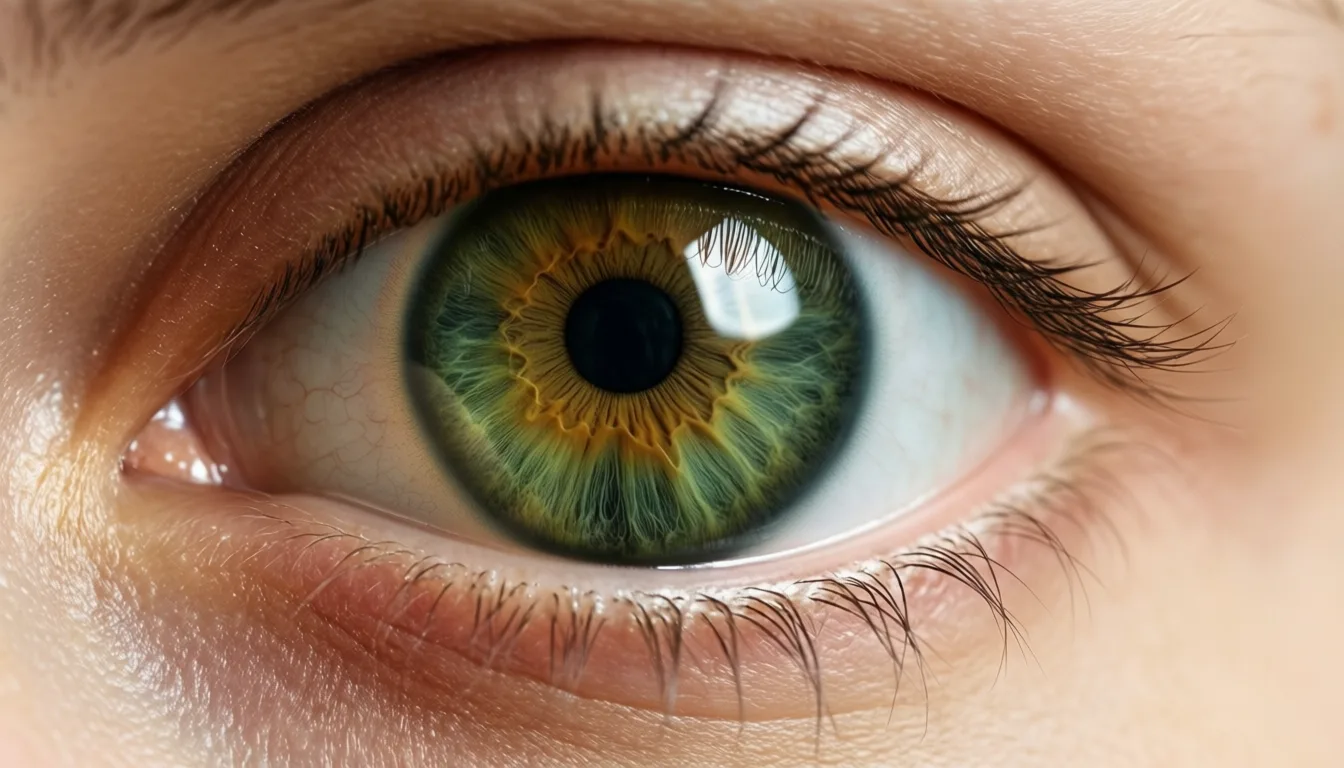
Tobacco smoke increases oxidative stress and vascular damage in the small, metabolically active tissues of the retina and lens.
What this means if you're 35 to 50
Perimenopause is already a season of risk recalibration. Bone density, cardiovascular markers, sleep, mood — the dashboard lights up. Eye health rarely makes the top of that list, but it probably should, because the diseases in this analysis are largely silent until they aren't. AMD, glaucoma and cataracts develop over years; the choices that bend their trajectory are the ones you're making now.
If you currently smoke, the most honest read of this evidence is that cessation belongs alongside blood pressure and cholesterol on your healthspan shortlist — and that the eye-specific case for quitting is stronger than the public conversation suggests. If you used to smoke, the residual risk in the data is a reason to be proactive about dilated eye exams, not a reason to shrug. And if you've never smoked, this is one more argument for protecting that status, including from the underexamined risks of vaping and chronic secondhand exposure, which the review did not separately quantify.
None of this is medical advice, and none of it replaces a conversation with an ophthalmologist or your primary care clinician. But the synthesis does what good evidence reviews are supposed to do: it takes a vague cultural sense that smoking is "bad for your eyes" and gives it a number large enough to act on.
The bottom line
The evidence base on smoking and eye disease isn't new, but the resolution just got sharper. A 2025 meta-meta-analysis aggregates the best available reviews and lands on effect sizes — 7–12× for AMD, ~3× for glaucoma, ~4× for cataracts — that are too large and too consistent to dismiss as statistical noise, even with wide confidence intervals and the usual caveats of observational data. The direction of the action item is unambiguous: among the modifiable levers for protecting your vision into your sixties and seventies, quitting is still at the top of the list.
Frequently asked questions
How much does smoking actually raise the risk of age-related macular degeneration?
According to the 2025 meta-meta-analysis, current smokers face roughly a seven-to-twelve-fold higher risk of age-related macular degeneration compared with people who have never smoked. The wide range reflects uncertainty in the precise size of the effect, though the direction of the finding is consistent across the pooled data.
If I quit smoking, does my risk of eye disease go back to normal?
Quitting lowers the risk, but it does not fully reset it. Past smokers in the pooled data still carried roughly a seven-fold increase in AMD risk relative to never-smokers, which the article describes as the retinal accounting not resetting overnight.
Does smoking affect only macular degeneration, or are other eye conditions involved?
The synthesis found elevated risks across multiple conditions. Current smokers had about three times the risk of primary open-angle glaucoma and roughly four times the risk of cataracts, in addition to the much larger AMD risk.
Why is smoking harmful to the eyes specifically?
The article explains that the eye is a small, metabolically demanding organ with delicate vasculature that is highly sensitive to oxidative stress. Tobacco smoke delivers a cocktail of oxidants, constricts blood vessels, and is thought to compromise the antioxidant defenses that protect the retina and lens over time.
How reliable is the evidence in this study?
The researchers rated the evidence as moderate, not definitive. The effects are large and consistent, but the analysis relies on observational data from 16 systematic reviews, and a randomized controlled trial — which would provide stronger proof of causation — cannot ethically be conducted on smoking.
Sources
- Impact of smoking on ocular health: A systematic review and meta-meta-analysis. — European journal of ophthalmology
Join the conversation
Comments are moderated and reviewed before they appear. Be constructive — this is health information.
Add your comment