Your Microbes, Your Healthspan: The Gut-Phytochemical Axis of Aging
Two new reviews argue your gut bugs are one of the most workable levers on healthy aging — and the plants on your plate are how you nudge them.
Okay, real talk: I used to think "gut health" was just a yogurt commercial. Then I spent a week reading two big new science reviews on aging, and I cannot stop thinking about the tiny ecosystem living in my intestines. Turns out the trillions of microbes down there aren't just along for the ride — researchers now consider them one of the more workable levers we have on how well we age. Not a miracle. A lever. There's a difference, and this story is about getting that difference right.
Here's the beginner question I kept asking: what does "healthy aging" even mean? Scientists use the word healthspan — basically, the stretch of life where you're still feeling good and free from the chronic stuff that piles up with age. A 2025 review in Advances in Nutrition frames diet and the gut microbiota as two of the most modifiable influences on that window, which is a polite way of saying: a lot of aging biology is baked in, but these two you can actually nudge. You can read the authors' full argument here.
A second review, in Science China Life Sciences, lands in the same neighborhood from a different street. Its authors argue that gut microbes shape healthy longevity by strengthening the intestinal barrier, dialing down chronic low-grade inflammation, tuning nutrient-sensing pathways, and supporting mitochondrial function — the cellular power plants that tend to get wheezy with age. Two independent teams, two journals, broadly the same map. That convergence is why this feels like a moment.
What your microbes actually do all day
Picture your gut lining as a very polite bouncer. It lets nutrients in and keeps troublemakers out. When that lining gets leaky with age, bits of bacteria slip through and the immune system goes into a slow, smoldering panic — researchers call it inflammaging. Both reviews point to gut microbes as key to keeping that bouncer alert: a healthier microbial community is associated with better barrier integrity and less chronic inflammation, plus knock-on effects on how cells sense nutrients and produce energy.
The Advances in Nutrition team adds another layer: the microbiota also influences mitochondrial function and oxidative stress, two of the usual suspects in age-related decline. None of this means a probiotic shake will reverse a birthday. It means the gut is plugged into more aging circuitry than we used to think.
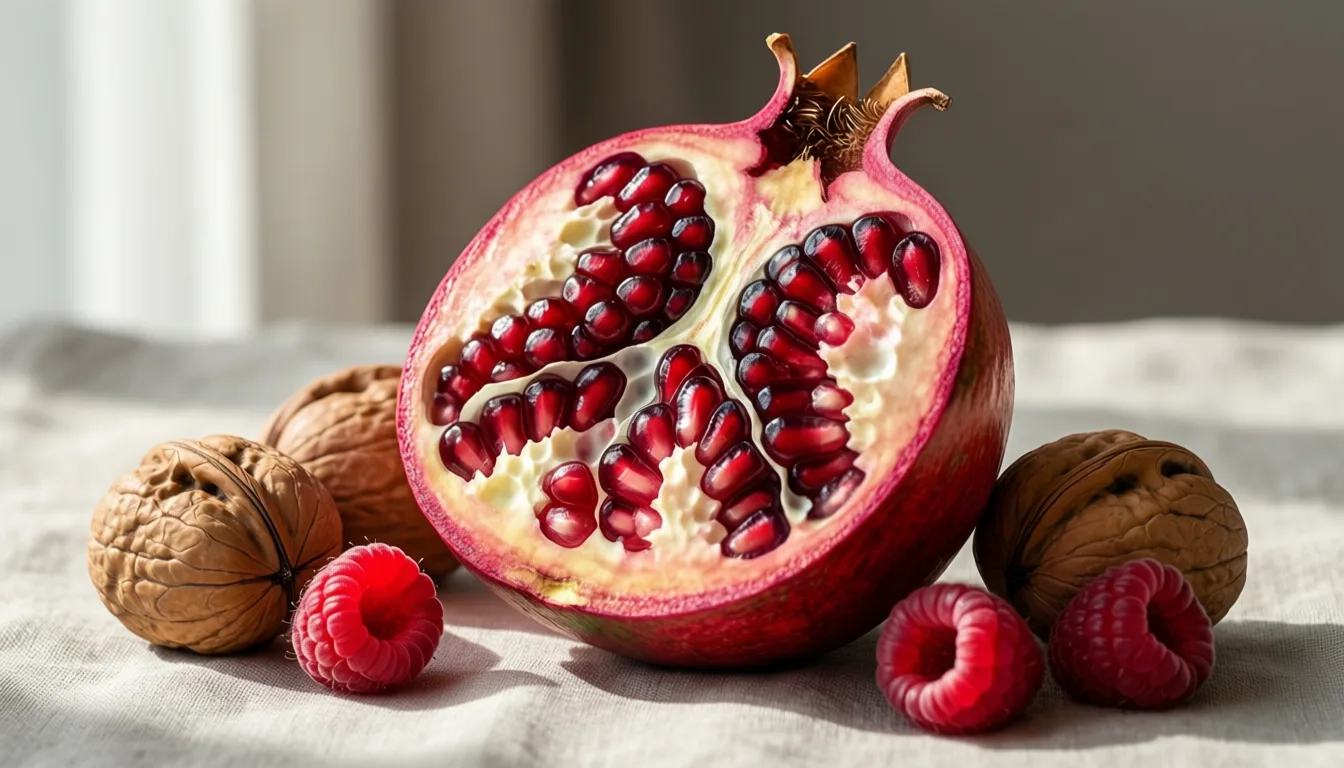
Pomegranates, berries and walnuts carry ellagitannins — raw material some gut microbes turn into urolithin A.
Enter the phytochemicals (a.k.a. plant chemistry)
Quick gloss: phytochemicals are the non-vitamin compounds plants make for themselves — the color in a blueberry, the bite in arugula, the bitterness in green tea. We don't strictly need them to survive, but the new reviews argue they're doing quiet work on our behalf. The Advances in Nutrition authors describe phytochemicals as nudging gut inflammation downward and nurturing a more diverse microbial community.
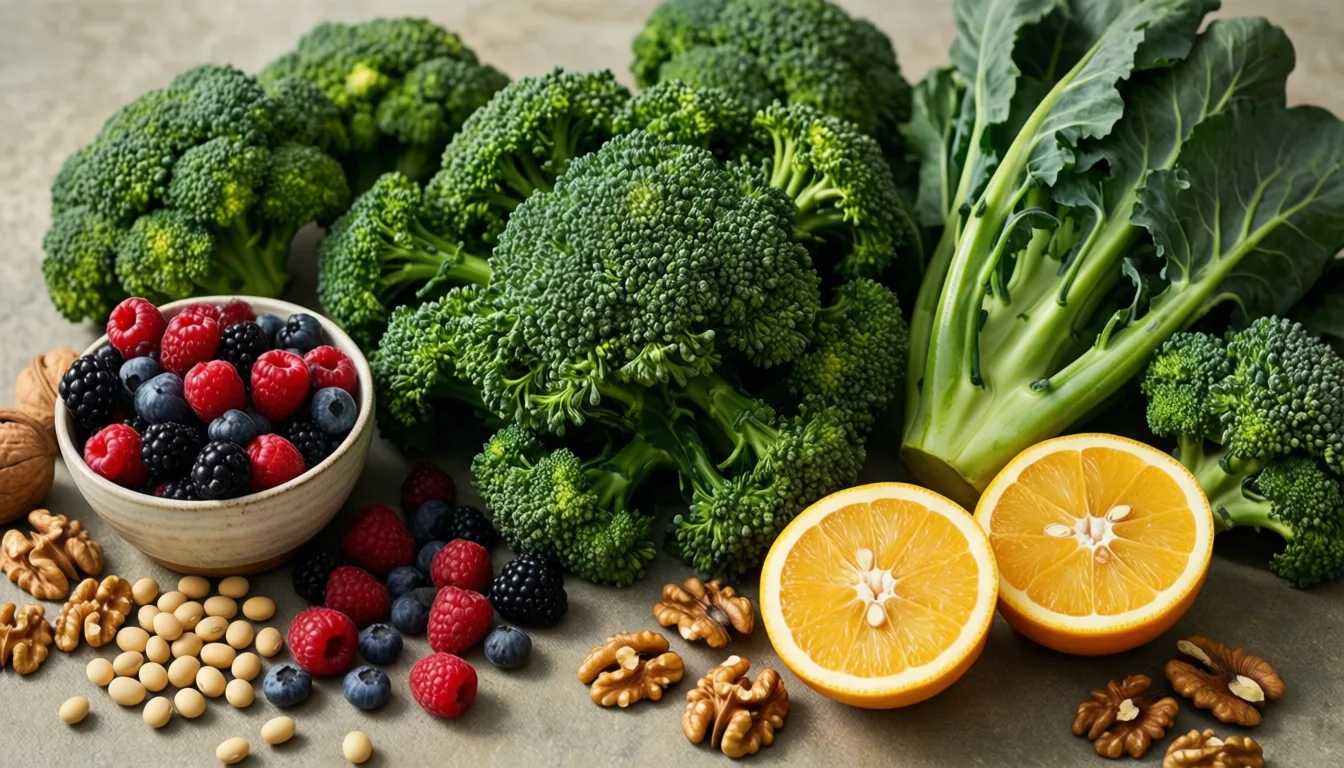
Here's the part that genuinely surprised me. Some of the most interesting health-linked molecules aren't in the food at all — your microbes make them after you eat the food. The review highlights a short list of these bacterial conversions: urolithin A from ellagitannins in berries, pomegranates and walnuts; equol from soy isoflavones; hesperetin from citrus; and sulforaphane availability from cruciferous vegetables like broccoli. Same salad, different gut, different output. Which is wild, and also the catch.
Same salad, different gut, different output. Your microbes are part of the recipe. On the personalization catch
Why "it depends" is the honest answer
The Advances in Nutrition review is explicit that an individual's capacity to produce these health-promoting metabolites from cruciferous vegetables, berries, nuts, citrus and soy isn't universal. Some people host the microbes that do the conversion; some don't. That's a big deal for how we talk about "superfoods." It means a food's benefit isn't just in the food — it's in the conversation between the food and your particular gut.
This is also where I want to slow down. These are review papers synthesizing mechanisms and associations, not a verdict that eating berries will add years to your life. The evidence is moderate and the field is moving. The reviews lay out a credible biological story and a real direction for personalized nutrition; they don't hand us a prescription.
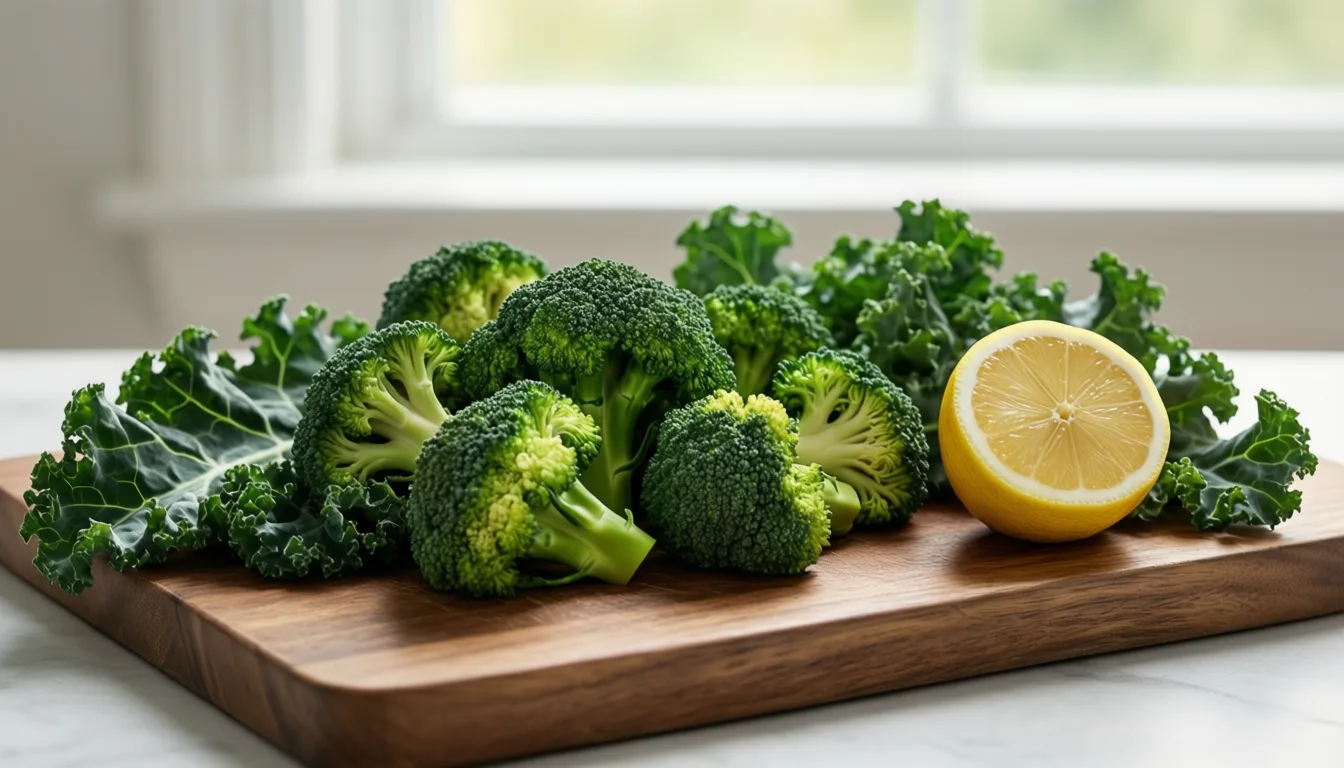
Cruciferous vegetables and citrus show up repeatedly as raw material for microbe-made metabolites.
- Healthspan, not just lifespan. The new reviews focus on the years you feel well, not just the years on the calendar.
- Microbes are a lever, not a cure. Gut bacteria appear to influence barrier integrity, inflammation, nutrient sensing and mitochondria — but the evidence is moderate.
- Plant variety is the move. Cruciferous veg, berries, nuts, citrus and soy keep coming up across both reviews.
- Your gut writes the recipe. Helpful metabolites like urolithin A and equol depend on whether your microbes can make them.
- Personalization is coming, slowly. Microbiota-targeted strategies are a research frontier, not a finished product.
- Talk to a clinician before changing supplements or diet for a health condition.
If you're new to this whole conversation, here's the version I'd text a friend: your gut is a busy little factory, the raw material is mostly plants, and the variety of plants seems to matter more than any single hero food. The science writers I trust aren't telling anyone to overhaul their life this week. They're saying: this lever is real, it's modifiable, and it's worth paying attention to as the next wave of research lands. I'll be here for it, probably eating a walnut.
Frequently asked questions
What is healthspan, and how is it different from lifespan?
Healthspan refers to the stretch of life where you're still feeling good and free from the chronic conditions that accumulate with age. A 2025 review in Advances in Nutrition frames diet and the gut microbiota as two of the most modifiable influences on that window, distinguishing it from overall lifespan, which simply counts years.
What is inflammaging, and how are gut microbes connected to it?
Inflammaging is the slow, smoldering immune response that occurs when the gut lining becomes leaky with age and bits of bacteria slip through into the body. Both reviews cited in the article point to gut microbes as key to keeping that barrier intact, with a healthier microbial community associated with better barrier integrity and less chronic inflammation.
What are phytochemicals, and why do the reviews highlight them?
Phytochemicals are the non-vitamin compounds plants produce for themselves — the color in a blueberry, the bite in arugula, the bitterness in green tea. The Advances in Nutrition review describes them as nudging gut inflammation downward and nurturing a more diverse microbial community.
Why might the same foods produce different health benefits in different people?
Some of the most health-linked molecules aren't present in food directly — gut microbes produce them after you eat. Because not everyone hosts the microbes capable of making these conversions, a food's benefit depends on the interaction between that food and an individual's particular gut community.
How strong is the evidence behind these findings, and should I overhaul my diet based on them?
The article describes the evidence as moderate — plausible mechanisms and growing human data, but not yet a clinical playbook. The reviews are characterized as laying out a credible biological story and a real direction for personalized nutrition, not a prescription for individual action.
Sources
- Promotion of Healthy Aging Through the Nexus of Gut Microbiota and Dietary Phytochemicals. — Advances in nutrition (Bethesda, Md.)
- Gut microbiota and healthy longevity. — Science China. Life sciences
Join the conversation
Comments are moderated and reviewed before they appear. Be constructive — this is health information.
Add your comment