
In This Issue
Longevity
-
 Intrinsic Capacity: The Resilience Framework Quietly Replacing 'Healthy Aging'
A WHO-aligned way of thinking about reserves — and a simpler test of leg power — gives men past sixty practical handles on staying strong, sharp and independent.
Intrinsic Capacity: The Resilience Framework Quietly Replacing 'Healthy Aging'
A WHO-aligned way of thinking about reserves — and a simpler test of leg power — gives men past sixty practical handles on staying strong, sharp and independent.
-
 The Aging Clock Comes of Age — and Sarcopenia Loses Its Footing
Biological-age tests are flooding the longevity scene, but the rulers we use to measure aging — and the muscle loss that comes with it — are getting a hard second look.
The Aging Clock Comes of Age — and Sarcopenia Loses Its Footing
Biological-age tests are flooding the longevity scene, but the rulers we use to measure aging — and the muscle loss that comes with it — are getting a hard second look.
-
 Telomere Length and the Sex-Specific Math of Years Lost
A 445,000-person UK Biobank analysis suggests telomeres track life expectancy differently in men and women — and a transplant study links short, dysfunctional telomeres to frailty. Here is what that actually means for you.
Telomere Length and the Sex-Specific Math of Years Lost
A 445,000-person UK Biobank analysis suggests telomeres track life expectancy differently in men and women — and a transplant study links short, dysfunctional telomeres to frailty. Here is what that actually means for you.

Peptides
-
 Exenatide's Heart Win Isn't Just the Sugar or the Scale
A fresh post hoc dive into EXSCEL says the cardiovascular payoff from a once-weekly GLP-1 isn't fully explained by better A1c, blood pressure, or bodyweight. Something else is doing work.
Exenatide's Heart Win Isn't Just the Sugar or the Scale
A fresh post hoc dive into EXSCEL says the cardiovascular payoff from a once-weekly GLP-1 isn't fully explained by better A1c, blood pressure, or bodyweight. Something else is doing work.
-
 GLP-1s Beyond Weight: Bladder Benefits, Bowel Risks, and the Post-Bariatric Rescue
Semaglutide's clinical footprint is widening fast — new data hint at off-target wins, real-world rescues, and a sharpening list of who should pause before the pen.
GLP-1s Beyond Weight: Bladder Benefits, Bowel Risks, and the Post-Bariatric Rescue
Semaglutide's clinical footprint is widening fast — new data hint at off-target wins, real-world rescues, and a sharpening list of who should pause before the pen.
Wellness Technology
-
 Lasers, Light, and Senescent Skin: What the Evidence Actually Shows
Premium energy-based devices promise to roll back skin aging. A new systematic review asks whether they truly act on the biology of senescence — or just polish the surface.
Lasers, Light, and Senescent Skin: What the Evidence Actually Shows
Premium energy-based devices promise to roll back skin aging. A new systematic review asks whether they truly act on the biology of senescence — or just polish the surface.
-
 The Glucose Monitor Grows Up: How CGM Is Becoming a Whole-Body Information Layer
Once a niche tool for type 1 diabetes, continuous glucose monitors are quietly reshaping how doctors — and families — read the body's signals in real time.
The Glucose Monitor Grows Up: How CGM Is Becoming a Whole-Body Information Layer
Once a niche tool for type 1 diabetes, continuous glucose monitors are quietly reshaping how doctors — and families — read the body's signals in real time.

Intrinsic Capacity: The Resilience Framework Quietly Replacing 'Healthy Aging'
A WHO-aligned way of thinking about reserves — and a simpler test of leg power — gives men past sixty practical handles on staying strong, sharp and independent.
For most of my working life, the phrase doctors reached for was healthy aging — a tidy label that managed to say both everything and nothing. It set a goal without telling you how to measure progress. A quieter idea has been gathering momentum in the geriatric literature, and it is more useful precisely because it is more concrete. The World Health Organization calls it intrinsic capacity: the sum of your physical and mental reserves at any given moment. Pair that with resilience — how well those reserves absorb a shock, whether a bad flu, a fall, or a stretch of bed rest — and you have a framework that treats aging as something you can monitor, not just endure.
A recent narrative review in the Journal of Clinical Medicine pulled together five years of work on these two concepts and argued that, taken together, they form a proactive framework for successful aging rather than a backward-looking tally of disease. Intrinsic capacity, in the WHO formulation the authors lean on, spans five domains: locomotion, vitality, cognition, sensory function, and psychology. Resilience is the dynamic part — your ability to bounce after a stressor lands.
The evidence here is moderate, not settled. The review is narrative, not a meta-analysis; it selected 43 articles from 145 candidates, and most of the underlying work is observational. What it suggests, fairly consistently, is that higher resilience tracks with better health outcomes, fewer chronic diseases, and steadier mental health in adults over sixty. That is a useful signal, not a guarantee, and worth holding at that weight.
- Reserves, not age. Intrinsic capacity measures what you have to spend across five domains — locomotion, vitality, cognition, senses, psychology.
- Resilience is the second half. How quickly you recover from an illness or injury matters as much as your baseline.
- Leg power is a window in. A new study suggests the first ten contractions of a simple fatigue test capture age-related power decline as well as a full lab workup.
- Evidence is moderate. The framework is promising and increasingly mainstream, but most supporting work is observational.
- Action belongs with a clinician. Use these ideas to ask better questions at your next visit, not to self-diagnose.
Why 'reserves' beats 'age'
Chronological age is a blunt instrument. Two men at seventy can sit across the same waiting room with wildly different futures, and the calendar will not tell you which is which. Intrinsic capacity tries to. It asks how far you can walk, how clearly you think, how well you see and hear, how steady your mood, how much vitality you carry into the afternoon. The review argues that folding these assessments into routine geriatric evaluation sharpens clinical decisions and, the authors suggest, supports better outcomes when interventions are targeted accordingly.
Resilience is the companion concept and, to my eye, the more interesting one. Reserves describe what you have on a Tuesday morning. Resilience describes what happens when Wednesday goes sideways — a chest infection, a slip on the stairs, a week in the hospital. Older men with more of it, the literature suggests, lose less ground and regain it faster. That is the part of aging that determines whether independence holds.
Chronological age is a blunt instrument. Two men at seventy can sit in the same waiting room with wildly different futures.

Locomotion is one of five domains in the intrinsic capacity framework — and the one most readily measured outside a clinic.
The leg-power shortcut
Of the five domains, locomotion is the one a reader can most plausibly track between checkups, and within locomotion, muscle power — force multiplied by speed — is the variable that matters most for getting out of a chair, catching a stumble, or climbing a curb with a bag of groceries. The trouble is that the gold-standard measurement, a torque-velocity assessment across many loads and speeds, is a lab procedure. It is time-consuming, hard on the joints, and impractical for the men who would benefit most from being measured.
A study in the Journal of Applied Physiology tested a simpler approach. Researchers compared the full torque-velocity workup to the first ten contractions of a four-minute single-load fatiguing task in young adults, older adults, and very old adults. The two methods tracked each other closely — peak power outputs were strongly correlated, and the estimated age-related decline in power was statistically indistinguishable between protocols in both men and women.
That is the practical headline. A short, single-load test appears to capture the same age- and sex-related differences in peak leg power as a far more elaborate one. The initial ten contractions produced peak power values about 13% lower than the gold standard — a consistent offset, not a distortion of the underlying trend. In plain terms: the shortcut reads a little low, but it reads the same direction and at the same slope.

The simplified test was validated on a knee extension machine in a lab — not a home protocol, but a plausible candidate for clinical and gym settings.
What this does — and doesn't — mean for you
A word of restraint here, because the gap between an interesting study and a personal protocol is wider than the headlines usually admit. The fatigue task was performed on a knee-extension dynamometer under supervised conditions. It is not a do-it-yourself exam, and the paper does not claim otherwise. What it offers is a credible path toward field-friendly assessment — the kind a physical therapist, a sports-medicine clinic, or a well-equipped gym could plausibly adopt without buying a lab.
For the reader at home, the more useful move is to bring the vocabulary to your next appointment. Ask your clinician whether your visit covers the five domains of intrinsic capacity, and whether anyone is tracking leg power — not just grip strength or a timed walk — as a marker of locomotion. Those are reasonable questions in 2026. They were exotic a decade ago.
It is also worth being honest about what neither paper proves. The review does not show that improving an intrinsic-capacity score causes longer life or delayed disability; it shows that the score correlates with both. The power study does not show that a simplified test predicts falls, hospitalizations, or independence; it shows that the test agrees with the harder one. These are foundations, not finished buildings. The framework is gaining ground because it is more measurable than its predecessors, which is a good reason to take it seriously and a poor reason to oversell it.
The long view, after thirty years of watching aging research shift its vocabulary, is that intrinsic capacity is the most useful frame to come along in some time — not because it is novel, but because it is measurable. The work in front of us, the work that will determine whether this framework earns its keep, is to turn its domains into routine numbers and its assessments into tools that fit in a clinic visit rather than a research grant. The leg-power study is one early brick in that wall. Expect more. In the meantime, the practical instruction is the dull one I keep returning to: keep moving, keep lifting something heavy, keep your appointments, and ask better questions when you get there.
Frequently asked questions
What are the five domains of intrinsic capacity?
According to the WHO formulation described in the article, intrinsic capacity spans five domains: locomotion, vitality, cognition, sensory function, and psychology. Together, these domains represent the sum of a person's physical and mental reserves at any given moment.
What is resilience, and why does it matter for aging?
In this framework, resilience is the dynamic part of healthy aging — the ability to bounce back after a stressor such as a bad flu, a fall, or a stretch of bed rest. The article notes that older adults with more resilience tend to lose less ground after such events and regain it faster, which is described as the factor that most determines whether independence holds.
How well does the simplified leg power test match the gold-standard lab measurement?
The study found that peak power outputs from the first ten contractions of a single-load fatiguing task were strongly correlated with the full torque-velocity workup, with a correlation of r = 0.96. The simplified test consistently read about 13% lower than the gold standard, but the article describes this as a consistent offset rather than a distortion of the underlying trend.
Can I do the simplified leg power test on my own at home?
No — the article is explicit that the fatigue task was performed on a knee-extension dynamometer under supervised conditions and is not a do-it-yourself exam. It describes the test as a plausible candidate for clinical and gym settings, such as a physical therapy clinic or a well-equipped gym, rather than a home protocol.
Does the research prove that a higher intrinsic capacity score leads to a longer life?
The article is clear that the review does not show that improving an intrinsic capacity score causes longer life or delayed disability — it shows that the score correlates with both. The article describes the framework as a set of foundations, not finished buildings, and cautions against overselling findings that are still largely observational.
Sources
- Resilience and Intrinsic Capacity in Older Adults: A Review of Recent Literature. — Journal of clinical medicine
- Initial contractions of a single-load fatiguing exercise provide a valid assessment of age-related differences in peak power. — Journal of applied physiology (Bethesda, Md. : 1985)

Beyond HDL-C: The Lipid Profile Hiding Inside Metabolic Syndrome
A new systematic review argues the number on your cholesterol panel misses the molecular story — and a parallel mortality analysis suggests insulin resistance and kidney function deserve a seat at the table.
For decades, the cholesterol panel has carried an almost moral weight. LDL was the villain, HDL the hero, and a single line on a lab report — high-density lipoprotein cholesterol, or HDL-C — became shorthand for the 'good' cholesterol you wanted more of. That story was always simpler than the biology. A new systematic review published in the European Journal of Clinical Investigation makes the case bluntly: in people with metabolic syndrome, the HDL-C number captures only a fraction of what is happening inside the particle itself. And a separate analysis of nearly 9,300 American adults with hyperlipidemia suggests the panel is missing another piece entirely — the way insulin resistance and the kidneys quietly shape long-term risk.
- HDL-C is one number; HDL is a population of particles carrying hundreds of distinct lipid species, and those species look different in metabolic syndrome.
- In metabolic syndrome, HDL particles consistently carry more triacylglycerides and phosphatidylinositol and less of several protective lipid families — a remodeling HDL-C alone cannot see.
- Among adults with hyperlipidemia, lower insulin sensitivity (eGDR) tracked with markedly higher mortality in a large U.S. cohort.
- Kidney function appears to mediate roughly a third of that relationship, hinting that lipids, glucose handling and renal health travel together.
- The evidence is moderate, not definitive. The HDL lipidome review rests on only four eligible studies; the mortality data are observational.
The number on the page, and the particle behind it
HDL is not a molecule. It is a family of particles assembled from proteins and lipids, and its composition shifts with diet, inflammation, glucose handling and disease. Researchers have catalogued more than 280 proteins and over 300 lipid species across the HDL pool, a complexity the standard cholesterol assay was never designed to register. The systematic review by Grao-Cruces and colleagues set out to ask a narrower question: when someone has metabolic syndrome — the cluster of abdominal obesity, high blood pressure, dysglycemia and dyslipidemia — how does the lipid cargo inside their HDL particles differ from that of healthy controls?
After searching MEDLINE, the Cochrane Library and Web of Science under PRISMA guidelines, the authors found only four studies that met their eligibility criteria. That is a small evidence base, and it is worth saying so plainly. But within it, the signal was consistent. HDL particles in metabolic syndrome carried higher levels of triacylglycerides and phosphatidylinositol, alongside lower levels of several lipid families thought to support HDL's anti-inflammatory and cholesterol-efflux functions. In other words, the particle was remodeled — and not in a flattering direction — even when the HDL-C value on the lab report might look unremarkable.

HDL is a population of particles, not a single molecule — and its cargo shifts with metabolic disease.
HDL-C captures only a fraction of the profound alterations occurring within HDL particles. Grao-Cruces et al., European Journal of Clinical Investigation, 2026
Why this reframes the cholesterol conversation
For the reader on a GLP-1, or considering one, the practical takeaway is not that HDL-C is meaningless. It is that the heuristic of 'higher HDL-C equals lower risk' has limits, especially when metabolic syndrome is in the picture. Two people can share the same HDL-C and carry quite different HDL particles — one buoyant and functional, the other triglyceride-enriched and inflammatory. The review's authors argue that the functional properties and molecular components of HDL, rather than HDL-C alone, are likely the key determinants of cardiovascular risk in this population.
None of this changes what your clinician can order tomorrow. Lipidomic profiling is a research tool, not a routine blood test. But it does change how to interpret a 'normal-looking' panel in someone who otherwise carries the markers of metabolic syndrome: central adiposity, elevated fasting glucose, raised blood pressure, high triglycerides. The reassurance offered by a single HDL number, in that context, may be thinner than it appears.
The insulin-resistance signal hiding next door
The second study takes a different route into the same neighborhood. Drawing on the National Health and Nutrition Examination Survey from 2005 to 2018, Zhang and colleagues followed 9,283 adults diagnosed with hyperlipidemia and asked whether a non-invasive marker of insulin resistance — the estimated glucose disposal rate, or eGDR — predicted who lived and who did not. eGDR is calculated from waist circumference, hypertension status and HbA1c, so it is a composite picture of metabolic health rather than a fasting insulin draw.
The gradient was striking. In the lowest eGDR quartile — the most insulin-resistant group — all-cause mortality reached 13.08%, compared with 3.07% in the most insulin-sensitive quartile. Cardiovascular mortality showed a similar spread, 4.06% versus 0.48%. After adjustment, each one-unit increase in eGDR was associated with a 7% lower all-cause mortality risk and a 14% lower cardiovascular mortality risk. The signal was especially pronounced in adults under 60.
The components of eGDR — waist size, blood pressure and HbA1c — are familiar metrics that together sketch insulin resistance.
The kidney in the middle
The most provocative finding is mediational. When the authors tested whether kidney function helped explain the eGDR–mortality link, estimated glomerular filtration rate accounted for roughly 36.5% of the association. That does not mean insulin resistance kills through the kidneys alone, but it does suggest the kidney is a meaningful node in the pathway that connects metabolic dysfunction to long-term outcomes in hyperlipidemic adults. For a reader whose attention has been trained on lipids and glucose, it is a useful nudge: renal function is part of the same story.
Caveats matter here. This is an observational analysis. eGDR is an estimate, not a clamp study. NHANES is a U.S. snapshot with its own demographic skew. And mediation analyses describe statistical relationships, not proven mechanisms. Still, the direction and magnitude of the gradient are hard to ignore, and they line up with a broader literature linking insulin resistance to cardiovascular and renal outcomes.
How strong is the evidence, really
Honest framing: moderate. The HDL lipidome review synthesizes only four eligible studies — a thin foundation, even when the findings rhyme. The NHANES analysis is large and well-conducted but observational, which means it can describe associations but cannot prove that raising eGDR or protecting kidney function would, on its own, lower mortality. Both papers point in the same direction as a wider body of cardiometabolic research, but neither is the final word.
What they do offer, taken together, is a more honest picture of what a cholesterol panel can and cannot tell you. HDL-C is a useful screen, not a verdict. Insulin resistance and kidney function deserve to sit alongside it. And for anyone navigating metabolic syndrome — with or without a GLP-1 in the mix — the most informed conversation with a clinician is probably the one that treats lipids, glucose and renal health as a single system rather than three separate report cards.
HDL-C is a useful screen, not a verdict.
Frequently asked questions
How does HDL in people with metabolic syndrome actually differ from HDL in healthy people?
In metabolic syndrome, HDL particles consistently carry higher levels of triacylglycerides and phosphatidylinositol, alongside lower levels of several lipid families thought to support HDL's anti-inflammatory and cholesterol-efflux functions. The particle is remodeled in a way that HDL-C alone cannot detect, even when the number on a lab report looks unremarkable.
What is eGDR, and why is it relevant to people with high cholesterol?
The estimated glucose disposal rate, or eGDR, is a non-invasive marker of insulin resistance calculated from waist circumference, hypertension status, and HbA1c. In a study of over 9,200 adults with hyperlipidemia, lower eGDR — meaning greater insulin resistance — tracked with markedly higher rates of both all-cause and cardiovascular mortality.
How large was the mortality difference between the most and least insulin-resistant groups in the study?
All-cause mortality in the lowest eGDR quartile reached 13.08%, compared with 3.07% in the most insulin-sensitive quartile. Cardiovascular mortality showed a similar spread, at 4.06% versus 0.48%.
Why does kidney function come up in a discussion about cholesterol and insulin resistance?
In the Zhang study, estimated glomerular filtration rate accounted for roughly 36.5% of the association between eGDR and mortality, suggesting the kidney is a meaningful node in the pathway connecting metabolic dysfunction to long-term outcomes in people with hyperlipidemia. The article describes renal function as part of the same story as lipids and glucose handling.
Can my doctor order a test to see the full lipid cargo inside my HDL particles?
Not as a routine test. The article notes that lipidomic profiling is currently a research tool, not a standard blood test, so it is not something a clinician can order tomorrow. The practical implication is that a normal-looking HDL-C number may offer thinner reassurance than it appears for someone who already carries the markers of metabolic syndrome.
Sources
- The high-density lipoprotein lipidome in metabolic syndrome: A systematic review. — European journal of clinical investigation
- Mediating role of estimated glomerular filtration rate in the association between hyperlipidemia and estimated glucose disposal rate-related mortality: a study in hyperlipidemic individuals. — Nutrition, metabolism, and cardiovascular diseases : NMCD

Exenatide's Heart Win Isn't Just the Sugar or the Scale
A fresh post hoc dive into EXSCEL says the cardiovascular payoff from a once-weekly GLP-1 isn't fully explained by better A1c, blood pressure, or bodyweight. Something else is doing work.
Every lifter who's ever side-eyed a GLP-1 wants the same answer: when these drugs lower cardiovascular risk, are they just doing it by trimming bodyfat and tightening glucose — the stuff a disciplined gym rat already chases — or is there something else going on under the hood? A new post hoc analysis of the EXSCEL trial, published in Cardiovascular Diabetology, takes that question seriously and runs the numbers. The verdict: the conventional risk factors we obsess over explain only a slice of the benefit. The rest is coming from somewhere else.
- Risk-factor math falls short. Modeled changes in A1c, blood pressure, lipids, heart rate, and weight explained only 29% of the MACE reduction and 15% of the all-cause mortality reduction seen with once-weekly exenatide.
- Heart failure looks different. Conventional risk-factor changes accounted for roughly 67% of the hospitalization-for-heart-failure signal — much more of that story is captured by the usual suspects.
- Mortality isn't mediated by the obvious levers. A formal mediation analysis found no clear role for changes in A1c, blood pressure, heart rate, LDL, triglycerides, or weight in explaining the all-cause mortality benefit.
- Class implication, not a personal protocol. The data point to pathways beyond glucose and weight — interesting biology, not a green light to self-prescribe.
EXSCEL was the big cardiovascular outcomes trial for once-weekly exenatide in type 2 diabetes. The post hoc team — Coleman, Holman, Sattar and colleagues — wanted to know how much of the placebo-controlled benefit could be accounted for by the routine risk-factor wins the drug produces: a little less A1c, a little less weight, modest tweaks to blood pressure and lipids. They fed participant-level data over time into a validated type 2 diabetes outcomes model and asked it to predict the relative risk reductions the trial actually observed. If the model nailed the numbers, that would mean the standard risk factors did the heavy lifting. If it undershot, the drug is doing something the model can't see.
It undershot. Hard, in places. For major adverse cardiovascular events, the simulation captured about 29% of the observed relative risk reduction. For all-cause mortality, just 15%. Cardiovascular death came in around 18%, stroke around 29%. In other words, if you told the model exactly how much A1c, weight, BP, and lipids moved on exenatide, it would have predicted a much smaller cardiovascular win than the trial actually delivered.
What the model could explain — and what it couldn't
Two outcomes broke the pattern. Heart-failure hospitalization was a much better fit: about 67% of the observed reduction was attributable to conventional risk-factor changes. That makes a certain mechanical sense — heart failure is exquisitely sensitive to weight, blood pressure, and glycemic load, and the model knows how to score those.
Myocardial infarction went the other direction in a strange way. The model predicted a bigger MI benefit than the trial actually showed — a 200% explanation rate, which is a polite statistical way of saying "we expected more." Translation: based on how much the standard risk factors moved, you'd have bet on a larger drop in heart attacks than EXSCEL delivered. Whatever extra biology is helping with stroke and mortality didn't obviously rescue MI.

The model predicted a bigger MI benefit than EXSCEL observed — and a much smaller MACE benefit. Both gaps point at unexplained biology.
The mediation analysis is the kicker
The authors didn't stop at simulation. They ran a formal Cox-regression mediation analysis on all-cause mortality, asking whether the early changes — baseline to six or twelve months — in HbA1c, blood pressure, heart rate, LDL, triglycerides, or weight actually mediated the survival benefit. The answer, per the published abstract: none of those changes meaningfully mediated the effect. The drug was keeping people alive, and the usual dashboard metrics weren't the reason why.
That's a big claim and the authors land it carefully. "Modest proportions" is the phrase they use. But the through-line is clear: a meaningful share of GLP-1 cardiovascular benefit appears to ride on mechanisms that aren't captured by the labs and vitals we typically track.
The drug was keeping people alive, and the usual dashboard metrics weren't the reason why.
What "something else" might mean
This is where the gym-floor brain wants a clean mechanism. The honest answer is the paper doesn't claim one. What it does is rule out the easy story — that GLP-1s save hearts purely by being expensive metformin-plus-Ozempic-light. If the conventional risk factors only carry 15% of the mortality benefit and 29% of the MACE benefit, the remaining majority is unexplained by this dataset. Inflammation, endothelial function, direct cardiac effects, vascular signaling — pick your hypothesis; the authors don't.
For readers who treat their physiology like a training log, this is the useful reframe: the cardiovascular case for this class isn't downstream of the scale. The two stories — body composition and cardiovascular risk — are partially independent. That changes how you interpret a friend who lost ten pounds on a GLP-1 and concluded the heart benefit must be "just the weight loss." Probably not just.

EXSCEL studied once-weekly exenatide specifically; class-wide extrapolation should be cautious.
The takeaway for the evidence-first lifter
If you've been waiting for the GLP-1 cardiovascular story to either fall apart or get more interesting, this is the more-interesting branch. The benefits in EXSCEL were real, the risk-factor math doesn't fully account for them, and the mortality signal in particular looks decoupled from the metrics most of us would have bet on. That's a strong finding, and it's the kind of result that should push researchers — and reasonable readers — toward asking what else this class is doing to the cardiovascular system.
None of that translates into a personal protocol. These are prescription medications studied in people with type 2 diabetes and cardiovascular risk; the trial population is not the average twenty-eight-year-old chasing a lean bulk. If GLP-1s are on your radar for any reason — metabolic, cardiovascular, or aesthetic — that conversation belongs with a clinician who can weigh your actual risk profile against the evidence. What the EXSCEL post hoc adds is a more honest map of what the evidence currently shows: the benefit is bigger than the obvious levers can explain, and the field has more work to do figuring out why.
Frequently asked questions
How much of exenatide's cardiovascular benefit was actually explained by improvements in blood sugar, weight, and other standard risk factors?
According to the post hoc analysis of the EXSCEL trial, changes in A1c, blood pressure, lipids, heart rate, and weight explained only 29% of the reduction in major adverse cardiovascular events and just 15% of the all-cause mortality reduction. The conventional risk-factor model significantly undershot the benefits the trial actually delivered.
Why did heart failure hospitalization behave differently from the other cardiovascular outcomes in this analysis?
Heart failure hospitalization was a much better fit for the risk-factor model, with conventional risk-factor changes accounting for roughly 67% of the observed reduction. The authors note that heart failure is especially sensitive to weight, blood pressure, and glycemic load — factors the model is well-equipped to score — which explains why more of that outcome's story is captured by the usual metrics.
What happened with myocardial infarction — did the model underestimate that benefit too?
No, myocardial infarction went the opposite direction. The model actually predicted a larger MI benefit than EXSCEL observed, producing what the article describes as a 200% explanation rate. In other words, based on how much the standard risk factors moved, the model would have predicted a bigger drop in heart attacks than the trial delivered.
What did the formal mediation analysis reveal about why exenatide reduced all-cause mortality?
The authors ran a Cox-regression mediation analysis and found that early changes in HbA1c, blood pressure, heart rate, LDL, triglycerides, and weight did not meaningfully mediate the survival benefit. The article's conclusion is direct: the drug was keeping people alive, and the usual dashboard metrics were not the reason why.
Does this research apply to all GLP-1 drugs, and does it say what the 'missing' mechanism actually is?
The article cautions that EXSCEL studied once-weekly exenatide specifically, so class-wide extrapolation should be cautious, and the study was not a head-to-head against semaglutide or tirzepatide. The paper also does not identify the unexplained mechanism — it confirms the gap exists but does not claim to know what fills it, listing inflammation, endothelial function, and direct cardiac effects only as possible hypotheses.
Sources

The Aging Clock Comes of Age — and Sarcopenia Loses Its Footing
Biological-age tests are flooding the longevity scene, but the rulers we use to measure aging — and the muscle loss that comes with it — are getting a hard second look.
So here's the thing nobody told me when I started reading longevity Twitter at 2 a.m.: the tests everyone's posting screenshots of — the ones that tell you your "biological age" is 27 even though your driver's license says 41 — are still kind of a work in progress. Same goes for the diagnosis your grandma might get for losing muscle as she ages. The science is real, the promise is exciting, but two new papers basically say the same thing in different accents: cool tools, please calibrate them.
- Aging clocks are everywhere in nutrition studies — but standard guidelines for how to use them are still catching up, according to a 2025 perspective in Advances in Nutrition.
- Sarcopenia, the medical term for age-related muscle loss, is diagnosed using criteria that lean heavily on expert opinion rather than hard statistical evidence, a Lancet Healthy Longevity appraisal argues.
- That measurement fuzziness has real consequences: wildly different prevalence numbers, inconsistent predictions of who's actually at risk, and a harder time testing whether exercise or nutrition treatments work.
- None of this means the tools are useless — it means the next few years of longevity research are about sharpening them, not selling them.
Wait, what's an aging clock again?
Quick gloss for anyone new here. An "aging clock" is a predictive algorithm — usually built from things like DNA methylation patterns, blood proteins, or metabolic markers — that spits out a number meant to estimate how old your body acts, as opposed to how many birthdays you've had. Think of it like a credit score for your cells: a single tidy number standing in for a lot of complicated underlying data.
Researchers love them because they're a fast way to ask, "Did this diet, supplement, or lifestyle change actually nudge the aging process?" — without waiting decades to count wrinkles or heart attacks. The 2025 perspective from Loughlin and colleagues calls these biomarkers "exciting and promising tools" for nutrition science, which is a pretty warm endorsement from a journal that does not deal in hype.
But the same paper points out that the field has a problem: the number of available clocks is growing fast, while validation efforts and guidelines for how to use them consistently are lagging behind. Different studies pick different clocks. Different clocks give different answers. And without shared rules, it gets hard to compare results across labs — let alone across the consumer tests showing up in your group chat.

Aging clocks turn lab data into a single biological-age estimate — useful, but only as good as the rules behind them.
Different clocks give different answers. Without shared rules, the numbers don't always talk to each other.
Why this matters if you're tracking your own "bio age"
If you've ever spat into a tube and gotten a biological-age readout back, you've basically participated in this same science — just the consumer version. The authors of the Advances in Nutrition paper aren't saying throw it out. They're saying the field needs an initial set of recommendations for consistent implementation, so that what counts as a meaningful change in your number actually means the same thing from study to study.
The honest read for a curious reader: a single biological-age number is a snapshot, not a verdict. It's interesting. It might even motivate good habits. But until the underlying tools are standardized, treat it the way you'd treat a fitness-tracker estimate of your "sleep score" — directionally useful, not a diagnosis.
Now about sarcopenia
Sarcopenia is the medical name for the muscle loss that creeps in with age — less strength, less mass, and eventually less ability to do everyday things like climb stairs or carry groceries. It's a huge deal for healthy aging, because muscle is basically the body's shock absorber against falls, frailty, and a long list of bad outcomes.
Here's where it gets interesting. A 2025 Personal View in The Lancet Healthy Longevity by Coelho-Júnior and Marzetti argues that the official ways doctors currently diagnose sarcopenia are primarily based on expert opinion, without a clear, transparent explanation of how those experts chose which criteria mattered most. In plain English: a group of smart people sat in a room and agreed on the rules, but the math and the hierarchy of evidence behind those rules isn't fully spelled out.
The authors' concern isn't that experts are wrong. It's that opinion-based definitions, when used as if they were settled science, can lead to messy downstream results.

Muscle loss with age is real and serious — the debate is over how to measure it well enough to treat it well.
Why a fuzzy ruler is a real problem
Imagine three different rulers, each labeled "inches," but each cut to a slightly different length. One study says 30% of older adults have sarcopenia. Another says 10%. A trial of a promising exercise program looks like a win with one ruler and a wash with another. That's not a hypothetical — it's basically what the Lancet Healthy Longevity appraisal describes when it points to considerable variability in reported prevalence rates and inconsistent findings about who's actually at risk.
The authors suggest the field needs a revised approach that mixes expert judgment with hierarchical evidence and more advanced statistical methods — and that asks a deeper question: are we even measuring the right thing when we measure "muscle failure" in older adults? Not exactly a comforting takeaway, but a refreshingly honest one.
It's not that experts are wrong. It's that an opinion-shaped ruler still needs to be calibrated.
The connecting thread
Read these two papers back-to-back and a pattern jumps out: longevity science is going through its measurement-tools moment. Aging clocks need standardized rules of use. Sarcopenia needs a definition built on more than consensus. Both are moderate, careful critiques from inside the field — not from skeptics shouting from the sidelines.
For readers, the practical move is less about doing something new and more about loosening your grip on the numbers. Your biological-age readout is a conversation starter, not a verdict. A sarcopenia diagnosis — or a near-miss on one — depends on which set of criteria your clinician is using. Both are reasons to ask thoughtful questions, not to panic-buy supplements.

The fundamentals — movement, protein, sleep, connection — don't depend on which ruler the science settles on.
- Aging clocks are promising but pre-standardized — treat a single biological-age number as a snapshot, not a diagnosis.
- Sarcopenia's official definitions are under critique for relying too heavily on expert consensus.
- Measurement fuzziness ripples outward into prevalence stats, risk predictions, and treatment trials.
- The fundamentals don't change: regular movement, adequate protein, and a clinician who knows your history are still the strongest cards in your hand.
Frequently asked questions
What is an aging clock, and why do researchers use them?
An aging clock is a predictive algorithm — built from things like DNA methylation patterns, blood proteins, or metabolic markers — that estimates how old your body acts rather than how many birthdays you've had. Researchers use them as a fast way to ask whether a diet, supplement, or lifestyle change actually nudged the aging process, without waiting decades to observe outcomes like wrinkles or heart attacks.
If I've already taken a biological age test, should I trust the number?
A single biological-age number is described in the article as a snapshot, not a verdict — directionally useful in the way a fitness tracker's sleep score might be, but not a diagnosis. Until the underlying tools are standardized across studies, a meaningful change in your number may not mean the same thing from one test to the next.
What is sarcopenia, and why does its diagnosis vary so much?
Sarcopenia is the medical term for the muscle loss that comes with age, resulting in less strength, less mass, and eventually reduced ability to do everyday tasks like climbing stairs or carrying groceries. Current diagnostic criteria are primarily based on expert opinion rather than hard statistical evidence, which leads to considerable variability in reported prevalence rates and inconsistent findings about who is actually at risk.
Why does an opinion-based definition of sarcopenia cause real-world problems?
When opinion-shaped definitions are used as if they were settled science, one study may report that 30% of older adults have sarcopenia while another reports 10%, and a promising exercise trial can look like a win with one set of criteria and a wash with another. The article compares this to three rulers all labeled 'inches' but each cut to a slightly different length.
What do both papers say the longevity field needs to do next?
Both papers call for better calibration of existing tools rather than abandonment of them: the aging-clock paper calls for an initial set of recommendations for consistent implementation across nutrition trials, while the sarcopenia paper argues for a revised approach that mixes expert judgment with hierarchical evidence and more advanced statistical methods.
Sources
- Perspective: Biomarkers of Aging in Human Nutrition Research-A Focus on Applications, Challenges, and Opportunities. — Advances in nutrition (Bethesda, Md.)
- Capturing what counts in muscle failure: a critical appraisal of the current operational models of sarcopenia. — The lancet. Healthy longevity

Lasers, Light, and Senescent Skin: What the Evidence Actually Shows
Premium energy-based devices promise to roll back skin aging. A new systematic review asks whether they truly act on the biology of senescence — or just polish the surface.
The pitch for premium aesthetic devices has quietly shifted. Where clinics once sold smoother skin, the new vocabulary borrows from longevity science: senescence, signaling, cellular rejuvenation. The implication for the executive paying four figures a session is that lasers, radiofrequency, ultrasound, and light therapies aren't just resurfacing the face — they're reaching the biology underneath it. A 2025 systematic review in Lasers in Surgery and Medicine set out to test whether that story holds up.
- The review is small. Only 23 original studies met inclusion criteria — a thin base for sweeping claims.
- The direction is encouraging. Across lasers, light-based, and other energy devices, treatments trended toward reducing markers of cellular senescence.
- The mechanism proposed is hormesis — a controlled stress that nudges aged cells back toward healthier signaling.
- Clinical ≠ cellular. Looking better in the mirror doesn't automatically mean senescent cells were cleared.
- Spend accordingly. Treat these devices as plausible, not proven, longevity interventions.
Cellular senescence is one of the load-bearing ideas in modern aging biology. As cells accumulate damage, some stop dividing but refuse to die, lingering in tissue and leaking inflammatory signals that degrade the cells around them. Skin shows this vividly: thinner dermis, slower repair, a dulled response to everyday insults. If an aesthetic device could reduce that burden, it would be doing something categorically different from a filler or a peel.
That is the question a team led by Kelm and Murphrey took to the literature. Following PRISMA methodology, they searched PubMed, EBSCO, and Web of Science for studies evaluating whether lasers, radiofrequency, ultrasound, photobiomodulation, photodynamic therapy, and intense pulsed light produced measurable effects on senescence at the cellular level. Twenty-three original articles met the bar — six on lasers, eleven on light-based modalities, and six on other energy devices.
What the review actually found
The headline conclusion is cautiously positive. Across the included work, these technologies demonstrated a positive effect on cellular senescence, alongside the clinical improvements in age-related skin changes that have made them a fixture of premium dermatology. The authors also note that the devices appeared to minimize neocarcinogenesis — that is, they didn't seem to be seeding new cancers while remodeling tissue, a question worth asking of any treatment that deliberately injures skin to provoke repair.
The mechanism the reviewers propose is hormesis: a controlled, sub-injurious stress that triggers adaptive repair pathways. Heat, light, or mechanical energy delivered at the right dose may push aged cells to either re-enter healthier signaling states or be cleared, restoring the molecular conversations that keep young skin resilient. The authors frame this as a converging fundamental mechanism promoting skin anti-fragility and longevity.
It is an elegant story. It is also, by the authors' own admission, built on thin ground.
Literature evaluating the impact of lasers and energy-based devices on cellular senescence is scarce. Kelm & Murphrey, Lasers in Surgery and Medicine, 2025
Energy-based devices span lasers, radiofrequency, ultrasound, and light — each delivering a different kind of controlled stress.
Why the evidence rating is moderate, not strong
Three things should temper enthusiasm. First, the size of the evidence base. Twenty-three studies across six distinct technology categories means most individual modalities are supported by only a handful of papers — sometimes in vitro, sometimes in animal models, sometimes in small human cohorts. A systematic review is only as strong as what it can find, and the authors are explicit that the literature in this area is scarce.
Second, the gap between clinical outcomes and cellular ones. A laser that smooths fine lines is doing something to the tissue — but the visible result can be driven by collagen remodeling, water content, or pigment changes without any meaningful shift in senescent-cell burden. The studies that look at both, the ones that matter most, are still a minority of the field.
Third, heterogeneity. The review groups together devices with very different physics: ablative and non-ablative lasers, monopolar and bipolar radiofrequency, focused ultrasound, red and near-infrared photobiomodulation. The dose, depth, and biological target vary enormously. A positive signal in aggregate does not mean every device in every clinic is delivering the same biological effect.

Treat device sessions like any optimization decision: define the outcome, set a review date, and don't extrapolate from a marketing claim.
How to read this if you're already booking sessions
For readers already spending on energy-based treatments — or weighing whether to start — the practical translation is straightforward. The biology is plausible. The early signal points in the right direction. The case that you are buying genuine cellular rejuvenation, rather than excellent surface remodeling, is not yet made.
That changes how to evaluate a provider's pitch. Claims that a device "reverses cellular aging" or "clears senescent cells" outrun what 23 mixed studies can support. Claims that a device produces measurable clinical improvement in age-related skin changes, with an emerging cellular rationale, are honest. The difference is worth noticing before you commit to a package.
It also reframes the longevity-stack question. If hormesis really is the shared mechanism, energy-based devices sit in the same conceptual family as exercise, sauna, and cold exposure — controlled stressors that ask the body to adapt. None of those need to displace the others, and none of them, on current evidence, are a substitute for sleep, sun protection, and the basics that drive most of how skin ages in the first place.
The most useful thing the Kelm and Murphrey review does is name the question out loud. For years, energy-based devices have been sold on appearance and bought on aspiration. Asking whether they touch the biology of aging — and being honest that the answer is maybe, and we need more work — is how this category earns its place in a serious longevity conversation. The next few years of research will decide whether the senescence story is a real mechanism or a premium marketing frame. For now, the responsible posture is interested, patient, and unwilling to pay for certainty that isn't there yet.
Frequently asked questions
How many studies did the 2025 systematic review include, and what types of devices did they cover?
The review included 23 original studies — six on lasers, eleven on light-based modalities, and six on other energy devices. Technologies examined included lasers, radiofrequency, ultrasound, photobiomodulation, photodynamic therapy, and intense pulsed light.
What is the mechanism the reviewers propose to explain how these devices might affect cellular senescence?
The reviewers propose hormesis — a controlled, sub-injurious stress that triggers adaptive repair pathways. Heat, light, or mechanical energy delivered at the right dose may push aged cells to re-enter healthier signaling states or be cleared, restoring the molecular activity that keeps younger skin resilient.
Does visible skin improvement after a treatment mean senescent cells were actually reduced?
Not necessarily. A laser that smooths fine lines can produce visible results through collagen remodeling, changes in water content, or pigment shifts without any meaningful shift in senescent-cell burden. Studies that measure both clinical and cellular outcomes are still a minority of the field.
Why do the authors rate the evidence as moderate rather than strong?
Three factors temper the findings: the evidence base is thin, with only 23 studies spread across six distinct technology categories; the gap between clinical and cellular outcomes means looking better doesn't confirm senescence was reduced; and the review groups together devices with very different physics, so a positive aggregate signal doesn't mean every device produces the same biological effect.
What does the review say about the cancer risk of using devices that deliberately injure skin to provoke repair?
The authors note that the devices appeared to minimize neocarcinogenesis, meaning they did not seem to be seeding new cancers while remodeling tissue — a question the reviewers considered worth raising given that these treatments deliberately stress the skin.
Sources
- The Impact of Lasers and Energy-Based Devices on Cellular Senescence: A Systematic Review. — Lasers in surgery and medicine

Telomere Length and the Sex-Specific Math of Years Lost
A 445,000-person UK Biobank analysis suggests telomeres track life expectancy differently in men and women — and a transplant study links short, dysfunctional telomeres to frailty. Here is what that actually means for you.
For two decades, telomeres — the protective caps at the ends of our chromosomes — have been sold to us as a kind of cellular odometer. Pay a few hundred dollars, mail in a cheek swab, and learn how fast you are aging. The pitch is seductive, and the science underneath it is real. But the science has also been quietly maturing, and the latest evidence suggests the odometer reads differently depending on whether you are a man or a woman, whether you have gone through menopause, and what other aging processes are unfolding in your body at the same time.
Two new studies, published this year in independent journals and using very different methods, sharpen the picture considerably. The first is a prospective analysis of 445,399 UK Biobank participants — 203,731 men and 241,668 women — that asked a deceptively simple question: when leukocyte telomere length goes up by one standard deviation, what happens to a person's individualized expected years of life lost? The second is a nested case-control study in lung transplant recipients that probed which biological signatures of aging actually track with frailty, the clinical syndrome of vulnerability that decides who recovers well from a stressor and who does not.
Read together, they tell a more nuanced story than the consumer telomere-testing industry typically offers. Telomere length is not destiny. It is also not noise. It is a signal whose meaning depends on context — and for women over fifty-five, that context turns out to matter a great deal.
The sex-specific math
In the UK Biobank cohort, each standard-deviation increase in leukocyte telomere length was associated with a 0.965-year decrease in expected years of life lost among men. Longer telomeres, fewer years lost — the relationship most of us already imagine when we hear the word "telomere."
Among women, the headline number ran the other way. Across the full female cohort, each standard-deviation increase in telomere length was linked to a 0.102-year increase in expected years of life lost. That is a small number, and the confidence interval is tight, but the direction alone is enough to give pause to anyone who has been quoted a telomere score by a wellness clinic.
Then comes the part that matters most to this magazine's readers. When the investigators split the female cohort by menopausal status, the picture reorganized itself. Postmenopausal women showed a protective association similar to men's — a 0.387-year decrease in expected years of life lost per standard-deviation increase in telomere length. Premenopausal women showed the opposite, with a 0.705-year increase. The authors interpret this as evidence that hormones are quietly shaping telomere dynamics, and that lumping women together as a single biological group obscures what is actually going on.

The biology of aging does not read the same way at fifty as it did at thirty-five — and telomere science is finally catching up to that fact.
Telomere length is not destiny. It is also not noise. It is a signal whose meaning depends on context.
What telomeres do, briefly
A short refresher, because the mechanism matters. Every time one of your cells divides, the very tips of its chromosomes get a little shorter. Telomeres are the buffer at those tips — repetitive DNA sequences that absorb the loss so the genes inside stay intact. When telomeres get critically short, cells stop dividing or die, and tissues lose their ability to repair themselves. That is one biological theory of why we age.
The complication is that telomere length is influenced by everything from inherited variants to chronic inflammation to hormonal milieu. Estrogen, in particular, is thought to support telomerase, the enzyme that maintains telomere length. The UK Biobank authors argue their findings — protective effects emerging only after menopause in women — are consistent with a hormonal modifier they cannot fully untangle in a single observational dataset. Their conclusion is appropriately cautious: telomere research and clinical interpretation should be done with sex and menopausal status in mind, not in spite of them.
Frailty, anemia, and the limits of a single number
The second study takes a different angle. Researchers compared 43 lung transplant recipients who were frail before and after transplant with 43 nonfrail matched controls, measuring epigenetic aging clocks (Horvath and GrimAge), telomere length, cytokine profiles, and hemoglobin. They wanted to know which markers actually track with the clinical reality of frailty.
The result was striking for what it ruled out. Epigenetic clocks correlated with chronological age but not with frailty. Chronic inflammation, measured by plasma cytokines, was not the dominant signal either. What did track with frailty in this cohort was telomere dysfunction together with anemia of chronic disease — two relatively unfashionable markers that have been around in clinical medicine for decades.
This is a small, specialized cohort, and the authors are careful to frame it as hypothesis-generating rather than definitive. But it is a useful corrective. The most expensive aging biomarkers on the market right now — the epigenetic clocks — did not light up frailty here. The boring blood tests did.

A standard complete blood count — the kind your primary care doctor already orders — captures anemia, one of the two signals most tightly linked to frailty in the transplant cohort.
What this means for the woman reading this
The honest translation goes like this. If you are postmenopausal, the new UK Biobank data suggests longer telomeres are modestly associated with fewer expected years of life lost — a pattern that finally resembles the one we have long assumed applied to everyone. If you are premenopausal, the same data suggests the relationship is more complicated, and the simple "longer is better" framing does not hold.
None of this means you should rush to order a commercial telomere test. The effect sizes are real but small at the individual level, the assays vary in quality, and a single number does not tell you what to do next. What it does mean is that if a clinic offers to interpret your telomere result without asking about your menopausal status, they are working from an outdated model.
The transplant study adds a second piece of practical wisdom. If you are worried about how well you will weather a future stressor — surgery, illness, a fall — the markers most worth paying attention to may be ones your primary care doctor already measures. Anemia, in particular, is treatable, and addressing it has a far clearer evidence base than any aging-clock intervention currently on the market.
- Sex and menopause matter. In a 445,399-person UK Biobank analysis, longer leukocyte telomeres were associated with fewer expected years of life lost in men and in postmenopausal women — but with a small increase in premenopausal women.
- The effect sizes are modest. Per standard-deviation change, we are talking about fractions of a year, not decades. Useful for population science, limited for personal forecasting.
- Hormones likely play a role. The authors interpret the menopause-status reversal as evidence that estrogen and related hormones shape telomere dynamics.
- Frailty has its own fingerprint. In a lung-transplant case-control study, telomere dysfunction and anemia tracked with frailty; expensive epigenetic clocks did not.
- Commercial telomere tests are not diagnostic. A single number cannot account for your hormonal status, your hemoglobin, or your overall clinical picture.
- Talk to your clinician. If aging biomarkers are on your mind, start with the blood work you can already get — and bring these studies to the conversation.
The temptation in longevity coverage is to package every new finding as either a breakthrough or a debunking. This is neither. It is the slower, more useful kind of progress — a maturing field learning to ask better questions about who its subjects actually are. For women over fifty-five, that is overdue, and welcome.
Frequently asked questions
Do longer telomeres mean the same thing for men and women?
No. In the UK Biobank analysis, each standard-deviation increase in telomere length was associated with roughly 0.965 fewer expected years of life lost in men, but with 0.102 more expected years of life lost across the full female cohort. The article describes this as evidence that lumping women together as a single biological group obscures what is actually going on.
Does menopausal status change how telomere length relates to longevity in women?
Yes, significantly. When researchers split the female cohort by menopausal status, postmenopausal women showed a protective association of 0.387 fewer expected years of life lost per standard-deviation increase in telomere length, while premenopausal women showed a 0.705-year increase in expected years lost. The authors interpret this as evidence that hormones are quietly shaping telomere dynamics.
Why might estrogen influence telomere length?
According to the article, estrogen is thought to support telomerase, the enzyme responsible for maintaining telomere length. The UK Biobank authors view the finding that protective effects emerge only after menopause in women as consistent with this hormonal modifier, though they note they cannot fully untangle it from a single observational dataset.
Did epigenetic aging clocks reliably predict frailty in the transplant study?
No. In the nested case-control study of lung transplant recipients, epigenetic clocks correlated with chronological age but not with frailty, and chronic inflammation measured by plasma cytokines was not the dominant signal either. What did track with frailty was telomere dysfunction together with anemia of chronic disease.
Should I order a commercial telomere test to understand my aging?
The article advises against rushing to do so, noting that effect sizes are real but small at the individual level, assay quality varies, and a single number does not tell you what to do next. It also warns that any clinic interpreting a telomere result without asking about menopausal status is working from an outdated model.
Sources
- Sex-Specific Association of Telomere Length with Individualized Expected Years of Life Lost among 203,731 Males and 241,668 Females. — Biomedical and environmental sciences : BES
- Frailty in lung transplant recipients is associated with anemia and telomere dysfunction but independent of epigenetic age. — American journal of transplantation : official journal of the American Society of Transplantation and the American Society of Transplant Surgeons

GLP-1s Beyond Weight: Bladder Benefits, Bowel Risks, and the Post-Bariatric Rescue
Semaglutide's clinical footprint is widening fast — new data hint at off-target wins, real-world rescues, and a sharpening list of who should pause before the pen.
Semaglutide started as a diabetes drug, became a weight-loss phenomenon, and is now quietly auditioning for a half-dozen other jobs. The 2025 literature is sketching a more complicated portrait than the cover stories suggest: a bladder benefit no one predicted, a real-world rescue for bariatric patients whose weight crept back, a refractory autoimmune case that surprised its clinicians — and, in a 59-year-old with a long surgical history, a small bowel obstruction that arrived shortly after the first doses. If you're 40 and considering a GLP-1 for body composition, the relevant question isn't whether these drugs work. It's where the map is still being drawn.
- The evidence is moderate, not settled. Most new signals come from retrospective cohorts and case reports, not randomized trials.
- A propensity-matched bladder study found GLP-1 users had lower rates of urinary retention and UTI after Botox for overactive bladder.
- Real-world data support semaglutide as a rescue for weight regain after bariatric surgery, outperforming liraglutide on weight loss.
- A bowel obstruction case report flags caution for anyone with prior abdominal surgery or known adhesions.
- An early dermatology case hints at anti-fibrotic effects — interesting, but a single patient is not a signal.
- Bottom line for a busy 40-year-old: the upside is real, the unknowns are real, and your surgical history matters more than the marketing implies.
The bladder finding nobody was looking for
Overactive bladder isn't a topic most performance-oriented men spend time on, but the study is interesting because of what it implies about GLP-1 biology rather than urology specifically. Researchers used the TriNetX database to assemble a retrospective cohort of non-diabetic adults with overactive bladder who received onabotulinumtoxinA — bladder Botox — and compared those on a concurrent GLP-1 to those not. After 1:1 propensity matching on age, race, ethnicity, hypertension and BMI, they had 992 patients per arm.
The GLP-1 group had a lower incidence of urinary retention (4.9% vs. 8.6%) and urinary tract infection (8.8% vs. 13.3%), with corresponding improvements on one-year Kaplan-Meier curves. Antispasmodic initiation rates were statistically similar. The authors are careful — this is a database study, not a trial — and they frame GLP-1s as a potential adjunct worth further investigation, not a treatment. Still, the matching tried to take obesity off the table, which suggests something beyond weight loss is in play.
Bladder Botox is a niche use case — but the matching method made it a useful test of GLP-1 effects untangled from weight loss.
The rescue after the rescue
Roughly a quarter to a third of bariatric surgery patients regain meaningful weight or never reach their target loss in the first place. The relevant 2025 paper followed 953 patients who had bariatric surgery between 2015 and 2020; 122 of them eventually started a GLP-1 because of regain or suboptimal response. At the point of starting the drug — roughly 42 months post-op — the cohort had lost about 19% of body weight on average, and 82% had regained more than a fifth of what they'd lost.
The split between drugs was instructive. Liraglutide (the daily injection) produced a maximum additional weight loss of about 4.7%; semaglutide produced about 8.3%, with a statistically significant edge. Combined surgical and pharmacological loss reached roughly 22% on liraglutide and 26% on semaglutide. The proportion classified as suboptimal responders fell from 52% to 31%. None of this is a randomized trial — it's a single-center retrospective — but for a real-world patient population, it suggests that post-bariatric regain has a credible pharmacological off-ramp.
The interesting question isn't whether GLP-1s work. It's where the map is still being drawn.
The risk signal worth taking seriously
GLP-1s slow gastric emptying. That's part of how they work and most of why people feel full. In an otherwise healthy abdomen, the slowdown is a feature. In an abdomen that's been operated on multiple times — and that may carry adhesions stitching loops of bowel into less-than-ideal anatomy — the same slowdown becomes a plausible trigger for obstruction.
A 2025 case report describes a 59-year-old woman with an extensive abdominal surgical history who developed small bowel obstruction shortly after starting semaglutide. One case is not a rate, and the authors don't pretend otherwise. What they argue is narrow and reasonable: given the mechanism and the rising prescription volume, clinicians should think carefully before prescribing GLP-1s to patients with significant prior abdominal surgery or known adhesions. For readers in their 40s with an appendectomy scar and nothing else, this isn't the warning. For readers with multiple laparotomies behind them, it is.

A single case report isn't a rate — but it sharpens the question of who shouldn't be on a GLP-1 without a closer look at their surgical history.
The case that hints at something else entirely
The fourth piece is the most speculative and the easiest to over-read. Dermatologists reported a 14-year-old patient with congenital linear scleroderma — a rare fibrosing skin disease — whose condition had progressed despite tocilizumab, mycophenolate and methotrexate. After starting a GLP-1, the team reported improved mobility and decreased skin hardening, and speculated that anti-fibrotic and anti-inflammatory effects of GLP-1 receptor agonists could be relevant.
This is one patient. It is not evidence that GLP-1s treat scleroderma, and it would be irresponsible to imply that the same biology will redirect aging, joint stiffness, or any of the other things people are quietly hoping the drugs might do. What it does is add to a small but growing list of off-target effects that, taken together, suggest GLP-1 receptors are doing more than appetite regulation. Whether any of it survives proper trials is the question of the next five years.
How to read a year of GLP-1 news
The pattern across these four papers is the pattern across the whole field right now: real signals at the edges, generated by retrospective databases and individual cases, racing ahead of the randomized trials that will eventually sort signal from noise. That's not a reason to dismiss them. It is a reason to calibrate language. A propensity-matched cohort of nearly 2,000 patients is a stronger basis for hypothesis than a single case report, and both are weaker than a properly powered trial. The honest read is that GLP-1s look like a more interesting class of drugs than the weight-loss conversation has admitted, and that the list of people who should pause before starting one is also slightly longer than the marketing implies.
For the reader optimizing energy, body composition and testosterone, the practical takeaway is narrower than the headlines. The metabolic case is real. The off-target signals are interesting but not yet actionable. The risk signal in post-surgical abdomens deserves a direct conversation with a clinician who has your chart in front of them. None of this is a verdict. It's a map being drawn in real time, and the smart move is to read it as such.
- Strongest evidence: post-bariatric rescue with semaglutide outperforming liraglutide in a 953-patient real-world cohort.
- Intriguing but preliminary: reduced urinary adverse events after bladder Botox in a propensity-matched non-diabetic cohort.
- Hypothesis-generating only: a single scleroderma case suggesting anti-fibrotic activity.
- Risk to flag with your clinician: small bowel obstruction in patients with significant prior abdominal surgery.
Frequently asked questions
What did researchers find about GLP-1s and overactive bladder treatment?
A propensity-matched study of 992 patients per arm found that GLP-1 users who received bladder Botox for overactive bladder had lower rates of urinary retention (4.9% vs. 8.6%) and urinary tract infection (8.8% vs. 13.3%) compared to non-users. The authors frame GLP-1s as a potential adjunct worth further investigation, not a treatment, and note the matching tried to account for obesity, suggesting something beyond weight loss may be involved.
Can semaglutide help people who regain weight after bariatric surgery?
Real-world data from 122 post-bariatric patients who started a GLP-1 due to regain or suboptimal results showed semaglutide produced about 8.3% additional weight loss versus roughly 4.7% for liraglutide, a statistically significant difference. The proportion classified as suboptimal responders fell from 52% to 31%. This was a single-center retrospective study, not a randomized trial.
Who should be especially cautious about the bowel obstruction risk linked to GLP-1s?
The article highlights a 2025 case report of a 59-year-old woman with an extensive abdominal surgical history who developed a small bowel obstruction shortly after starting semaglutide. Because GLP-1s slow gastric emptying, the article explains this slowdown can become a plausible trigger for obstruction in an abdomen with adhesions from prior surgeries. The authors suggest clinicians should think carefully before prescribing GLP-1s to patients with significant prior abdominal surgery or known adhesions.
What does the scleroderma case report actually prove about GLP-1s?
A single case report described a 14-year-old patient with congenital linear scleroderma whose mobility improved and skin hardening decreased after starting a GLP-1, leading the treating dermatologists to speculate about possible anti-fibrotic and anti-inflammatory effects. The article is explicit that one patient is not evidence that GLP-1s treat scleroderma, and that it would be irresponsible to imply the same biology applies broadly. It does add to a small list of off-target effects that suggest GLP-1 receptors do more than regulate appetite.
How reliable is the current evidence for these newly reported GLP-1 benefits?
The article states the evidence is moderate, not settled, with most new signals coming from retrospective cohorts and case reports rather than randomized trials. The bladder and fibrosis findings are described as interesting but not prescribing-grade, while the post-bariatric rescue data are characterized as a credible real-world signal. Whether any of these effects survive proper trials is, according to the article, the question of the next five years.
Sources
- Beyond Glycemic Control: Concurrent GLP-1 Receptor Agonist Use Is Associated with Reduced Urinary Adverse Events Following OnabotulinumtoxinA Treatment in Non-Diabetic Adults with Overactive Bladder. — Toxins
- Treatment of obesity with GLP-1 receptor agonist after bariatric surgery: Real-world evidence. — Medicina clinica
- Weighing the Risks: Small Bowel Obstruction Associated With Semaglutide Use in the Postoperative Abdomen. — Cureus
- The Therapeutic Effects of Semaglutide in Congenital Linear Scleroderma. — Cureus
The Glucose Monitor Grows Up: How CGM Is Becoming a Whole-Body Information Layer
Once a niche tool for type 1 diabetes, continuous glucose monitors are quietly reshaping how doctors — and families — read the body's signals in real time.
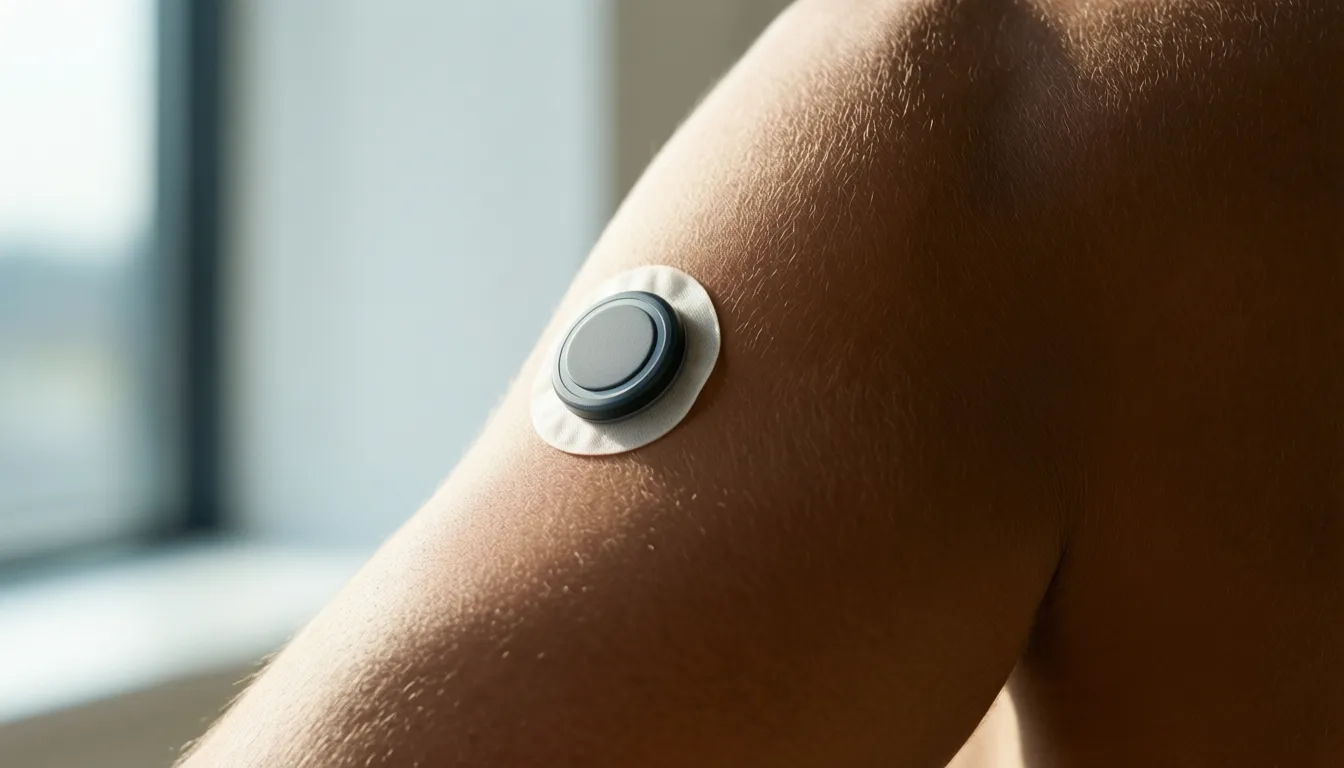
The small white disc on the back of the arm has become one of the most quietly radical pieces of wearable hardware in modern medicine. For two decades, continuous glucose monitors — CGMs — were the domain of type 1 diabetes, a lifeline for people whose pancreases had stopped negotiating with their bloodstream. Then came the smartphone integrations, the over-the-counter approvals, the biohackers strapping them on to audit oat-milk lattes. Now the device is entering a third, more interesting act: it is becoming an information layer. Not a glucose meter so much as a continuous, granular feed of how a body is actually behaving — usable by clinicians treating type 2 diabetes without insulin, and, in at least one documented case, by a family member watching a crisis unfold in real time.
The looksmaxing crowd has long treated CGMs as a metabolic mirror — a way to see which foods spike, which workouts flatten the curve, which late nights blunt insulin sensitivity the next morning. That use case is real, but the more consequential story right now is clinical. A new retrospective analysis of Optum's Clinformatics Data Mart — a large U.S. claims and lab database — looked at adults with type 2 diabetes who were managing the condition without insulin, relying instead on the standard non-insulin toolkit: metformin, sulfonylureas, SGLT2 inhibitors, DPP-4 inhibitors, and GLP-1 receptor agonists. The question was simple: does adding a CGM to those medications change anything measurable?
The answer, according to the study published in Endocrinology, Diabetes & Metabolism, is yes — modestly but consistently. Across 52,394 CGM-naïve adults, CGM users saw an A1c reduction roughly 0.45 percentage points greater than non-users over the follow-up period. After adjusting for covariates, CGM users posted larger A1c drops than non-users across every medication class examined. That is not a miracle cure, and it is not a randomized trial. It is observational data from real-world claims, which means selection effects are baked in — the kind of patient who gets a CGM may also be the kind of patient who tracks, who shows up, who tweaks. The authors are upfront about that.
Why a tenth of a percent matters
In glycemic terms, a sustained A1c reduction of nearly half a percentage point is not trivial. Endocrinologists generally treat fractions of a percent as clinically meaningful when scaled across millions of patients and years of exposure. What the Optum analysis implies is that the value of a CGM in type 2 diabetes may not be the sensor itself but the behavioral feedback loop it creates — a person sees the curve after the rice bowl, sees the flat line after the walk, and adjusts. The medication does the pharmacology; the sensor closes the loop.
That framing matters because CGMs were, until recently, prescribed mainly for people on intensive insulin regimens, where the cost of a missed low is acute. Extending them upstream — to people whose diabetes is being held by oral agents and GLP-1s — is a bet that information itself is therapeutic. The new data offers moderate support for that bet. It does not yet tell us which patients benefit most, how long the effect persists once the novelty fades, or whether the same gains would survive a randomized design.
The medication does the pharmacology. The sensor closes the loop.

The behavioral feedback loop — see the curve, change the meal — may be where CGM earns its keep in non-insulin type 2 care.
The case that reframes the device
If the claims data tells the population story, a single case report tells the more startling one. Writing in Cureus, clinicians described a 68-year-old woman with type 2 diabetes, borderline personality disorder, and major depressive disorder who attempted suicide by injecting 90 units of lispro insulin and ingesting 12 lorazepam tablets. Her daughter was watching her mother's glucose remotely through the CGM's share function. When the curve dropped sharply, the daughter intervened. The patient reached the emergency department, received intravenous dextrose, was admitted to the ICU, and survived. At one-month follow-up, she was under psychiatric care and denied ongoing suicidal ideation.
The case report is, by definition, a single data point. It cannot tell us how often CGM alerts catch insulin overdoses, whether the share-function design saves lives at scale, or how to weigh privacy against safety in psychiatric care. What it does is reframe what the device is. A glucose monitor that a family member can watch in real time is not just a metabolic tool — it is a passive safety net for a specific high-risk population: people who have access to insulin as both medicine and means.

The CGM's share function — designed for parents of children with type 1 diabetes — is finding unanticipated uses in adult psychiatric care.
What the evidence does — and doesn't — say
Read together, the two papers sketch a device in transition. The claims analysis is large and real-world but observational; the case report is vivid but singular. Neither is a randomized trial, and neither should be read as proof that everyone with type 2 diabetes — or everyone with a psychiatric diagnosis — should be wearing a sensor. The honest read is that CGM is accumulating moderate evidence for uses beyond its original indication, and that the next few years will likely bring trials designed to test those uses directly.
For the optimization-minded reader, the takeaway is more cultural than clinical. The CGM is becoming infrastructure. It is the first widely worn sensor that gives a continuous, medically meaningful readout of a metabolic process most of us never see. Whether that readout improves your physique, your sleep, or your A1c depends on what you and your clinician do with it. The device, increasingly, is just the feed.
- Modest, real-world A1c gains. In a large claims analysis, CGM users with non-insulin-treated type 2 diabetes saw roughly a 0.45-percentage-point greater A1c reduction than non-users.
- Observational, not randomized. The Optum data cannot prove causation; selection effects likely play a role, and randomized trials are still needed.
- Beyond glycemia. A case report describes a family member using CGM share data to detect a hypoglycemic crash from an insulin overdose in time to intervene.
- Information, not instruction. The clinical benefit appears to come from the behavioral feedback loop — seeing the curve and adjusting — paired with appropriate medication.
- Talk to a clinician. CGM decisions, especially in patients with psychiatric comorbidities or complex regimens, belong in a conversation with a treating physician.
Frequently asked questions
How much did CGM use reduce A1c compared to not using one, according to the claims study?
In the Optum Clinformatics Data Mart analysis of 52,394 adults, CGM users with non-insulin-treated type 2 diabetes saw an A1c reduction roughly 0.45 percentage points greater than non-users over the follow-up period. After adjusting for covariates, CGM users posted larger A1c drops than non-users across every medication class examined.
Why can't the Optum study prove that CGMs directly caused the A1c improvement?
The study is observational data drawn from real-world insurance claims, not a randomized trial, which means selection effects are built in. The authors acknowledge that the type of patient who gets a CGM may also be the type who tracks their health closely, shows up to appointments, and makes adjustments — factors that could independently explain better outcomes.
What non-insulin medications were the patients in the study taking?
The patients were managing type 2 diabetes with metformin, sulfonylureas, SGLT2 inhibitors, DPP-4 inhibitors, and GLP-1 receptor agonists — five drug classes in total.
How did a CGM play a role in the emergency case described in the article?
A 68-year-old woman with type 2 diabetes attempted suicide by injecting insulin and ingesting lorazepam tablets; her daughter was monitoring her mother's glucose remotely through the CGM's share function and intervened when the readings dropped sharply. The patient reached the emergency department, received treatment, and survived.
What was the CGM share function originally designed for, and how is it now being used differently?
The share function was designed for parents monitoring children with type 1 diabetes. The case report described in the article illustrates it finding an unanticipated use in adult psychiatric care, where a family member used it to detect a dangerous hypoglycemic crisis in real time.
Sources
- Exploring Combined Use of Continuous Glucose Monitoring and Anti-Diabetes Medications on Glycaemic Control for People With Type 2 Diabetes Not Using Insulin. — Endocrinology, diabetes & metabolism
- Utility of Continuous Glucose Monitoring in the Management of a Suicide Attempt in a Patient With Comorbid Type 2 Diabetes and Major Depressive Disorder. — Cureus