
In This Issue
Metabolic Health
-
 The Oral GLP-1 Era Begins: What Orforglipron's Phase 3 Means for the Future of Obesity Care
A new phase 3 trial shows a once-daily pill can deliver meaningful weight loss without a needle — and that small detail could change who actually gets treated.
The Oral GLP-1 Era Begins: What Orforglipron's Phase 3 Means for the Future of Obesity Care
A new phase 3 trial shows a once-daily pill can deliver meaningful weight loss without a needle — and that small detail could change who actually gets treated.
-
 The Quiet Number on Your Bloodwork That May Predict More Than You Think
A new NHANES analysis suggests a simple index pulled from a routine CBC — the Systemic Immune-Inflammatory Index — tracks with mortality risk in metabolic syndrome. Here's what it is, and what it isn't.
The Quiet Number on Your Bloodwork That May Predict More Than You Think
A new NHANES analysis suggests a simple index pulled from a routine CBC — the Systemic Immune-Inflammatory Index — tracks with mortality risk in metabolic syndrome. Here's what it is, and what it isn't.

The Oral GLP-1 Era Begins: What Orforglipron's Phase 3 Means for the Future of Obesity Care
A new phase 3 trial shows a once-daily pill can deliver meaningful weight loss without a needle — and that small detail could change who actually gets treated.
If you have ever tried to remember anything at 6:14 a.m. while a toddler climbs your shoulder like a small, sticky mountaineer, you already understand why the size of a medication matters less than whether you can actually take it. For the millions of adults navigating obesity, the GLP-1 revolution of the last few years has been genuinely promising — and genuinely hard to access. The drugs work. They are also injectable, expensive, and often out of stock. So when a once-daily pill in the same drug family clears a large phase 3 trial, it is worth paying attention, calmly and without the usual miracle-cure noise.
The drug is called orforglipron, and unlike the injectable GLP-1s you have heard about, it is a small-molecule, non-peptide compound — meaning it can survive the trip through your stomach and be taken as a tablet, not a shot. In the ATTAIN-1 phase 3 trial published in the New England Journal of Medicine, researchers randomized 3,127 adults with obesity but without diabetes to one of three orforglipron doses or placebo, alongside diet and physical activity guidance, for 72 weeks.
The results are what clinicians would call clinically meaningful, and what tired parents might call finally, a reasonable headline. At the highest dose, average body weight fell by 11.2% over 72 weeks, compared with 2.1% on placebo. More than half of participants on the 36-mg dose lost at least 10% of their starting weight, and roughly one in five lost 20% or more. Waist circumference, systolic blood pressure, triglycerides, and non-HDL cholesterol all improved as well.
Why a pill is not just a smaller shot
For a new parent juggling pediatrician visits, pumping schedules, and the existential dread of the diaper aisle, the practical difference between a weekly injection and a daily tablet is not trivial. Injectables require refrigeration, pharmacy coordination, and a willingness to use a needle on yourself in a bathroom while someone bangs on the door asking for snacks. A pill is, well, a pill.
That matters for adherence — the unglamorous variable that quietly determines whether any medication works in real life. It also matters for supply. Peptide injectables are complex to manufacture; small-molecule pills generally are not. If orforglipron reaches the market, the bottleneck that has shaped the GLP-1 era so far — chronic shortages, pharmacy lotteries, compounded knockoffs of uncertain quality — could ease considerably. That is not a promise, but it is a reasonable expectation grounded in how these supply chains actually work.

Daily oral dosing fits into the rhythms of family life in a way weekly injections often don't.
What the numbers actually mean
A 11.2% average reduction over 72 weeks puts oral orforglipron in the conversation with injectable GLP-1s, though not quite at the top of the class — semaglutide and tirzepatide injectables have posted larger average reductions in their own trials. The honest read: orforglipron looks like a strong, accessible option, not a replacement for every existing therapy. For someone whose main obstacle to treatment has been needles, cost, or supply, that distinction is the whole story.
The trial also tracked cardiometabolic markers that matter beyond the scale. Waist circumference, systolic blood pressure, triglycerides, and non-HDL cholesterol all improved significantly in the orforglipron groups. These are the levers that move long-term risk for heart disease and stroke, and they tend to track with — but are not identical to — weight loss itself.
The honest read: orforglipron looks like a strong, accessible option, not a replacement for every existing therapy.
The realistic caveats
A few things to hold in mind before this becomes the next thing your group chat wants you to ask your doctor about. First, ATTAIN-1 enrolled adults with obesity but without diabetes; separate trials are evaluating orforglipron in people with type 2 diabetes and other conditions. Second, like other GLP-1s, the most common side effects in the class are gastrointestinal — nausea, vomiting, diarrhea, constipation — and tend to be most pronounced during dose escalation. Third, 72 weeks is a long trial by clinical standards but a short one by life standards; durability beyond two years, and what happens when people stop taking it, are open questions for any GLP-1.
And the structural caveat: a pill is easier to manufacture and ship than an injectable, but easier does not automatically mean cheaper at the pharmacy counter. Pricing, insurance coverage, and prior-authorization gymnastics will shape who actually gets this drug far more than the molecule itself does.

Whether a GLP-1 is right for you is a conversation, not a headline.
If you are wondering whether this is for you
Here is the kind, realistic version: obesity treatment is medical care, not a moral project, and the right next step is a conversation with a clinician who knows your history. If you have been waiting for an option that does not involve injections, this trial suggests one is plausibly on the way — pending regulatory review, real-world data, and the slow choreography of getting a new drug onto formularies. None of that requires you to do anything different today, except maybe drink some water and go to bed twenty minutes earlier. Both are free.
- Oral, once-daily. Orforglipron is a small-molecule GLP-1 receptor agonist taken as a pill, not an injection.
- Meaningful weight loss. In a 72-week phase 3 trial, the 36-mg dose produced an average 11.2% reduction in body weight vs. 2.1% on placebo.
- Cardiometabolic markers improved. Waist circumference, blood pressure, triglycerides, and non-HDL cholesterol all moved in the right direction.
- Access could shift. Pills are typically easier to manufacture and distribute than peptide injectables — potentially easing the supply bottleneck.
- Caveats remain. GI side effects are common to the class; long-term durability and real-world pricing are still open questions.
- Talk to a clinician. Whether — and when — a GLP-1 fits into your care is a personal medical decision.
Frequently asked questions
How is orforglipron different from injectable GLP-1 drugs?
Orforglipron is a small-molecule, non-peptide compound taken as a once-daily tablet rather than an injection. Because it can survive digestion, it does not require refrigeration, pharmacy coordination, or needles. Pills are also generally less complex to manufacture than peptide injectables, which could help ease the supply shortages that have defined the GLP-1 era so far.
What weight loss results did the ATTAIN-1 trial show?
In the 72-week trial of 3,127 adults, participants on the highest 36-mg dose lost an average of 11.2% of their body weight, compared with 2.1% on placebo. More than half of those on the 36-mg dose lost at least 10% of their starting weight, and roughly one in five lost 20% or more.
Did orforglipron improve anything beyond the number on the scale?
Yes — waist circumference, systolic blood pressure, triglycerides, and non-HDL cholesterol all improved significantly in the orforglipron groups. The article notes these are the markers that move long-term risk for heart disease and stroke.
What are the most common side effects?
Like other GLP-1 drugs, orforglipron's most common side effects are gastrointestinal — nausea, vomiting, diarrhea, and constipation. These tend to be most pronounced during the dose-escalation phase.
Does orforglipron perform as well as injectable GLP-1s like semaglutide or tirzepatide?
Not quite — the article notes that injectable semaglutide and tirzepatide have posted larger average weight reductions in their own trials. Orforglipron is described as a strong, accessible option rather than a replacement for every existing therapy, particularly valuable for people whose main barrier has been needles, cost, or supply.
Sources
- Orforglipron, an Oral Small-Molecule GLP-1 Receptor Agonist for Obesity Treatment. — The New England journal of medicine

The Quiet Number on Your Bloodwork That May Predict More Than You Think
A new NHANES analysis suggests a simple index pulled from a routine CBC — the Systemic Immune-Inflammatory Index — tracks with mortality risk in metabolic syndrome. Here's what it is, and what it isn't.
Here's the thing about being a woman in her forties trying to make sense of her own bloodwork: you get a PDF with thirty numbers on it, your doctor says "everything looks fine," and you walk out wondering whether "fine" actually means anything. So when a study comes along claiming that a number you already have — buried in the CBC you got at your last physical — might quietly predict your long-term risk if you've got metabolic syndrome, it earns a second look. Skeptical, but a second look.
The number in question is called the Systemic Immune-Inflammatory Index, or SII. It's not exotic. It's calculated from three values on a standard complete blood count — platelets, neutrophils, and lymphocytes — multiplied and divided in a specific way. No special panel, no boutique lab, no $400 out-of-pocket test. If you've had a CBC in the last year, the raw ingredients are already sitting in your patient portal.
What's new is a prospective cohort analysis published in Clinics that pulled data from more than 6,000 participants in NHANES, the long-running U.S. health survey, between 2013 and 2018. The researchers looked specifically at women, asked whether SII tracked with metabolic syndrome — that cluster of belly fat, blood pressure, blood sugar and lipid problems that haunts a lot of us in midlife — and then followed people forward to see who died, and of what.
What the study actually found
Two things, mainly. First, women with metabolic syndrome had higher SII scores than women without it — suggesting that the same inflammatory machinery driving the syndrome shows up, faintly, on a routine blood count. Second, and more interesting, higher SII levels were associated with a higher risk of dying from any cause among women with metabolic syndrome, in what the authors describe as a nonlinear, "J-shaped" dose-response curve. Translation: very low isn't necessarily safest, but climbing into the high end of the range tracked with worse outcomes.
For cardiovascular death specifically, the signal was clearest in women aged 60 and older with metabolic syndrome. That's a narrower finding than the headlines might suggest, and it matters. This isn't a universal "high SII equals heart attack" story. It's a more careful one about a specific population in which an inflammatory pattern seems to carry weight.

The ingredients for SII are already on most standard CBC reports — platelets, neutrophils, lymphocytes.
It's not a new test. It's a new way of reading a test you've probably already had.
Why inflammation, why now
Metabolic syndrome has always been a bit of a Russian-nesting-doll diagnosis: high waist circumference, elevated fasting glucose, raised blood pressure, off-kilter triglycerides and HDL. Pick any three and you're in. What ties them together under the hood is a low-grade, chronic inflammatory state — the kind that doesn't make you feel sick but quietly nudges arteries, pancreatic beta cells, and liver tissue toward dysfunction over decades.
SII is a crude proxy for that inflammatory tone. Neutrophils tend to rise with acute and chronic inflammation. Lymphocytes often fall with chronic stress states. Platelets get pulled into the story because of their role in vascular inflammation and clotting. Multiply the first two, divide by the third, and you get a single number that — imperfectly — reflects the body's inflammatory balance. The authors argue that systemic inflammation captured by SII may contribute to the development and progression of metabolic syndrome and its complications, though they're careful to say the mechanisms still need to be worked out.
What this is not
This is the part where, if we were friends getting coffee, I'd put my hand on your arm. It's one observational study. A well-designed one, with a big sample and a respected dataset, but observational. It can show that high SII travels with worse outcomes; it can't prove SII causes them, and it can't tell you that lowering your SII number will lower your risk. The authors themselves call for more research into clinical utility and risk stratification — meaning even they aren't ready to hand this to your primary care doctor as a decision tool.
It also doesn't come with a target. There's no validated "healthy SII" cutoff for women in midlife, no Goldilocks zone you can aim for. The J-shaped curve hints that very low values aren't automatically reassuring either, which is exactly why this isn't a number to start chasing on your own.
So what do you do with this
Honestly? Mostly the things you already know are good for metabolic health — and which, not coincidentally, also lower inflammation. Sleep that isn't a rumor. Strength training a couple of times a week. A diet skewed toward fiber, fish, and plants. Managing the stress load that, in our forties, has a way of compounding like credit card interest. None of these are sexy, and none of them depend on whether the SII story holds up over the next decade of research.
What's worth carrying away is smaller, and maybe more useful: the CBC sitting in your patient portal contains more information than the "normal/abnormal" flags suggest. The numbers on it aren't just there to rule out anemia or infection. They're a faint but real signal of how your immune system is humming along — and in metabolic syndrome, that hum appears to matter.

The three CBC values that go into SII are already on most reports — usually under "differential."
- What SII is: A simple index calculated from platelets, neutrophils, and lymphocytes on a routine CBC — no special test required.
- What the study showed: In a NHANES cohort of U.S. women, higher SII was associated with metabolic syndrome and with higher all-cause mortality risk among those who had it.
- Where the cardiovascular signal was strongest: Women aged 60 and older with metabolic syndrome.
- What it isn't: Proof that SII causes anything, or that lowering the number lowers risk. There's no validated target range.
- What to do: Don't chase a number. Do ask your clinician how your CBC fits with the rest of your metabolic picture, and keep doing the boring, effective basics.
- Evidence strength: Moderate — one large prospective cohort, biologically plausible, but early in clinical translation.
The promise of a near-free biomarker is genuinely appealing in a wellness landscape full of $300 panels and continuous monitors. But the honest read of this study is that SII is an interesting lead, not a verdict — a quiet hint that the inflammation under metabolic syndrome leaves fingerprints on tests we're already running. Worth watching. Worth asking about. Not yet worth rearranging your life around.
Frequently asked questions
What is the Systemic Immune-Inflammatory Index (SII) and how is it calculated?
SII is calculated from three values already found on a standard complete blood count — platelets, neutrophils, and lymphocytes — multiplied and divided in a specific way. No special panel or additional test is required; if you have had a CBC in the last year, the raw ingredients are already in your patient portal.
What did the study actually find about SII and women with metabolic syndrome?
The study found two main things: women with metabolic syndrome had higher SII scores than women without it, and higher SII levels were associated with a higher risk of dying from any cause among women who had metabolic syndrome. The relationship followed a nonlinear, 'J-shaped' dose-response curve, meaning very low values are not automatically the safest outcome either.
For which group of women was the cardiovascular death signal the strongest?
The cardiovascular death signal was clearest in women aged 60 and older who had metabolic syndrome. The article notes this is a narrower finding than broad headlines might suggest and is not a universal statement about all women.
Should I ask my doctor to treat or lower my SII number?
According to the article, no — there is no guideline that supports treating an SII number, and there is no validated 'healthy SII' cutoff for women in midlife. What is reasonable is asking your clinician whether your CBC shows any pattern of chronic inflammation and whether your platelet, neutrophil, and lymphocyte counts are in the range they would expect for you.
Does this study prove that a high SII causes worse health outcomes?
No. The article describes it as one observational study, meaning it can show that high SII travels with worse outcomes but cannot prove SII causes them, and cannot show that lowering the number lowers risk. The authors themselves call for more research into clinical utility before this could serve as a decision tool for clinicians.
Sources
Tirzepatide's Expanding Frontier: From Pediatric Diabetes to Liver Mitochondria
A landmark phase 3 trial puts the dual-receptor agonist on the map for adolescents with type 2 diabetes — and new mechanistic work suggests its effects reach all the way down to the mitochondrion.
For three years, tirzepatide has been narrated almost entirely through the lens of the bathroom scale. That story is getting longer. In the last twelve months the dual GIP/GLP-1 receptor agonist has begun appearing in trial registries and electron-microscopy panels that have nothing to do with waist circumference and everything to do with the organs underneath it — pancreatic beta cells, hepatocytes, and now the mitochondria inside them. Two new papers, one a rigorous pediatric phase 3 and the other a mechanistic mouse study, suggest the drug's second act is about organ-level repair.
- Pediatric proof. A randomized, double-blind, placebo-controlled phase 3 Lancet trial (SURPASS-PEDS) establishes tirzepatide's efficacy and safety in adolescents with type 2 diabetes — a population whose treatment options have been notoriously thin.
- Mechanism, not just outcome. In an obese-diabetic-menopausal mouse model, tirzepatide preserved hepatic architecture and intact mitochondrial morphology where untreated animals showed swelling and disorganized cristae.
- The pathways have names. The liver work points to PINK1/PRKN-mediated mitophagy and SIRT3/NRF2 redox modulation as the molecular fingerprints of tirzepatide's protective effect.
- Translation caveat. The pediatric data are human and randomized; the liver-repair data are preclinical and rodent. Treat them as two different rungs on the evidence ladder.
- This is reporting, not a protocol. Dosing, eligibility, and risk profile are decisions for a clinician — particularly in adolescents.
The pediatric gap, finally addressed
Youth-onset type 2 diabetes has long been the awkward cousin of the adult disease — more aggressive, less responsive to the same drugs, and tested in far fewer trials. Until recently, metformin and basal insulin did most of the work, and they did it imperfectly. SURPASS-PEDS, published in The Lancet, is the kind of trial this corner of medicine has been waiting for: 39 sites across eight countries, participants aged 10 to under 18 with inadequately controlled type 2 diabetes, randomized 1:1:1 to tirzepatide 5 mg, tirzepatide 10 mg, or placebo, with everyone masked through the 30-week double-blind phase before the open-label extension began. The primary endpoint was the change in HbA1c from baseline to week 30 — the same benchmark used in the adult SURPASS program, deliberately so.
The headline finding, reported by Hannon and colleagues, is that tirzepatide outperformed placebo on glycemic control in adolescents whose disease had resisted metformin, basal insulin, or both. That sentence is short because the implication is large: a dual-incretin agonist now has high-quality randomized evidence in a population where prescribing has historically been a process of extrapolation and hope.
The drug's second act is not about the scale. It is about what is happening inside the cells the scale never sees. PinnacleLife analysis
Youth-onset type 2 diabetes has historically been studied in adults and prescribed for adolescents by extrapolation. SURPASS-PEDS narrows that gap.
Below the surface: what tirzepatide appears to do to liver mitochondria
The second paper sits one floor down, at the level of the organelle. Metabolic dysfunction-associated steatotic liver disease (MASLD) is the quiet companion of obesity and type 2 diabetes, and it gets quieter still — and worse — after menopause. To model that triple hit, Marcondes-de-Castro and colleagues fed female C57BL/6 mice a high-fat, high-sucrose diet for 12 weeks and performed bilateral ovariectomies in half of them to simulate menopause. They then gave tirzepatide daily for four weeks and looked at the livers under electron microscopy and through gene- and protein-expression panels.
The contrast was structural. Untreated obese-diabetic and obese-diabetic-ovariectomized mice showed the textbook signs of metabolic stress: hepatocellular fat accumulation, mitochondrial swelling, and disorganized cristae. Tirzepatide-treated mice did not. Their hepatic architecture was preserved and their mitochondria looked intact — the kind of ultrastructural rescue that is hard to fake on an electron micrograph.
The molecular signature behind that rescue is the part biohackers will want to bookmark. According to the same analysis, tirzepatide downregulated autophagy genes (Ulk3, Atg5, Atg7) and the mitophagy regulators PINK1 and PRKN, while upregulating mitochondrial biogenesis markers (Ppargc1a, Tfam), antioxidant enzymes (SOD2, GR, GPX, CAT), and the redox modulators Sirt3 and Nrf2. ER-stress markers Atf4 and Ddit3 came down too. The narrative the authors offer is not 'the drug stripped the fat'; it is 'the drug recalibrated the organelle.'
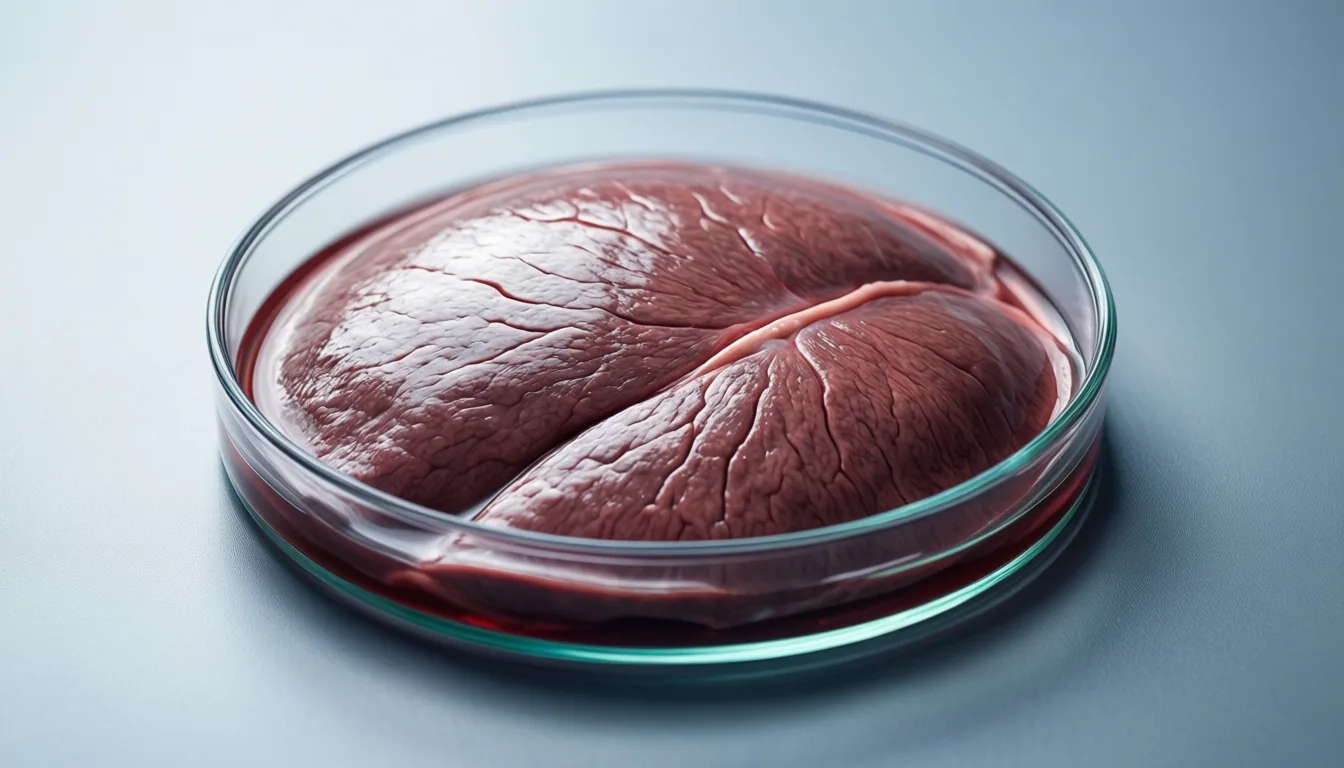
The mechanistic work was conducted in mice. Translation to human liver biology is plausible but not established.
Reading the two papers together
It is tempting to braid these findings into a single story — adolescents get better glycemic control because tirzepatide is quietly repairing their hepatocytes — but the evidence does not yet support that arc. SURPASS-PEDS is a human randomized trial measuring HbA1c. The Tissue & Cell paper is a mouse study measuring cristae morphology and gene expression. They sit on different rungs of the evidence ladder, and the gap between them is exactly where overstatement usually creeps in.
What the two papers do, taken together, is shift the center of gravity of the tirzepatide conversation. The pediatric trial answers a clinical question that has been open for years. The mechanistic mouse work sketches a plausible molecular story for the organ-level effects clinicians have been describing anecdotally. Neither paper says tirzepatide treats MASLD in humans. Neither says the pediatric benefit is mediated by mitophagy. Both say something quieter and more durable: the dual-receptor era is producing rigorous, paired data — outcomes in people, pathways in tissue — at a pace the field has not previously enjoyed.
What to watch next
Three things are worth tracking. First, the open-label extension of SURPASS-PEDS, in which all participants received tirzepatide for an additional 22 weeks — durability and safety data in adolescents are the missing piece. Second, whether the PINK1/PRKN and SIRT3/NRF2 signals identified in the mouse liver work reproduce in human hepatocyte models or post-treatment biopsies. Third, the broader question the two papers implicitly raise: how much of tirzepatide's clinical benefit is downstream of weight loss, and how much is direct organ-level recalibration that would persist even if weight did not change much? That question will define the next five years of incretin research, and it is no longer a hypothetical one.
Outcomes in people, pathways in tissue — at a pace the field has not previously enjoyed.
Frequently asked questions
What is SURPASS-PEDS, and what did it find?
SURPASS-PEDS is a randomized, double-blind, placebo-controlled phase 3 trial published in The Lancet, conducted across 39 sites in eight countries, enrolling participants aged 10 to under 18 with inadequately controlled type 2 diabetes. The trial found that tirzepatide outperformed placebo on glycemic control — measured by change in HbA1c from baseline to week 30 — in adolescents whose disease had resisted metformin, basal insulin, or both.
What were the main treatment options for adolescents with type 2 diabetes before this trial?
Until recently, metformin and basal insulin did most of the work in treating youth-onset type 2 diabetes, and they did it imperfectly. Prescribing for this population has historically been a process of extrapolation from adult trials rather than evidence generated in adolescents directly.
What did the mouse study find about tirzepatide's effect on the liver?
In a mouse model combining obesity, diabetes, and surgically simulated menopause, untreated animals showed hepatocellular fat accumulation, mitochondrial swelling, and disorganized cristae, while tirzepatide-treated mice had preserved hepatic architecture and intact mitochondria. The molecular analysis pointed to PINK1/PRKN-mediated mitophagy and SIRT3/NRF2 redox modulation as part of the drug's protective effect.
Do the liver findings from the mouse study apply to people?
According to the article, the mechanistic work was conducted in mice and translation to human liver biology is described as plausible but not yet established. Randomized human trials in MASLD populations are identified as what will ultimately be needed to answer that question.
What should readers watch for as this research continues?
The article highlights two things worth tracking: durability and safety data from the open-label extension of SURPASS-PEDS, in which all participants received tirzepatide for an additional 22 weeks after the blinded phase, and whether the PINK1/PRKN and SIRT3/NRF2 signals identified in the mouse liver work can be reproduced in human biology.
Sources
- Efficacy and safety of tirzepatide in children and adolescents with type 2 diabetes (SURPASS-PEDS): a randomised, double-blind, placebo-controlled, phase 3 trial. — Lancet (London, England)
- Tirzepatide enhances liver structural integrity by promoting mitochondrial dynamics and mitophagy via PINK1/PRKN and SIRT3/NRF2 pathways in an obese-diabetic-menopausal mouse model. — Tissue & cell