Tirzepatide's Expanding Frontier: From Pediatric Diabetes to Liver Mitochondria
A landmark phase 3 trial puts the dual-receptor agonist on the map for adolescents with type 2 diabetes — and new mechanistic work suggests its effects reach all the way down to the mitochondrion.
For three years, tirzepatide has been narrated almost entirely through the lens of the bathroom scale. That story is getting longer. In the last twelve months the dual GIP/GLP-1 receptor agonist has begun appearing in trial registries and electron-microscopy panels that have nothing to do with waist circumference and everything to do with the organs underneath it — pancreatic beta cells, hepatocytes, and now the mitochondria inside them. Two new papers, one a rigorous pediatric phase 3 and the other a mechanistic mouse study, suggest the drug's second act is about organ-level repair.
- Pediatric proof. A randomized, double-blind, placebo-controlled phase 3 Lancet trial (SURPASS-PEDS) establishes tirzepatide's efficacy and safety in adolescents with type 2 diabetes — a population whose treatment options have been notoriously thin.
- Mechanism, not just outcome. In an obese-diabetic-menopausal mouse model, tirzepatide preserved hepatic architecture and intact mitochondrial morphology where untreated animals showed swelling and disorganized cristae.
- The pathways have names. The liver work points to PINK1/PRKN-mediated mitophagy and SIRT3/NRF2 redox modulation as the molecular fingerprints of tirzepatide's protective effect.
- Translation caveat. The pediatric data are human and randomized; the liver-repair data are preclinical and rodent. Treat them as two different rungs on the evidence ladder.
- This is reporting, not a protocol. Dosing, eligibility, and risk profile are decisions for a clinician — particularly in adolescents.
The pediatric gap, finally addressed
Youth-onset type 2 diabetes has long been the awkward cousin of the adult disease — more aggressive, less responsive to the same drugs, and tested in far fewer trials. Until recently, metformin and basal insulin did most of the work, and they did it imperfectly. SURPASS-PEDS, published in The Lancet, is the kind of trial this corner of medicine has been waiting for: 39 sites across eight countries, participants aged 10 to under 18 with inadequately controlled type 2 diabetes, randomized 1:1:1 to tirzepatide 5 mg, tirzepatide 10 mg, or placebo, with everyone masked through the 30-week double-blind phase before the open-label extension began. The primary endpoint was the change in HbA1c from baseline to week 30 — the same benchmark used in the adult SURPASS program, deliberately so.
The headline finding, reported by Hannon and colleagues, is that tirzepatide outperformed placebo on glycemic control in adolescents whose disease had resisted metformin, basal insulin, or both. That sentence is short because the implication is large: a dual-incretin agonist now has high-quality randomized evidence in a population where prescribing has historically been a process of extrapolation and hope.
The drug's second act is not about the scale. It is about what is happening inside the cells the scale never sees. PinnacleLife analysis
Youth-onset type 2 diabetes has historically been studied in adults and prescribed for adolescents by extrapolation. SURPASS-PEDS narrows that gap.
Below the surface: what tirzepatide appears to do to liver mitochondria
The second paper sits one floor down, at the level of the organelle. Metabolic dysfunction-associated steatotic liver disease (MASLD) is the quiet companion of obesity and type 2 diabetes, and it gets quieter still — and worse — after menopause. To model that triple hit, Marcondes-de-Castro and colleagues fed female C57BL/6 mice a high-fat, high-sucrose diet for 12 weeks and performed bilateral ovariectomies in half of them to simulate menopause. They then gave tirzepatide daily for four weeks and looked at the livers under electron microscopy and through gene- and protein-expression panels.
The contrast was structural. Untreated obese-diabetic and obese-diabetic-ovariectomized mice showed the textbook signs of metabolic stress: hepatocellular fat accumulation, mitochondrial swelling, and disorganized cristae. Tirzepatide-treated mice did not. Their hepatic architecture was preserved and their mitochondria looked intact — the kind of ultrastructural rescue that is hard to fake on an electron micrograph.
The molecular signature behind that rescue is the part biohackers will want to bookmark. According to the same analysis, tirzepatide downregulated autophagy genes (Ulk3, Atg5, Atg7) and the mitophagy regulators PINK1 and PRKN, while upregulating mitochondrial biogenesis markers (Ppargc1a, Tfam), antioxidant enzymes (SOD2, GR, GPX, CAT), and the redox modulators Sirt3 and Nrf2. ER-stress markers Atf4 and Ddit3 came down too. The narrative the authors offer is not 'the drug stripped the fat'; it is 'the drug recalibrated the organelle.'
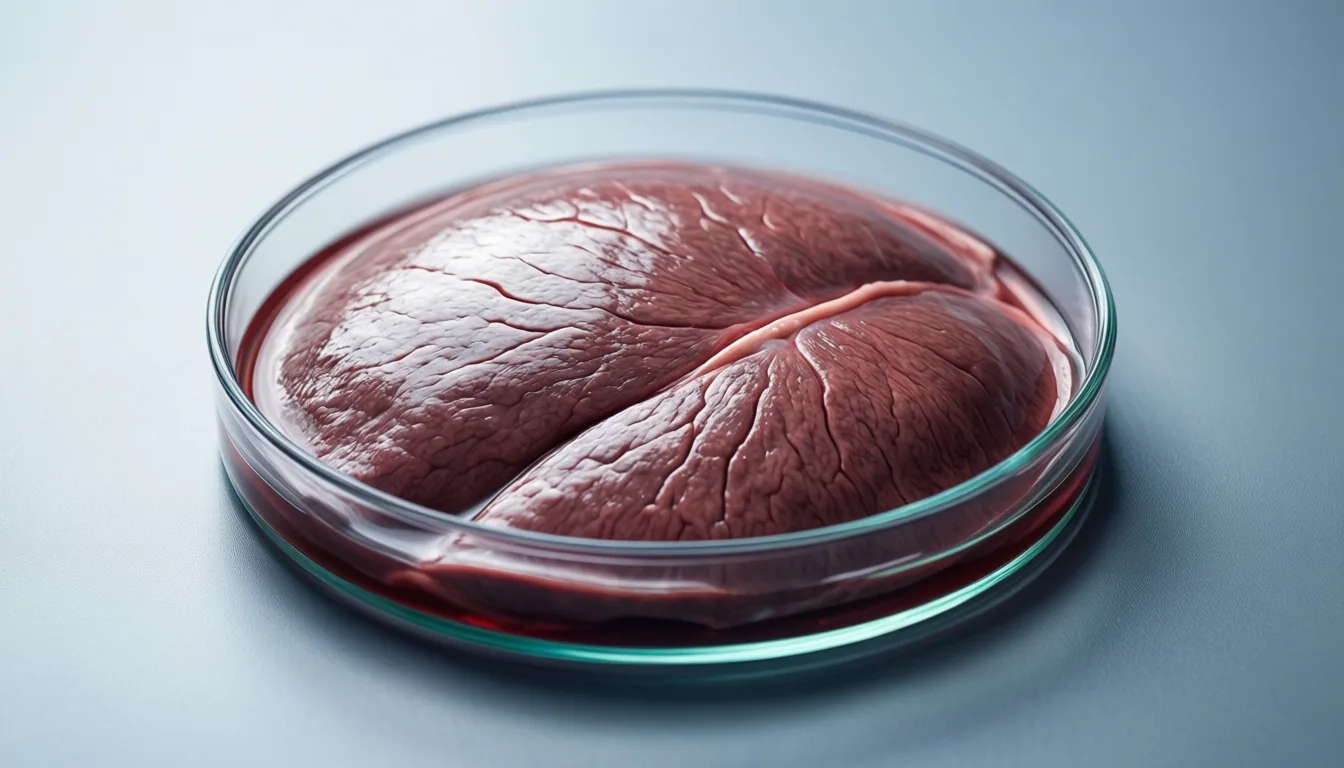
The mechanistic work was conducted in mice. Translation to human liver biology is plausible but not established.
Reading the two papers together
It is tempting to braid these findings into a single story — adolescents get better glycemic control because tirzepatide is quietly repairing their hepatocytes — but the evidence does not yet support that arc. SURPASS-PEDS is a human randomized trial measuring HbA1c. The Tissue & Cell paper is a mouse study measuring cristae morphology and gene expression. They sit on different rungs of the evidence ladder, and the gap between them is exactly where overstatement usually creeps in.
What the two papers do, taken together, is shift the center of gravity of the tirzepatide conversation. The pediatric trial answers a clinical question that has been open for years. The mechanistic mouse work sketches a plausible molecular story for the organ-level effects clinicians have been describing anecdotally. Neither paper says tirzepatide treats MASLD in humans. Neither says the pediatric benefit is mediated by mitophagy. Both say something quieter and more durable: the dual-receptor era is producing rigorous, paired data — outcomes in people, pathways in tissue — at a pace the field has not previously enjoyed.
What to watch next
Three things are worth tracking. First, the open-label extension of SURPASS-PEDS, in which all participants received tirzepatide for an additional 22 weeks — durability and safety data in adolescents are the missing piece. Second, whether the PINK1/PRKN and SIRT3/NRF2 signals identified in the mouse liver work reproduce in human hepatocyte models or post-treatment biopsies. Third, the broader question the two papers implicitly raise: how much of tirzepatide's clinical benefit is downstream of weight loss, and how much is direct organ-level recalibration that would persist even if weight did not change much? That question will define the next five years of incretin research, and it is no longer a hypothetical one.
Outcomes in people, pathways in tissue — at a pace the field has not previously enjoyed.
Frequently asked questions
What is SURPASS-PEDS, and what did it find?
SURPASS-PEDS is a randomized, double-blind, placebo-controlled phase 3 trial published in The Lancet, conducted across 39 sites in eight countries, enrolling participants aged 10 to under 18 with inadequately controlled type 2 diabetes. The trial found that tirzepatide outperformed placebo on glycemic control — measured by change in HbA1c from baseline to week 30 — in adolescents whose disease had resisted metformin, basal insulin, or both.
What were the main treatment options for adolescents with type 2 diabetes before this trial?
Until recently, metformin and basal insulin did most of the work in treating youth-onset type 2 diabetes, and they did it imperfectly. Prescribing for this population has historically been a process of extrapolation from adult trials rather than evidence generated in adolescents directly.
What did the mouse study find about tirzepatide's effect on the liver?
In a mouse model combining obesity, diabetes, and surgically simulated menopause, untreated animals showed hepatocellular fat accumulation, mitochondrial swelling, and disorganized cristae, while tirzepatide-treated mice had preserved hepatic architecture and intact mitochondria. The molecular analysis pointed to PINK1/PRKN-mediated mitophagy and SIRT3/NRF2 redox modulation as part of the drug's protective effect.
Do the liver findings from the mouse study apply to people?
According to the article, the mechanistic work was conducted in mice and translation to human liver biology is described as plausible but not yet established. Randomized human trials in MASLD populations are identified as what will ultimately be needed to answer that question.
What should readers watch for as this research continues?
The article highlights two things worth tracking: durability and safety data from the open-label extension of SURPASS-PEDS, in which all participants received tirzepatide for an additional 22 weeks after the blinded phase, and whether the PINK1/PRKN and SIRT3/NRF2 signals identified in the mouse liver work can be reproduced in human biology.
Sources
- Efficacy and safety of tirzepatide in children and adolescents with type 2 diabetes (SURPASS-PEDS): a randomised, double-blind, placebo-controlled, phase 3 trial. — Lancet (London, England)
- Tirzepatide enhances liver structural integrity by promoting mitochondrial dynamics and mitophagy via PINK1/PRKN and SIRT3/NRF2 pathways in an obese-diabetic-menopausal mouse model. — Tissue & cell
Join the conversation
Comments are moderated and reviewed before they appear. Be constructive — this is health information.
Add your comment