
In This Issue



Beyond Weight Loss: Tirzepatide's Inflammation Signal and the Combo Therapy Shift
New meta-analyses suggest the metabolic-drug story is moving past the scale — toward measurable inflammation reduction and stacked cardiorenal protection. Here's what that actually changes for a 40-year-old.
For three years, the conversation around GLP-1 drugs has been dominated by a single number on a single instrument: the bathroom scale. That framing was never quite right, and the latest evidence makes it look increasingly narrow. Two new systematic reviews — one on tirzepatide's effect on inflammatory markers, another on what happens when GLP-1 receptor agonists are stacked with SGLT2 inhibitors — suggest the real story is shifting toward something more interesting: measurable reductions in background inflammation, and combination regimens that protect the heart and kidneys in ways monotherapy alone does not.
If you are a busy 40-year-old tracking your metabolic health, this matters for one practical reason. The benchmarks that doctors — and increasingly, patients — care about are quietly being rewritten. Weight loss is becoming a means, not the end. The end is a lower-inflammation, lower-event physiology that ages more slowly. The evidence here is moderate, not settled, but the direction is becoming hard to ignore.
- Tirzepatide lowered hsCRP and IL-6 across pooled trials, suggesting effects beyond glucose and weight — though the analysis was small and mostly short-term.
- The inflammation signal held across doses (5, 10, and 15 mg), which strengthens the case that the effect is real rather than dose-quirk.
- GLP-1 + SGLT2 combinations showed consistent cardiorenal benefits in observational data versus monotherapy.
- In randomized data, GLP-1 benefits did not depend on background SGLT2 use — the two appear additive, not redundant.
- Evidence is moderate: heavy on post-hoc and observational analyses, light on head-to-head combination RCTs.
- None of this is a prescription. Talk to a clinician before changing or starting any medication.
The inflammation signal
The first paper, a PRISMA-guided systematic review and meta-analysis published in Reviews in Endocrine & Metabolic Disorders, pooled seven randomized trials and one observational study of tirzepatide — the dual GIP/GLP-1 receptor agonist marketed as Mounjaro and Zepbound. The question was narrow and useful: does the drug move two well-validated inflammation markers, high-sensitivity C-reactive protein (hsCRP) and interleukin-6 (IL-6)?
The answer, in the pooled data, was yes. Compared with placebo, tirzepatide reduced hsCRP by a mean difference of roughly 33 percent and IL-6 by about 18 percent, with low heterogeneity across studies. The reductions held at 5 mg, 10 mg, and 15 mg doses — meaning the effect was not confined to the high end of the dosing range.
Why care about hsCRP and IL-6? Because both are upstream signals of the low-grade inflammation that quietly drives cardiovascular events, insulin resistance, and arguably much of what 'aging badly' looks like in mid-life metabolism. The CANTOS trial established a decade ago that targeting inflammation independently of cholesterol could reduce cardiovascular events. If tirzepatide is dampening that same axis as a downstream effect of weight loss — or, more interestingly, partially independent of it — the implications stretch well past the waistline.
The honest caveat: the analysis was small. Six studies entered the meta-analysis. The trials were not designed primarily to measure inflammation. Most of the signal almost certainly reflects the dramatic weight loss tirzepatide produces, and the authors do not claim a weight-independent mechanism. What they do claim is that the inflammation reduction is real, consistent, and worth treating as a measurable outcome in its own right.

hsCRP and IL-6 are blood markers of low-grade inflammation — increasingly central to how clinicians think about cardiometabolic risk.
Weight loss is becoming a means, not the end. The end is a lower-inflammation, lower-event physiology that ages more slowly.
The combination question
The second paper, published in Cardiovascular Diabetology, asked a different and arguably more clinically urgent question: when you combine a GLP-1 receptor agonist with an SGLT2 inhibitor — two drug classes with independently proven cardiorenal benefits — do you get more than the sum of their parts, or are they stepping on each other's mechanisms?
The investigators pooled four post-hoc analyses of randomized trials and ten observational studies. In the randomized data, they ran a meta-regression to test whether GLP-1 benefits depended on whether patients were already taking an SGLT2 inhibitor. Across major adverse cardiac events, cardiovascular mortality, non-fatal MI, non-fatal stroke, all-cause mortality, heart failure hospitalization, and the renal composite, no interaction reached significance — meaning GLP-1 benefits were consistent regardless of baseline SGLT2 use.
In plain language: the two drug classes appear to be additive on the outcomes that matter. The observational arm of the analysis pointed the same direction, with combination therapy outperforming SGLT2 monotherapy on cardiorenal endpoints.
This is the part of the story that should reshape how you read your next conversation with a cardiologist or endocrinologist. The old framing was sequential: pick the drug, treat the condition, swap if it fails. The emerging framing is layered: stack mechanisms that target different parts of the same disease — glucose handling, weight, inflammation, sodium and fluid dynamics, mineralocorticoid signalling — and let the protection compound.

The clinical conversation is shifting from monotherapy to layered combinations targeting different mechanisms.
What this actually changes
For a busy 40-year-old who is metabolically curious — maybe carrying ten pounds you would like gone, watching fasting glucose creep up, or with a family history of cardiovascular disease — the practical takeaways are narrower than the headlines.
First, weight is no longer the only scoreboard for these drugs. If you or someone in your life is on a GLP-1 or dual agonist, asking the prescribing clinician to track hsCRP alongside the usual lipid panel and HbA1c is a reasonable conversation to have. It is cheap, widely available, and increasingly relevant.
Second, combination regimens are not a fringe idea. For patients with type 2 diabetes and established cardiovascular or kidney disease, stacking a GLP-1 with an SGLT2 inhibitor — and in some cases adding finerenone — is moving toward standard of care, supported by guideline updates that the new meta-analyses reinforce. This is a clinician's decision, not a consumer one, but it is worth knowing the landscape before you walk in.
Third, the inflammation story remains a signal, not a settled mechanism. The effect sizes are large, but the trials were short and the marker reductions are not the same thing as documented event reductions attributable specifically to inflammation lowering. The next round of trials — ideally with inflammation as a pre-specified endpoint — will tell us whether tirzepatide belongs in the same conceptual bucket as anti-inflammatory cardiovascular agents, or whether the hsCRP drop is simply the predictable echo of substantial weight loss.
The arc here is the one worth holding onto. Five years ago, GLP-1s were diabetes drugs. Three years ago, they were weight-loss drugs. Today, the most interesting work treats them as cardiometabolic infrastructure — a foundation you build other protections on top of, with inflammation as one of the dials they appear to move. Moderate evidence, real direction, no miracles. That is usually what genuine progress in medicine looks like before it gets oversold.
Frequently asked questions
By how much did tirzepatide reduce inflammation markers compared to placebo?
In the pooled analysis, tirzepatide reduced hsCRP by a mean difference of roughly 33 percent and IL-6 by about 18 percent compared with placebo, with low heterogeneity across studies.
Did the inflammation-lowering effect only show up at the highest tirzepatide dose?
No. The reductions held at 5 mg, 10 mg, and 15 mg doses, meaning the effect was not confined to the high end of the dosing range. The article notes this consistency across doses strengthens the case that the effect is real rather than a dose-specific quirk.
Is tirzepatide's effect on inflammation separate from its effect on weight loss?
The authors do not claim a weight-independent mechanism, noting that most of the signal almost certainly reflects the dramatic weight loss tirzepatide produces. What they do claim is that the inflammation reduction is real, consistent, and worth treating as a measurable outcome in its own right.
What did the research find about combining GLP-1 drugs with SGLT2 inhibitors?
Across the major cardiac and renal outcomes studied, GLP-1 benefits were consistent regardless of whether patients were already taking an SGLT2 inhibitor, suggesting the two classes are additive rather than redundant. Observational data in the same analysis also showed combination therapy outperforming SGLT2 monotherapy on cardiorenal endpoints.
Is there anything practical someone on a GLP-1 drug can do based on this research?
The article suggests asking the prescribing clinician to track hsCRP alongside the usual lipid panel and HbA1c, describing it as cheap, widely available, and increasingly relevant. It emphasizes that any decisions about changing or starting medications are for a clinician to make, not a consumer.
Sources
- Anti-inflammatory effects of tirzepatide: a systematic review and meta-analysis. — Reviews in endocrine & metabolic disorders
- Cardiovascular and renal outcomes of dual combination therapies with glucagon-like peptide-1 receptor agonists and sodium-glucose transport protein 2 inhibitors: a systematic review and meta-analysis. — Cardiovascular diabetology

The GLP-1 Reckoning: A Decade of Real-World Data on Gains, Eye Risks, and Faces
GLP-1s deliver durable fat loss and metabolic wins — but a maturing evidence base is also flagging ocular signals and structural changes worth knowing before you pin or pass.
Walk into any serious gym in 2026 and you'll hear the same conversation in the corner by the dumbbells: who's on, who's off, who's stacking a low dose with their cut. GLP-1 receptor agonists — semaglutide, tirzepatide, the whole family — used to be diabetes drugs. Then they were obesity drugs. Now they're cultural artifacts, and the data finally has enough runway to tell us what a decade of real-world use actually looks like. The headline: the metabolic wins are real and durable. The fine print: a maturing evidence base is also surfacing signals — ocular adverse events, measurable changes in the face — that the early hype cycle quietly skipped.
- The fat loss is legit. A 54-study meta-analysis of nearly 60,000 patients pegs average loss at 10.6% of total body weight versus 3.9% on placebo, peaking at 12–18 months.
- Adherence is the whole game. Patients who stay on the drug hit ~12% TBW loss; weight regain after stopping runs roughly 0.55% of original body weight per month.
- Metabolic dividends are large. Incident type 2 diabetes dropped sevenfold versus placebo; hypertension resolution peaked at a 23% reduction.
- Ocular safety signals are real but rare. Pharmacovigilance flagged a strong semaglutide signal for NAION, an optic-nerve event — disproportionality, not proven causation.
- Your face changes too. A matched case-control study documented measurable shifts in facial landmarks in GLP-1 users — modest sample, but worth knowing.
- Bottom line: Powerful tool, not a free lunch. Talk to a clinician, not the algorithm.
The gains are real — and durable
Let's start with what the data actually supports, because the strength matters. A 2025 meta-analysis pulling together 54 studies and 59,856 patients found GLP-1-treated patients lost an average of 10.6% of total body weight versus 3.9% on placebo, with the curve peaking somewhere between months 12 and 18. Split out the people who actually took the drug as prescribed and that number climbs to roughly 12%. That's not a tweak. That's body-recomp territory most natural lifters never see from diet alone.
The metabolic story is even more striking. The same meta-analysis reported a sevenfold reduction in incident type 2 diabetes versus placebo, and hypertension resolution peaked at 23% in treated patients compared to 11% on placebo. For a population at metabolic risk, those are the kind of numbers that justify the prescription pad.
But here's the catch that gets buried in the noise: adherence is the whole ballgame. Stop the drug and weight comes back at roughly 0.55% of original body weight per month — fast, within weeks. This is a chronic-use medication, not a six-month cycle. Treat it like a cycle and the rebound math gets ugly.

Long-term real-world data is what separates a trend from a tool. GLP-1s have finally accumulated both.
The eye signals nobody put on the box
Here's where the conversation gets more careful. A 2026 multi-database pharmacovigilance study mined the FDA's FAERS system (2005–2025 Q1) and the WHO's VigiBase (1987–2025 Q1) for ocular adverse events tied to five GLP-1 agonists. The big finding: semaglutide showed the strongest disproportionality signal for NAION — non-arteritic anterior ischemic optic neuropathy, essentially a stroke of the optic nerve — with reporting odds ratios of 40.18 in VigiBase and 31.46 in FAERS. Dulaglutide pulled high signals for visual impairment and diabetic retinopathy, often within the first 30 days of use.
Before you panic-cancel your prescription: a disproportionality signal in a pharmacovigilance database is not the same as proven causation. These systems collect spontaneous reports — they're built to flag patterns worth investigating, not to confirm risk. The authors themselves frame this as underrecognized signals that need further characterization. NAION is also rare in absolute terms. The signal matters; the base rate keeps it in perspective.
Translation for the gym floor: if you're on a GLP-1 and you notice sudden vision changes — blurring, a dim patch, a field cut — that's a same-day call to a doctor, not a forum post.
A signal is a flag worth investigating, not a verdict. The honest move is to know it exists, not to pretend it doesn't.

Ophthalmic adverse-event signals — particularly for semaglutide and NAION — are the most discussed new safety concern in the 2026 literature.
Yes, your face is part of the conversation
"Ozempic face" started as tabloid shorthand. The 2025 literature gave it a measuring tape. A retrospective case-control study matched 18 GLP-1 users against 18 controls — same age, sex, ethnicity, diagnosis — and measured facial landmarks from high-resolution frontal photographs: total face height, mid- and lower-facial heights, palpebral fissure dimensions, philtrum, lip and vermillion heights, mouth width, and more. Average GLP-1 use was 324 days; average weight loss was 3.4 kg. The researchers documented measurable changes in facial landmarks attributable to GLP-1 use, including in patients whose BMI didn't differ significantly from controls.
That last part is the interesting bit. The facial changes weren't simply a function of large weight loss — they showed up in a cohort that had only modestly dropped weight on paper. Whether that reflects subcutaneous fat redistribution, soft-tissue changes, or something else mechanistically is a question the study can't answer. With 36 total patients and a single-institution design, this is a hypothesis-generating finding, not a definitive one. But it's the first real measurement in a space that had been pure speculation.
For lifters who care about the cosmetic side of a cut: the face changes faster than the rest of you, and GLP-1 weight loss isn't the same as gym-driven recomp. Lose 12% of body weight without resistance training and you're losing a non-trivial chunk of lean mass too. Which brings us to the part the prescribing literature still underweights.
The honest read
The evidence rating on this one is moderate, and the language should match. We have a large, well-powered meta-analysis showing real and durable metabolic benefits. We have pharmacovigilance work flagging ocular signals that deserve attention but haven't established causation. We have a small matched study documenting facial-landmark changes that maps onto what clinicians have been observing anecdotally. Three different strengths of evidence, three different levels of certainty.
What that adds up to for the smart lifter: GLP-1s are a serious tool with serious upside for the right person, and the right person is the one having this conversation with an actual clinician — not chasing a vial through a gray-market channel because someone on a podcast lost forty pounds. The drugs work. The fine print is finally legible. Read it before you decide.
Frequently asked questions
How much weight do people actually lose on GLP-1 medications, and how long does it take to see peak results?
A meta-analysis of 54 studies and nearly 60,000 patients found that GLP-1-treated patients lost an average of 10.6% of total body weight compared to 3.9% on placebo, with weight loss peaking between months 12 and 18. Patients who took the drug as prescribed reached roughly 12% total body weight loss.
What happens to weight if someone stops taking a GLP-1 medication?
The data shows weight returns at approximately 0.55% of original body weight per month after stopping, and regain begins within weeks. The article describes GLP-1s as chronic-use medications, not short-term cycles.
What eye-related safety signals have been flagged with GLP-1 use?
A 2026 pharmacovigilance study found that semaglutide showed the strongest disproportionality signal for NAION — a condition described in the article as essentially a stroke of the optic nerve — with high reporting odds ratios in both the FDA's FAERS system and the WHO's VigiBase. Dulaglutide showed signals for visual impairment and diabetic retinopathy, often within the first 30 days of use. The article notes these are signals worth investigating, not proven causes.
Are the facial changes sometimes called 'Ozempic face' real, and what does the research actually show?
A 2025 matched case-control study measured facial landmarks from photographs of 18 GLP-1 users and 18 controls, and documented measurable changes in facial structure attributable to GLP-1 use. Notably, some facial changes appeared even in patients whose BMI did not differ significantly from controls, suggesting the changes are not simply a result of large-scale weight loss. The study had only 36 total participants, so the article characterizes it as hypothesis-generating rather than definitive.
Beyond weight loss, what other health benefits have been observed with GLP-1 medications?
The same large meta-analysis reported a sevenfold reduction in incident type 2 diabetes compared to placebo. Hypertension resolution peaked at 23% in GLP-1-treated patients versus 11% on placebo.
Sources
- Analysis of the long-term impact of glucagon-like peptide-1 (GLP-1) receptor agonists for control of obesity and obesity-related comorbidities: a meta-analysis. — Surgical endoscopy
- Multi-database pharmacovigilance assessment of GLP-1 receptor agonist-related ophthalmic risks using advanced signal detection in FAERS and vigibase. — Journal of endocrinological investigation
- Effects of Glucagon-Like Peptide-1 Receptor Agonist on Facial Landmarks. — Ophthalmic plastic and reconstructive surgery
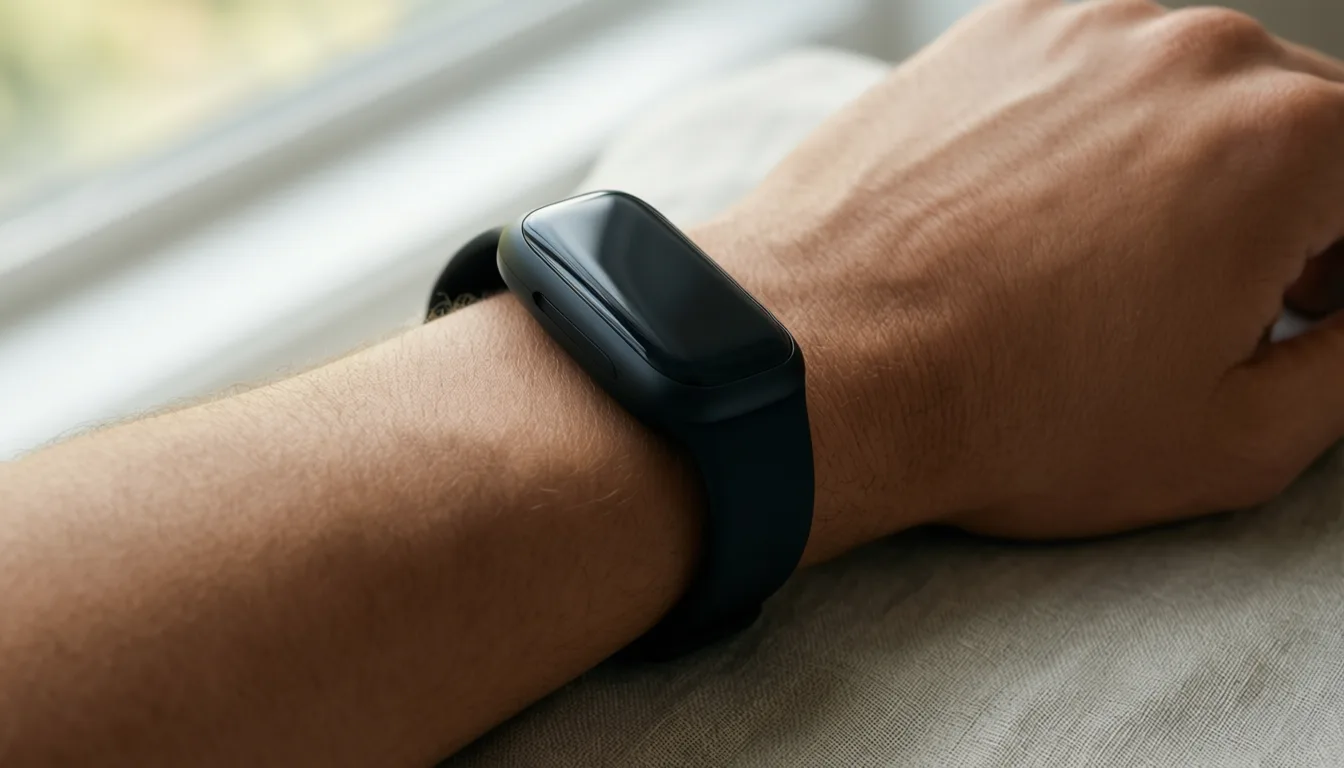
Wearables Are Learning to See a Flare-Up Coming — Days Before the Cough
A CE-certified wristband paired with a new composite score flagged COPD exacerbations roughly four days before clinicians confirmed them. It's a real glimpse of consumer biosensing crossing into early warning.
For a decade, the wearable on your wrist has mostly been a coach — nudging step counts, scoring sleep, gamifying recovery. The interesting frontier now is something quieter and more consequential: a wearable that notices you're about to get sick. A new clinical trial in patients with chronic obstructive pulmonary disease (COPD) suggests that frontier is closer than the wellness aisle implies. Using a CE-certified wristband and a simple composite of three vital signs, researchers were able to anticipate flare-ups an average of 4.4 days before a clinician confirmed them — a meaningful head start in a disease where early intervention changes outcomes.
- What's new: A wrist-worn sensor plus a new score (the Bora Vital Sign Standard Score, or BVS3) predicted COPD exacerbations from home-monitored vitals.
- How early: About 4.4 ± 3.1 days ahead of clinical confirmation, on average.
- How accurate: AUC 0.88, sensitivity 74%, specificity 85% — strong, but not a diagnostic.
- How realistic: Median adherence of 86% over six months suggests people actually wore it.
- The caveat: One 220-patient trial in a specific disease. Promising, not proven across the board.
From step counts to early warning
The eMEUSE-SANTÉ trial (NCT04963192) followed 220 COPD patients for six months as they wore a Class IIa connected wristband that continuously logged three things: oxygen saturation (SpO₂), breathing rate, and heart rate. Researchers then asked a deceptively hard question — can these three signals, taken together, warn us when a patient is sliding toward an acute exacerbation? The answer, according to the published results, was a qualified yes. The team's composite BVS3 score reached an AUC of 0.88 (95% CI 0.83–0.92) for moderate and severe exacerbations combined, with overall accuracy of 84.8%.
That's a strong signal in a domain that has resisted easy prediction. AECOPD episodes — the flare-ups that send patients to the ER and accelerate lung decline — often arrive with only a day or two of recognizable warning. Catching them earlier means earlier steroids, earlier antibiotics where indicated, and fewer hospitalizations. A four-day lead, if it holds up outside this trial, is the kind of margin that changes a clinical playbook.
The wearable didn't diagnose anything. It noticed a pattern — and the pattern showed up days before the cough did.

The trial's appeal is its simplicity: three vitals, continuously, at home.
Why three boring numbers beat one fancy one
The interesting design choice here isn't the hardware — wristbands that track SpO₂, breathing rate, and heart rate are no longer exotic. It's the score. The BVS3 is an unsupervised statistical model, meaning it doesn't need a labeled history of a given patient's prior flare-ups to start being useful. It watches each person's own baseline and flags deviations. The researchers report that individual Z-scores for heart rate, breathing rate and SpO₂ each carried specific predictive value, with the composite outperforming any single signal.
That matters for the looksmaxing-adjacent crowd already swimming in wearable data, because it points to where the genre is heading. The next leap won't come from a new sensor on your wrist; it'll come from smarter math on the signals you're already generating. Personal baselines, deviation detection, and disease-specific scores are the architecture — not yet another resting-heart-rate readout.
Read the evidence at its actual strength
This is one well-conducted trial of 220 patients at a single general hospital, with 42 physician-validated exacerbations across 39 patients providing the events the model was tested against. That is a respectable but modest event count, and the analysis was retrospective — the score was evaluated on data already collected, not deployed to change care in real time. Independent replication in larger, more diverse cohorts is the next test, along with prospective trials that ask the harder question: does acting on the alert actually reduce hospitalizations?
None of that diminishes the result. It just sets the right expectation. A 4.4-day average lead time is a statistical average, with a standard deviation of 3.1 days; some patients will be flagged a week early, others barely in time. Sensitivity at 74% means roughly a quarter of events were missed. This is a decision-support signal, not a verdict.

Continuous monitoring only works if people will wear the thing. Adherence here was unusually high.
What it means for the rest of us
For now, the BVS3 lives inside a clinical trial for a specific patient population. But the design template is portable. The same logic — continuous home vitals plus a personalized deviation score — is exactly how researchers are starting to think about predicting respiratory infections, post-surgical decline, and cardiovascular events. Expect the consumer wearables you already own to inherit some of this thinking over the next few product cycles, even if the medical-grade versions stay walled off behind clinician dashboards.
The most useful posture, if you're invested in tracking your own physiology, is patience with a side of skepticism. A wristband that nudges you toward better sleep is not the same product category as one that flags an exacerbation four days early — and the latter will arrive, when it arrives, with regulatory clearances, prescribing pathways and a clinician on the other end of the alert. That's a feature, not a bug.
The headline finding from eMEUSE-SANTÉ is modest and exciting at the same time: three vital signs, one wristband, six months of real life, and a score that saw the storm coming a few days out. That's not a miracle. It is, plausibly, the shape of the next wearable era — fewer badges, more foresight.
Frequently asked questions
What vital signs does the wristband track to predict a COPD flare-up?
The wristband continuously monitors three signals: oxygen saturation (SpO₂), breathing rate, and heart rate. These three readings are combined into a composite score called the Bora Vital Sign Standard Score (BVS3), which outperformed any single signal on its own.
How far in advance can the system detect an oncoming flare-up?
In the trial, the BVS3 score flagged exacerbations an average of 4.4 days before a clinician confirmed them. That figure comes with a standard deviation of 3.1 days, meaning some patients were alerted close to a week early while others had much less lead time.
How accurate was the BVS3 score at predicting exacerbations?
For moderate and severe flare-ups combined, the score reached an AUC of 0.88, with a sensitivity of 74%, a specificity of 85%, and an overall accuracy of 84.8%. The authors describe it as a decision-support signal rather than a diagnostic verdict, noting that roughly one in four events was missed.
Did participants actually keep wearing the device throughout the six-month study?
Adherence was unusually high for a wearable study, with a median wear-time of 86% over six months. The article notes this as a meaningful finding because continuous monitoring only works if people will consistently wear the device.
Can people with COPD — or other chronic conditions — start using this technology now?
Not yet for general use. The BVS3 currently exists within a single clinical trial involving 220 patients at one hospital, and the analysis was retrospective rather than deployed in real time to change care. The article states that medical-grade versions, when they arrive, will come with regulatory clearances and a clinician on the other end of the alert.
Sources
- Short-term prediction of COPD exacerbations based on wearable vital sign monitoring. — PLOS digital health