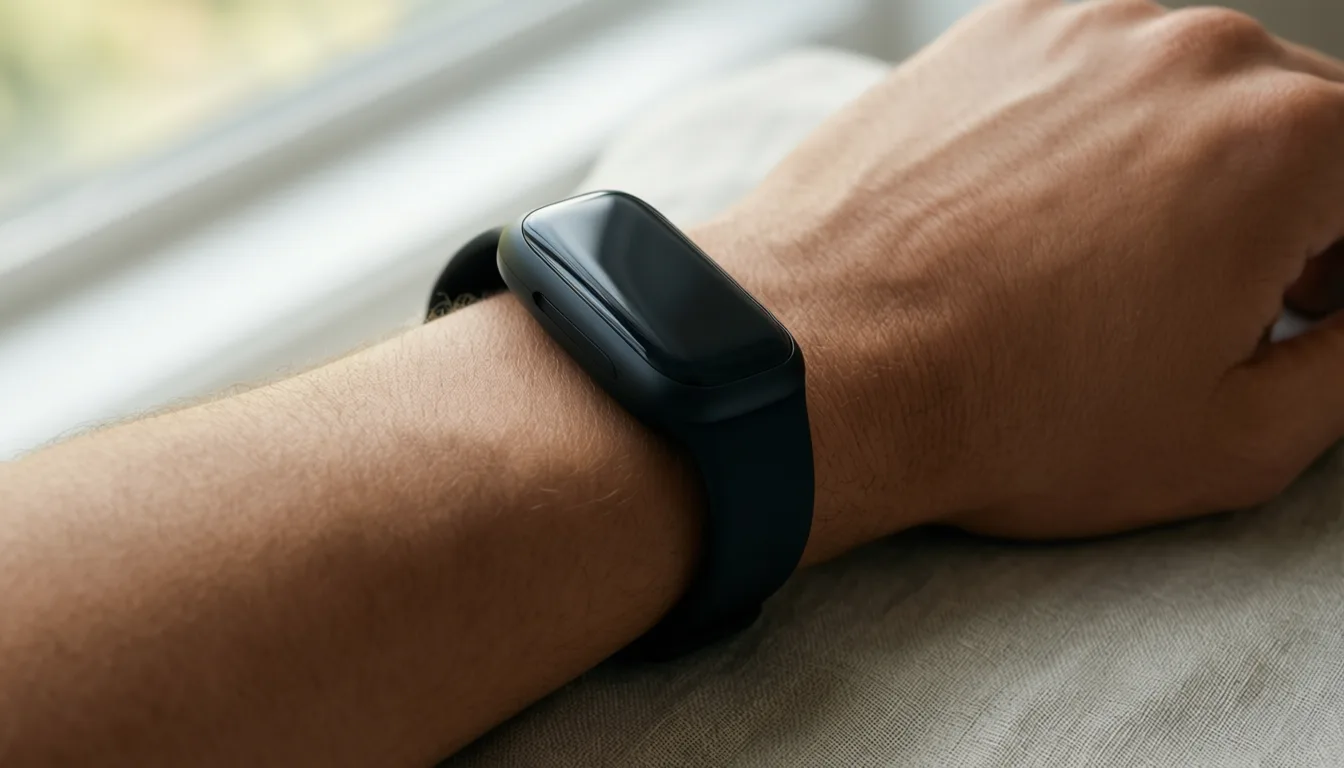
Wearables Are Learning to See a Flare-Up Coming — Days Before the Cough
A CE-certified wristband paired with a new composite score flagged COPD exacerbations roughly four days before clinicians confirmed them. It's a real glimpse of consumer biosensing crossing into early warning.
For a decade, the wearable on your wrist has mostly been a coach — nudging step counts, scoring sleep, gamifying recovery. The interesting frontier now is something quieter and more consequential: a wearable that notices you're about to get sick. A new clinical trial in patients with chronic obstructive pulmonary disease (COPD) suggests that frontier is closer than the wellness aisle implies. Using a CE-certified wristband and a simple composite of three vital signs, researchers were able to anticipate flare-ups an average of 4.4 days before a clinician confirmed them — a meaningful head start in a disease where early intervention changes outcomes.
- What's new: A wrist-worn sensor plus a new score (the Bora Vital Sign Standard Score, or BVS3) predicted COPD exacerbations from home-monitored vitals.
- How early: About 4.4 ± 3.1 days ahead of clinical confirmation, on average.
- How accurate: AUC 0.88, sensitivity 74%, specificity 85% — strong, but not a diagnostic.
- How realistic: Median adherence of 86% over six months suggests people actually wore it.
- The caveat: One 220-patient trial in a specific disease. Promising, not proven across the board.
From step counts to early warning
The eMEUSE-SANTÉ trial (NCT04963192) followed 220 COPD patients for six months as they wore a Class IIa connected wristband that continuously logged three things: oxygen saturation (SpO₂), breathing rate, and heart rate. Researchers then asked a deceptively hard question — can these three signals, taken together, warn us when a patient is sliding toward an acute exacerbation? The answer, according to the published results, was a qualified yes. The team's composite BVS3 score reached an AUC of 0.88 (95% CI 0.83–0.92) for moderate and severe exacerbations combined, with overall accuracy of 84.8%.
That's a strong signal in a domain that has resisted easy prediction. AECOPD episodes — the flare-ups that send patients to the ER and accelerate lung decline — often arrive with only a day or two of recognizable warning. Catching them earlier means earlier steroids, earlier antibiotics where indicated, and fewer hospitalizations. A four-day lead, if it holds up outside this trial, is the kind of margin that changes a clinical playbook.
The wearable didn't diagnose anything. It noticed a pattern — and the pattern showed up days before the cough did.
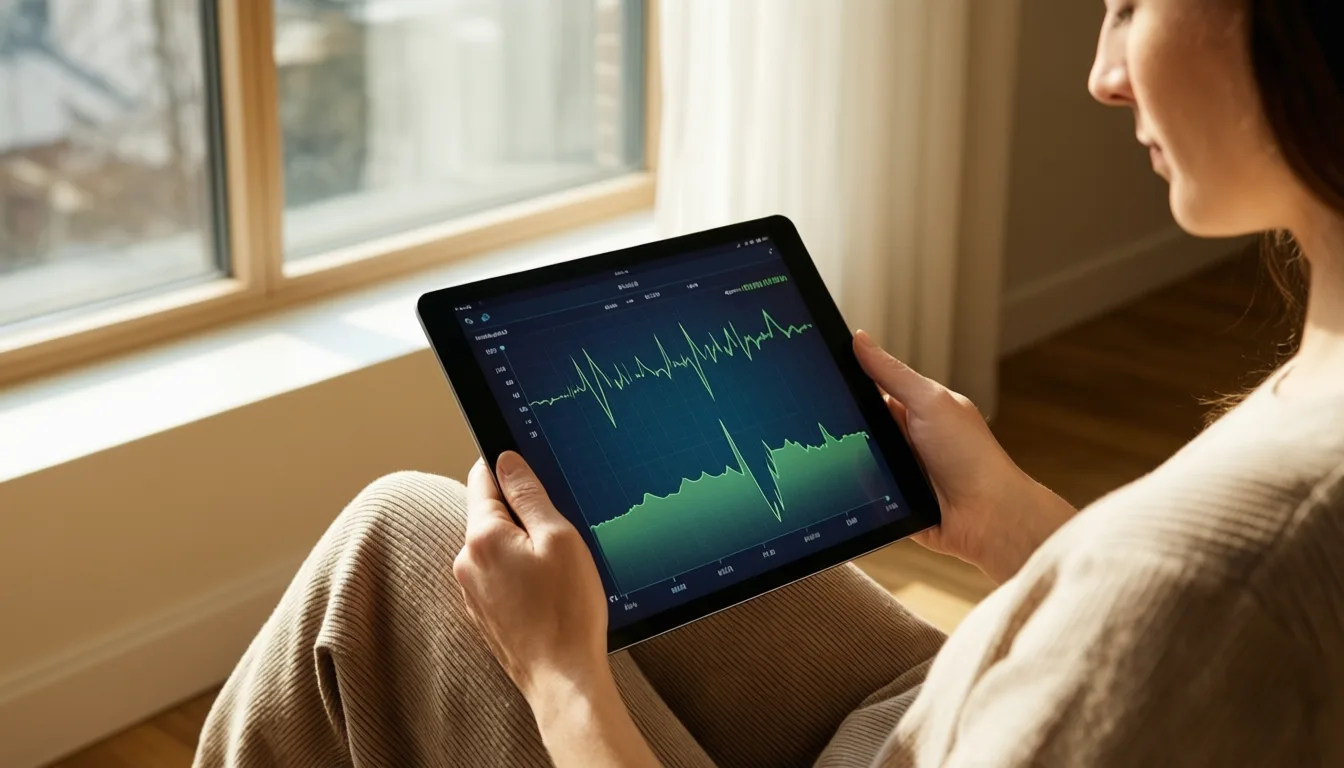
The trial's appeal is its simplicity: three vitals, continuously, at home.
Why three boring numbers beat one fancy one
The interesting design choice here isn't the hardware — wristbands that track SpO₂, breathing rate, and heart rate are no longer exotic. It's the score. The BVS3 is an unsupervised statistical model, meaning it doesn't need a labeled history of a given patient's prior flare-ups to start being useful. It watches each person's own baseline and flags deviations. The researchers report that individual Z-scores for heart rate, breathing rate and SpO₂ each carried specific predictive value, with the composite outperforming any single signal.
That matters for the looksmaxing-adjacent crowd already swimming in wearable data, because it points to where the genre is heading. The next leap won't come from a new sensor on your wrist; it'll come from smarter math on the signals you're already generating. Personal baselines, deviation detection, and disease-specific scores are the architecture — not yet another resting-heart-rate readout.
Read the evidence at its actual strength
This is one well-conducted trial of 220 patients at a single general hospital, with 42 physician-validated exacerbations across 39 patients providing the events the model was tested against. That is a respectable but modest event count, and the analysis was retrospective — the score was evaluated on data already collected, not deployed to change care in real time. Independent replication in larger, more diverse cohorts is the next test, along with prospective trials that ask the harder question: does acting on the alert actually reduce hospitalizations?
None of that diminishes the result. It just sets the right expectation. A 4.4-day average lead time is a statistical average, with a standard deviation of 3.1 days; some patients will be flagged a week early, others barely in time. Sensitivity at 74% means roughly a quarter of events were missed. This is a decision-support signal, not a verdict.

Continuous monitoring only works if people will wear the thing. Adherence here was unusually high.
What it means for the rest of us
For now, the BVS3 lives inside a clinical trial for a specific patient population. But the design template is portable. The same logic — continuous home vitals plus a personalized deviation score — is exactly how researchers are starting to think about predicting respiratory infections, post-surgical decline, and cardiovascular events. Expect the consumer wearables you already own to inherit some of this thinking over the next few product cycles, even if the medical-grade versions stay walled off behind clinician dashboards.
The most useful posture, if you're invested in tracking your own physiology, is patience with a side of skepticism. A wristband that nudges you toward better sleep is not the same product category as one that flags an exacerbation four days early — and the latter will arrive, when it arrives, with regulatory clearances, prescribing pathways and a clinician on the other end of the alert. That's a feature, not a bug.
The headline finding from eMEUSE-SANTÉ is modest and exciting at the same time: three vital signs, one wristband, six months of real life, and a score that saw the storm coming a few days out. That's not a miracle. It is, plausibly, the shape of the next wearable era — fewer badges, more foresight.
Frequently asked questions
What vital signs does the wristband track to predict a COPD flare-up?
The wristband continuously monitors three signals: oxygen saturation (SpO₂), breathing rate, and heart rate. These three readings are combined into a composite score called the Bora Vital Sign Standard Score (BVS3), which outperformed any single signal on its own.
How far in advance can the system detect an oncoming flare-up?
In the trial, the BVS3 score flagged exacerbations an average of 4.4 days before a clinician confirmed them. That figure comes with a standard deviation of 3.1 days, meaning some patients were alerted close to a week early while others had much less lead time.
How accurate was the BVS3 score at predicting exacerbations?
For moderate and severe flare-ups combined, the score reached an AUC of 0.88, with a sensitivity of 74%, a specificity of 85%, and an overall accuracy of 84.8%. The authors describe it as a decision-support signal rather than a diagnostic verdict, noting that roughly one in four events was missed.
Did participants actually keep wearing the device throughout the six-month study?
Adherence was unusually high for a wearable study, with a median wear-time of 86% over six months. The article notes this as a meaningful finding because continuous monitoring only works if people will consistently wear the device.
Can people with COPD — or other chronic conditions — start using this technology now?
Not yet for general use. The BVS3 currently exists within a single clinical trial involving 220 patients at one hospital, and the analysis was retrospective rather than deployed in real time to change care. The article states that medical-grade versions, when they arrive, will come with regulatory clearances and a clinician on the other end of the alert.
Sources
- Short-term prediction of COPD exacerbations based on wearable vital sign monitoring. — PLOS digital health
Join the conversation
Comments are moderated and reviewed before they appear. Be constructive — this is health information.
Add your comment