
In This Issue




The Cardiometabolic Continuum: Why Inflammation Is Becoming the New Vital Sign
Endocrinologists are quietly rewriting the rulebook — treating diabetes, fatty liver, and heart disease as one slow-burning inflammatory story. Here's what that means for the rest of us.
For years, the standard metabolic check-up has felt a little like inspecting a car by reading only the speedometer. Fasting glucose. LDL. Blood pressure. Tick, tick, tick. And yet plenty of women in their forties walk out of those appointments told they're "fine" — while quietly suspecting that something underneath the hood is not, in fact, fine. The fatigue. The stubborn middle. The lipid panel that drifts a little worse each year despite the kale. A growing chorus of endocrinologists thinks our dashboard is missing a gauge, and that gauge is inflammation.
The reframing is significant. A 2025 perspective in the Journal of Clinical Medicine argues that type 2 diabetes and cardiovascular disease are not two separate epidemics that happen to overlap, but co-evolving manifestations of a shared cardiometabolic continuum — one driven by chronic inflammation, dysfunctional fat tissue, and the chatter between organs that we used to treat in isolation. In plain English: your liver, your fat cells, your pancreas, and your arteries are in a group chat, and the tone of that chat is set largely by inflammation.
This is not a fringe idea anymore. The same perspective notes that even with aggressive glycemic, lipid, and blood pressure control, residual cardiovascular risk remains stubbornly high, which is a polite way of saying that hitting our usual numbers isn't enough. Something else is doing damage in the background. Increasingly, the suspect is low-grade, smoldering inflammation that no one ordered a test for.
The new gauges on the dashboard
Here's where it gets interesting for the optimizer set. A 2026 clinical study in Metabolic Syndrome and Related Disorders looked at three blood biomarkers — high-sensitivity C-reactive protein (hsCRP), Fetuin-A, and YKL-40 — in people with metabolic syndrome versus healthy controls. All three were significantly elevated in the metabolic syndrome group. More striking: when researchers tracked patients over three months of lifestyle changes alone, shifts in severity scores moved in lockstep with shifts in the biomarkers, with correlations of 0.84 for hsCRP, 0.92 for Fetuin-A, and 0.91 for YKL-40.
Translation: when these women got serious about food and movement, the inflammatory signature in their blood moved with them — and the more the severity dropped, the more the biomarkers dropped. That's the kind of feedback loop that anyone who has ever screamed at a bathroom scale would actually find useful.
A caveat before anyone runs off to order their own panel: this was a small study — 47 patients and 23 controls — and it doesn't prove these biomarkers should replace anything in your current workup. But it does suggest they're tracking something real, and something the standard panel doesn't see.

Lifestyle shifted the inflammatory signature in three months — no medication required.
Your liver, your fat cells, your pancreas, and your arteries are in a group chat — and inflammation is setting the tone.
Why your liver is suddenly everyone's business
If you've heard the acronym MASLD lately and assumed it was someone else's problem, this is the part to read twice. Metabolic dysfunction–associated steatotic liver disease is the new name for what most of us still call fatty liver, and a 2026 systematic review in Current Obesity Reports describes it as the hepatic manifestation of ectopic fat accumulation and adipose tissue dysfunction — i.e., the liver expression of a whole-body problem.
What the reviewers found is unsettling in a fascinating way. Excess visceral fat appears to drive adipose tissue hypoxia, macrophage infiltration, and chronic low-grade systemic inflammation that doesn't stay polite about staying in the abdomen. They describe a proposed liver–lung axis, where the same inflammatory traffic that scars the liver seems to show up in the airways. Across 22 studies, MASLD was common in people with COPD and obstructive sleep apnea and was associated with worse respiratory phenotypes, more exacerbations, and higher respiratory mortality in several cohorts. Liver fibrosis, more than steatosis itself, seemed to track most closely with impaired lung function.
This is a systematic review of mostly observational data, so cause-and-effect is not nailed down. But the pattern is consistent enough — and the mechanism plausible enough — that thinking of these as separate diseases is starting to look quaint.

What this means before your next physical
None of this is permission to bypass your clinician with a shopping cart of obscure lab tests. Some of these biomarkers — Fetuin-A and YKL-40 in particular — are still being evaluated for clinical utility, not yet a standard part of care. hsCRP, by contrast, is widely available, inexpensive, and a reasonable conversation-starter at your next appointment, especially if you have any combination of central weight gain, rising blood pressure, borderline glucose, or a family history of early heart disease.
The bigger shift is conceptual. If diabetes, fatty liver, and heart disease are points on one continuum, then the most useful question to bring to a clinician isn't "Am I diabetic yet?" It's "What's my inflammatory load, and what is it doing to me?" That reframing matters most in midlife, when perimenopausal hormonal shifts are already reshuffling fat distribution, sleep, and lipid handling — exactly the levers this continuum runs on.
The honest summary: we are not at the point where a single blood draw tells you your cardiometabolic future. We are at the point where the field is openly admitting the old dashboard is incomplete, and the new gauges are being prototyped in real time. That's worth knowing before your next physical — because the questions you ask in that 15-minute appointment are the ones most likely to change what gets measured.
- One continuum, not three diseases. Leading endocrinologists are reframing T2D, fatty liver, and CVD as connected expressions of inflammation and adipose dysfunction.
- hsCRP is the accessible starting point. It's widely available and tracked metabolic syndrome severity closely in recent research.
- Fetuin-A and YKL-40 are promising but early. Small studies show strong correlations with metabolic burden; they are not yet routine clinical tools.
- Visceral fat is the engine. It drives the inflammatory signaling that links liver, vasculature, and even lung outcomes.
- Lifestyle moved the needle in 3 months. Standardized diet and movement advice — no drugs — shifted biomarkers in step with severity.
- Bring the question, not the prescription. Ask your clinician about your inflammatory load, especially if you have central weight gain or a family history of early heart disease.
Frequently asked questions
What are the three inflammation biomarkers the article highlights, and are any of them available through my doctor now?
The article discusses high-sensitivity C-reactive protein (hsCRP), Fetuin-A, and YKL-40. Of the three, hsCRP is described as widely available and inexpensive, making it a reasonable conversation-starter at a next appointment; Fetuin-A and YKL-40 are still being evaluated for clinical utility and are not yet standard tools.
If my cholesterol, blood pressure, and blood sugar are all in a normal range, do I still need to think about inflammation?
According to the article, even with aggressive control of glucose, lipids, and blood pressure, residual cardiovascular risk remains stubbornly high. The article suggests low-grade, smoldering inflammation may be doing damage in the background that standard panels don't detect.
How long did it take for lifestyle changes to shift inflammation markers in the study described?
The study tracked patients over three months of lifestyle changes alone — no medication — and found that shifts in biomarker levels moved in lockstep with shifts in metabolic syndrome severity scores. The article notes the study involved 47 patients and 23 controls, so it was small and not definitive.
What is MASLD, and why does the article say it matters beyond the liver?
MASLD stands for metabolic dysfunction–associated steatotic liver disease, which the article describes as the new name for what is commonly called fatty liver. A systematic review cited in the article found a proposed liver–lung axis, where inflammatory signaling linked to liver disease was also associated with worse respiratory outcomes, more exacerbations, and higher respiratory mortality across 22 studies.
What single question does the article suggest bringing to a clinician instead of asking 'Am I diabetic yet?'
The article recommends reframing the conversation by asking, 'What is my inflammatory load, and what is it doing to me?' It notes this reframing matters most in midlife, when hormonal shifts are already affecting fat distribution, sleep, and lipid handling.
Sources
- Rethinking the Diabetes-Cardiovascular Disease Continuum: Toward Integrated Care. — Journal of clinical medicine
- Can the Diagnosis of Metabolic Syndrome and the Severity of the Disease Be Determined with the Help of Inflammatory Biomarkers? — Metabolic syndrome and related disorders
- Metabolic Dysfunction-Associated Steatotic Liver Disease and Respiratory Disorders: A Systematic Review of Clinical and Pathophysiological Associations. — Current obesity reports

Wearables Grow Up: From Heart Failure Monitoring to Continuous Kidney and Breath Tracking
Remote and wearable monitoring is crossing from consumer gadget to clinically validated tool—with fresh evidence in heart failure, chronic kidney disease, and respiratory tracking.
For a decade, the wearable on your wrist has lived in an awkward middle space—too data-rich to ignore, too noisy to act on. That is quietly changing. A new wave of evidence, including a 65-trial meta-analysis in heart failure and fresh biosensor work on kidney disease and breathing, suggests remote monitoring is finally earning a place inside the care plan rather than alongside it. The results are encouraging, not euphoric: real signals, modest effect sizes, and a clear message that the technology is graduating from lifestyle accessory to clinical instrument.
- Heart failure has the strongest case. A meta-analysis of 65 randomized trials links remote monitoring to lower mortality and fewer hospitalizations.
- Kidney monitoring is earlier-stage. Wearable biosensors for chronic kidney disease are advancing fast in the lab, but clinical translation is still a work in progress.
- Breath tracking is getting precise. A new biosensor accurately captured respiratory rate and simulated apnea across body positions in validation testing.
- Effect sizes are real but modest. Expect incremental gains layered onto good care, not replacements for it.
- Talk to a clinician before acting on wearable data. These tools are most useful inside a care relationship, not outside it.
The heart failure case, finally stress-tested
Remote patient monitoring (RPM) in heart failure has been studied for years, but the evidence has often felt like a patchwork: small trials, mixed endpoints, and inconsistent technologies ranging from nurse phone calls to implanted hemodynamic sensors. A 2026 systematic review in Cureus tried to settle the question by pooling 65 randomized controlled trials—roughly 23,000 patients across structured telephone support, non-invasive telemonitoring, and invasive hemodynamic monitoring—and then applying trial sequential analysis to ask whether the accumulated evidence is actually robust, or just trending in a direction.
The headline numbers are meaningful. Remote monitoring was associated with a statistically significant reduction in all-cause mortality (risk ratio 0.911, 95% CI 0.842–0.985), with a number needed to treat of 104 per year to prevent one death. Heart failure hospitalizations were also reduced (RR 0.781, 95% CI 0.710–0.859). Crucially, the trial sequential analysis suggested the cumulative evidence has crossed the threshold required to support a stable mortality signal under a 15% relative risk reduction assumption—meaning further trials are unlikely to overturn the direction of the finding.
That is the kind of language careful evidence reviewers reserve for conclusions they trust. It is not the language of a cure. A roughly 9% relative reduction in mortality is clinically meaningful at population scale and underwhelming at the individual level; it is an additive intervention, not a transformative one. But for a chronic condition where readmissions drive cost and suffering, additive matters.
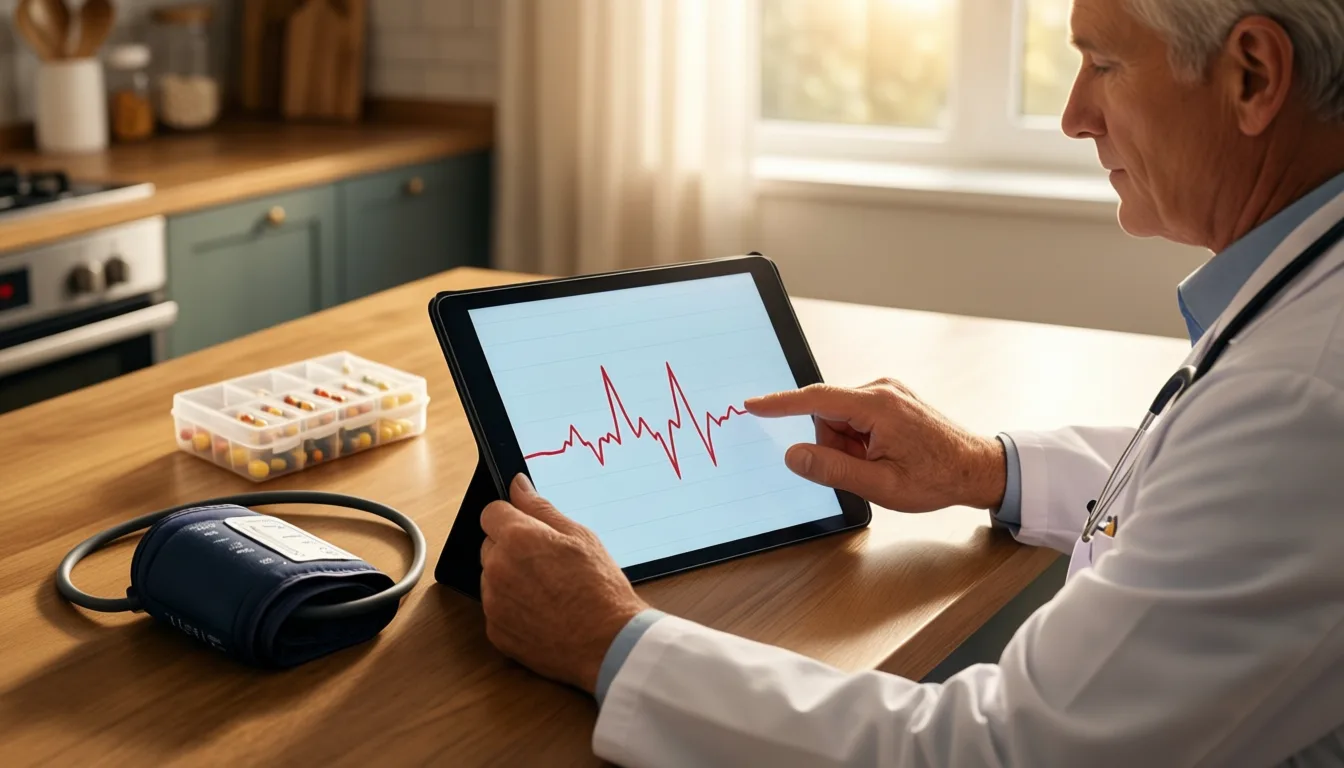
The evidence base for remote heart failure monitoring is strongest when devices connect to a care team that can act on the data.
The technology is graduating from lifestyle accessory to clinical instrument—carefully, and with caveats.
Kidneys: the next frontier, still in the lab
If heart failure represents the maturing edge of remote monitoring, chronic kidney disease (CKD) represents the emerging one. CKD affects more than 850 million people worldwide, and current diagnostics—serum creatinine, estimated glomerular filtration rate, urinary albumin—are intermittent snapshots of a slowly evolving disease. A 2026 review in Biosensors surveys the landscape of wearable platforms designed to fill that gap with continuous, non-invasive measurement.
The science is genuinely interesting. Researchers are exploring electrochemical, optical, and field-effect transistor sensing mechanisms applied to sweat, interstitial fluid, and saliva, with materials engineered to be flexible and skin-conformal. The vision is a patch or wristband that tracks renal biomarkers the way a continuous glucose monitor tracks sugar—catching dynamic changes that lab draws miss entirely.
The honest framing: this is a review of the field, not a clinical endorsement of any specific device. The same review catalogues the obstacles standing between the lab bench and the pharmacy shelf—biofouling, enzymatic instability, and variability in biofluid composition—alongside emerging fixes like antifouling interfaces and synthetic recognition elements. Translation will take years, regulatory pathways are still being mapped, and busy professionals should treat any consumer device claiming to monitor kidney health with skepticism until the evidence is there.
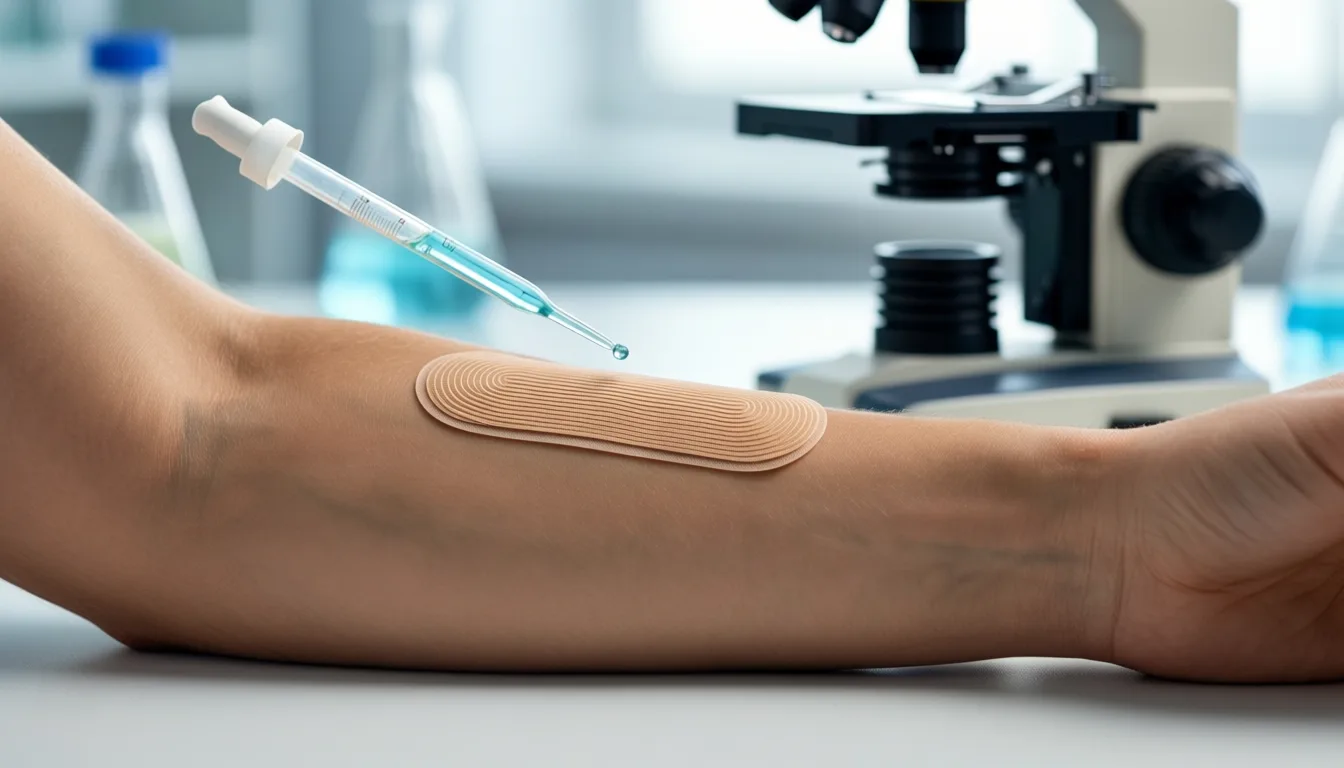
Wearable kidney monitoring is moving fast in materials science, but clinical-grade devices for consumers are not here yet.
Breath, captured continuously
Respiratory rate is one of the most informative vital signs and one of the most poorly captured in everyday clinical practice—often counted by eye, often inaccurately. A 2026 validation study in Biosensors tested the PneumoWave biosensor against both a programmable manikin and 20 healthy volunteers, with the manikin running at 6 to 30 breaths per minute and 10-second simulated apnea episodes.
The agreement was tight. In vitro correlation with the manikin reached r = 0.99 with all apnea events detected, and in volunteers the biosensor showed equally strong agreement with direct observation (r = 0.99, ICC = 0.99), with 97% of apnea events captured across body postures of 45°, 90°, and 180°. Posture did not significantly degrade accuracy—an important detail for any device that has to work while a person sleeps, slumps in a meeting, or lies in a hospital bed.
Two caveats worth holding onto. First, the in vivo cohort was small (20 healthy adults), so this is a validation of measurement fidelity, not proof of clinical benefit at scale. Second, simulated apnea on a manikin is not the same as sleep apnea in a patient with comorbidities. Still, the data make a credible case that accurate continuous respiratory monitoring is technically within reach—relevant for anyone interested in sleep quality, recovery, or post-operative safety.
How to think about all of this
The arc across these three studies is consistent. Remote and wearable monitoring works best when it is integrated into a care pathway, when the outcomes being measured are clinically meaningful, and when the technology is judged against the right benchmark—not perfection, but the messy status quo of intermittent labs, eyeballed vital signs, and missed early warnings. By that benchmark, the evidence is moving in the right direction.
For busy professionals, the practical implication is modest. If you live with heart failure or care for someone who does, the case for asking a cardiologist about a remote monitoring program is now stronger than it was a year ago. If you are tracking sleep or recovery, continuous respiratory rate is plausibly worth more attention than another step counter. And if you are healthy, the most useful wearable is still the one whose data you would actually share with a clinician who can interpret it.
The wearable is growing up. It is not yet a stethoscope, and it does not need to be. It needs to be useful—and increasingly, it is.
Frequently asked questions
How strong is the evidence that remote monitoring helps people with heart failure?
A 2026 systematic review pooled 65 randomized controlled trials covering roughly 23,000 patients and found remote monitoring was associated with a statistically significant reduction in all-cause mortality and a 22% reduction in heart failure hospitalizations. Trial sequential analysis suggested the cumulative evidence has crossed the threshold required to support a stable mortality signal, meaning further trials are unlikely to overturn the direction of the finding.
Can I buy a wearable right now to monitor my kidney health?
Clinical-grade wearable devices for kidney monitoring are not yet available for consumers. The research is still largely at the lab stage, with obstacles like biofouling, enzymatic instability, and variability in biofluid composition yet to be fully resolved, and regulatory pathways are still being mapped. The article advises treating any consumer device currently claiming to monitor kidney health with skepticism until the evidence is there.
How accurate was the breathing biosensor described in the article?
The PneumoWave biosensor showed very strong agreement with direct observation in 20 healthy volunteers, achieving a correlation of r = 0.99 and capturing 97% of simulated apnea events across body postures of 45°, 90°, and 180°. Posture did not significantly degrade accuracy, which the article notes is an important detail for a device that needs to work while a person sleeps or lies in a hospital bed.
Does it matter whether my wearable data is shared with a doctor or care team?
According to the article, the heart failure benefits documented in the meta-analysis emerged specifically when monitoring connected patients to clinicians who could act on the data, through structured telephone support, telemonitoring, or implanted sensors feeding a care team. A device with no one on the other end of the data is unlikely to replicate those results.
How big a difference does remote heart failure monitoring actually make for an individual patient?
The article describes the effect as real but modest — a roughly 9% relative reduction in mortality that is clinically meaningful at population scale but underwhelming at the individual level, with a number needed to treat of 104 per year to prevent one death. It characterizes remote monitoring as an additive intervention layered onto good care, not a transformative or replacement therapy.
Sources
- Remote Patient Monitoring in Heart Failure: A Systematic Review, Meta-Analysis, and Trial Sequential Analysis. — Cureus
- Wearable Biosensors for Continuous Monitoring of Chronic Kidney Disease: Materials, Biofluids, and Digital Health Integration. — Biosensors
- Assessment of Respiratory Rate and Simulated Apnea Utilizing the PneumoWave Biosensor: In Vitro and In Vivo Validation. — Biosensors

Subjective Age and the Mind: What 15 Years of Data Suggest About How We Grow Older
A long-running German study finds that how old you feel tracks how your brain performs over time — at both the population and personal level. The signal is modest, but it's persistent.
Ask a roomful of women in their sixties how old they feel, and the answers rarely match the calendar. Some say forty-eight. Some say seventy-five, depending on the week. For a long time, that gap between chronological age and felt age was treated as a curiosity — a matter of attitude, perhaps vanity. A new analysis of 15 years of data from nearly 16,000 German adults suggests it may be something more interesting: a quiet, two-way conversation between how we see ourselves aging and how our minds actually perform.
The study, published in Developmental Psychology, followed participants between the ages of 40 and 95 across five measurement waves from 2002 to 2017. Researchers tracked several dimensions of what psychologists call subjective aging — how old a person feels, and how strongly they associate getting older with physical loss, social loss, or with the possibility of ongoing personal development. They paired those measures with a standard cognitive test of perceptual-motor speed, the kind of quick visual-and-hand processing that tends to slow with age.
What they found was not a thunderclap. It was a pattern, repeated across years and across people, that is hard to dismiss. Adults who saw aging as a period of continued growth, and who reported less of a sense of physical and social loss, tended to perform better on speed tests — and tended to decline more slowly over the 15-year window.
Between people, and within them
The more revealing piece of the analysis is methodological. The authors used a modeling approach designed to separate two questions that often get tangled together. The first is a between-person question: do people with sunnier, growth-oriented views of aging, on average, score better and decline more gently than people who feel weighed down by it? The second is a within-person question: on the specific occasions when a single individual feels older or more burdened than their own typical baseline, does their cognitive performance dip below their own typical baseline too?
The answer to the between-person question was a fairly clear yes. People with higher levels of ongoing development perceptions and lower physical-loss perceptions showed both higher speed scores and shallower trajectories of decline, even after controlling for education, health, social ties, and other demographic factors, according to the 15-year analysis. The within-person picture was more nuanced, but the authors describe reciprocal links — suggesting that mindset and cognition do not simply sit side by side; they appear to nudge each other over time.
Mindset and cognition do not simply sit side by side. They appear to nudge each other across the years.

Social connection and a sense of ongoing development are among the subjective-aging dimensions the study tracked.
What the numbers actually say
It is worth being precise about the strength of the signal. This is observational research. No one was randomized to feel younger. The associations, while statistically robust across a very large sample, are modest in size — the kind of effect that shifts a trajectory by degrees rather than rewriting it. The authors themselves frame the findings as evidence of bidirectional links, not of a single causal arrow running from feelings to neurons.
Still, the architecture of the study is unusually strong for this kind of question. Nearly 16,000 participants, fifteen years of follow-up, and a model that pulls apart stable individual differences from fluctuations within the same person — that is a sturdier foundation than the cross-sectional snapshots most subjective-aging headlines have been built on.
Why this matters for a longevity toolkit
For readers who already pay attention to sleep architecture, strength training, lipid panels and hormone shifts, the implication is not that mindset replaces any of those things. It is that the psychological lens through which we view our own aging may belong on the same shelf — not as a slogan, but as a measurable variable that tracks with cognitive trajectories over a decade and a half.
That matters because subjective aging is, at least in principle, more modifiable than chronological age. The dimensions the German researchers measured — feelings of ongoing development, perceptions of physical decline, perceptions of social loss — are shaped by what we do, who we spend time with, the stories we are told about getting older, and the stories we tell ourselves. None of that is destiny. None of it is trivial either.

Physical capability shapes how we perceive aging — and perception, in turn, may shape cognitive trajectories.
What it doesn't say
A few cautions are worth holding alongside the headline. The cognitive measure here is perceptual-motor speed, not memory, executive function, or dementia incidence; we should not stretch the finding into claims about Alzheimer's risk. The sample is German, mostly white, and middle-aged-and-older — generalization beyond that requires care. And bidirectional associations cut both ways: slower cognition can itself shape how old a person feels, which is part of what the within-person modeling captures.
None of this should be read as instruction to perform optimism. Forcing cheerfulness about aging is its own kind of dismissiveness, and women in this readership have heard enough of that. The more useful reading is quieter: notice the language you use about your own aging, notice what reinforces a sense of continued development, and treat the answer to how old do you feel? as a piece of information worth tracking — alongside the bloodwork.
- The study is large and long. Nearly 16,000 adults across 15 years and five measurement waves.
- The signal is moderate, not dramatic. Subjective aging and perceptual-motor speed track each other at both the between- and within-person level.
- The relationship looks bidirectional. Mindset and cognition appear to influence each other over time, rather than one simply driving the other.
- Ongoing-development beliefs matter most. Seeing later life as a period of continued growth was associated with shallower cognitive decline.
- This is not a prescription. Mindset belongs alongside sleep, training, social connection and medical care — not in place of them.
- Talk to a clinician about any persistent cognitive or mood changes; subjective shifts can have treatable causes.
Fifteen years is a long time to watch a question. What this dataset offers is not a miracle, and not a mandate — just a steadier piece of evidence that the inner life of aging and its outer measurements are talking to each other. For a generation of women who have spent decades being told their experience was anecdotal, that is a small, useful kind of validation.
Frequently asked questions
How large was the study and how long did it run?
The study followed nearly 16,000 German adults between the ages of 40 and 95 across five measurement waves spanning 2002 to 2017, a 15-year observation window. It was published in Developmental Psychology.
What did the researchers actually find about subjective aging and cognitive performance?
Adults who saw aging as a period of continued growth and reported less of a sense of physical and social loss tended to perform better on perceptual-motor speed tests and declined more slowly over the 15 years. The relationship appeared bidirectional, meaning mindset and cognition seemed to nudge each other over time rather than one simply driving the other.
Does this mean a positive mindset can prevent dementia or memory loss?
No — the cognitive measure in this study was perceptual-motor speed, not memory, executive function, or dementia incidence, so the findings should not be extended to claims about Alzheimer's risk. The associations were also described as modest in size, shifting a trajectory by degrees rather than rewriting it.
Can a person actually change how old they feel?
The article notes that subjective aging is, at least in principle, more modifiable than chronological age. The dimensions the researchers tracked — feelings of ongoing development, perceptions of physical decline, and perceptions of social loss — are shaped by what we do, who we spend time with, and the stories we tell ourselves about getting older.
When is it worth bringing up cognitive or mood concerns with a clinician?
According to the article, cognitive concerns, persistent low mood, or a sharp shift in how you feel about your own aging are all reasonable things to raise at a check-up. A clinician can help distinguish a normal psychological adjustment from something — such as depression, thyroid changes, medication effects, or early cognitive change — that warrants a closer look.