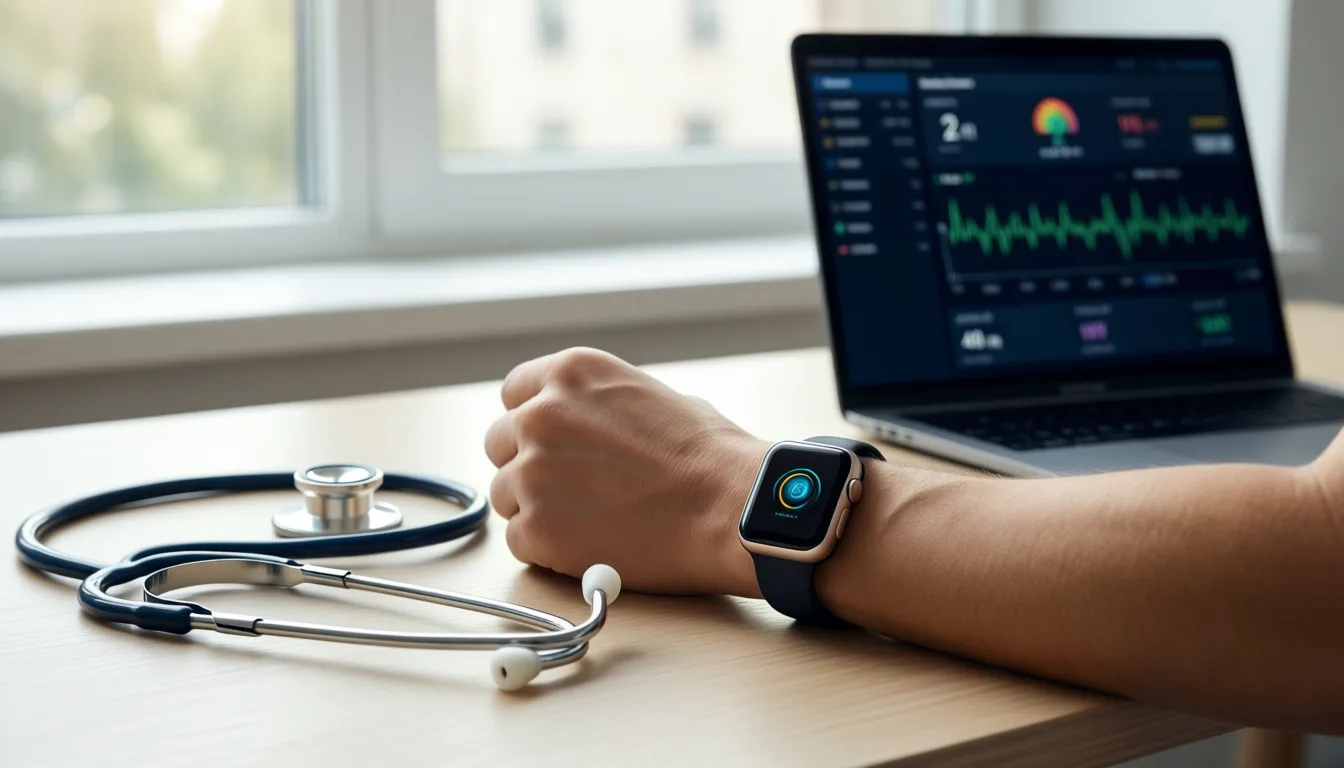
Wearables Grow Up: From Heart Failure Monitoring to Continuous Kidney and Breath Tracking
Remote and wearable monitoring is crossing from consumer gadget to clinically validated tool—with fresh evidence in heart failure, chronic kidney disease, and respiratory tracking.
For a decade, the wearable on your wrist has lived in an awkward middle space—too data-rich to ignore, too noisy to act on. That is quietly changing. A new wave of evidence, including a 65-trial meta-analysis in heart failure and fresh biosensor work on kidney disease and breathing, suggests remote monitoring is finally earning a place inside the care plan rather than alongside it. The results are encouraging, not euphoric: real signals, modest effect sizes, and a clear message that the technology is graduating from lifestyle accessory to clinical instrument.
- Heart failure has the strongest case. A meta-analysis of 65 randomized trials links remote monitoring to lower mortality and fewer hospitalizations.
- Kidney monitoring is earlier-stage. Wearable biosensors for chronic kidney disease are advancing fast in the lab, but clinical translation is still a work in progress.
- Breath tracking is getting precise. A new biosensor accurately captured respiratory rate and simulated apnea across body positions in validation testing.
- Effect sizes are real but modest. Expect incremental gains layered onto good care, not replacements for it.
- Talk to a clinician before acting on wearable data. These tools are most useful inside a care relationship, not outside it.
The heart failure case, finally stress-tested
Remote patient monitoring (RPM) in heart failure has been studied for years, but the evidence has often felt like a patchwork: small trials, mixed endpoints, and inconsistent technologies ranging from nurse phone calls to implanted hemodynamic sensors. A 2026 systematic review in Cureus tried to settle the question by pooling 65 randomized controlled trials—roughly 23,000 patients across structured telephone support, non-invasive telemonitoring, and invasive hemodynamic monitoring—and then applying trial sequential analysis to ask whether the accumulated evidence is actually robust, or just trending in a direction.
The headline numbers are meaningful. Remote monitoring was associated with a statistically significant reduction in all-cause mortality (risk ratio 0.911, 95% CI 0.842–0.985), with a number needed to treat of 104 per year to prevent one death. Heart failure hospitalizations were also reduced (RR 0.781, 95% CI 0.710–0.859). Crucially, the trial sequential analysis suggested the cumulative evidence has crossed the threshold required to support a stable mortality signal under a 15% relative risk reduction assumption—meaning further trials are unlikely to overturn the direction of the finding.
That is the kind of language careful evidence reviewers reserve for conclusions they trust. It is not the language of a cure. A roughly 9% relative reduction in mortality is clinically meaningful at population scale and underwhelming at the individual level; it is an additive intervention, not a transformative one. But for a chronic condition where readmissions drive cost and suffering, additive matters.
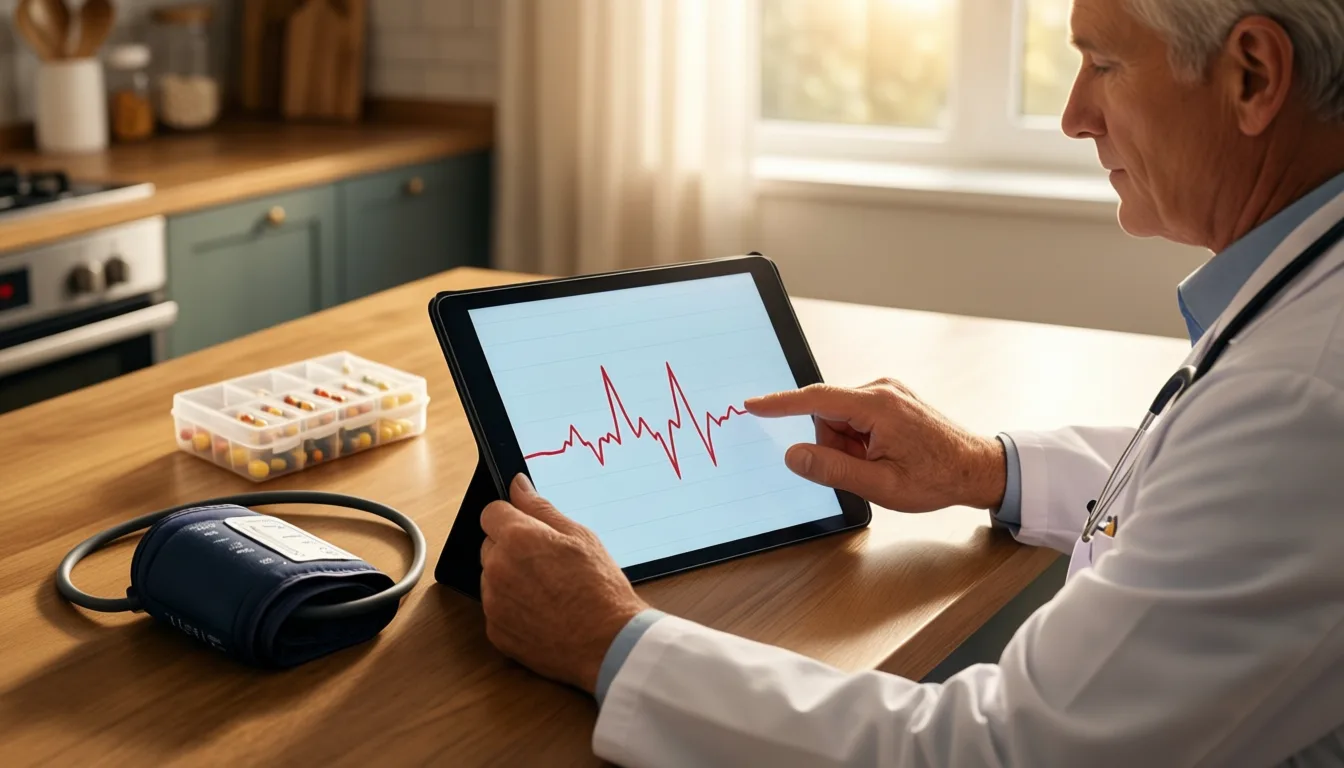
The evidence base for remote heart failure monitoring is strongest when devices connect to a care team that can act on the data.
The technology is graduating from lifestyle accessory to clinical instrument—carefully, and with caveats.
Kidneys: the next frontier, still in the lab
If heart failure represents the maturing edge of remote monitoring, chronic kidney disease (CKD) represents the emerging one. CKD affects more than 850 million people worldwide, and current diagnostics—serum creatinine, estimated glomerular filtration rate, urinary albumin—are intermittent snapshots of a slowly evolving disease. A 2026 review in Biosensors surveys the landscape of wearable platforms designed to fill that gap with continuous, non-invasive measurement.
The science is genuinely interesting. Researchers are exploring electrochemical, optical, and field-effect transistor sensing mechanisms applied to sweat, interstitial fluid, and saliva, with materials engineered to be flexible and skin-conformal. The vision is a patch or wristband that tracks renal biomarkers the way a continuous glucose monitor tracks sugar—catching dynamic changes that lab draws miss entirely.
The honest framing: this is a review of the field, not a clinical endorsement of any specific device. The same review catalogues the obstacles standing between the lab bench and the pharmacy shelf—biofouling, enzymatic instability, and variability in biofluid composition—alongside emerging fixes like antifouling interfaces and synthetic recognition elements. Translation will take years, regulatory pathways are still being mapped, and busy professionals should treat any consumer device claiming to monitor kidney health with skepticism until the evidence is there.
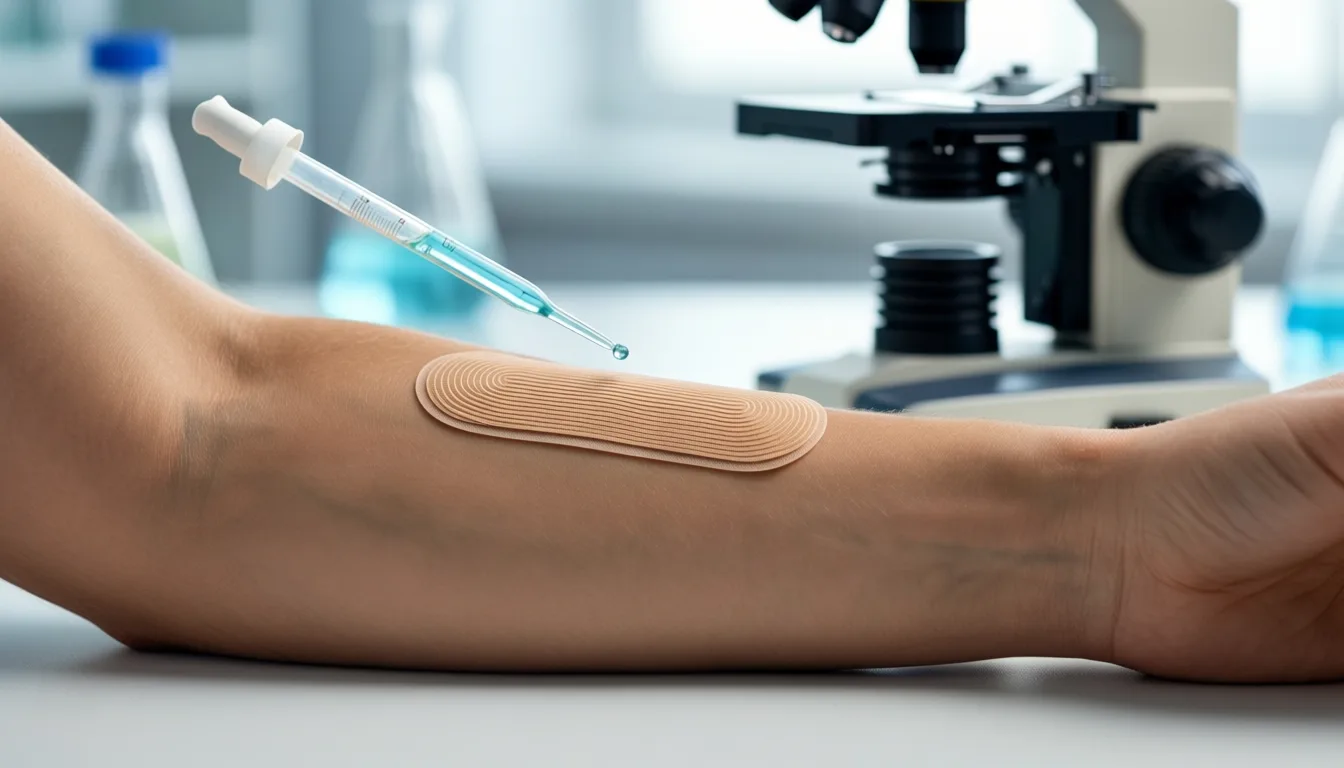
Wearable kidney monitoring is moving fast in materials science, but clinical-grade devices for consumers are not here yet.
Breath, captured continuously
Respiratory rate is one of the most informative vital signs and one of the most poorly captured in everyday clinical practice—often counted by eye, often inaccurately. A 2026 validation study in Biosensors tested the PneumoWave biosensor against both a programmable manikin and 20 healthy volunteers, with the manikin running at 6 to 30 breaths per minute and 10-second simulated apnea episodes.
The agreement was tight. In vitro correlation with the manikin reached r = 0.99 with all apnea events detected, and in volunteers the biosensor showed equally strong agreement with direct observation (r = 0.99, ICC = 0.99), with 97% of apnea events captured across body postures of 45°, 90°, and 180°. Posture did not significantly degrade accuracy—an important detail for any device that has to work while a person sleeps, slumps in a meeting, or lies in a hospital bed.
Two caveats worth holding onto. First, the in vivo cohort was small (20 healthy adults), so this is a validation of measurement fidelity, not proof of clinical benefit at scale. Second, simulated apnea on a manikin is not the same as sleep apnea in a patient with comorbidities. Still, the data make a credible case that accurate continuous respiratory monitoring is technically within reach—relevant for anyone interested in sleep quality, recovery, or post-operative safety.
How to think about all of this
The arc across these three studies is consistent. Remote and wearable monitoring works best when it is integrated into a care pathway, when the outcomes being measured are clinically meaningful, and when the technology is judged against the right benchmark—not perfection, but the messy status quo of intermittent labs, eyeballed vital signs, and missed early warnings. By that benchmark, the evidence is moving in the right direction.
For busy professionals, the practical implication is modest. If you live with heart failure or care for someone who does, the case for asking a cardiologist about a remote monitoring program is now stronger than it was a year ago. If you are tracking sleep or recovery, continuous respiratory rate is plausibly worth more attention than another step counter. And if you are healthy, the most useful wearable is still the one whose data you would actually share with a clinician who can interpret it.
The wearable is growing up. It is not yet a stethoscope, and it does not need to be. It needs to be useful—and increasingly, it is.
Frequently asked questions
How strong is the evidence that remote monitoring helps people with heart failure?
A 2026 systematic review pooled 65 randomized controlled trials covering roughly 23,000 patients and found remote monitoring was associated with a statistically significant reduction in all-cause mortality and a 22% reduction in heart failure hospitalizations. Trial sequential analysis suggested the cumulative evidence has crossed the threshold required to support a stable mortality signal, meaning further trials are unlikely to overturn the direction of the finding.
Can I buy a wearable right now to monitor my kidney health?
Clinical-grade wearable devices for kidney monitoring are not yet available for consumers. The research is still largely at the lab stage, with obstacles like biofouling, enzymatic instability, and variability in biofluid composition yet to be fully resolved, and regulatory pathways are still being mapped. The article advises treating any consumer device currently claiming to monitor kidney health with skepticism until the evidence is there.
How accurate was the breathing biosensor described in the article?
The PneumoWave biosensor showed very strong agreement with direct observation in 20 healthy volunteers, achieving a correlation of r = 0.99 and capturing 97% of simulated apnea events across body postures of 45°, 90°, and 180°. Posture did not significantly degrade accuracy, which the article notes is an important detail for a device that needs to work while a person sleeps or lies in a hospital bed.
Does it matter whether my wearable data is shared with a doctor or care team?
According to the article, the heart failure benefits documented in the meta-analysis emerged specifically when monitoring connected patients to clinicians who could act on the data, through structured telephone support, telemonitoring, or implanted sensors feeding a care team. A device with no one on the other end of the data is unlikely to replicate those results.
How big a difference does remote heart failure monitoring actually make for an individual patient?
The article describes the effect as real but modest — a roughly 9% relative reduction in mortality that is clinically meaningful at population scale but underwhelming at the individual level, with a number needed to treat of 104 per year to prevent one death. It characterizes remote monitoring as an additive intervention layered onto good care, not a transformative or replacement therapy.
Sources
- Remote Patient Monitoring in Heart Failure: A Systematic Review, Meta-Analysis, and Trial Sequential Analysis. — Cureus
- Wearable Biosensors for Continuous Monitoring of Chronic Kidney Disease: Materials, Biofluids, and Digital Health Integration. — Biosensors
- Assessment of Respiratory Rate and Simulated Apnea Utilizing the PneumoWave Biosensor: In Vitro and In Vivo Validation. — Biosensors
Join the conversation
Comments are moderated and reviewed before they appear. Be constructive — this is health information.
Add your comment