
Aerobic Capacity Is Brain Capacity: How VO2peak Tracks With White-Matter Health
A new lifespan MRI study links higher cardiorespiratory fitness to cleaner white matter and fewer brain lesions — a moderate-evidence case that training your engine trains your wiring.
The treadmill test is a brutally honest instrument. You strap on a mask, the belt tilts, the pace climbs, and somewhere past your comfort zone a number falls out: V̇O2peak — the most oxygen your body can pull from air and push into working muscle. Endurance athletes obsess over it because it predicts race pace. Cardiologists like it because it predicts mortality. And now a team publishing in GeroScience has added another reason to care: across the adult lifespan, that single number tracks with the microscopic health of the wiring inside your skull.
The study, led by Junyeon Won and colleagues at UT Southwestern, scanned 177 healthy adults spanning early adulthood to late life. Everyone did a treadmill test to exhaustion to nail down V̇O2peak. Everyone then went into an MRI for two complementary looks at the brain's white matter: diffusion tensor imaging (DTI) to probe microstructural integrity at the scale of individual axon bundles, and FLAIR imaging to measure white-matter hyperintensities (WMH) — the bright punctate lesions that accumulate with age and vascular wear. A cognitive battery rounded out the protocol.
The headline finding: higher cardiorespiratory fitness was associated with lower free-water signal in white matter, a DTI metric that, when elevated, suggests the tissue scaffolding is loosening — extracellular water creeping in where tightly packed, myelinated axons should dominate. Fitter brains looked structurally tidier.
The interaction that matters
Cross-sectional fitness-and-brain studies are a dime a dozen, and most of them tell you something you could guess: older brains look worse, fitter people look better. What makes this paper interesting is the age × V̇O2peak interaction the authors found in two specific places — free water in the corpus callosum (the great white highway connecting the hemispheres) and total WMH volume. The positive slope of decline with age was shallower in higher-fit participants than in lower-fit ones.
Translated: everyone's white matter degrades with time, but the trajectory bends. Aerobic capacity appears to act less like a one-time deposit and more like a discount rate applied to the cost of aging. And the lesions and microstructural fraying weren't cosmetic — lower WMH volume and lower corpus-callosum free water were associated with better fluid cognition, the kind of on-the-fly reasoning that erodes first as we age.
Aerobic capacity appears to act less like a one-time deposit and more like a discount rate applied to the cost of aging.
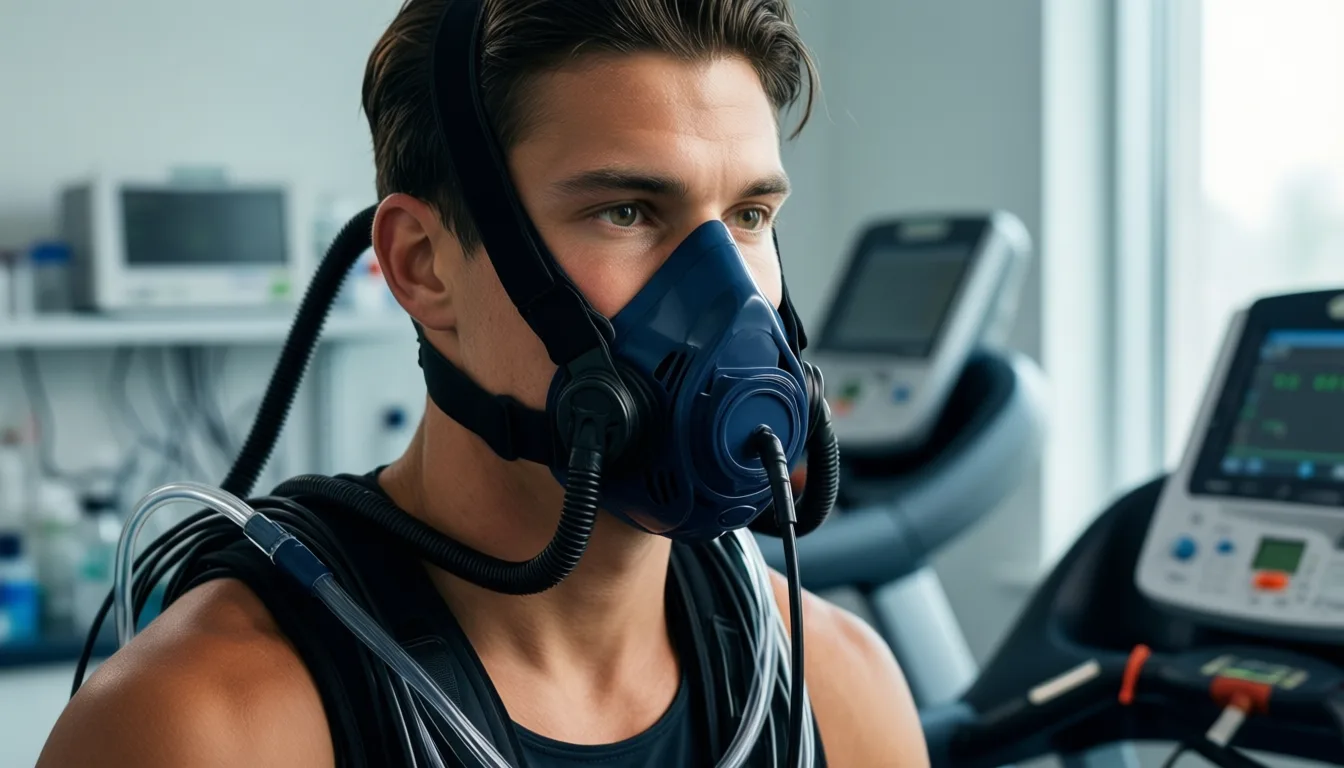
V̇O2peak is measured directly via expired-gas analysis on a graded exercise test — the gold standard the GeroScience cohort used.
Why white matter, and why free water
For performance readers used to thinking about mitochondria and capillary density, white matter is a worthy obsession. It's the brain's transmission system: myelinated axons bundled into tracts that move signals between regions fast enough for fluid cognition to feel instantaneous. When those bundles degrade — through demyelination, axonal loss, or small-vessel ischemia — signal latency creeps up, networks decouple, and processing speed sags.
Standard DTI metrics like fractional anisotropy can be fooled by extracellular water leaking into the voxel. The free-water correction the UT Southwestern team used separates the tissue compartment from that contaminating signal, giving a cleaner read on the axons themselves. That higher V̇O2peak tracked with lower free water suggests fitter brains have less of that telltale interstitial seepage — consistent with healthier microvasculature, better perfusion, or both.
The corpus callosum showing up as a hotspot is not surprising. It's metabolically demanding, vascularly vulnerable, and one of the first tracts to show age-related decline. If aerobic fitness is buying protection somewhere, the CC is exactly where you'd hope to see it.
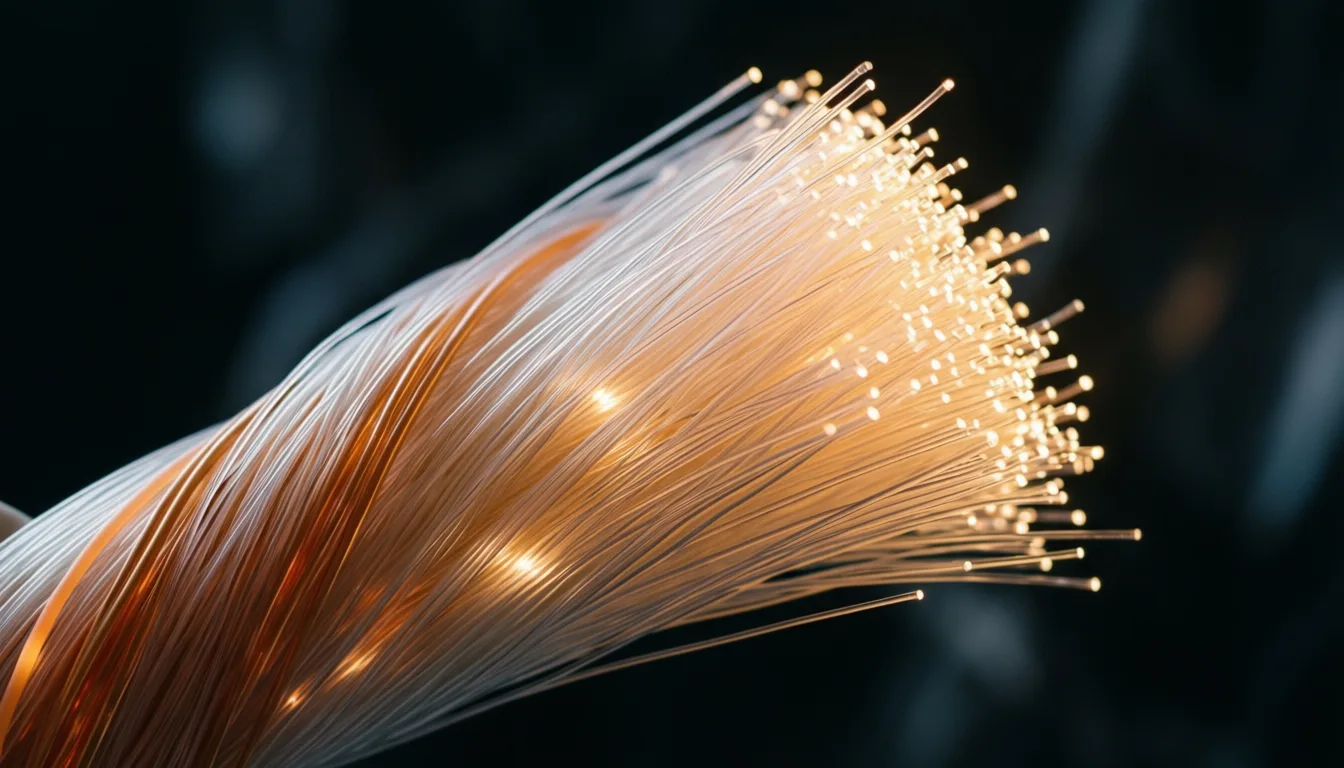
White-matter tracts are the brain's bandwidth. Free-water-corrected DTI lets researchers see the axons more clearly through the noise.
What the study can and can't tell us
This is where the moderate evidence rating earns its keep. The design is cross-sectional: a snapshot of 177 brains and their owners' fitness on a given day. It cannot prove that training up your V̇O2peak will rescue your corpus callosum. Healthier brains and healthier hearts share upstream determinants — genetics, sleep, metabolic health, education, decades of daily choices — and any of those could be doing work the model attributes to fitness. The sample is healthy adults, not a clinical population, which is good for generality but limits inference about disease prevention.
What it does offer is biologically coherent, lifespan-wide evidence that the people carrying higher aerobic capacity also carry structurally better-looking brains, and that the gap widens with age in exactly the tissues that matter for cognition. Combined with prior work in older adults that the authors build on, the direction of the arrow is consistent even if causality isn't nailed down.
Training implications, held loosely
The paper doesn't prescribe a protocol, and neither will we. But the broader exercise-physiology literature is unambiguous that V̇O2peak responds to training at every age studied, and the classic recipe — a base of zone-2 aerobic volume layered with regular high-intensity intervals (the 4×4 protocol is the most-studied) — remains the most reliable way to move the number. For the endurance reader already doing this work for race times, the GeroScience data is a quiet bonus: the same sessions that lift your threshold may be defending the wiring that lets you remember the splits afterward.
The honest framing is this. Aerobic capacity is one of the few biomarkers you can train hard and measure precisely, and it keeps showing up in places that matter — mortality curves, metabolic health, and now white-matter integrity across the lifespan. The mechanisms are plausible, the human evidence is accumulating, and the intervention is something most readers of this magazine are already doing. The upside case is that we're training brains as a side effect of training engines.
- The finding: In 177 healthy adults, higher V̇O2peak was associated with lower free-water DTI signal and the age-related rise in white-matter hyperintensities was blunted in fitter individuals.
- The cognitive link: Lower WMH volume and lower corpus-callosum free water tracked with better fluid cognition scores.
- The caveat: Cross-sectional design — strong association, not proof of causation. Shared upstream factors could be doing some of the work.
- The mechanism (plausible): Better cerebral perfusion and microvascular health in higher-fit brains, captured by the free-water correction that filters out interstitial seepage.
- The takeaway for training: The same aerobic base + intervals that move race pace move the biomarker most consistently linked to brain-tissue integrity.
- The framing: Educational, not prescriptive — consult a clinician before structured high-intensity work.
Frequently asked questions
What exactly did the study find about the relationship between fitness and brain white matter?
In 177 healthy adults, higher VO2peak was associated with lower free-water signal in white matter, suggesting structurally tidier tissue. Critically, the age-related rise in white-matter hyperintensities and free water in the corpus callosum was shallower in higher-fit participants, meaning aerobic capacity appeared to slow the trajectory of white-matter decline rather than simply reflecting a one-time advantage.
Why does the corpus callosum specifically keep coming up in this research?
The article describes the corpus callosum as metabolically demanding, vascularly vulnerable, and one of the first tracts to show age-related decline. Because it is the main structure connecting the brain's two hemispheres, it is exactly where the researchers would expect to see protective effects if aerobic fitness were buying protection anywhere in the white matter.
Does this study prove that exercising more will protect my brain?
No — the study is cross-sectional, meaning it is a snapshot in time and cannot prove that raising your VO2peak will rescue your white matter. Healthier brains and healthier hearts share upstream determinants such as genetics, sleep, metabolic health, and education, any of which could be responsible for the association the researchers observed.
What type of cognitive ability was linked to white-matter health in this study?
Lower white-matter hyperintensity volume and lower free water in the corpus callosum were both associated with better fluid cognition — described in the article as the kind of on-the-fly reasoning that erodes first as people age.
Can a smartwatch or fitness app give me an accurate VO2peak reading?
According to the article, a true VO2peak requires a lab test using expired-gas analysis, which is the gold standard the study used. Field estimates from tools like the Cooper test, Garmin or Apple Watch algorithms, or the Rockport walk test provide a usable proxy but not the same level of precision. The article suggests periodic lab testing every 12 to 24 months to track your trajectory over time.
Join the conversation
Comments are moderated and reviewed before they appear. Be constructive — this is health information.
Add your comment