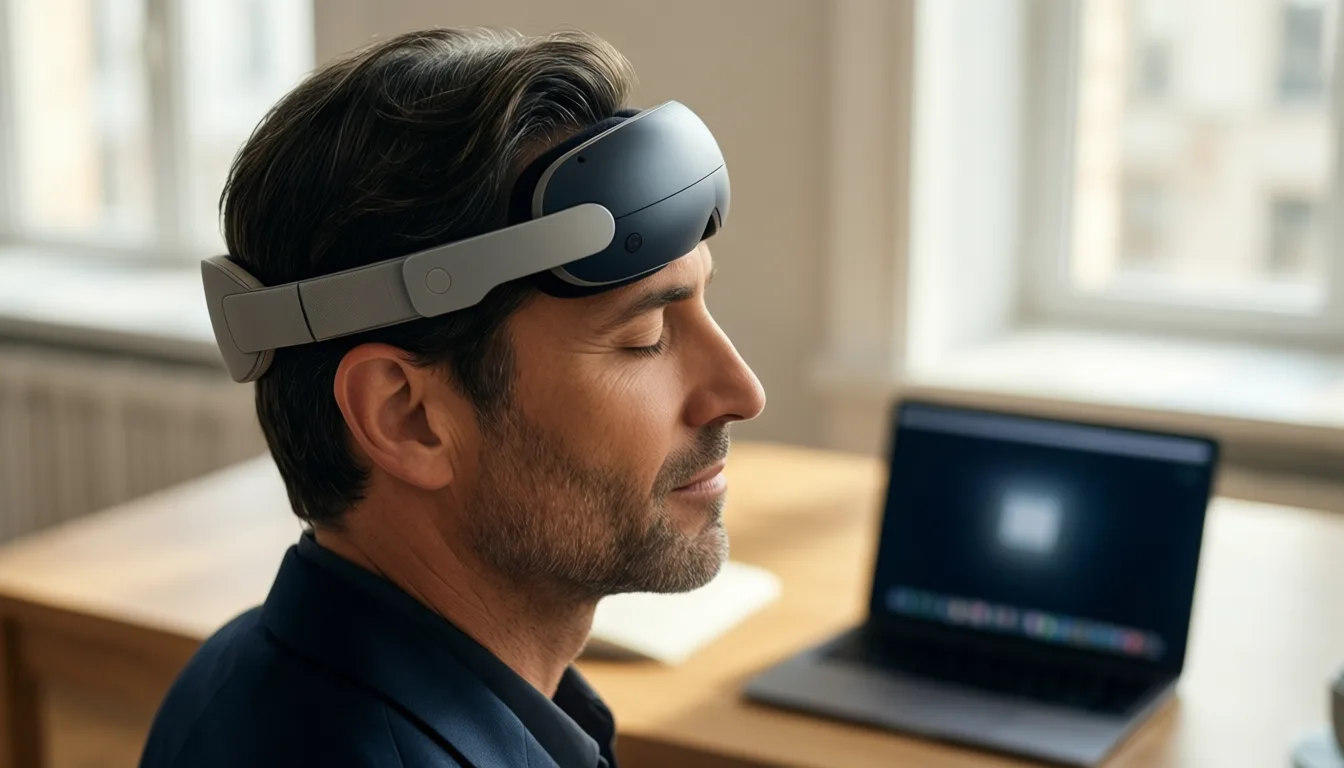
Brain-Computer Interfaces Grow Up: Why Individualization Is the Next Frontier
The lab demos are dazzling, but a new review argues the real unlock for BCIs is designing around the person — their development, their aging brain, their life.
For a technology so often described in the language of science fiction, the brain-computer interface is having a surprisingly grown-up moment. The headlines still belong to surgical implants and viral demos — a cursor moved by thought, a paralyzed patient typing at conversational speed — but the quieter story unfolding in the literature is about something far less cinematic and far more consequential. After decades of proving that BCIs can work, researchers are now asking the harder question: how do you make them work for a specific person, in a specific body, across a specific life?
That is the throughline of a new review in Frontiers in Human Neuroscience, which argues that the next frontier for BCI-based assistive and rehabilitative technologies (ARTs) is not bandwidth or electrode count but individualization — designs that account for the user's neurodevelopment, aging trajectory, disability profile, and psychosocial context. It is a deceptively modest reframing. It is also, the authors suggest, the difference between a lab demo and a tool someone actually uses on a Tuesday afternoon.
The premise is straightforward. BCIs let a person bypass typical peripheral motor pathways to control external devices, restoring or extending mobility, communication, and cognition. But the population that stands to benefit most is also the most heterogeneous imaginable: a child born with cerebral palsy, an adult with late-stage ALS, an older stroke survivor relearning a hand. The review's authors note that the complexity of disability types and the wide range of residual function across users effectively define individual needs — which is another way of saying that a one-size-fits-all BCI is, almost by definition, a BCI that fits no one particularly well.
The brain is a moving target
The second insight is biological. The brain a BCI talks to at age seven is not the brain it will talk to at seventy. Cortical maps reorganize through development, prune in adolescence, and shift again with the slow architectural changes of aging. Add a stroke, a progressive neurodegenerative condition, or simply the plasticity induced by months of BCI training itself, and the signal landscape is in constant motion. The review draws particular attention to how brain changes during development and aging should shape both the engineering and the ethical use of these systems — a point that has been underweighted in a field historically focused on healthy adult volunteers.
For longevity-minded readers, this is the interesting wrinkle. BCIs are usually framed as assistive tech for the disabled, but the underlying problem — extracting reliable intent from a brain whose substrate is shifting — is the same problem aging itself poses. An interface that can track and adapt to a 75-year-old's slowly changing sensorimotor cortex is, in principle, an interface that could ride the curve of normal cognitive aging too.
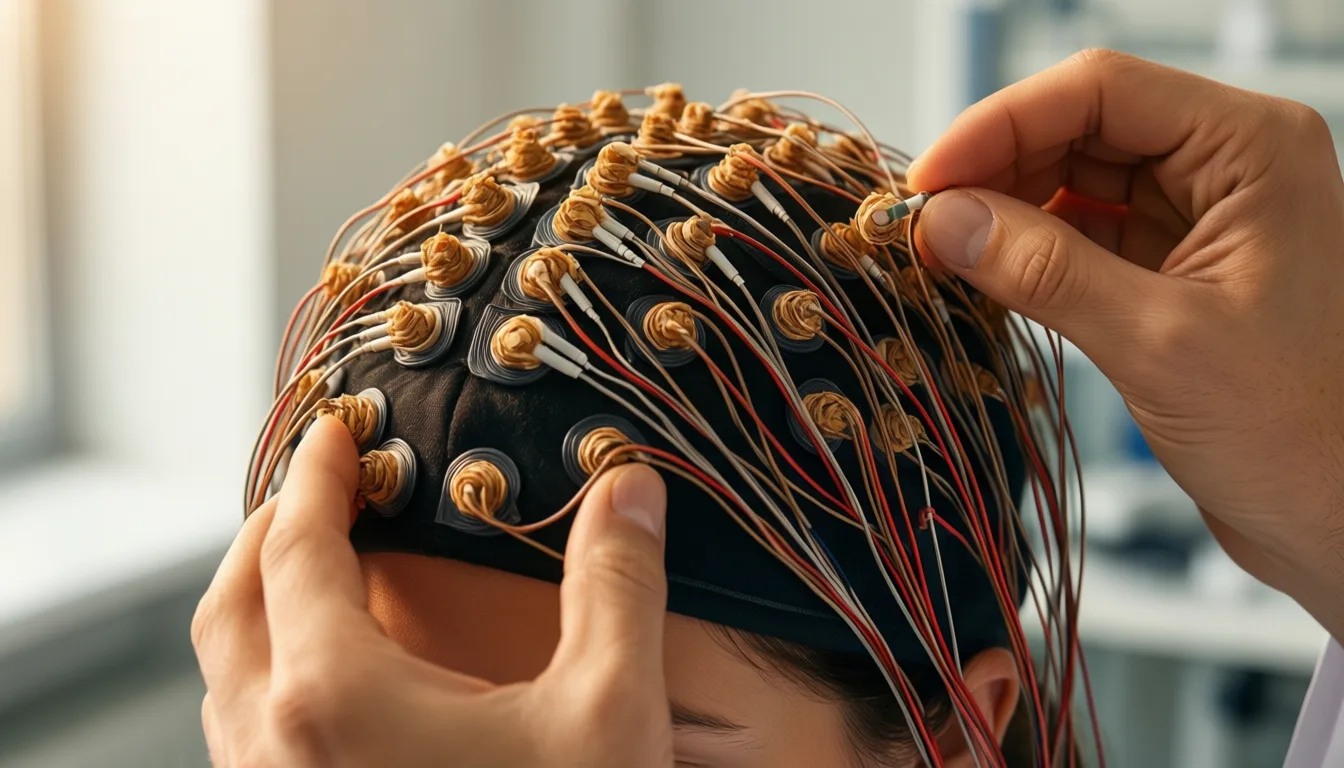
Non-invasive systems still dominate real-world use, trading signal fidelity for accessibility and transferability across users.
Implant or not? A more honest trade-off
The Neuralink era has made implantable BCIs feel inevitable, but the review pushes back gently on that framing. Implantable systems offer richer signals and finer control, but they carry surgical risk, slower iteration cycles, and a much harder consent calculus — especially for pediatric users or adults with communication or cognitive disabilities, where the very faculties needed to give informed consent may be the ones in question.
Non-implantable BCIs, meanwhile, are quietly winning on a different axis. Because they rely on more standardized signal acquisition and algorithms that generalize better across users, the review notes they offer broader accessibility and transferability, making them better suited to a wider user group. The trade-off is real — less bandwidth, more noise — but for the bulk of assistive use cases, the calculus may favor the headset over the craniotomy for years to come.
A one-size-fits-all BCI is, almost by definition, a BCI that fits no one particularly well.
Beyond the signal: the psychosocial layer
Perhaps the most underrated argument in the review is that BCI design has to integrate psychosocial and health-related factors alongside the engineering. A device that restores typing speed but exhausts the user after twenty minutes, or one that demands a caregiver's full attention to calibrate each morning, is not really restoring autonomy — it is relocating the burden. The authors frame adaptability not as a nice-to-have but as the precondition for scale: without it, every deployment becomes a bespoke research project, and the field stays stuck in the demo phase.
That framing matters because it shifts the success metric. The question is no longer "how many bits per minute?" but "can this person use this device, in their home, for the things they actually want to do, six months from now?" It is a less glamorous benchmark. It is also the one that will determine whether BCIs become a durable category of medicine or remain a recurring TED-talk fixture.
- Individualization is the gating problem. Disability type, residual function, and life stage vary so widely that adaptable design — not raw performance — is what limits real-world adoption.
- The brain is not static. Neurodevelopment and aging reshape the signals BCIs depend on, with direct implications for design and long-term ethical use.
- Non-invasive systems still have the edge on reach. Standardized signal acquisition and better algorithm generalization make them more transferable across users than implants.
- Consent is genuinely hard. For pediatric users and people with cognitive or communication disabilities, the ethics of implantation deserve more scrutiny than the hype cycle gives them.
- Psychosocial fit is part of the device. Fatigue, caregiver burden, and daily usability determine whether a BCI is actually used — or quietly abandoned.
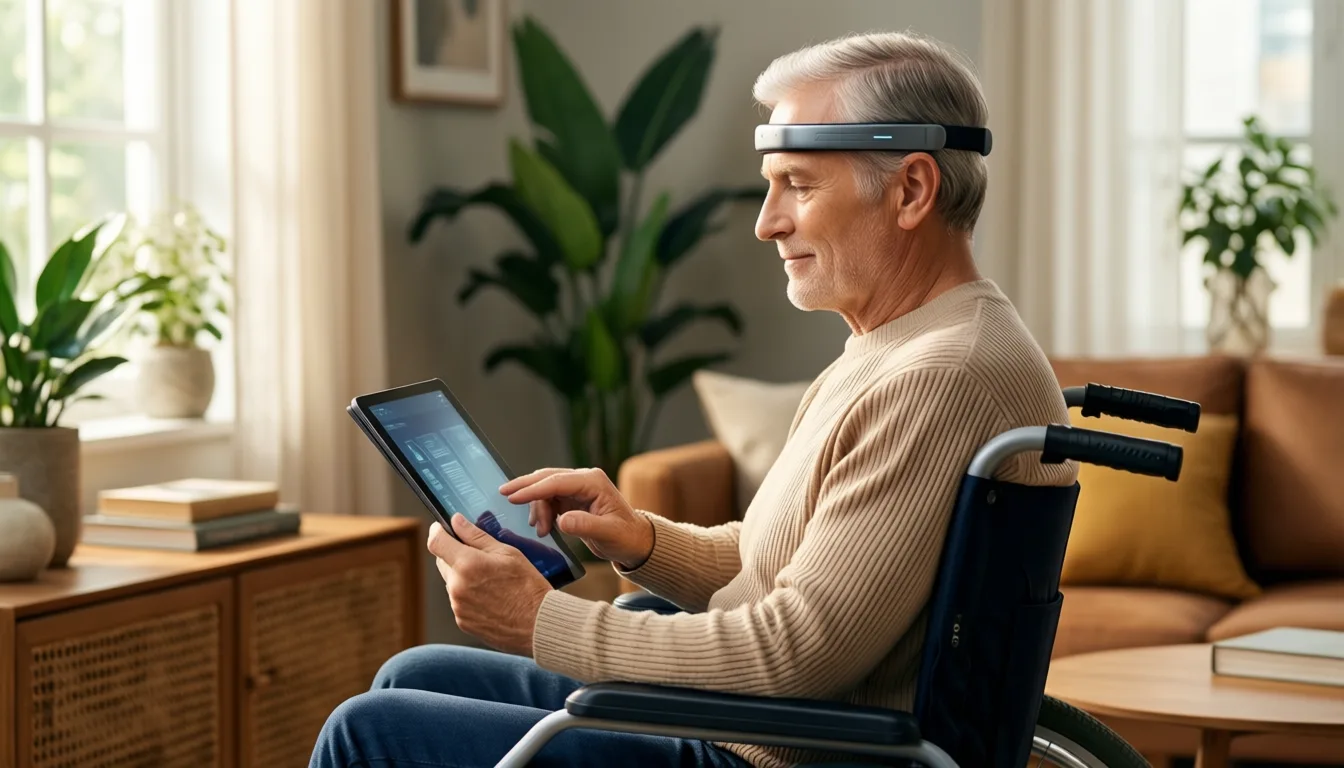
The real benchmark isn't bits per minute — it's whether the device is still in use six months later.
What a maximalist should actually watch
If you are tracking this space for its longevity implications, the signal-to-noise ratio in BCI coverage is brutal. Surgical demos dominate the feed; the slow work of adaptive algorithms, longitudinal calibration, and lifespan-aware design rarely trends. The review is a useful corrective. It suggests the next decade of meaningful progress will look less like a bigger electrode array and more like a quieter set of advances: models that re-tune themselves as the user's cortex changes, consent frameworks that accommodate fluctuating capacity, and devices designed from day one for a brain that will keep changing.
None of this is a reason to discount the implant trajectory — the signal quality argument is real, and for the most severe motor disabilities, it may be the only path. But the review's argument is that the field's center of gravity should shift toward the user, not the electrode. For a generation of readers who think about their own brains as systems to be optimized over decades, that is the more interesting story.
Frequently asked questions
Why can't one BCI design work for everyone?
The population that stands to benefit most from BCIs is highly heterogeneous, ranging from a child born with cerebral palsy to an adult with late-stage ALS to an older stroke survivor. Disability types and the wide range of residual function across users define individual needs, which means a one-size-fits-all BCI is, almost by definition, a BCI that fits no one particularly well.
How does aging affect the brain signals a BCI relies on?
Cortical maps reorganize through development, prune in adolescence, and shift again with the slow architectural changes of aging. Add a stroke, a progressive neurodegenerative condition, or even the plasticity induced by months of BCI training itself, and the signal landscape is in constant motion.
What advantages do non-invasive BCIs have over implantable ones?
Non-invasive BCIs rely on more standardized signal acquisition and algorithms that generalize better across users, offering broader accessibility and transferability across a wider user group. They avoid surgical risk and the difficult consent calculations that implantable systems require, especially for pediatric users or adults with communication or cognitive disabilities.
Why do psychosocial factors matter in BCI design?
A device that restores a function but exhausts the user after twenty minutes, or requires a caregiver's full attention to calibrate each morning, is not truly restoring autonomy — it is relocating the burden. The review's authors frame adaptability as the precondition for scale, arguing that without it every deployment becomes a bespoke research project and the field remains stuck in the demo phase.
What does the article identify as the real benchmark for BCI success?
The review argues the question is no longer how many bits per minute a BCI can transmit, but whether a person can use the device in their home, for the things they actually want to do, six months from now. That benchmark, the authors suggest, will determine whether BCIs become a durable category of medicine or remain a recurring demonstration technology.
Sources
- Individualized brain-computer interface for people with disabilities: a review. — Frontiers in human neuroscience
Join the conversation
Comments are moderated and reviewed before they appear. Be constructive — this is health information.
Add your comment