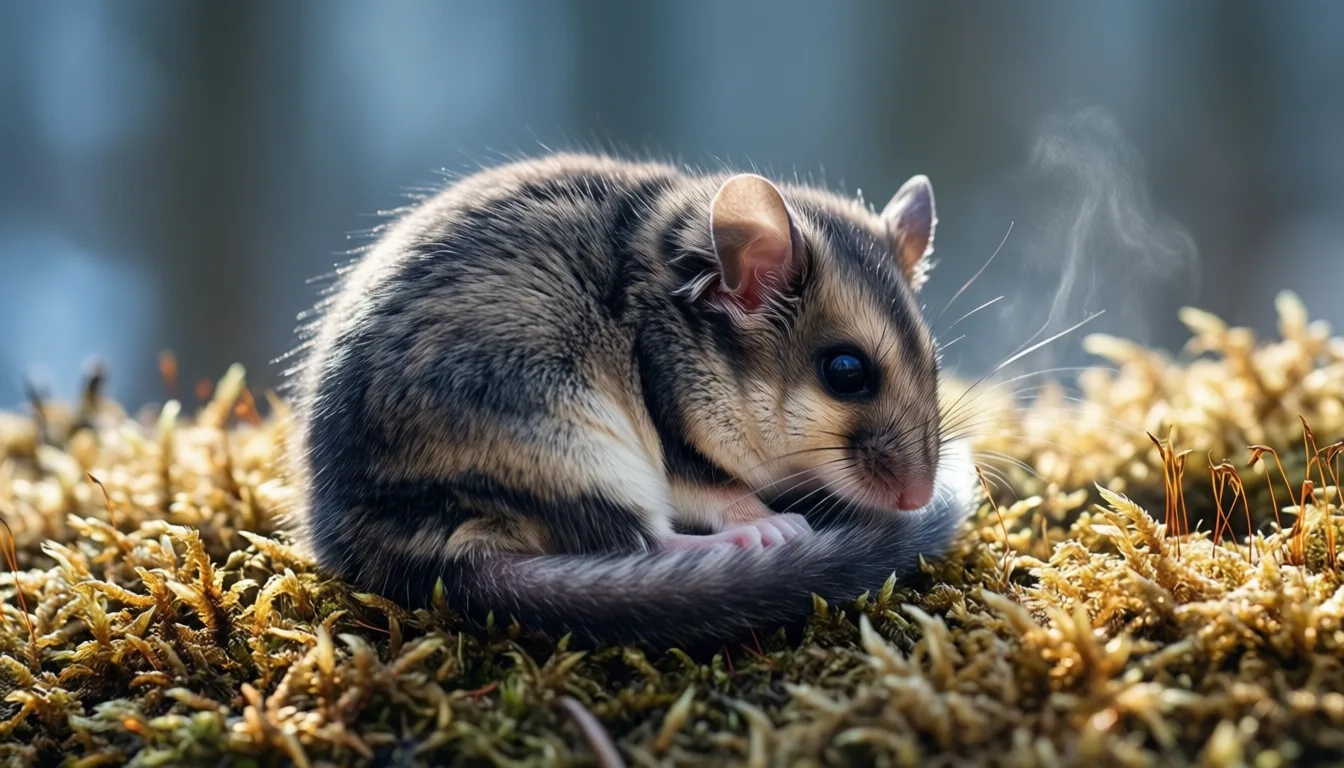
Torpor on Demand: A Brain Switch That Slowed Epigenetic Aging in Mice
A new Nature Aging paper shows that activating a small cluster of neurons can drop mice into a hibernation-like state — and the cooler core temperature, not the fasting, appears to be what bends the epigenetic clock.
For decades, hibernation has been longevity's most tantalizing natural experiment. Ground squirrels, lemurs and bears routinely outlive their metabolic peers, and the suspicion has been that the trick lies somewhere in the controlled cooling and slowing of the body itself. The problem has always been the same: correlation. Hibernators do many unusual things at once, and untangling which of those things actually buys time has been nearly impossible. A new paper in Nature Aging takes a sharp run at that tangle — and, in mice at least, comes back with an answer that is both more specific and more surgical than anyone had a right to expect.
The work, led by Sinisa Hrvatin's lab with collaborators including Steve Horvath, the architect of the epigenetic clock, demonstrates that a spatially defined cluster of neurons in the preoptic area of the mouse brain is sufficient to induce what the authors call a torpor-like state, or TLS. When those neurons are activated for extended periods, the mice cool, slow, and — strikingly — their blood epigenetic age advances more slowly than that of their littermates. Healthspan markers improve in parallel. The headline finding, reported in Jayne and colleagues' 2025 paper, is the first causal demonstration that induced hypometabolism is geroprotective rather than merely correlated with longer life.
- Causal, not correlational. Activating preoptic-area neurons was sufficient to induce a torpor-like state and slow epigenetic aging in mice.
- Temperature is the lever. When the authors decomposed the effect, lower core body temperature — not caloric restriction or metabolic rate alone — carried the signal.
- Multi-tissue effect. Epigenetic-clock deceleration appeared across multiple tissues, with healthspan improvements alongside.
- Mice, not people. This is preclinical work in a species that naturally enters daily torpor; humans do not, and the translational distance is large.
- Reframes the question. If body temperature is a true mediator of aging, the long debate over why caloric restriction works gets a new candidate mechanism.
What the experiment actually did
Mice are facultative daily torpor users: when food is scarce or temperatures drop, they can let their core temperature fall and their metabolism slump for hours at a time. Earlier work had pinpointed a region of the preoptic area as a regulator of that response. The new study takes the next step and asks whether driving those neurons on demand is enough to reproduce the state — and what happens to the animal's biological age if you keep doing it.
According to the Nature Aging report, the answer to the first question is yes: targeted neuronal activation reliably produced a torpor-like state with the expected drops in core temperature and metabolic rate. The answer to the second is the interesting one. Prolonged induction of TLS measurably slowed blood epigenetic aging and improved healthspan metrics across multiple tissues.
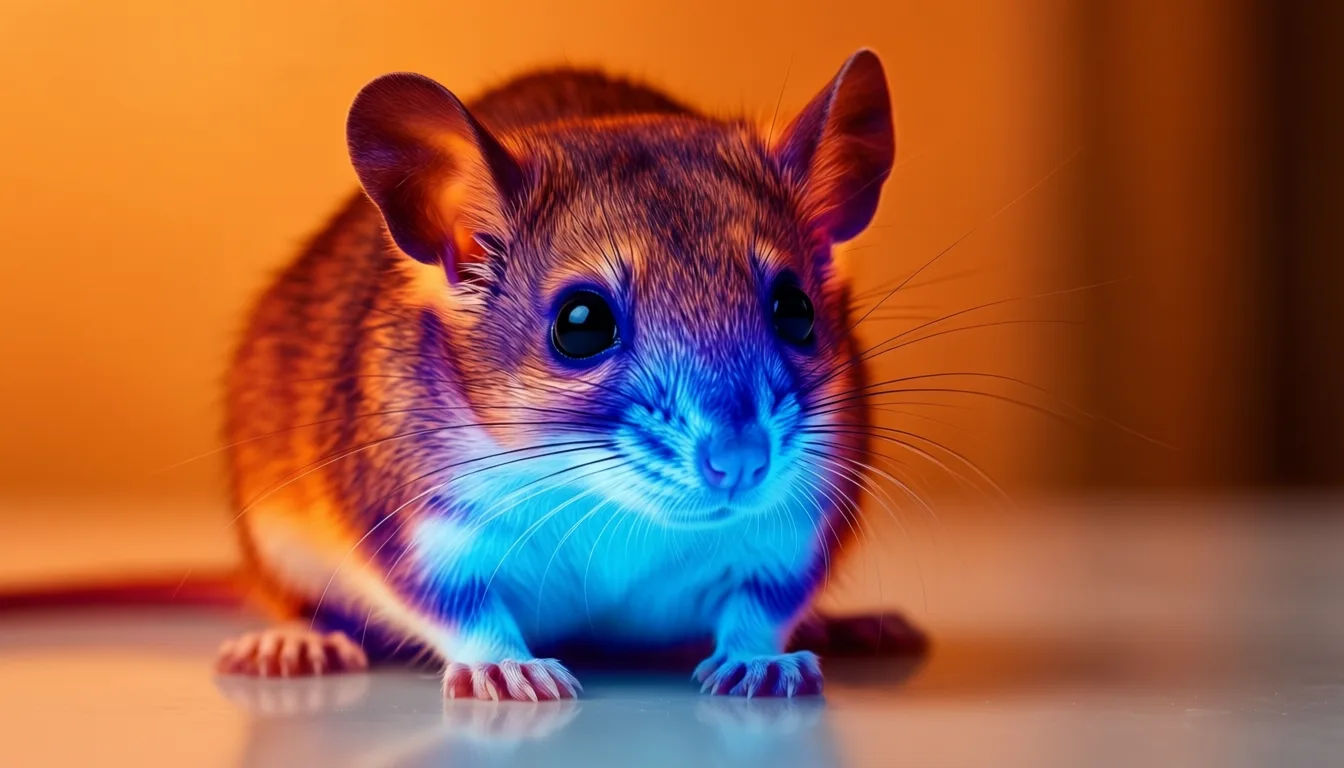
Torpor is defined by what it subtracts — heat, motion, fuel use — rather than what it adds.
The decomposition that matters
The most consequential move in the paper is methodological. Torpor bundles three things that geroscience has long argued about separately: lower metabolic rate, de facto caloric restriction (animals in torpor don't eat), and lower core body temperature. Each has its own decades-old literature and its own partisans. The Hrvatin group designed experiments to pull these levers independently and asked which one carried the epigenetic-aging signal.
Their conclusion, as stated in the paper, is that the decelerating effect of TLS on blood epigenetic aging is mediated by decreased core body temperature. Not the fasting. Not the metabolic slowdown by itself. The cooling.
The decelerating effect of torpor on aging is mediated by decreased core body temperature — not the fasting, not the metabolic slowdown alone. Jayne et al., Nature Aging, 2025
That is a provocative finding because it reframes a question geroscientists have been arguing about for years: why does caloric restriction extend life in so many species? One persistent hypothesis has been that part of the benefit is indirect, mediated by the small drop in core temperature that restricted animals tend to show. The new work doesn't settle that debate, but it puts temperature squarely back at the center of it — as a candidate causal mediator rather than a passive correlate.

Daily torpor is a normal part of small-mammal physiology. Humans have no comparable native program.
What this is not
It is worth being precise about what the study does and does not claim. It is a mouse study. The intervention is invasive neural activation, not a pill, a cold plunge, or a wearable. The readout is an epigenetic clock plus healthspan markers, not lifespan in the classical sense. And mice are obligately better at this than we are: humans do not enter torpor, and our thermoregulatory architecture is built for stubborn defense of 37 °C, not for graceful descent below it.
None of that diminishes the result. It does mean the translational distance is real. The most defensible reading is that Jayne and colleagues have produced the cleanest causal evidence to date that a hibernation-like physiological state is geroprotective, and that the active ingredient appears to be temperature. That is a hypothesis to test, not a protocol to adopt.
Why longevity readers should care anyway
The geroscience field has spent a long decade hunting for interventions that are both causal and mechanistically legible. Many candidates — senolytics, rapalogs, NAD precursors — have one of those properties but not always both. A neurally induced torpor-like state has, at least in mice, now demonstrated both: a clean causal handle and a mechanism that can be decomposed and tested. That is unusually good hygiene for this field.
The honest summary is that the Nature Aging paper does not tell us how to live longer. It tells us where to look. And it suggests that the thermostat — long assumed to be a passive setpoint that aging happens around — may be closer to a dial that aging happens through. That is a meaningfully different starting point for the next round of experiments, and it is the kind of result that earns its place on a longevity reader's radar without needing to be oversold.
Frequently asked questions
What is a torpor-like state (TLS) and how was it induced in the study?
A torpor-like state is a condition characterized by drops in core body temperature and metabolic rate, similar to natural torpor. In the study, researchers activated a specific cluster of neurons in the preoptic area of the mouse brain to reliably produce this state on demand.
Which factor in torpor was found to slow epigenetic aging — the fasting, the metabolic slowdown, or the cooling?
The study found that decreased core body temperature was the key mediator. The authors designed experiments to separate the effects of lower metabolic rate, caloric restriction, and lower body temperature, and concluded that the cooling carried the epigenetic-aging signal, not the fasting or metabolic slowdown alone.
Was the slowing of epigenetic aging seen in just one tissue or across the whole body?
The effect was multi-tissue. Epigenetic-clock deceleration appeared across multiple tissues, and healthspan improvements were observed alongside the epigenetic changes.
Does this study mean people should try cold exposure or other temperature-lowering practices to slow aging?
No. The authors are explicit that this is preclinical work in mice, the intervention involved invasive neural activation rather than any lifestyle practice, and humans do not naturally enter torpor. The paper is described as a hypothesis to test, not a protocol to adopt.
Why does this finding matter for the long-running debate about caloric restriction and longevity?
Caloric restriction is known to produce a small drop in core body temperature in animals, and one hypothesis has been that this temperature drop partly explains caloric restriction's life-extending effects. The new work puts temperature back at the center of that debate as a candidate causal mediator rather than a passive side effect, though the authors note it does not fully settle the question.
Join the conversation
Comments are moderated and reviewed before they appear. Be constructive — this is health information.
Add your comment