
PRP, Stem Cells, and Peptides: Where Regenerative Orthopedics Actually Has Evidence
A 2025 review of 160 studies grades four regenerative modalities for joint and tendon care. The signal is real — but uneven, and narrower than the marketing suggests.
Walk past any high-end orthopedic clinic in 2026 and you will see the same vocabulary on the window: platelet-rich plasma, stem cells, peptides, biomimetic scaffolds. The promise is seductive — repair instead of replace, regenerate instead of resect. The marketplace has expanded faster than the evidence underneath it, which leaves the curious reader with a genuinely hard question: which of these therapies has actually earned its place in a serious recovery plan, and which is selling a centrifuge dressed up as a cure?
A structured review published this year in the Journal of Clinical Medicine offers the most useful map yet. The authors screened roughly 160 studies from PubMed between 2009 and January 2025, then narrowed to 59 that met inclusion criteria prioritizing randomized controlled trials — 20 on platelet-rich plasma (PRP), 20 on mesenchymal stem cells (MSCs), 10 on peptide therapies, and 7 on biomimetic materials. Risk of bias was assessed with the Cochrane and ROBINS-I tools, and a random-effects meta-regression weighed therapy type, sample size, and bias against reported pain outcomes. It is, in other words, the kind of synthesis a longevity-minded reader should actually read before booking an injection.
The headline finding: not all four modalities are created equal, and the gap is wider than clinic brochures imply. In the meta-regression, MSC therapy emerged as the most effective intervention for pain reduction (β = 8.45, p < 0.05). PRP and peptide-based therapies showed moderate improvements. Biomimetic materials — the engineered scaffolds meant to coax tissue back into shape — landed at the bottom of the effect-size ranking. None of this means biomimetics are a dead end; it means the human clinical evidence is still thin and early.
PRP: a short-acting tool, not a cure
Platelet-rich plasma is the most familiar name on the list because it is the easiest to deliver: spin a patient's blood, concentrate the platelets, inject. The review's read on PRP is measured rather than dismissive. It provided short-term pain relief, particularly in acute injuries and tendon repair. That is a real, useful finding — and also a narrower claim than what is often advertised. The same review flagged that inconsistencies in preparation methods limited success in chronic conditions, which is the polite scientific way of saying that two clinics calling something "PRP" may be delivering meaningfully different products.
For the reader trying to translate this into a decision, the practical takeaway is unglamorous: PRP appears most defensible as a short-horizon intervention for an acute tendon or soft-tissue problem, and least defensible as a recurring maintenance ritual for chronic joint pain. Preparation protocol, platelet concentration, and leukocyte content are not trivial details; they are the intervention.
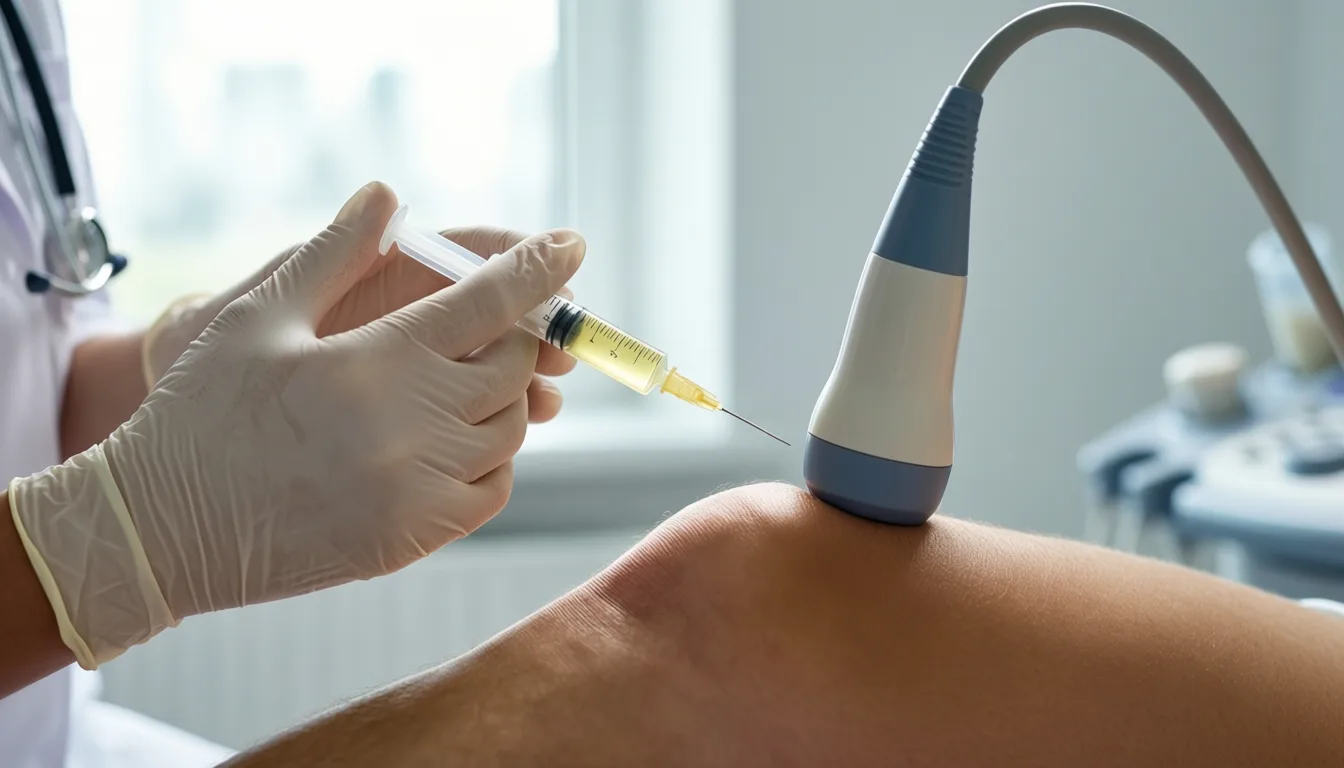
PRP's strongest signal is in acute tendon and soft-tissue injury — not chronic joint maintenance.
MSCs: the strongest signal, with the biggest caveats
Mesenchymal stem cells are where the review's enthusiasm and its disclaimers coexist most uncomfortably. The pain-reduction effect was the largest of the four modalities, which is exactly the result the regenerative field has been chasing for two decades. But effect size in a meta-regression is not the same as a finished clinical playbook. Cell source (bone marrow, adipose, umbilical), dose, expansion technique, and delivery route still vary widely across the studies that fed into the analysis, and the regulatory status of many MSC products remains unsettled.
What this means for a reader evaluating a clinic: the underlying biological signal is real and increasingly hard to wave away, and the operational details — where the cells came from, how they were processed, how they were delivered — determine whether you are buying into that signal or into something only loosely related to it. The right posture is curiosity with a high bar for documentation, not faith.
The biology is real. The product you are buying may or may not be.
Peptides and biomimetics: promising, premature
Peptide-based therapies — short amino-acid sequences designed to nudge specific repair pathways — landed in the moderate-improvement bucket alongside PRP. With only 10 trials meeting inclusion criteria, the evidence base is genuinely small, and the marketing is genuinely loud. The mismatch matters. A modest, replicated signal in a handful of RCTs is a reason to follow the field; it is not a reason to assemble a multi-peptide stack on the basis of a podcast.
Biomimetic materials sit further upstream still. Only seven studies cleared the review's bar, and the modality showed the lowest effect in the pain-reduction analysis. That is not a verdict on the underlying science — engineered scaffolds for cartilage and bone are an active and serious area of research — but it is a verdict on what the human clinical record currently supports. Today, biomimetics belong in trials, not on a consumer menu.
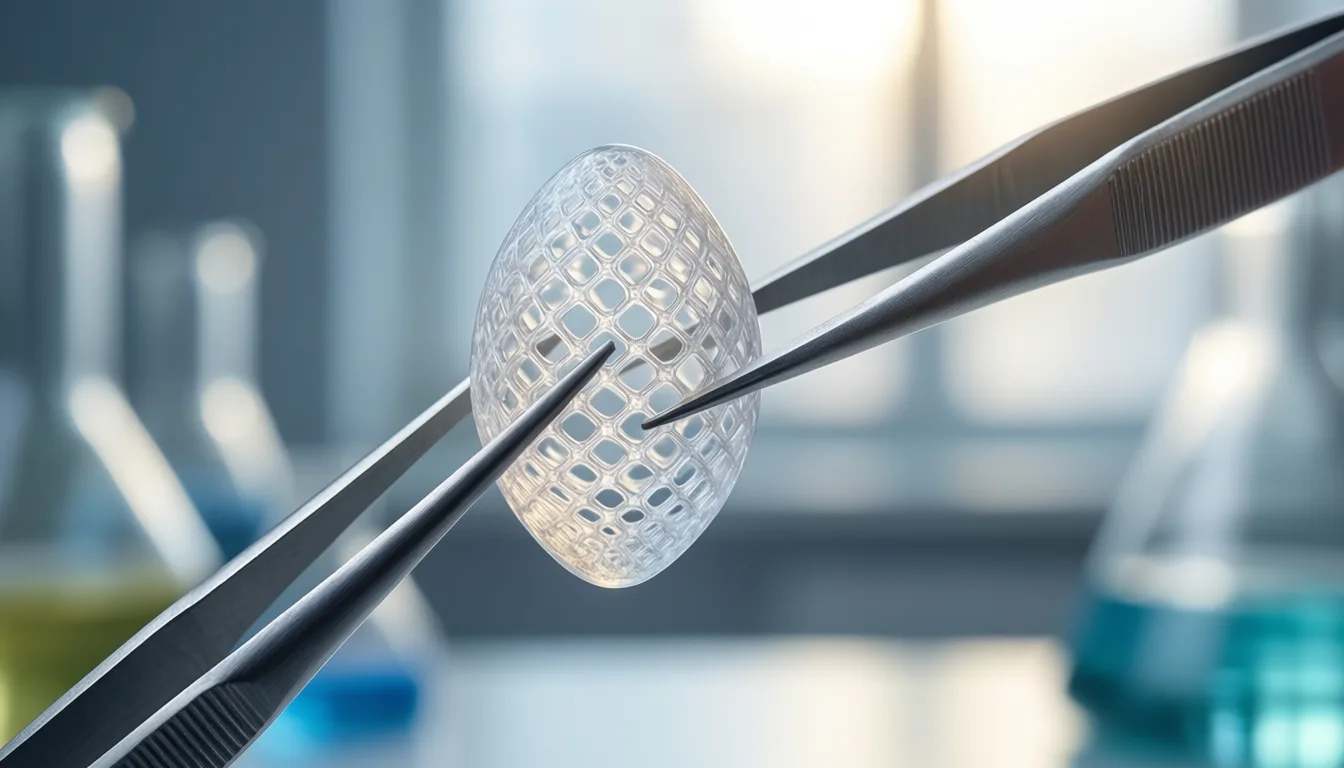
Biomimetic scaffolds are scientifically serious and clinically early — a field to watch, not to buy.
How to read a regenerative clinic
The most useful thing a 160-study review can give a reader is not a verdict but a vocabulary. If a clinic cannot tell you which preparation protocol they use, which cell source, which peptide sequence, which scaffold material — and what the comparator was in the trials they cite — you are not being offered evidence-based care. You are being offered a procedure that resembles one. The four modalities here are not equivalent, the trials behind them are not equivalent, and the clinic delivering them is not incidental to the outcome.
None of this is medical advice, and none of it substitutes for a conversation with a clinician who knows your imaging, your history, and your goals. But it is a defensible frame for that conversation: ask which modality the evidence actually supports for your specific problem, ask what the protocol is, and ask what the alternative — including conservative care — would look like over the same horizon.
- MSCs led the 2025 meta-regression for pain reduction (β = 8.45, p < 0.05), but product variability remains the central caveat.
- PRP is best read as short-term, with the clearest signal in acute injury and tendon repair, not chronic joint maintenance.
- Peptide therapies show moderate effects across a small evidence base (10 trials) — a field to follow, not a stack to assemble.
- Biomimetic materials are early: only 7 included trials and the lowest measured effect on pain.
- Preparation and protocol are the intervention. Two clinics offering the "same" therapy may be delivering meaningfully different products.
- This is education, not prescription. Bring the framing — and the questions — to a clinician who knows your case.
Frequently asked questions
Which of the four regenerative therapies showed the strongest evidence for pain reduction?
Mesenchymal stem cell (MSC) therapy emerged as the most effective intervention for pain reduction in the meta-regression, with an effect size of β = 8.45 (p < 0.05). PRP and peptide-based therapies showed moderate improvements, while biomimetic materials landed at the bottom of the effect-size ranking.
Is PRP a good option for chronic joint pain?
According to the review, PRP appears most defensible as a short-horizon intervention for acute tendon or soft-tissue problems and least defensible as a recurring maintenance ritual for chronic joint pain. Inconsistencies in preparation methods also limited its success in chronic conditions.
Why does it matter which clinic delivers a regenerative therapy?
Preparation protocol, platelet concentration, and leukocyte content are not trivial details — they are the intervention itself. Two clinics offering the same therapy may be delivering meaningfully different products, and operational details like cell source, processing method, and delivery route affect whether a patient is buying into the evidenced biological signal or something only loosely related to it.
How strong is the evidence behind peptide therapies?
Peptide-based therapies showed moderate improvement in the analysis, but only 10 trials met the review's inclusion criteria, making the evidence base genuinely small. The article notes this is a reason to follow the field, not to assemble a multi-peptide stack based on a podcast.
Why are biomimetic materials not yet considered a consumer option?
Only seven biomimetic studies cleared the review's inclusion bar, and the modality showed the lowest effect in the pain-reduction analysis. The article describes them as scientifically serious but clinically early — a field to watch, not to buy.
Join the conversation
Comments are moderated and reviewed before they appear. Be constructive — this is health information.
Add your comment